Nakuru’s Growing Pains: How Political Gridlock Stalls Kenya’s Newest City

SUMMARY

Nakuru’s promotion to city status brought hope for better public services and modern growth. Instead, political fights between local leaders and budget delays have slowed down real development. Critical funds sit unused while basic infrastructure crumbles. At the same time, public healthcare suffers from unresolved labor disputes, and city services often go to political allies rather than qualified experts. For Nakuru to become a true economic hub, the city must choose administrative competence over political games.

Nakuru’s recent elevation to city status carried the promise of modernized urban management, but the reality is frequently hijacked by local political theater. As the county executive and the Members of the County Assembly (MCAs) maneuver ahead of the 2027 elections, budget standoffs have become the norm rather than the exception. Local media continuously cover these assembly wrangles, where MCAs hold county budgets hostage to secure ward-level patronage funds. This political gridlock directly delays the formation and empowerment of municipal boards, meaning critical urban infrastructure funds—such as those from the World Bank’s Kenya Devolution Support Program (KDSP)—often lie idle while the city’s drainage and solid waste management systems decay.
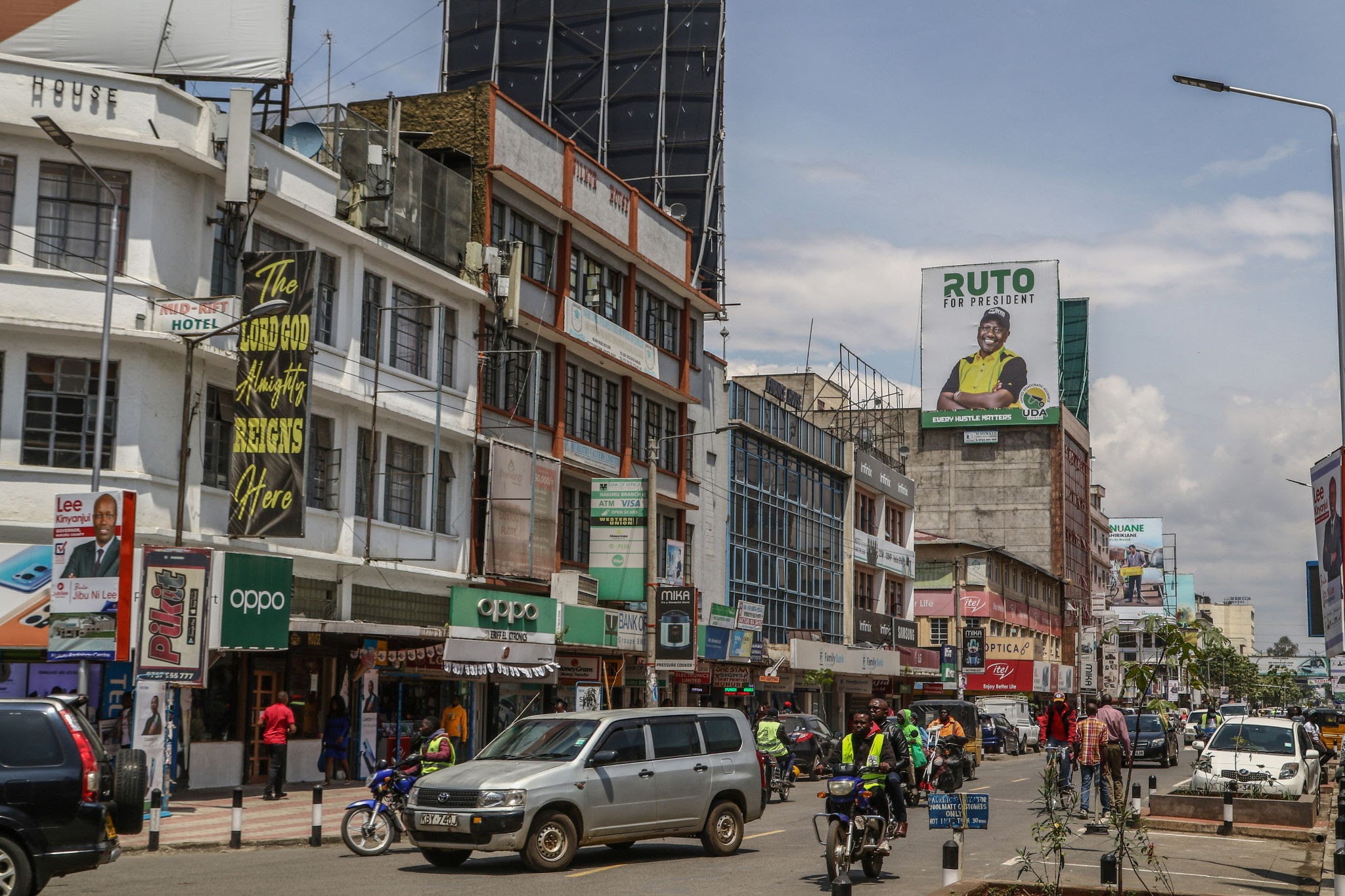
NAKURU, KENYA – 2022/08/15: A poster with the image of Kenya Kwanza Alliance presidential candidate, William Ruto, is seen on Kenyatta Avenue in Nakuru City ahead of the presidential declaration of the winner of the just concluded general election. (Photo by James Wakibia/SOPA Images/LightRocket via Getty Images)

The most immediate victim of this political distraction in Nakuru is the healthcare sector. While the county administration has made publicized attempts to stabilize its workforce—such as recently transitioning over 300 health workers to permanent terms—these efforts are constantly swallowed by the wider context of unresolved, politicized labor disputes. News reports have painted a grim picture at the Nakuru Level 5 Hospital during the nationwide clinical officers’ and nurses’ strikes. Because political leaders failed to honor previously negotiated Collective Bargaining Agreements (CBAs) in favor of funding other political priorities, patients in Nakuru are frequently turned away from locked public wards, forcing the urban poor to seek expensive private care or face fatal consequences.

Ultimately, Nakuru’s dilemma is that its city planning is subordinated to political loyalty. When municipal tenders for basic services like street lighting or garbage collection are awarded to political cronies rather than competent contractors, the city’s aesthetic and functional appeal plummets. Instead of a technically driven city management team, the administration is burdened by a politically motivated workforce. For a city aspiring to be a regional economic hub, this continuous cycle of prioritizing voter mobilization over administrative competence threatens to permanently stall Nakuru’s urban development.

References:

Daily Nation Uncertainty for residents, businesses in Nakuru amid ‘total shutdown’ plan

KTN News Kenya Nakuru clinical officers threaten to withdraw remaining staff as strike enters 38th day

Tuko 6 Nakuru Lands Officials Charged in KSh 50 Million Procurement Scandal

Climate Whiplash—When Infrastructure Meets Volatility

Nairobi has entered a perilous era of “climate whiplash,” where bone-dry droughts are abruptly terminated by high-intensity “long rains” that the city’s infrastructure is fundamentally unequipped to handle. Scientific assessments confirm that the climate crisis has increased the intensity of extreme rainfall in East Africa by approximately 40%. This volatility means that the “once-in-a-century” floods of the past are becoming our annual reality, yet our drainage networks remain trapped in the 20th century, designed for historical patterns that no longer exist.

The MAM (March-April-May) rains of 2024 and the recent 2026 deluges have laid bare a systemic collapse. While upscale neighborhoods like Runda face property damage and traffic paralysis, the fallout in settlements like Mathare and Mukuru is existential, with over 200,000 people displaced nationally in 2024 alone. The tragedy is compounded by a failure to translate early warnings from the Meteorological Department into proactive evacuations, leaving residents to face rising waters with zero meaningful preparation.

This infrastructure deficit creates a “water paradox”: even as floods submerge the streets, taps in major estates run dry. The intense runoff carries such high levels of silt and organic debris that treatment plants at Ngethu and Sasumua are forced to shut down, unable to process the turbid water. This cycle of flood-induced scarcity underscores the urgent need for modernized filtration and massive retention reservoirs, as the city’s reliance on aging systems makes it a victim of its own climate-altered environment.

References:

Inside Climate News Following Months of Drought, Floods in Kenya Kill More Than 40 People

Greenpeace Deadly Kenyan floods show urgent need to build climate resilience

Streamline Nairobi’s Water Paradox: Infrastructure Failure Amidst Excessive Rainfall

Eldoret’s Transition to City Status: Addressing Challenges and Sustainable Development

The elevation of Eldoret to city status opens a new chapter brimming with potential for transformative growth. As Eldoret steps into its role as Kenya’s fifth city, the focus should be on harnessing this status to catalyze infrastructure development, attract significant investments, and create a robust economic environment. The city’s strategic position, bolstered by key infrastructures such as the Eldoret International Airport, presents an opportunity to establish it as a regional hub for trade and industry. This growth could have a ripple effect, benefiting neighboring towns and fostering a vibrant economic ecosystem across the North Rift region.

Courtesy: Nation TV

Looking ahead, it is crucial for Eldoret to proactively address the challenges that accompany city status. Ensuring that the transition does not lead to burdensome taxes or the displacement of small-scale traders will be vital for maintaining public trust and ensuring inclusive growth. The local government must prioritize transparent governance and active community engagement, particularly in urban planning and infrastructure projects. This approach will help create a balanced development that meets the needs of all residents while attracting both local and international investors to support long-term economic stability.

To fully capitalize on its new status, Eldoret should invest in sustainable urban development initiatives. Improving public services such as healthcare, education, and housing will be essential to support the city’s growing population. Additionally, fostering partnerships with private sector players can drive innovation and economic diversification, ensuring that Eldoret not only grows but thrives as a modern, dynamic city that serves as a model for future urban development in Kenya​.

References:

The Star Uasin Gishu erects more statues to welcome Eldoret City status

The Star Gachagua tells off detractors as Ruto confers Eldoret city

The Star [PHOTOS] The fifth! Ruto confers Eldoret to city status

Pulse Live 7 qualifications Eldoret Town has satisfied to be conferred city status

The Star Eldoret city status comes with hope of investments, job creation

ENGLISH PREMIER LEAGUE | Man United beat Man City 3 – 2 [Video]

Nani’s 94th minute goal settled a mouthwatering Community Shield as Manchester United came back from two goals down to win the encounter by 3 goals to 2. The win sends United to their 19th Community Shield win; matching their Barclays Premier League record tally.

City had gone ahead at the end of the first half, with goals form Lescott, and a 25 yard shot from Dzeko easily beating United’s keeper, De Gea. It appeared quite unfortunate for United to go down by two goals having completely outplayed their City rivals. Ferguson’s response was to make three changes, bringing on new signing, Phil Jones, and Jonny Evans to replace Ferdinand and Nemanja Vidic at the back, and introducing Tom Cleverley into his midfield. Smalling reduced the deficit from close range when Young’s free-kick narrowly evaded Lescott. Six minutes later, came the equalizer, with Rooney, Nani and Cleverley opening City up with numbing series of short passes before Nani beat Joe Hart with a clever chip.  The match looked certain for penalties, when Nani kept his cool in a one-on-one situation to beat Hart for the second time right in the last minute. United were by far the better side, taking the game to their opponents and in the end they were the worthy winners.

With young player already impressing, the manager is set to have a headache in choosing his starting eleven. With Scholes’ role still up for grabs; Cleverly proved he is ready to take up the position by being a key figure in United’s come back.

References:
Manchester City 2 Manchester United 3: Nani stars as champions’ comeback stuns rivals in Wembley showdown Man City 2 – 3
Man City 2 – 3 Man Utd