Dismantling ‘JurisPesa’: Kenya’s Intelligence-Led War on Judicial Corruption and the Road to 2027

Welcome to Jijuze_The Kenyan Pulse! In this special edition, we go behind the scenes of a judicial system in the midst of a high-stakes makeover. As the 2027 General Election approaches, the Kenyan Judiciary is no longer just defending itself against accusations of “JurisPesa”—it is actively re-engineering the bench to ensure that justice is neither a commodity nor a political tool. From a historic “peace summit” with its fiercest critics to the deployment of intelligence-led surveillance in court corridors, this is the story of an institution fighting for its soul.

The journey from the leadership of Chief Justice Emeritus David Maraga to the current tenure of Chief Justice Martha Koome marks a shift from building constitutional foundations to aggressive operational enforcement. While the previous era focused on institutional independence and the initial digital response to the pandemic, the current administration is weaponizing technology and intelligence to dismantle systemic “cartels” that rely on brokers and enablers to facilitate bribery. This evolution is fueled by a new, multi-agency offensive that brings together the Ethics and Anti-Corruption Commission (EACC) and the National Intelligence Service (NIS) to turn “whispers in court corridors” into verified, actionable facts.

Here is a sneak peek into the key highlights of this unfolding legal adventure:

  • The “JurisPesa” Peace Summit: On February 3, 2026, the Judiciary broke tradition by hosting a consultative meeting with its most vocal critics, signaling a radical new openness to dialogue and systemic reform.
  • The Intelligence-Led Offensive: A deep dive into the partnership between the courts and the national spy agency (NIS) to proactively map corruption “hotspots” and intercept unethical patterns before they reach the bench.
  • The Digital Paywall: How 100% digitization of court payments and the “Uadilifu” case management system are effectively locking out the human “brokers” who once thrived on physical cash and registry delays.
  • The 2027 Gatekeepers: A look at the high-pressure recruitment for the Supreme Court, where the search is on for “judicial shock absorbers” capable of withstanding the inevitable political firestorms of the next election cycle.
  • Accountability in Action: The impact of the new 2026 Judicial Service Regulations, which have already streamlined the removal of individual judges and transformed how the public reports misconduct.

Join us as we explore whether these structural “shock absorbers” will be enough to shield the Republic in moments of national tension, or if the deeply rooted culture of “commodified justice” will find new ways to adapt. This is the heartbeat of the law—this is Jijuze_The Kenyan Pulse!

The Secret Deal: Why Transparency Matters

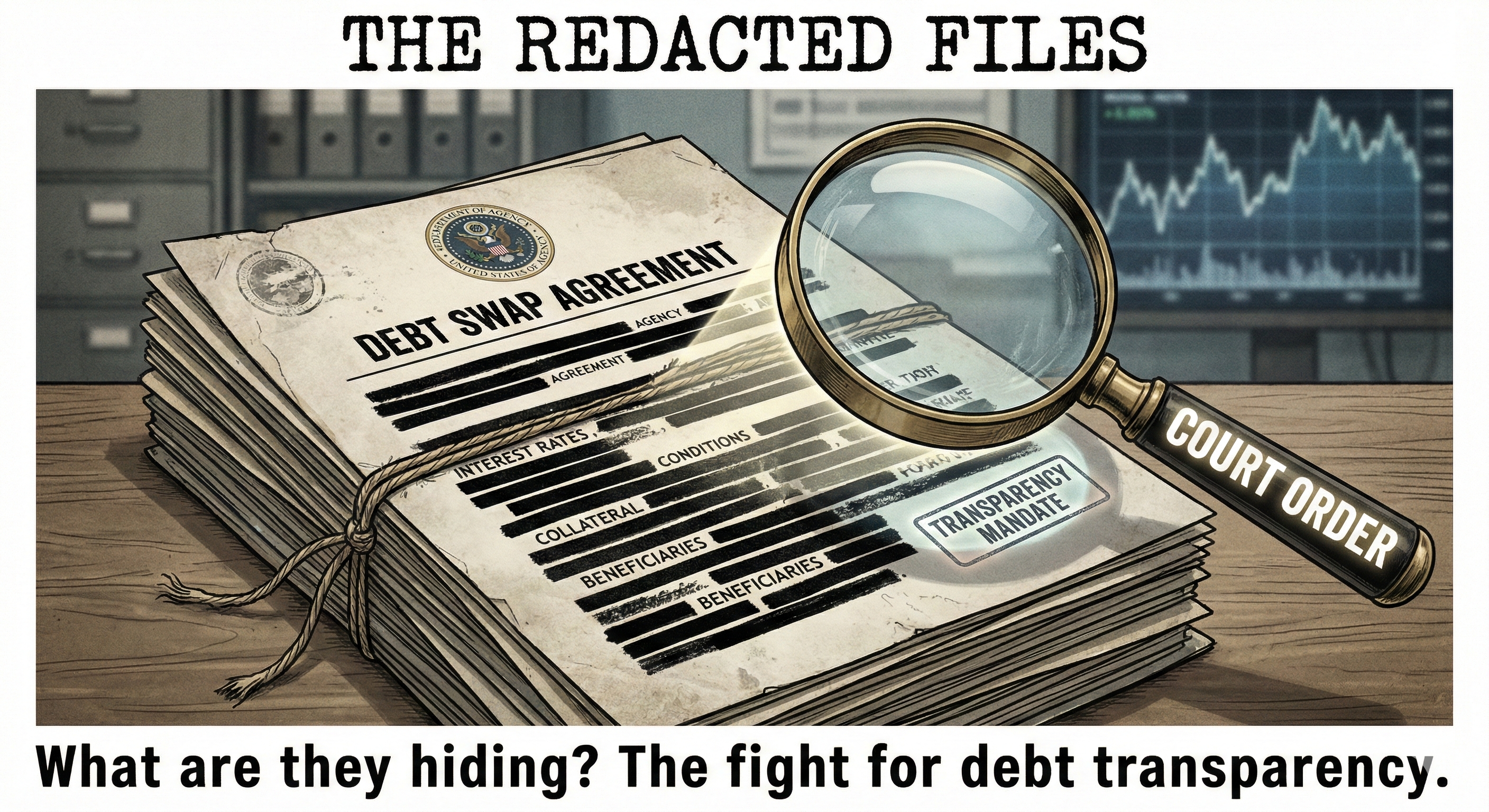
Despite the high stakes, the specific terms of the debt-for-food swap remain shrouded in secrecy, sparking legal battles and civil society alarm. A case filed at the East African Court of Justice, Wanjiru Gikonyo v The Attorney General, challenges the government’s refusal to disclose the full details of sovereign debt agreements. Litigants argue that committing future tax revenues and “savings” to long-term projects without public participation is unconstitutional. The lack of a public dashboard detailing exactly how the Sh129 billion will be spent creates a “transparency deficit” that invites mismanagement.

This opacity exacerbates the “sovereignty paradox.” By allowing the US-DFC and WFP to dictate the terms of expenditure, Kenya is effectively admitting that its own institutions cannot be trusted. While external conditionality acts as a safeguard against local corruption, the public remains in the dark about what exactly has been signed away. Are there hidden fees? What are the penalties for non-compliance? Without full disclosure, the Kenyan taxpayer is a passenger in a vehicle being driven by foreign creditors.

Transparency is not just a legal formality; it is the only disinfectant strong enough to prevent the “bureaucratic consignment” of funds. Civil society is demanding that the Treasury publish every shilling of the “savings” and every project beneficiary. Until then, the debt swap remains a “black box”—a deal negotiated in boardrooms in Washington and Nairobi, with the bill sent to the citizen who has no say in the menu.

References:

Afronomics Law Sovereign Debt News Update No. 147: The Promises and Transparency Pitfalls of Kenya’s $1 Billion Debt-for-Food Swap

The Institute for Social Accountability The High Court has ordered the National Treasury to disclose critical information on Kenya’s bilateral loans and sovereign bonds.