Eldoret’s Transition to City Status: Addressing Challenges and Sustainable Development

The elevation of Eldoret to city status opens a new chapter brimming with potential for transformative growth. As Eldoret steps into its role as Kenya’s fifth city, the focus should be on harnessing this status to catalyze infrastructure development, attract significant investments, and create a robust economic environment. The city’s strategic position, bolstered by key infrastructures such as the Eldoret International Airport, presents an opportunity to establish it as a regional hub for trade and industry. This growth could have a ripple effect, benefiting neighboring towns and fostering a vibrant economic ecosystem across the North Rift region.

Courtesy: Nation TV

Looking ahead, it is crucial for Eldoret to proactively address the challenges that accompany city status. Ensuring that the transition does not lead to burdensome taxes or the displacement of small-scale traders will be vital for maintaining public trust and ensuring inclusive growth. The local government must prioritize transparent governance and active community engagement, particularly in urban planning and infrastructure projects. This approach will help create a balanced development that meets the needs of all residents while attracting both local and international investors to support long-term economic stability.

To fully capitalize on its new status, Eldoret should invest in sustainable urban development initiatives. Improving public services such as healthcare, education, and housing will be essential to support the city’s growing population. Additionally, fostering partnerships with private sector players can drive innovation and economic diversification, ensuring that Eldoret not only grows but thrives as a modern, dynamic city that serves as a model for future urban development in Kenya​.

References:

The Star Uasin Gishu erects more statues to welcome Eldoret City status

The Star Gachagua tells off detractors as Ruto confers Eldoret city

The Star [PHOTOS] The fifth! Ruto confers Eldoret to city status

Pulse Live 7 qualifications Eldoret Town has satisfied to be conferred city status

The Star Eldoret city status comes with hope of investments, job creation

Kenyan Executive Under Fire: Petition Filed for President and Deputy’s Removal

A legal petition has been submitted to the Kenyan courts seeking the removal of President William Ruto and Deputy President Rigathi Gachagua, citing constitutional violations and a breach of public trust. The petition, filed by Migeria Lempaa & Kariuki Advocates, accuses the leaders of incompetence and mismanagement, particularly highlighting the mishandling of economic policies and the discontinuation of vital social programs. The petitioners argue that these actions have resulted in socio-economic instability, undermining the constitutional responsibilities of the executive office.

Milimani Law Courts

The allegations hinge on Article 145 of the Kenyan Constitution, which provides grounds for impeachment, including gross misconduct and violation of the Constitution. The petitioners claim that the actions of Ruto and Gachagua meet these criteria, noting their failure to uphold public welfare and constitutional duties. They stress that the administration’s conduct could lead to further unrest and instability, drawing parallels with economic crises in other countries. The call for judicial intervention is seen as a necessary step to uphold governance and prevent further constitutional breaches.

Given the escalating public discontent, it would be prudent for President Ruto to consider reordering his government’s priorities to better align with the needs of the Kenyan populace. This could involve revisiting controversial economic policies and strengthening social support systems. By taking proactive steps to address the concerns raised in the petition, Ruto could mitigate potential political fallout and restore confidence in his administration. A focus on transparency, accountability, and responsiveness to public needs may offer a constructive path forward, potentially averting the need for drastic measures like impeachment or a public referendum.

References:

The Standard Petitioners move to court seeking to oust Ruto, Gachagua

Nairobi Wire Petition Filed to Remove Ruto and Gachagua from Office

Impeaching the Kenyan President is Not Treason, It’s Constitutional Ruth Nashipae Muigai, LLB(Hons). LLM

KLRC Constitution of Kenya: Article 145. Removal of President by impeachment


Kenya’s Political Landscape: Ruto’s Surprising Move and Good Governance Challenges

Kenya’s President Ruto has taken a surprising step by nominating four Cabinet Secretaries from the opposition party, sparking concerns about the legitimacy of his administration. The move comes as the country grapples with economic challenges and political tensions.

Left: Raila Odinga; Right: President Ruto

Sources close to the ruling party have revealed that the nominations were made without the formal approval of the opposition leader, Raila Odinga, who had previously issued demands for specific issues to be addressed before engaging in dialogue with the government. This development has left many wondering whether the opposition is quietly aligning itself with the government, potentially compromising its independence.

As the situation unfolds, analysts are cautioning that a broad-based government of national unity could have far-reaching implications for Kenya’s democracy. In light of this, it is crucial to examine the concept of good governance and its intersection with human rights. Good governance refers to the process by which public institutions conduct public affairs, manage public resources, and guarantee the realization of human rights in a manner free from abuse and corruption. This requires respecting human rights, ensuring transparency, accountability, responsibility, participatory decision-making, responsiveness to people’s needs, and freedom from corruption.

According to experts, good governance is closely linked to human rights, as human rights standards and principles provide a set of values to guide government actions and a framework for accountability. In turn, good governance is essential for respecting and protecting human rights in a sustainable manner.

The four key areas where good governance and human rights intersect are:

  1. Democratic Institutions: The establishment of strong democratic institutions is critical for ensuring that power is exercised transparently and in accordance with the rule of law.
  2. Public Service Delivery: Good governance requires effective public service delivery, which involves providing essential services to citizens in a fair, equitable, and efficient manner.
  3. The Rule of Law: The rule of law is essential for upholding human rights, as it provides a framework for ensuring that laws are respected and enforced fairly and without discrimination.
  4. Anti-Corruption Efforts: Anti-corruption efforts are vital for preventing the abuse of power and ensuring that public resources are used for the benefit of all citizens.

As Kenya’s government navigates this complex landscape, it is essential to prioritize good governance and ensure that institutions are accountable, transparent, and responsive to the needs of the people. This requires a commitment to upholding human rights, protecting fundamental freedoms, and promoting sustainable development.

References:

The Standard Mixed reactions as Ruto unveils new Cabinet

AllAfrica Kenya: Sifuna Insists ODM Not in Govt Despite Ruto’s Cabinet Picks

AllAfrica Kenya: Ruto Co-Opts ODM Into Govt Naming Joho, Oparanya, Mbadi In Cabinet

Associated Press Kenyan president appoints opposition ministers to his Cabinet amid political unrest

United Nations Human Rights About good governance

United Nations Human Rights OHCHR and good governance

Kenya Kwanza Legal Challenges: Impact on Economic Transformation

President William Ruto’s Kenya Kwanza administration has faced a series of legal challenges that have impeded the implementation of the Bottom-Up Economic Transformation Agenda. In January 2024, the High Court issued an injunction against Ruto’s proposal to deploy police officers to Haiti to combat gang violence, declaring the initiative unconstitutional. The judiciary underscored that there was no legal basis for sending police abroad instead of military personnel, granting the government a 14-day window to file an appeal. This ruling exemplifies the judiciary’s stringent oversight of the executive’s international commitments.

In February 2024, another judicial setback occurred when the court enjoined the funding for a pet housing project, integral to Ruto’s broader affordable housing initiative. The court found the funding mechanism incompatible with constitutional mandates, thus stymying Ruto’s flagship program aimed at alleviating housing shortages. This judgment highlighted the judiciary’s rigorous interpretation of constitutional provisions governing public expenditure and developmental projects, reinforcing the legal scrutiny applied to executive actions.

These judicial rebuffs are part of an ongoing trend where the courts have systematically invalidated various projects and proposals under the Kenya Kwanza agenda. The recurrent legal impediments have substantially hampered the administration’s capacity to implement its strategic plans, underscoring the judiciary’s crucial role in shaping public policy and governance in Kenya. These legal confrontations illustrate the persistent tension between the executive and the judiciary, as Ruto’s administration navigates the intricate constitutional and legal landscape to advance its ambitious policy objectives.

References:

Nation Blocked: Ruto’s never-ending losing streak in court

BBC How Kenya’s judges stood up to President William Ruto

Global Initiative Kenya’s High Court blocks proposal to send police support to Haiti

BBC Kenya housing levy: Blow to William Ruto as court blocks tax

The EastAfrican Ruto furious after court blocks funding for pet housing project

Kenya’s Electoral Reforms: President Ruto Signs IEBC Amendment Bill

President William Ruto’s signing of the Independent Electoral and Boundaries Commission (IEBC) Amendment Bill, attended by his political rival Raila Odinga and Kalonzo Musyoka, marks a significant moment in Kenyan politics given their historically adversarial relationship. The bill, aimed at reconstituting the electoral commission, addresses long-standing issues within Kenya’s electoral system. It mandates the formation of a nine-member selection panel tasked with recruiting commissioners with proven expertise in ICT and accounting, expected to become operational by late October or early November 2024, ensuring a more structured and transparent recruitment process.

President Ruto assents to IEBC Bill

Reactions to the bill’s signing have been mixed, highlighting both support and skepticism. Raila Odinga emphasized the necessity of a unified electoral commission for credible future elections, viewing the bill’s focus on professional qualifications for commissioners as a positive step towards enhancing the commission’s efficiency. However, some public voices have expressed concerns about the implementation timeline and whether the changes will be sufficient to address entrenched electoral issues. This mix of reactions underscores the need for continuous monitoring and engagement from all stakeholders to ensure the new commission’s effectiveness.

The IEBC Amendment Bill represents a crucial step in Kenya’s electoral reforms, providing a framework for addressing systemic issues within the electoral commission. Ensuring the transparent and timely implementation of the new provisions is essential for maintaining public trust in the electoral process. Continuous public engagement and dialogue are necessary to build on this momentum, addressing underlying issues and ensuring a fair and credible environment for future elections. As Kenya moves forward, it is imperative that all stakeholders work together to support the new commission and uphold the integrity of the electoral system.

References:

Tuko Kenyans React as Raila Odinga Joins William Ruto during Signing of IEBC Amendment Bill: “Good Move”

The Star Raila, Kalonzo join Ruto as he assents to IEBC Bill

Nation Ruto assents to IEBC Bill, paves way for hiring of commissioners

Business Daily Stage set for fresh IEBC team as Ruto assents to Bill

The Africa Report Kenya to reconstitute electoral commission as Ruto signs IEBC bill into law


Addressing Unrest in Kenya: Youth Engagement and Reforms

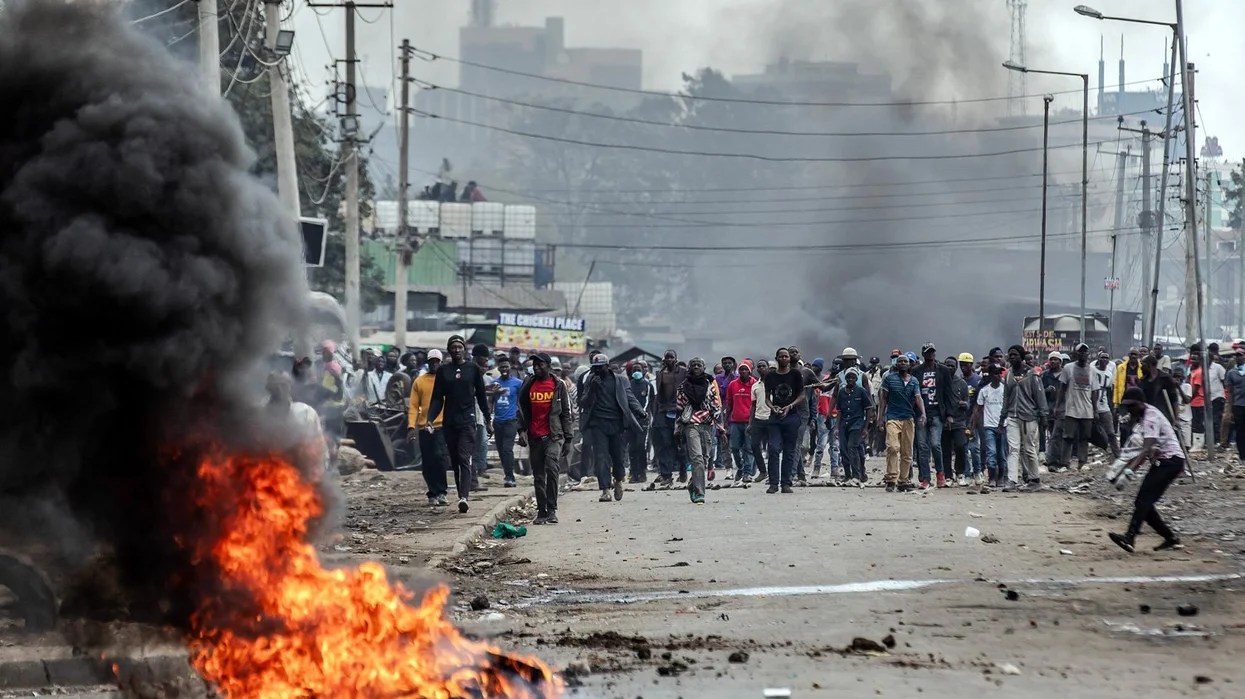
In recent weeks, Kenya has experienced a surge in protests predominantly led by Generation Z, who are voicing their dissatisfaction with the Finance Bill 2024 and broader governance issues. Initially peaceful, these demonstrations have been disrupted by violent infiltrations, leading to looting and confrontations with the police. President William Ruto has acknowledged the grievances of the youth and expressed a willingness to engage in dialogue, while emphasizing the need to maintain public order. Human rights organizations have criticized the government’s response, highlighting the need for accountability and a more nuanced approach to managing protests. These organizations argue that peaceful demonstrators should not be conflated with criminal elements who exploit the situation for personal gain.

Gen Z protestors barricade road in Nairobi

The Kenyan protests contrast sharply with the Arab Spring demonstrations, which were characterized by widespread, often leaderless uprisings against autocratic regimes across the Middle East and North Africa. The Arab Spring saw governments toppled and significant political upheaval, driven by a combination of economic despair, political repression, and a desire for democratic reforms. In contrast, the Kenyan protests are more structured, with specific economic and social grievances articulated by the youth. While the Arab Spring often faced violent crackdowns, the Kenyan government’s approach has been to engage in dialogue and propose reforms, although incidents of police brutality have been reported. This approach underscores the Kenyan administration’s recognition of the legitimacy of the protesters’ demands, even as it grapples with maintaining public order.

To address the current unrest effectively, it is essential for the Kenyan government to establish a structured dialogue platform with youth leaders. This platform should facilitate regular consultations to address grievances and co-create solutions. Reassessing the Finance Bill 2024 in collaboration with economic experts and community representatives could help address the underlying economic concerns driving the protests. Comprehensive police reforms are also necessary to ensure law enforcement operates with greater accountability and respect for human rights. Effective public communication strategies are vital to fostering transparency and understanding between the government and the populace. Supporting peaceful protests by providing security and preventing infiltration by criminal elements is essential to safeguarding the rights of demonstrators and maintaining public order. These measures, aligned with studies on youth demonstrations’ impact on political change in Africa, can help Kenya navigate this period of unrest constructively and restore trust between the government and its citizens.

References:

The Star Leaders condemn infiltration of Gen Z protests by goons

France24 Kenyan police arrest hundreds accused of looting during anti-government protests

Citizen Digital ‘Ragtag Militia Infiltrating Peaceful Protests,’ Gideon Moi Condemns Violence In Protests

Lethal Repression of Peaceful Protest in Africa. Why Do (non-) Accountable and Military Regimes Shoot By Torsten Mix, Master’s in International Security (Downloadable dissertation paper)

Accord Youth Demonstrations and their Impact on Political Change and Development in Africa

AllAfrica Kenya: Youths March in Tribute to Anti-Budget Protest Victims in Nairobi

Rising Tensions in Kenya: Public Outcry and Unrest Amid Finance Bill Controversy

Kenya has been rocked by a week of heavy protests against President William Ruto’s proposed Finance Bill 2024, which aimed to raise $2.7 billion through new taxes on basic commodities, motor vehicles, and financial transactions. The widespread public outcry and violent demonstrations led to the bill’s withdrawal, highlighting the deep-seated discontent among the Kenyan populace. Despite this concession, protests continue across major cities like Nairobi, with citizens demanding more significant changes, including Ruto’s resignation, amid frustrations over the rising cost of living and lack of economic opportunities.

Thursday protests in Nakuru

The protests have exposed broader grievances against the government. The heavy military presence in response to the unrest has further fueled tensions, with reports indicating over 20 deaths, 300 injuries, and numerous arrests as police used tear gas to disperse crowds. Amidst this turmoil, President Ruto signed the Appropriations Bill into law, subject to an adjusted supplementary budget, to ensure expenditure on critical services. This move aims to operate under the Finance Act 2023, financing a Sh3.9 trillion budget for the upcoming financial year. However, the government’s plan to reintroduce the Finance Bill with amendments has not yet succeeded in quelling the unrest. Engaging in meaningful dialogue with citizens, particularly the youth who are at the forefront of these demonstrations, is crucial for moving forward.

Addressing the underlying economic issues, implementing transparent governance, and ensuring that future fiscal policies do not disproportionately burden the poor will be vital steps in restoring trust and stability. The Kenyan government must take concrete actions to address the grievances that have fuelled the protests, such as creating job opportunities, reducing living costs, and increasing government accountability. These measures would demonstrate a genuine commitment to addressing the needs of the Kenyan people and help to ease the current tensions.As the situation evolves, the government’s responsiveness and the public’s resilience will shape Kenya’s path toward resolving this crisis. It is essential for everyone to remain vigilant against misinformation and cheap propaganda that can exacerbate divisions and hinder constructive dialogue. Accurate information and open communication will be key in navigating this period of unrest and working towards a more equitable and prosperous Kenya. In these turbulent times, a collective effort is required to ensure that the voices of all Kenyans are heard and that the country’s leadership takes meaningful steps to address the root causes of the unrest.

References:

Reuters Kenya’s young protesters plot next moves after dramatic tax win

The Star Empty roads, closed shops: Gen Z scale down protests amid heavy military deployment
Kenya News Agency Scores Nursing Injuries Sustained In Protests

All Africa Kenya: President Ruto Signs Appropriations Bill Subject to Adjusted Supplementary Budget

US-Kenya Relations Strengthened: President Biden Designates Kenya as Major Non-NATO Ally

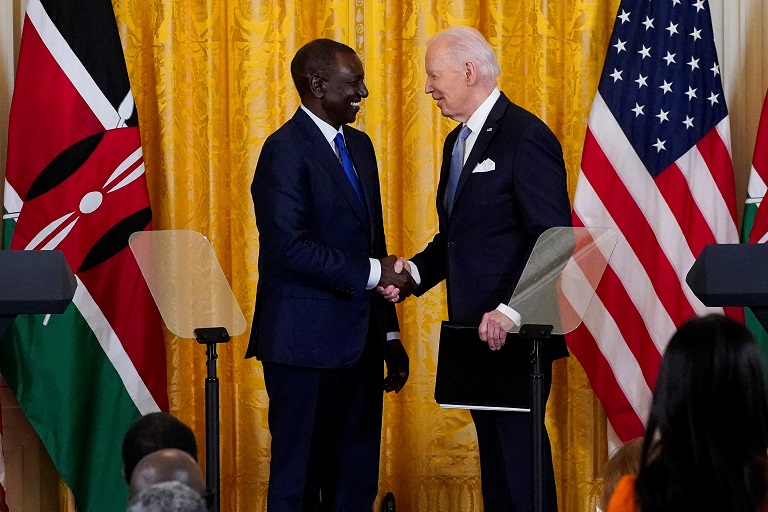
On 23rd last month, President Joe Biden hosted a grand White House dinner to honour Kenyan President William Ruto , marking the first state visit by an African leader in nearly 20 years. The event featured a surprise appearance by former US president Barack Obama, emphasising the significance of US-Kenya relations.

Photo Courtesy: Reuters

The state dinner underscored the significance of US-Kenya relations, with President Biden praising Ruto’s bold leadership and announcing Kenya’s designation as a major non-NATO ally, a first for sub-Saharan Africa. This move aims to bolster bilateral ties and recognise Kenya’s growing influence on the global stage. Biden and Ruto also unveiled the “Nairobi-Washington Vision,” a collaborative effort to support debt relief for developing nations and enhance cooperation on critical issues such as health, security, economic stability, cybersecurity, and climate change.

Former President Obama, whose father was born in Kenya, briefly attended the dinner, emphasising the personal and historical significance of the event. His presence symbolised the deep connections between the two nations. The evening’s celebrations not only honoured the longstanding friendship between the US and Kenya but also looked forward to a future of enhanced collaboration and mutual support in tackling global challenges.

References

Independent Barack is back! Obama stops by Biden’s lavish state dinner for Kenyan president

The East African Ruto, Biden announce new investment deals as they seek deeper ties

BBC Biden welcomes Kenya’s leader as US under pressure in Africa


Coast Governors Veto Muguka Sale

President William Ruto has reversed a ban on Muguka, a stimulant linked to drug abuse among young people, which was previously announced by three coastal leaders in Kenya. Ruto directed the Ministry of Agriculture to engage all stakeholders, emphasizing the economic importance of muguka for Embu County, where it brings in significant income. Agriculture CS Mithika Linturi declared the ban by the three governors as invalid, noting that Muguka is legally recognized as a cash crop under existing regulations.

Considering that the County Governor serves as the chief executive officer of the county government in Kenya, and recognizing the dual-level structure of governance comprising the national and county governments, it is within the purview of the County Governor to exercise legislative and executive powers at the county level. In accordance with the principles of devolution enshrined in the Constitution of Kenya, County Governors possess the authority to promulgate and enforce ordinances and regulations that address the specific needs and welfare of their respective communities. Consequently, in situations where such local enactments are demonstrably in the best interest of the county’s populace, the authority of the County Governor to override or modify national legislation may be justified, ensuring that local governance is responsive and tailored to the unique socio-economic and cultural context of the county.

Calls for tougher penalties to combat the sale of illicit brews in Kenya are amplified, emphasizing the need for comprehensive measures from both the Executive and Parliament. The surge in criminal activities linked to the trade is a cause for concern, prompting advocates for stricter enforcement of laws regulating alcoholic beverages. Meanwhile, the Nakuru Bar Owners Association supports government initiatives to eliminate illicit liquor sales, citing concerns over public health and legitimate businesses. In contrast, the sale and consumption of Muguka, a psychotropic substance, present growing concerns, particularly in coastal regions. Pressure mounts on the government to address the social and health consequences associated with Muguka use, including addiction and criminal activities. Efforts to regulate Muguka sales and consumption are underway, but challenges persist in enforcing restrictions and combating its proliferating trade.

In the same way that the unwavering dedication of law enforcement in Bahati, Nakuru County, has tackled the scourge of second-generation alcohol, so too must this steadfast commitment be mirrored at the coast to combat the sale of Muguka. True progress in safeguarding our communities lies in applying consistent zeal and resolve across all regions, recognising that the health and future of our society depend on our collective and equal efforts.

References

The Africa Report Kenya: Ruto’s reversal of muguka ban in coastal region draws criticism

AfroCave Role and Functions of a County Governor in Kenya

Kenya News Agency Ex-MP Calls For Stiffer Penalties To Curb Sale, Consumption Of Illicit Brews