Nairobi has entered a perilous era of “climate whiplash,” where bone-dry droughts are abruptly terminated by high-intensity “long rains” that the city’s infrastructure is fundamentally unequipped to handle. Scientific assessments confirm that the climate crisis has increased the intensity of extreme rainfall in East Africa by approximately 40%. This volatility means that the “once-in-a-century” floods of the past are becoming our annual reality, yet our drainage networks remain trapped in the 20th century, designed for historical patterns that no longer exist.
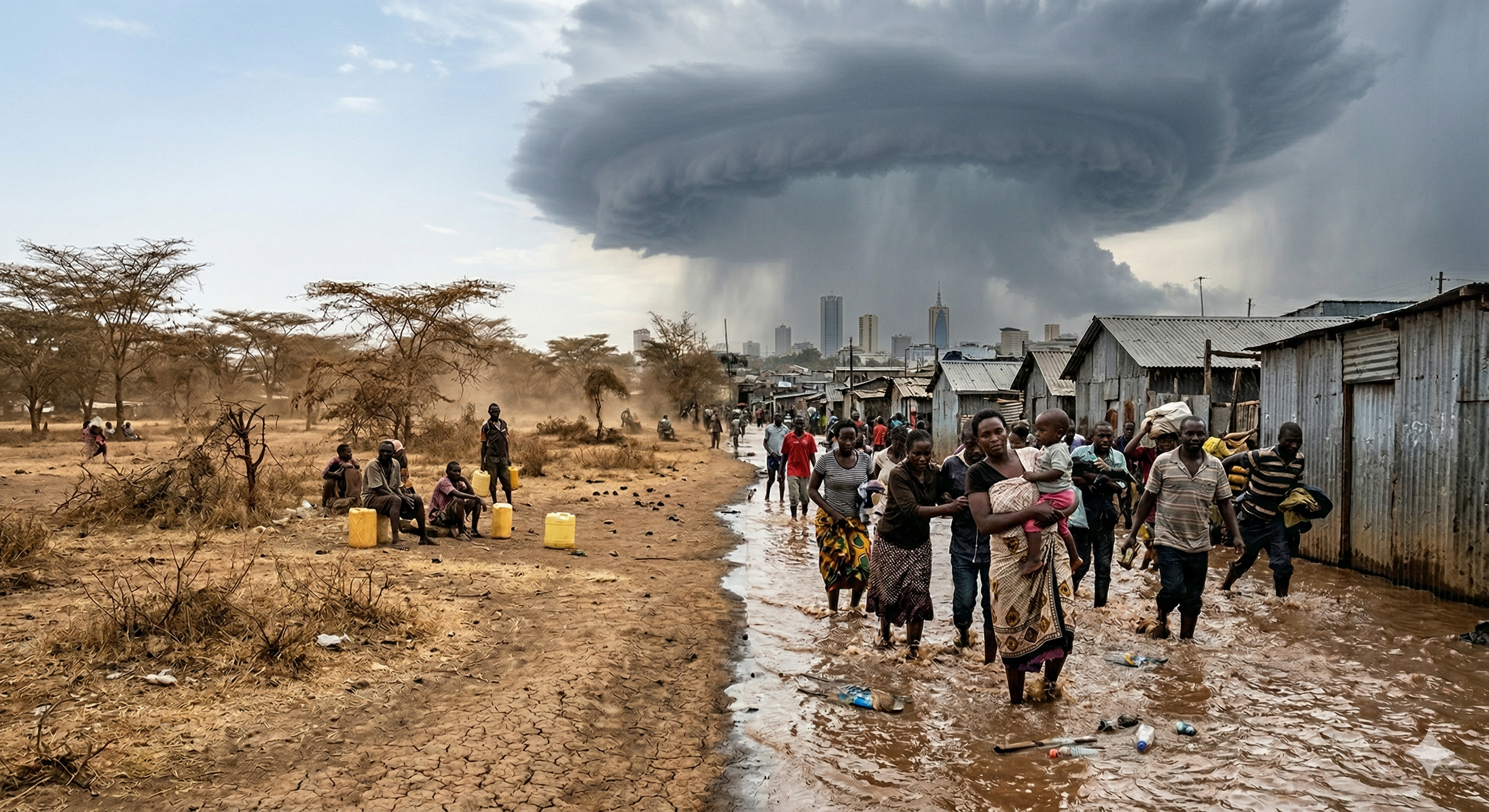
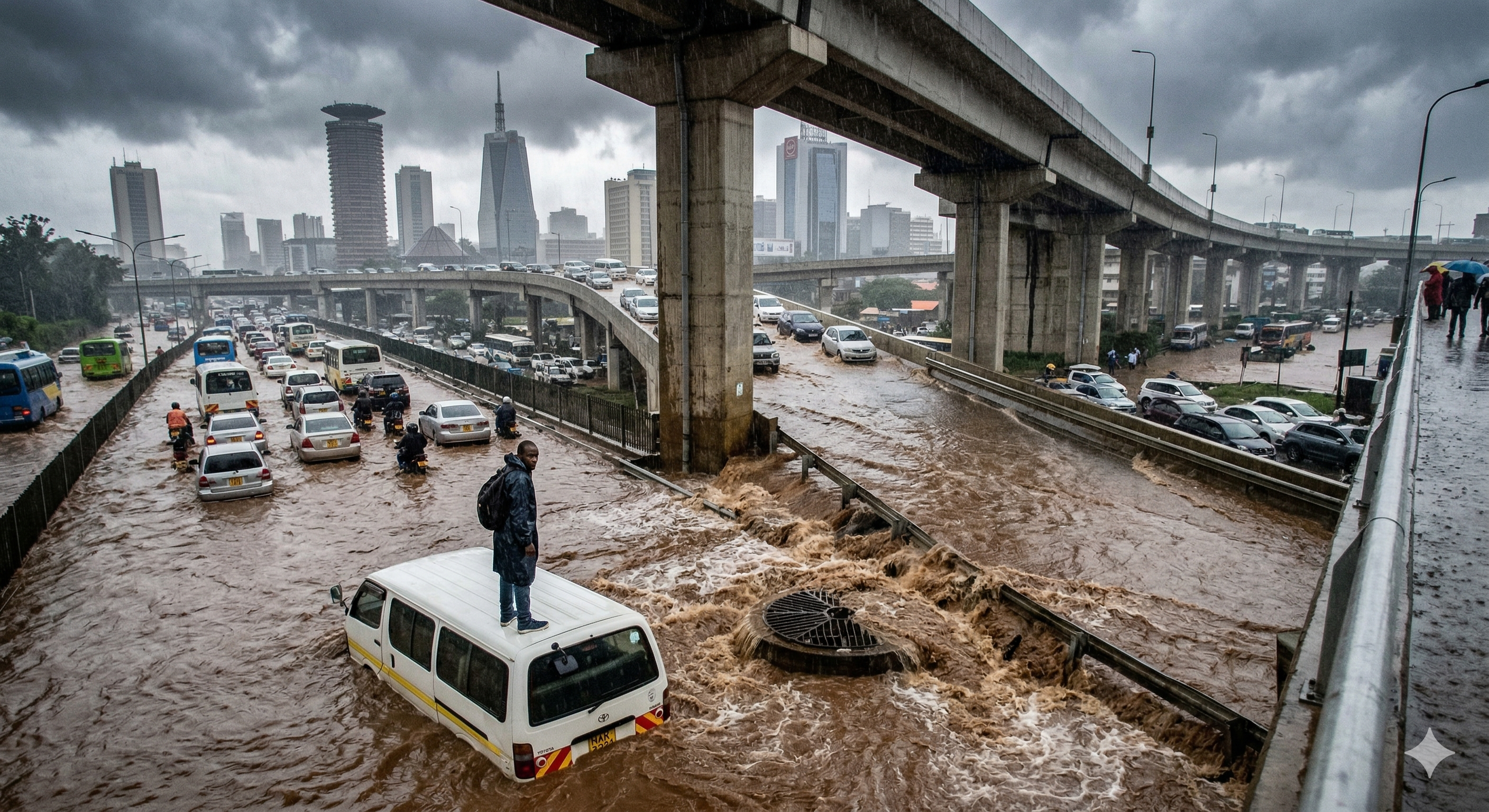
The MAM (March-April-May) rains of 2024 and the recent 2026 deluges have laid bare a systemic collapse. While upscale neighborhoods like Runda face property damage and traffic paralysis, the fallout in settlements like Mathare and Mukuru is existential, with over 200,000 people displaced nationally in 2024 alone. The tragedy is compounded by a failure to translate early warnings from the Meteorological Department into proactive evacuations, leaving residents to face rising waters with zero meaningful preparation.
This infrastructure deficit creates a “water paradox”: even as floods submerge the streets, taps in major estates run dry. The intense runoff carries such high levels of silt and organic debris that treatment plants at Ngethu and Sasumua are forced to shut down, unable to process the turbid water. This cycle of flood-induced scarcity underscores the urgent need for modernized filtration and massive retention reservoirs, as the city’s reliance on aging systems makes it a victim of its own climate-altered environment.
References:
Inside Climate News Following Months of Drought, Floods in Kenya Kill More Than 40 People
Greenpeace Deadly Kenyan floods show urgent need to build climate resilience
Streamline Nairobi’s Water Paradox: Infrastructure Failure Amidst Excessive Rainfall
 Jijuze