Kenyan Politics: Raila Odinga, William Ruto, and the Ever-Changing Alliances Landscape

The 2005 referendum on Kenya’s proposed constitution was more than just a vote; it was a pivotal moment that redefined the country’s political alliances and set the stage for future power struggles. Raila Odinga and William Ruto, then key figures in the opposition, found common cause in their opposition to President Mwai Kibaki’s draft constitution. The proposed document was seen by many as flawed, favoring the incumbent’s administration. Rallying under the “Orange” banner, which symbolized their resistance, Raila and Ruto spearheaded a campaign that resonated with a significant portion of the electorate. Their victory, which culminated in the rejection of the constitution, not only signaled the birth of the Orange Democratic Movement (ODM) but also established Raila as a formidable force in Kenyan politics. The referendum catalyzed a new era of political realignments, where former allies became rivals and the landscape of Kenyan politics became increasingly fluid and unpredictable.
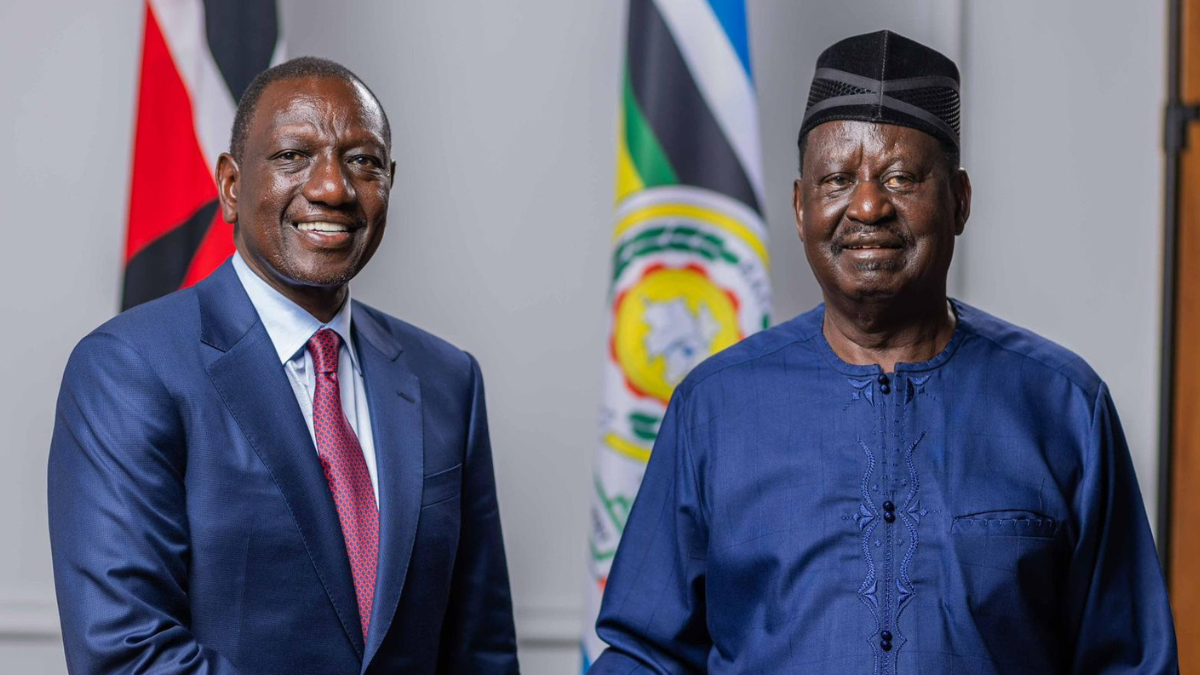
President Ruto and Raila at the launch of Raila’s AUC bid at State House – Nairobi

Fast forward to the present, and the political dynamics in Kenya have taken an unexpected turn, revealing the cyclical nature of political allegiances. Raila Odinga, who has long been a mainstay in Kenyan politics, is now setting his sights on the international stage with his bid for the African Union Commission (AUC) chairmanship. What is perhaps most surprising is the support he has garnered from President William Ruto, his long-time political adversary. This alliance, which would have been unthinkable just a few years ago, underscores the strategic calculations at play in Kenya’s political arena. For Raila, Ruto’s backing is crucial as it not only bolsters his candidacy but also provides a sense of national unity that could strengthen his position on the continental stage. For Ruto, supporting Raila may serve to consolidate his own power by easing domestic tensions and sidelining a potential competitor in the next general election. This pragmatic alliance highlights the fluidity of Kenyan politics, where today’s adversaries can quickly become tomorrow’s allies if the circumstances are right.

The implications of this alliance are far-reaching and could significantly reshape Kenya’s political landscape. Raila’s pursuit of the AUC chairmanship has left a potential power vacuum within ODM, a party that has been synonymous with his leadership for nearly two decades. This could lead to a reorganization within the party, with emerging leaders vying to fill the void, or it could trigger the formation of new alliances as political players reposition themselves for the future. Meanwhile, the Kenyan electorate is left to grapple with the ramifications of this newfound camaraderie between two of the country’s most influential leaders. On one hand, the alliance could bring a period of political stability, reducing the polarization that has characterized recent elections. On the other hand, there is a risk that voters, particularly those who have been loyal to Raila or Ruto based on their opposition to the other, may feel disillusioned or betrayed. This evolving narrative is a testament to the ever-changing nature of Kenyan politics, where alliances are as much about survival as they are about ideology, and where the next chapter is always just one unexpected alliance away.

References:

Capital News Ruto Hosts Historic Launch of Raila’s AU Commission Chairmanship Candidacy

The EastAfrican Raila Odinga: ‘My heart is ready, my hands are steady’ for AUC top job

The Star Raila arrives at State House ahead of his AUC bid launch

Nation Show of might as Ruto unveils Raila AUC bid

The Star Raila launches website to promote his AUC job bid

The Star [PHOTOS] Ruto officially launches Raila’s AUC bid at State House

The Nairobi Law Monthly Raila’s handshakes with opponents greatly cost his supporters

Nation United stand in vote against 2005 constitution gave birth to Orange

The Standard How referendum campaigns gave birth to ODM


Kenya’s Electoral Reforms: President Ruto Signs IEBC Amendment Bill

President William Ruto’s signing of the Independent Electoral and Boundaries Commission (IEBC) Amendment Bill, attended by his political rival Raila Odinga and Kalonzo Musyoka, marks a significant moment in Kenyan politics given their historically adversarial relationship. The bill, aimed at reconstituting the electoral commission, addresses long-standing issues within Kenya’s electoral system. It mandates the formation of a nine-member selection panel tasked with recruiting commissioners with proven expertise in ICT and accounting, expected to become operational by late October or early November 2024, ensuring a more structured and transparent recruitment process.

President Ruto assents to IEBC Bill

Reactions to the bill’s signing have been mixed, highlighting both support and skepticism. Raila Odinga emphasized the necessity of a unified electoral commission for credible future elections, viewing the bill’s focus on professional qualifications for commissioners as a positive step towards enhancing the commission’s efficiency. However, some public voices have expressed concerns about the implementation timeline and whether the changes will be sufficient to address entrenched electoral issues. This mix of reactions underscores the need for continuous monitoring and engagement from all stakeholders to ensure the new commission’s effectiveness.

The IEBC Amendment Bill represents a crucial step in Kenya’s electoral reforms, providing a framework for addressing systemic issues within the electoral commission. Ensuring the transparent and timely implementation of the new provisions is essential for maintaining public trust in the electoral process. Continuous public engagement and dialogue are necessary to build on this momentum, addressing underlying issues and ensuring a fair and credible environment for future elections. As Kenya moves forward, it is imperative that all stakeholders work together to support the new commission and uphold the integrity of the electoral system.

References:

Tuko Kenyans React as Raila Odinga Joins William Ruto during Signing of IEBC Amendment Bill: “Good Move”

The Star Raila, Kalonzo join Ruto as he assents to IEBC Bill

Nation Ruto assents to IEBC Bill, paves way for hiring of commissioners

Business Daily Stage set for fresh IEBC team as Ruto assents to Bill

The Africa Report Kenya to reconstitute electoral commission as Ruto signs IEBC bill into law


Raila Odinga’s Ambitious Bid for African Union Commission Chairperson

Raila Odinga, a veteran Kenyan politician and leader of the opposition, has set his sights on the prestigious position of African Union Commission (AUC) Chairperson. However, his bid faces significant hurdles due to proposed changes in the AU’s election rules. These new regulations, which aim to introduce stricter eligibility criteria, could potentially disqualify Odinga from the race. Despite this, Odinga’s ambition remains undeterred as he seeks to navigate these challenges with the support of the Kenyan government.

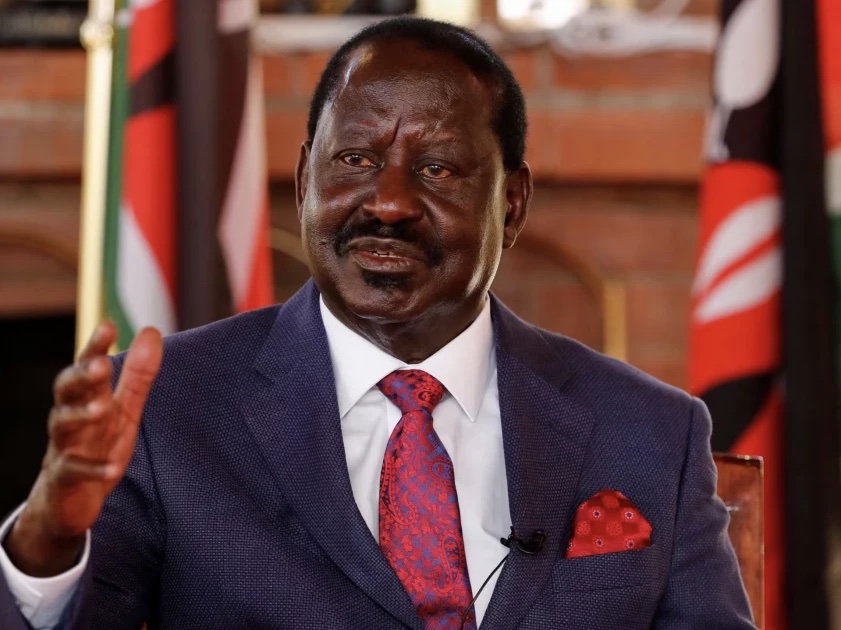
Raila Odinga

The Kenyan government, under the leadership of President William Ruto, has publicly endorsed Odinga’s candidacy. A campaign secretariat has been established to bolster his bid, reflecting a rare moment of cooperation between the two political adversaries. Nevertheless, internal coordination issues have led to delays in the formal submission of Odinga’s application. By June 30, 2024, the government had yet to submit his bid, raising concerns about their commitment and the potential impact on Odinga’s chances. The deadline for submission is fast approaching, with the government racing against time to ensure that all necessary documentation is filed by August 6, 2024. This delay has amplified anxieties about the effectiveness of the campaign and whether the bid will meet the stringent new criteria set by the AU.

In parallel with addressing submission delays, diplomatic efforts are in full swing to garner support for Odinga’s candidature across the African continent. Kenyan envoys have been actively lobbying for endorsements from other member states, emphasizing Odinga’s extensive experience and commitment to African unity. Domestically, Odinga has shown his political acumen by responding supportively to recent Gen Z demonstrations, while simultaneously criticizing the government’s heavy-handed response to these protests. He condemned the administration’s approach, aligning himself with the youth movements and advocating for more progressive policies. The outcome of these efforts remains uncertain, with the next few weeks being crucial for Odinga’s campaign. If successful, Odinga could leverage his political acumen and regional backing to secure the AUC Chairperson position. However, failure to meet the AU’s new eligibility criteria or the submission deadline could result in disqualification, significantly impacting his political trajectory.

References:

The Star Why Raila’s bid for AUC top job is yet to be submitted – PS Sing’oei
Nation State in race against time to officially nominate Raila for AUC post

Kenya News Agency Envoys Urged To Popularize Raila Odinga’s AU Bid
The Kenya Times EXPLAINED: New AU Changes That Could Lock Out Raila from Race

The Nairobi Law Monthly Govt yet to submit Odinga name for AUC position

The EastAfrican Kenya to submit Raila’s AUC candidature by June 30


EDUCATION | Strike by Public University Dons Persists

“Public Universities are part of the government and it was government’s wish that all its workers are well remunerated. As government, we want to see that the university staff is paid well. I appeal to unions, not to use the weapon of strike menacingly, but as a weapon of last resort,” said the Prime Minister, Raila Odinga, as he brokered negotiations to call off a similar strike by the University Academic Staff Union (UASU), last year.

The government’s failure to honor its pledges to civil servants, gives reason to the re-current strikes in public institutions. The University Academic Staff Union (UASU) cited stalled implementation of new salaries and allowances, as the reasons for the strike. Last year, Finance Permanent Secretary, Joseph Kinyua, “presented a signed letter to his Higher Education counterpart, Professor Crispus Kiamba, committing the government to pay the last installment of 2008/09 – 2009/10 financial years, collective bargaining agreements…” Capital FM website reported.  Recently on October 19th varsity dons signalled a strike with the union chairman Samuel Kubasu, saying lecturers expected the new pay rise to be between 30-40 per cent. httpv://www.youtube.com/watch?v=ru9IicNR46Y&feature=fvsr            The impasse at the universities arose after the authorities failed to respond to demands for a salary increase, whose negotiation started in 2009, but stalled mid-stream.” Meanwhile, Mr. Justice Paul Kosgei, of the Industrial Court ruled that, “pending the hearing and determination of an application filed by the Inter-University Council Consultative Forum, the lecturers should not engage in any activity likely to paralyze learning at higher institutions.” allAfrica.com reported. Despite the ruling, the strike continues. Egerton University becomes the latest institution to be closed, and students sent home as the lecturers strike proceeds into day 3. Going into the second week of the strike, the situation is expected to worsen following Thursday night’s unfruitful talks, involving the Prime Minister, Raila Odinga, seeking to arrive at a compromise.

With this new constitutional dispensation, and in this age and time, some things were bound to happen; on one hand, the citizenry would become more aware of their civil rights, thus demanding them, where they previously would not, and on the other, the government would fail to own up to its pledges, more so during this time, that you can only hide a little or none, from the public’s watchful eyes. What a risky area to begin a crisis? Education is the key. Whoever is concerned with its safe-keeping should be careful lest it breaks.

References:

Court Halts Lecturers’ Strike allAfrica.com Novermber 9, 2011

Strike Cripples Varsity Exams and Graduation November 9, 2011

All the Sides to Blame for Unnecessary Strikes November 9, 2011

Judge Rules Varsity Dons Strike Illegal Novermber 10, 2011

Varsity lecturers’ signal strike October 19, 2011

Kenya university dons call off strike April 8, 2010