Nairobi Rising—A Multi-Billion Shilling Gamble on the Future

Nairobi is currently undergoing an Sh80 billion transformation under the “Nairobi Rising” agenda, an ambitious intergovernmental pact designed to pull the capital out of its cycle of disaster. The roadmap includes a Sh25 billion overhaul of the city’s drainage and a Sh33 billion investment in expanding sewer systems and restoring polluted waterways. This represents the most significant attempt in recent history to decouple the city’s stormwater from its sewage, a move intended to end the perennial outbreaks of cholera and typhoid that follow every flood.
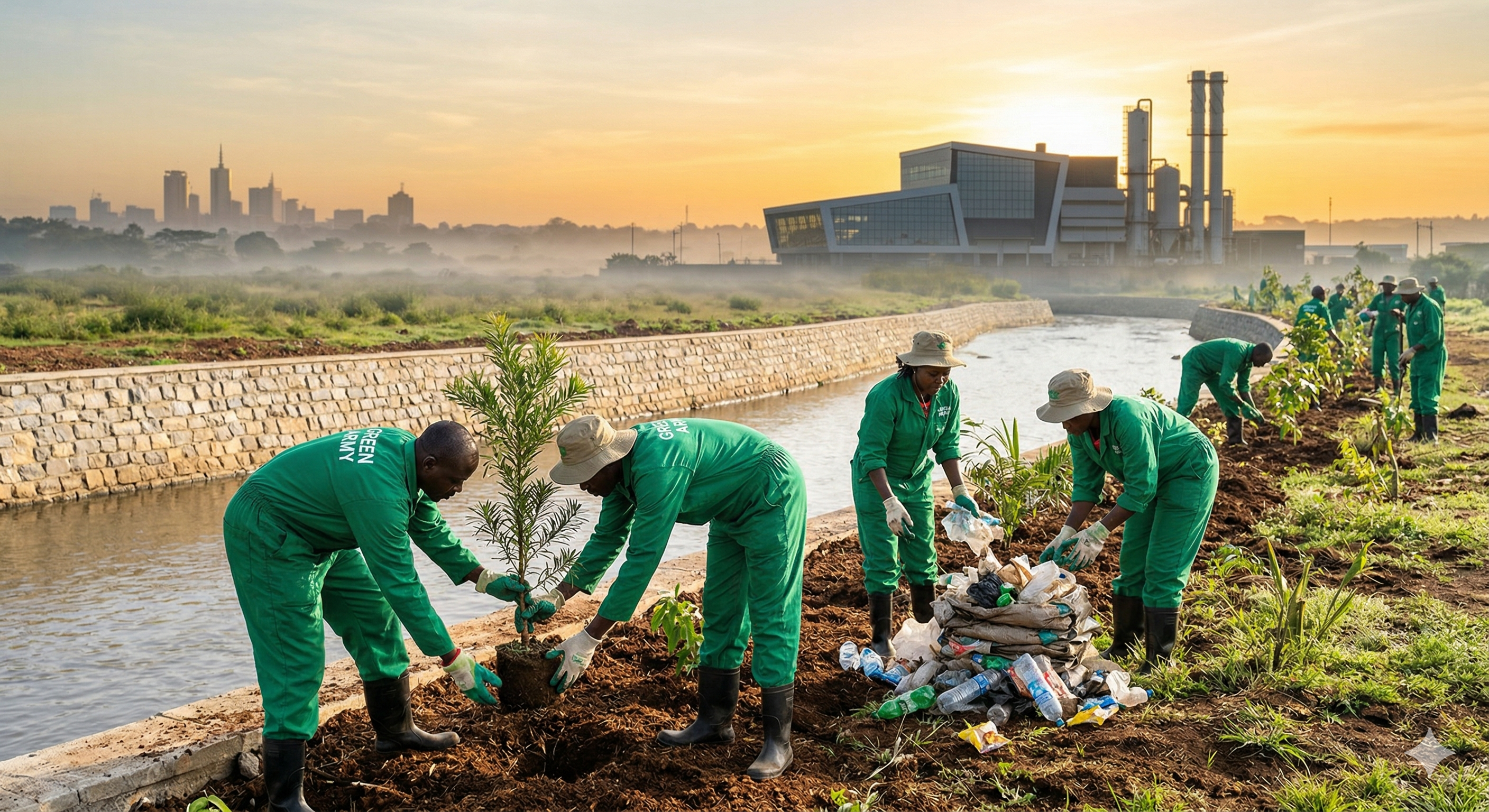
A central pillar of this new vision is the decommissioning of the notorious Dandora dumpsite. Long a source of environmental and health risks, Dandora is slated to be replaced by a modern waste-to-energy plant in Ruai that will generate between 45 and 70 megawatts of electricity. By transitioning to a circular economy, the government hopes to eliminate the plastic debris that currently chokes the city’s drains, which costs an estimated KES 4.5 billion annually in reactive mitigation.

However, the success of “Nairobi Rising” hinges on institutional reform and accountability. The plan includes the creation of a specialized Nairobi Metropolitan Police Unit to enforce zoning laws and protect reclaimed riparian land, but critics warn of the “financial hangover” left by previous interventions. For the residents of Nairobi, the stakes could not be higher; as the April 2026 waste management launch approaches, the city is betting billions that it can finally build the resilience needed to survive its own growth.

References:

Capital News Sewerage and Sanitation Take Centre Stage in Nairobi’s Sh80bn Development Plan

People Daily Ruto unveils plan for a major overhaul of Dandora dumpsite

Big 3 Africa Nairobi Waste to Energy Transformation
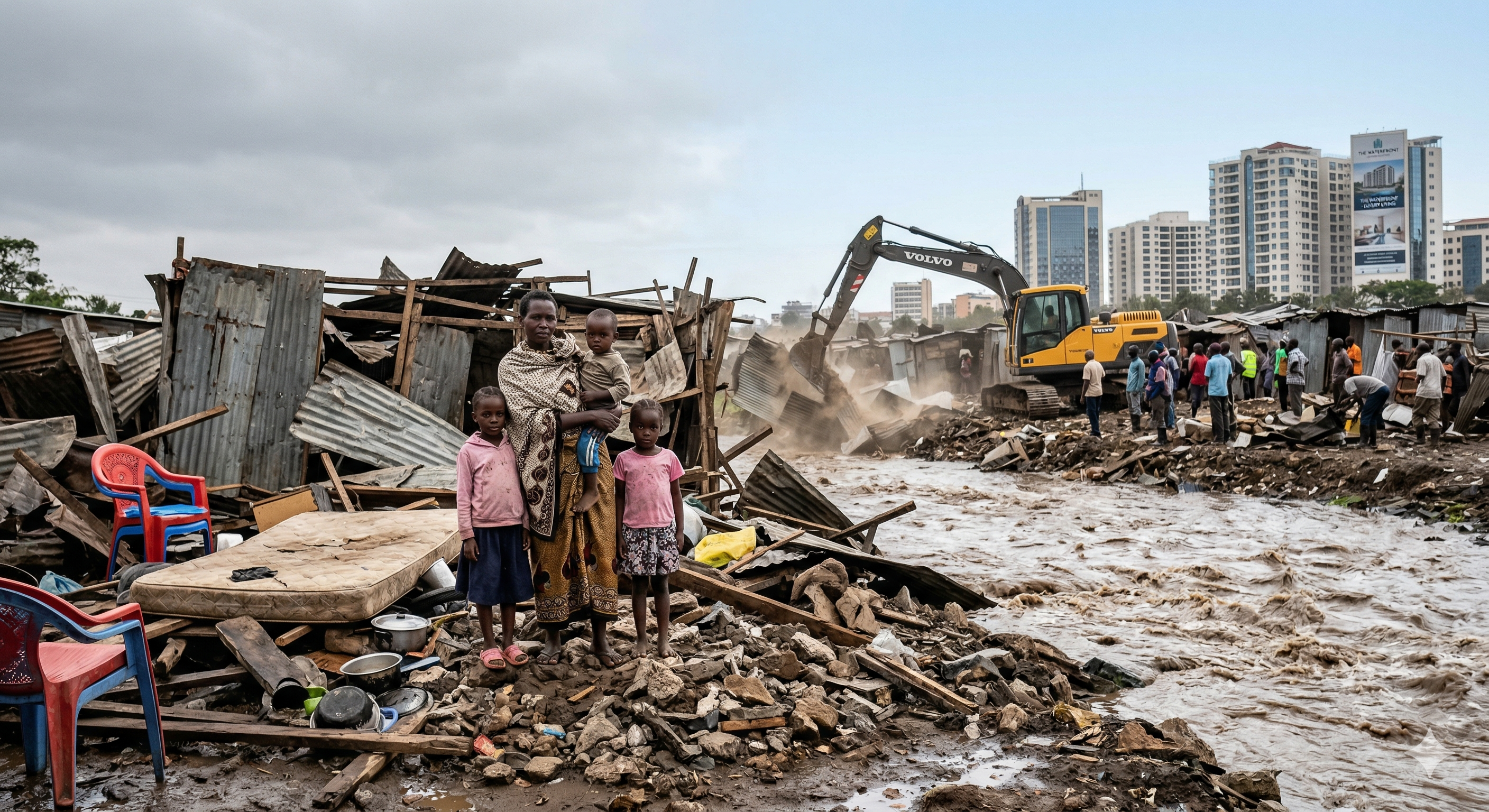
The “No Retreat” Policy—The Human Cost of Riparian Reclamation

In the wake of the March 2026 floods, Governor Johnson Sakaja issued a “no retreat” order for the demolition of illegal structures along Nairobi’s riverbanks. This aggressive reclamation strategy, aimed at restoring the city’s natural waterways, has targeted hotspots from Westlands to the downstream zones of the Nairobi River. While the government frames these actions as essential flood mitigation, the bulldozers have sparked a fierce debate over “environmental justice” and the selective enforcement of the law.

The human cost of these evictions is profound, particularly for the “twice-displaced” women of settlements like Mukuru. Many families who lost their homes to floodwaters were subsequently met with state-led demolitions, often with only 48 hours’ notice. While the government offered a one-time facilitation fee of KES 10,000 ($75), residents and advocacy groups have slammed the amount as a “grossly inadequate” pittance that fails to secure stable housing in a city where they have lived for decades.

The legal battle is now shifting to the courts, where residents of the River Bank settlement near Gikomba recently secured a stay order against further demolitions. Petitioners argue that the government’s reliance on a “blanket” 30-meter riparian buffer is scientifically untenable and discriminates against the poor while leaving high-end developments in similar zones untouched. As the Nairobi Rivers Regeneration Project pushes forward with its Sh50 billion mandate, the city must decide if “order and dignity” can be achieved without sacrificing the rights of its most vulnerable citizens.

References:

Capital News Sakaja orders demolition of illegal riverbank structures as flood mitigation works begin

Nairobi Times COURT BLOCKS DEMOLITION OF HOUSES BUILT ALONG NAIROBI RIVER RIPARIAN LAND.

HIC Evicted and Forgotten: The Gendered Consequences of Nairobi’s Riparian Evictions

The Grounded Shield—Nairobi’s Disaster Management Crisis

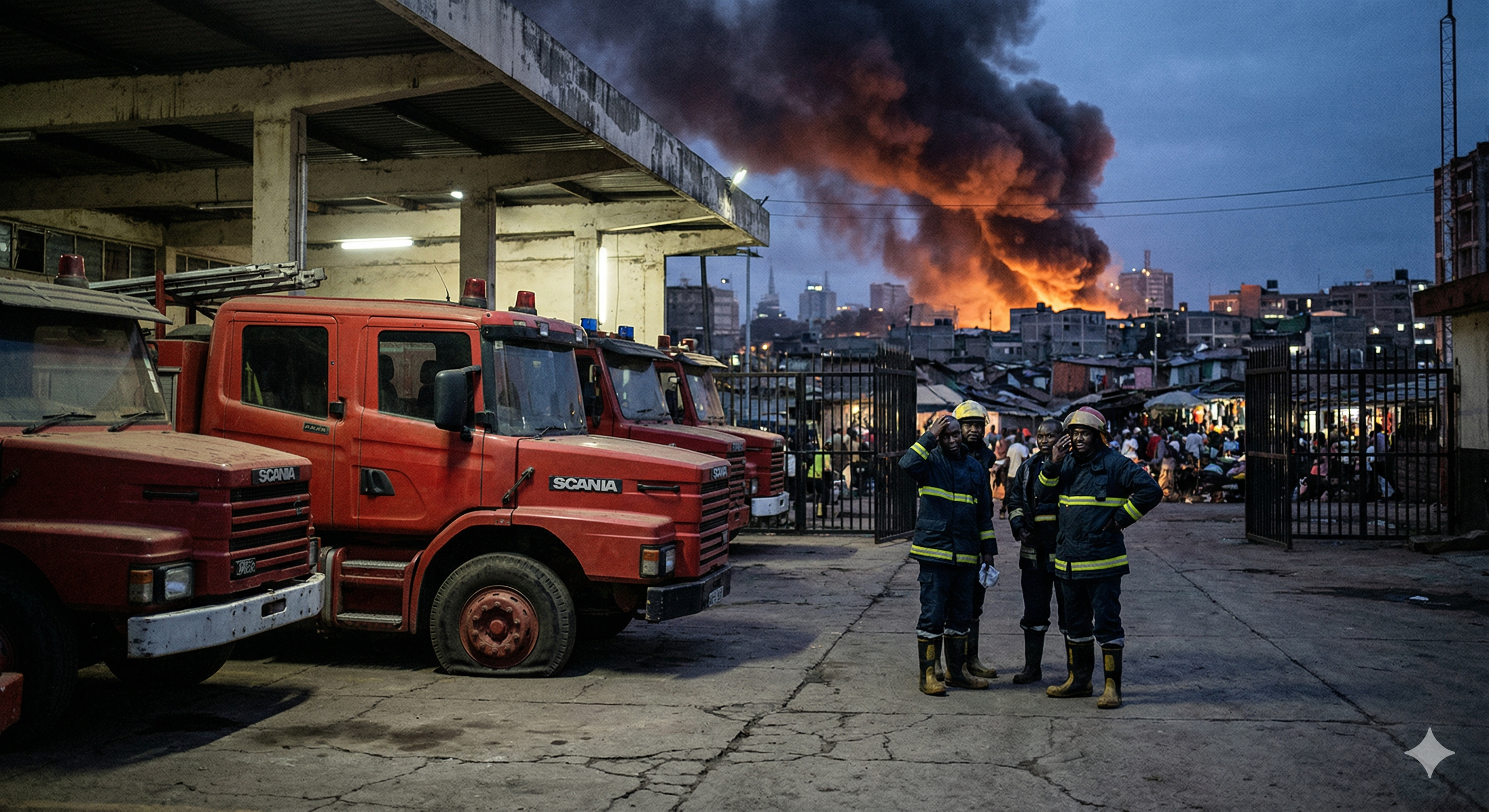
Beneath the headlines of rushing water and leaping flames lies a quieter, more systemic tragedy: the near-total collapse of Nairobi’s emergency response capacity. Despite a population exceeding 4.3 million, the city’s firefighting department was recently revealed to be in a state of terminal neglect. As of late 2024, an astounding 26 out of 31 fire engines and water tankers were grounded, often for issues as trivial as a lack of spare tires or brake components. This leaves the entire metropolis relying on just a handful of operational vehicles during its most vulnerable moments.

This capacity gap is most lethal in the city’s markets and informal settlements. In Gikomba, where the history is “written in flames,” recurrent fires have decimated the livelihoods of thousands of traders who watch their stock turn to ash while waiting for help that arrives “too late to rescue”. The problem is worsened by a non-functional hydrant system; of the 4,500 hydrants scattered across the city, only about 50 are operational, many having been destroyed during road construction or closed to prevent water theft.

The result is what experts call a “ticking time bomb” in urban governance. When a gas truck exploded in Embakasi in early 2024, killing at least three and injuring 280, it highlighted not just a failure of response, but a catastrophic failure of regulation. Despite being denied permits three times, the illegal facility continued to operate in a high-density area, proving that in Nairobi, the distance between a regulatory oversight and a mass casualty event is razor-thin.

References:

The Eastleigh Voice Nairobi’s firefighting capacity in crisis as 26 fire engines remain grounded due to delays in spare parts

Aljazeera Nairobi gas explosion: At least 3 dead, hundreds injured in Kenya’s capital

Daily Nation Sinai fire tragedy:  Death toll rises to seven

Climate Whiplash—When Infrastructure Meets Volatility

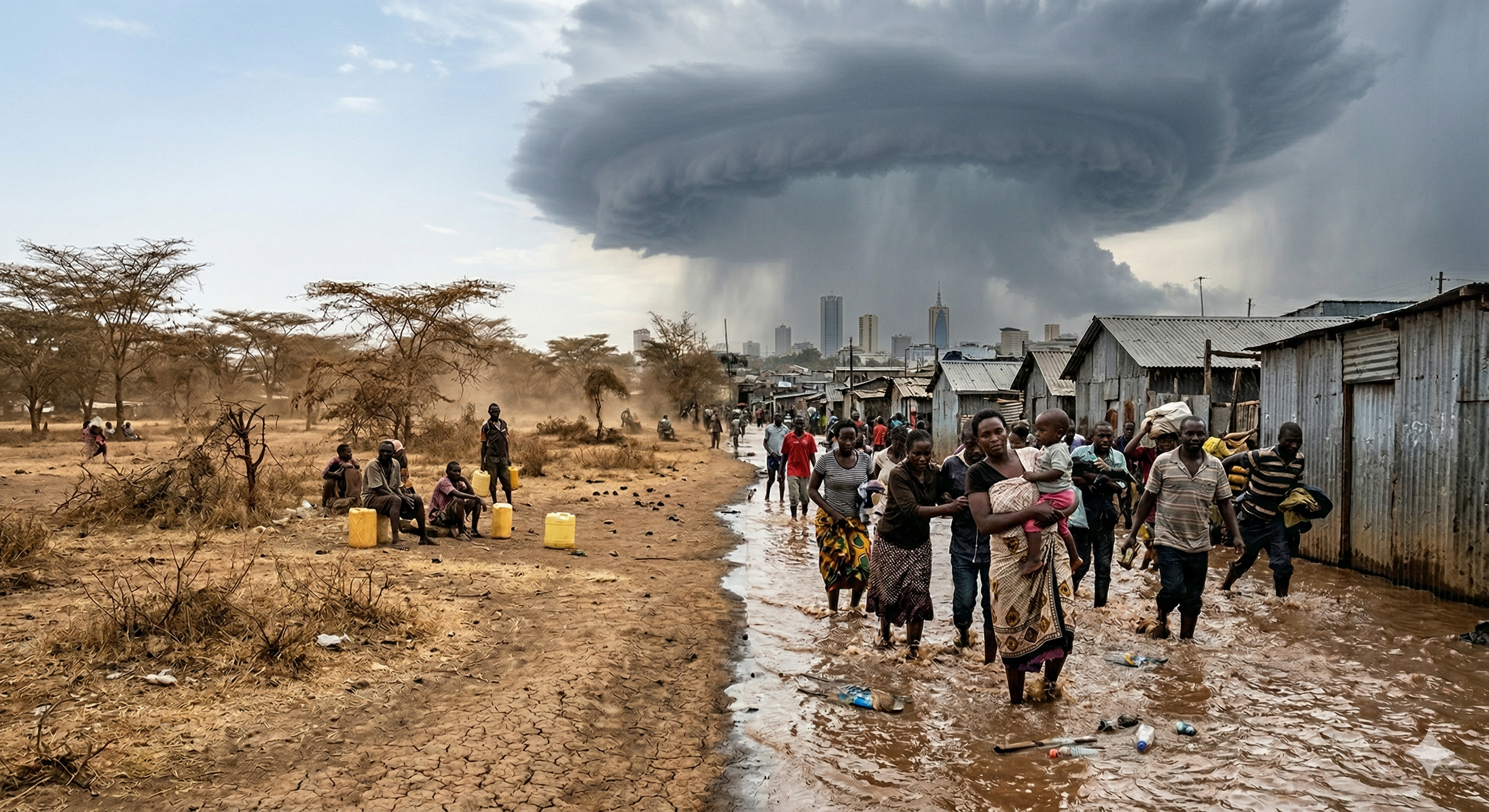
Nairobi has entered a perilous era of “climate whiplash,” where bone-dry droughts are abruptly terminated by high-intensity “long rains” that the city’s infrastructure is fundamentally unequipped to handle. Scientific assessments confirm that the climate crisis has increased the intensity of extreme rainfall in East Africa by approximately 40%. This volatility means that the “once-in-a-century” floods of the past are becoming our annual reality, yet our drainage networks remain trapped in the 20th century, designed for historical patterns that no longer exist.

The MAM (March-April-May) rains of 2024 and the recent 2026 deluges have laid bare a systemic collapse. While upscale neighborhoods like Runda face property damage and traffic paralysis, the fallout in settlements like Mathare and Mukuru is existential, with over 200,000 people displaced nationally in 2024 alone. The tragedy is compounded by a failure to translate early warnings from the Meteorological Department into proactive evacuations, leaving residents to face rising waters with zero meaningful preparation.

This infrastructure deficit creates a “water paradox”: even as floods submerge the streets, taps in major estates run dry. The intense runoff carries such high levels of silt and organic debris that treatment plants at Ngethu and Sasumua are forced to shut down, unable to process the turbid water. This cycle of flood-induced scarcity underscores the urgent need for modernized filtration and massive retention reservoirs, as the city’s reliance on aging systems makes it a victim of its own climate-altered environment.

References:

Inside Climate News Following Months of Drought, Floods in Kenya Kill More Than 40 People

Greenpeace Deadly Kenyan floods show urgent need to build climate resilience

Streamline Nairobi’s Water Paradox: Infrastructure Failure Amidst Excessive Rainfall

The Physics of Failure—Understanding Peak Discharge

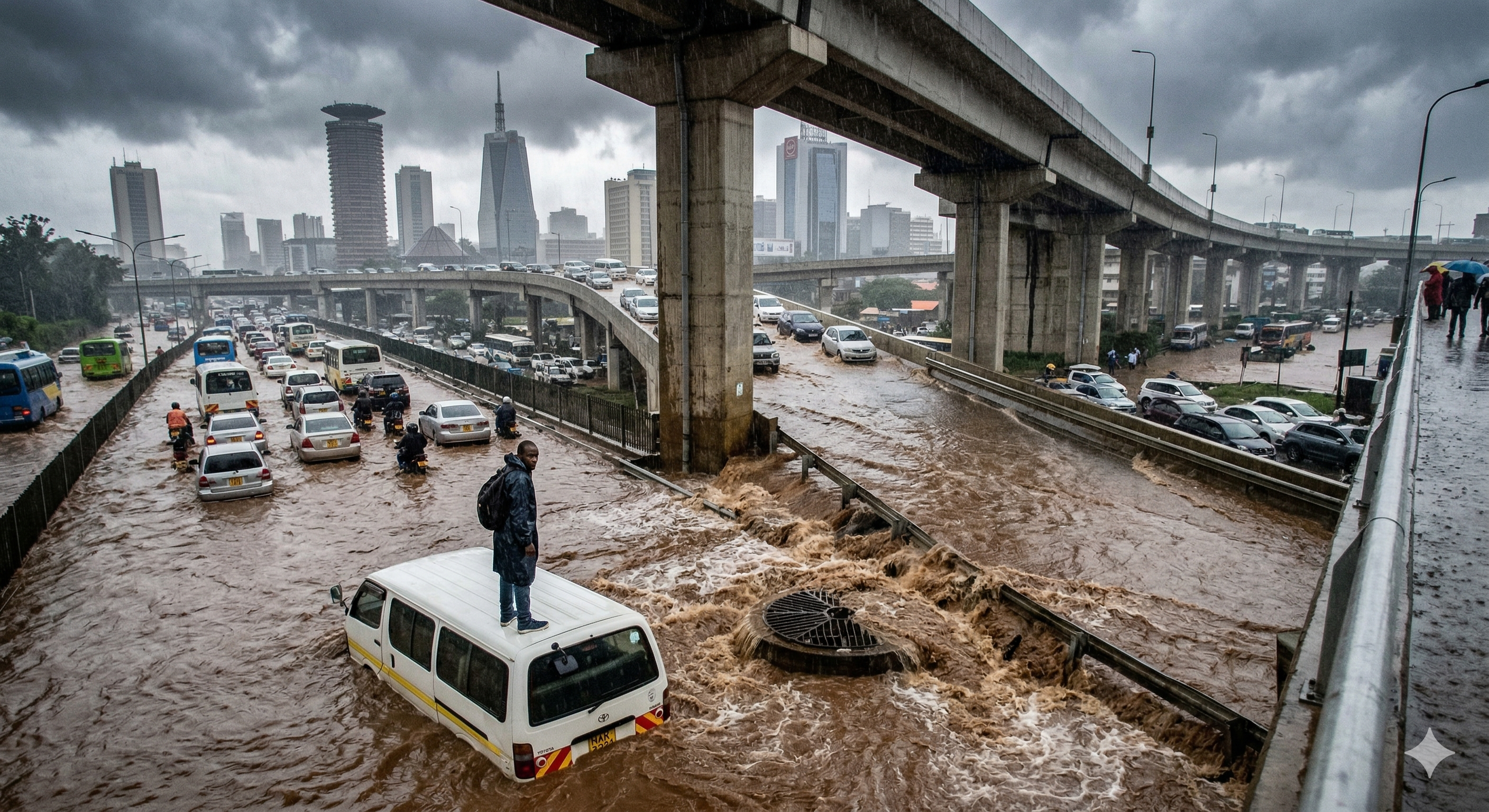
Nairobi’s drowning is not merely a matter of bad luck; it is a mathematical certainty dictated by the hydrological principle of peak discharge. Defined by the formula Q=CiA, the volume of water rushing through our streets (Q) is a direct product of rainfall intensity (i), the drainage area (A), and the runoff coefficient (C). In a natural landscape, the earth acts as a sponge, but Nairobi’s rapid transformation into a “concrete jungle” has spiked the runoff coefficient to lethal levels. When surfaces become impermeable, water that should have been absorbed is instead weaponized into destructive surface runoff.

The catastrophic flash floods of March 2026 provided a grim laboratory for this principle. Within a single 24-hour window, a staggering 112mm of rain fell on the capital—representing over 120% of the entire monthly average for March. Because the city’s expansion has prioritized high-density “non-porous” development, the runoff has nowhere to go but down, inundating low-lying informal settlements. This technical reality means that even moderate rains now generate peak flows that exceed the capacity of archaic culverts designed decades ago for a much smaller, greener city.

As the Nairobi River repeatedly bursts its banks, the “fragmented responsibility” between national and county governments ensures that these bottlenecks remain unaddressed. While the science of Q=CiA is clear, the governance of drainage maintenance is anything but, with conflicting schedules and a lack of digitized master plans. Without a fundamental shift in how we manage the city’s surface permeability, Nairobi remains a city where the next rainstorm is not just a weather event, but a predictable hydrological disaster.

References

Assessment of Flash Floods in the Streets of Nairobi A Research Paper by Wachira Silvia Wanjiru, Nairobi University

Streamline Drowning In Neglect: The Urgent Battle For Nairobi’s Drainage Systems

The Guardian Weather tracker: At least 10 dead in Nairobi after a month’s rain falls in 24 hours