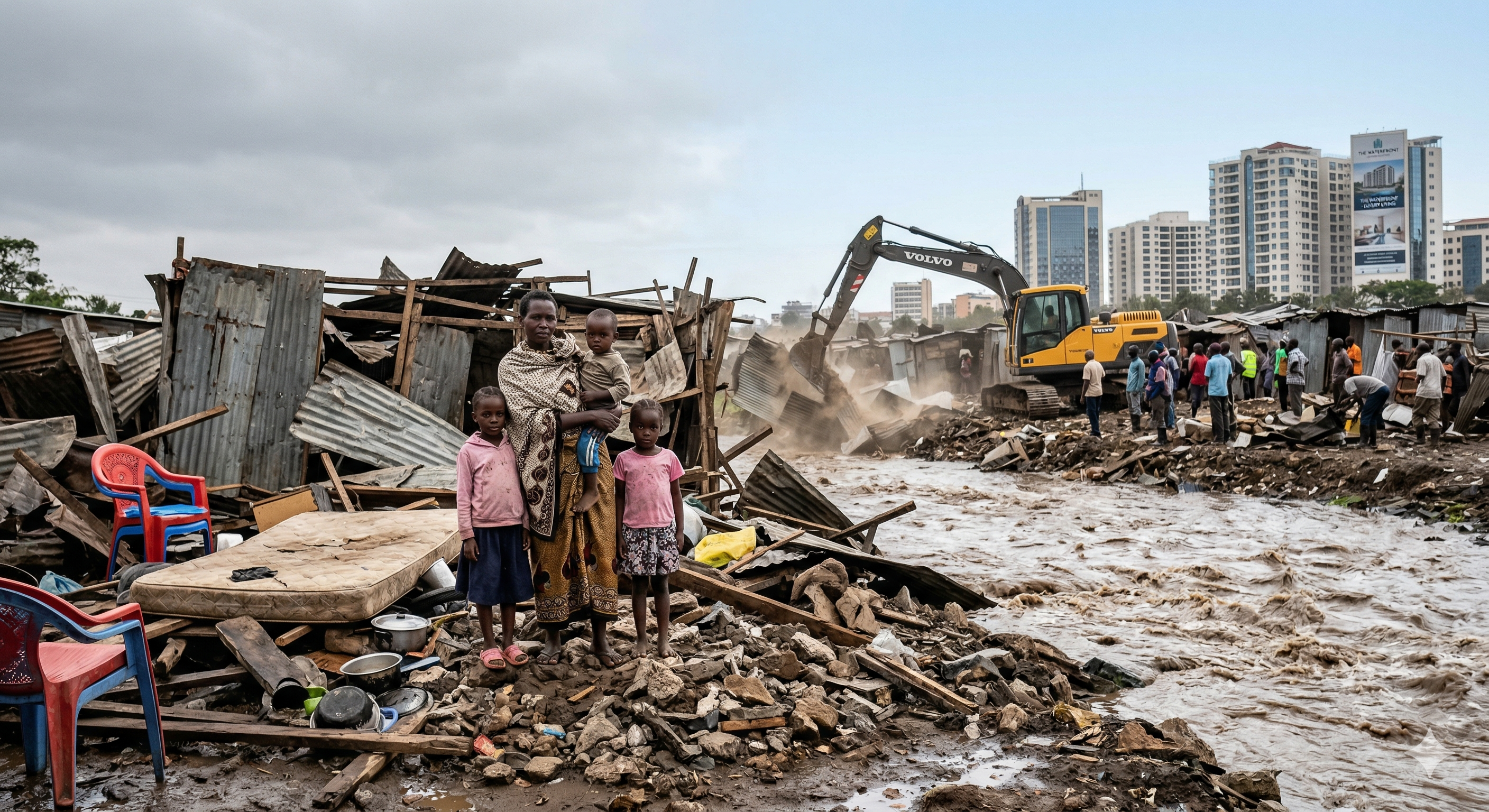
In the wake of the March 2026 floods, Governor Johnson Sakaja issued a “no retreat” order for the demolition of illegal structures along Nairobi’s riverbanks. This aggressive reclamation strategy, aimed at restoring the city’s natural waterways, has targeted hotspots from Westlands to the downstream zones of the Nairobi River. While the government frames these actions as essential flood mitigation, the bulldozers have sparked a fierce debate over “environmental justice” and the selective enforcement of the law.
The human cost of these evictions is profound, particularly for the “twice-displaced” women of settlements like Mukuru. Many families who lost their homes to floodwaters were subsequently met with state-led demolitions, often with only 48 hours’ notice. While the government offered a one-time facilitation fee of KES 10,000 ($75), residents and advocacy groups have slammed the amount as a “grossly inadequate” pittance that fails to secure stable housing in a city where they have lived for decades.
The legal battle is now shifting to the courts, where residents of the River Bank settlement near Gikomba recently secured a stay order against further demolitions. Petitioners argue that the government’s reliance on a “blanket” 30-meter riparian buffer is scientifically untenable and discriminates against the poor while leaving high-end developments in similar zones untouched. As the Nairobi Rivers Regeneration Project pushes forward with its Sh50 billion mandate, the city must decide if “order and dignity” can be achieved without sacrificing the rights of its most vulnerable citizens.
References:
Capital News Sakaja orders demolition of illegal riverbank structures as flood mitigation works begin
Nairobi Times COURT BLOCKS DEMOLITION OF HOUSES BUILT ALONG NAIROBI RIVER RIPARIAN LAND.
HIC Evicted and Forgotten: The Gendered Consequences of Nairobi’s Riparian Evictions
Long before policymakers coined terms like “Extended Producer Responsibility” or “circular economy,” Kenya’s informal waste pickers were already living that reality — only without recognition, protection, or pay equity. Every dawn, thousands of men and women descend upon dumpsites from Dandora to Mombasa, armed with hooks, sacks, and unmatched resilience. They are the invisible workforce behind the country’s fragile recycling system, recovering up to 80 percent of all plastics that ever get recycled. Yet, despite this colossal contribution, their average earnings remain trapped between KSh 30–50 per kilogram, with no health insurance, no stable contracts, and little policy voice. It’s a moral contradiction and an economic inefficiency rolled into one: the very people enabling Kenya’s environmental survival are surviving on its margins. The system is built on their sweat, but not their dignity.
The irony deepens when you follow the plastic’s trail. Once the pickers sell to small middlemen, the material ascends through aggregation points — like Mr. Green Africa’s sorting hubs — and ends up feeding multinational supply chains that boast of “sustainable sourcing.” At every stage, the profit margins grow — except for the people who initiate the cycle. Yet without these workers, Kenya’s plastic waste problem would quadruple overnight. Their local intelligence — knowing which streets yield high-value PET, which neighborhoods mix organics with plastics — is the kind of human data even the best AI sorting systems can’t replicate. In cities like Nairobi, where waste management systems are perpetually underfunded, informal networks fill the void that government institutions have left wide open. The question isn’t whether they matter; it’s whether we’ll ever pay them like they do.
To unlock Kenya’s circular future, policymakers must stop treating informal pickers as peripheral players and start embedding them in the national waste economy. That means formal recognition, access to microfinance, integration into municipal contracts, and training to adapt to upcoming high-tech recycling plants. When hybrid models like enzymatic recycling and pyrolysis eventually take root, the quality of feedstock — clean, segregated plastics — will be the single biggest success factor. And who’s best positioned to ensure that? The same waste pickers who’ve been sorting Kenya’s chaos by hand for decades. Investing in their safety, tools, and professionalization isn’t charity — it’s infrastructure. The day we place their expertise at the center of policy, Kenya’s recycling revolution will finally have the spine it needs.
References:
Africa News Nairobi-based Company Turns Plastic Waste into Eco-Friendly Bricks
The Standard Program to address welfare of Kenyan waste pickers starts
Daily Nation Kenya picked to lead Africa’s plastic waste revolution
WWF Lifetime cost of plastic 10 times higher for low-income countries than rich ones, revealing crippling inequities in plastics value chain
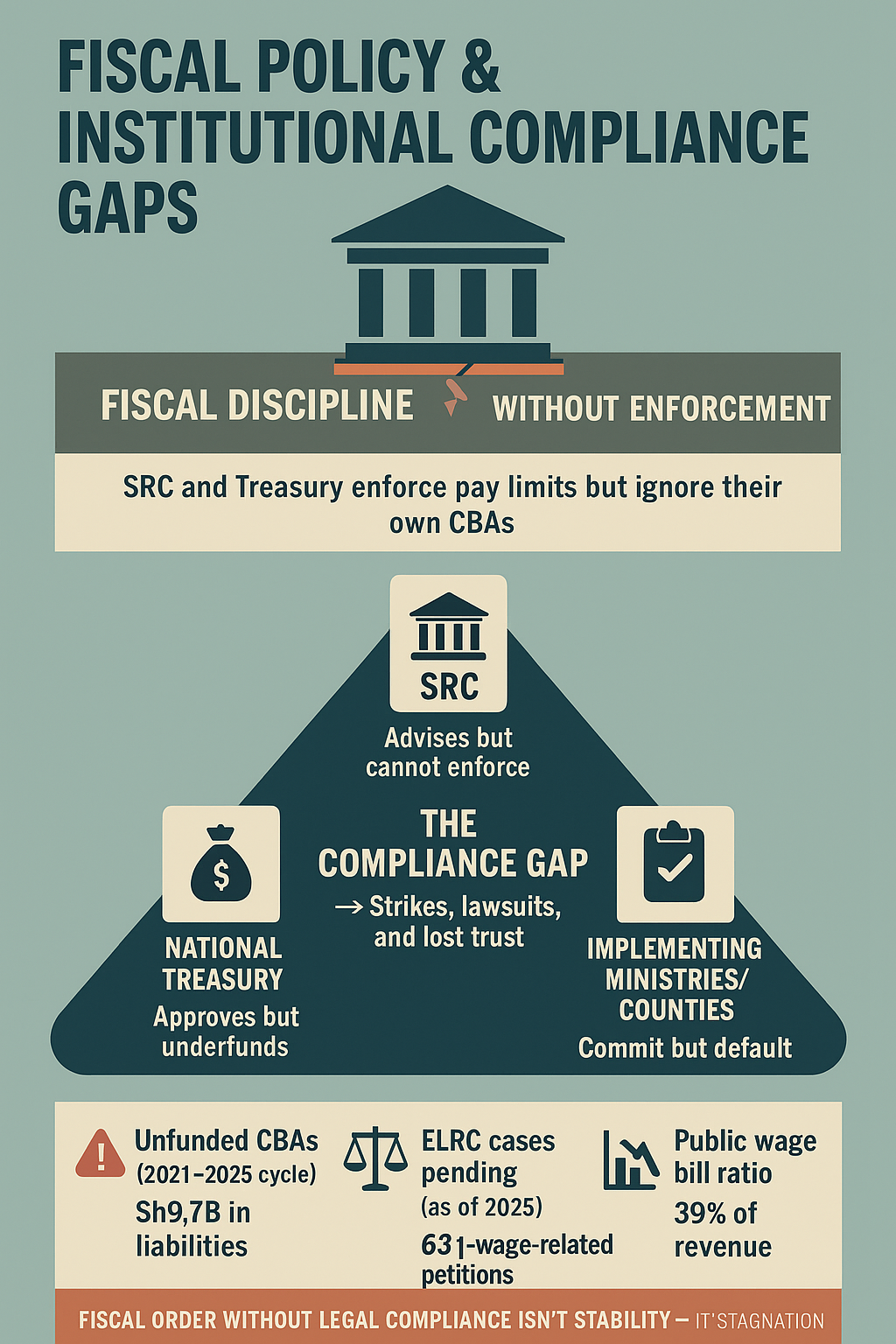
At the heart of Kenya’s endless labor unrest lies a contradiction the state has refused to confront: it preaches fiscal discipline while institutionalizing non-compliance. The Salaries and Remuneration Commission (SRC) — the body constitutionally mandated to manage public wage policy — has become a paradox of design: all authority, no enforcement. It issues guidelines that ministries and counties cite when cornered but ignore when expedient. Its circulars on pay harmonization and job evaluation are routinely undermined by politically negotiated allowances, ad hoc promotions, and extra-legal CBAs signed under pressure. The result is a regulatory void where fiscal control is performative and accountability optional. SRC’s power is largely symbolic — a watchdog muzzled by law and outpaced by politics — while the wage bill continues to balloon, not because of policy ignorance, but because institutions have learned how to outmaneuver oversight.
The National Treasury sits at the center of this dysfunction, weaponizing scarcity while mismanaging prioritization. Its annual insistence on fiscal prudence rings hollow against a record of delayed disbursements, unpaid CBA arrears, and selective funding of politically strategic programs. Treasury’s budgeting cycle has effectively become a tool of containment — a means to manage unrest rather than reform systems. When doctors, teachers, or civil servants strike, it is rarely due to wage greed; it is because their legally negotiated agreements remain unfunded despite formal approval. The Treasury’s pattern of signing off on CBAs without allocating corresponding funds has turned the entire labor framework into a credibility trap. Each unhonored agreement erodes faith not just in the fiscal system, but in the idea that government commitments are binding at all. This chronic underfunding blurs the line between austerity and abdication — and in doing so, transforms fiscal caution into a breeding ground for revolt.
The compliance gap that emerges from this broken triangle — SRC, Treasury, and the implementing ministries or counties — is not administrative; it is existential. Each actor claims procedural innocence while collectively ensuring systemic failure. Ministries invoke budget ceilings; counties plead disbursement delays; SRC blames its limited mandate — and the Labor Ministry, the one body meant to arbitrate, has devolved into a crisis registrar. This institutional buck-passing is now a defining feature of Kenya’s governance culture. It explains why industrial action has become cyclical, why courts are perpetually mediating CBAs, and why public trust continues to collapse. Investors see it too: the volatility of Kenya’s labor market is not caused by worker militancy, but by the state’s refusal to honor its own laws. The strikes are symptoms — the disease is compliance failure dressed up as fiscal discipline. Until Kenya reforms the machinery of accountability between its fiscal and labor institutions, economic stability will remain an illusion built on broken promises.
References:
Daily Nation How bloated wage bills are choking counties and stalling development
Watamu is no longer just a coastal getaway—it’s a case study in what community-powered, climate-smart tourism can look like for Africa. As Kenya’s tourism sector projects a historic KSh1.2 trillion contribution in 2025, Watamu stands out not only for its natural beauty, but for how it’s transforming development from the ground up. Local associations, women’s groups, and marine conservationists are leading the charge—turning beach cleanups, turtle protection, and plastic recycling into viable economic engines. This is not your typical resort town: here, environmental sustainability and economic inclusion go hand in hand. And for Kenyans living abroad, it offers a deeply meaningful opportunity to participate in rebuilding an economy that reflects both cultural pride and ecological urgency.
A Report by Taylor & Jordan Travel
Watamu is tapping into the global shift toward regenerative tourism—experiences that give back, not just take. Whether it’s community-run mangrove boardwalks, youth-led heritage tours, or conservation-linked seafood ventures, the town offers immersive, ethical travel that aligns with the values of many in the diaspora. Tourists are not just spectators here—they are contributors to a system that protects biodiversity and empowers local livelihoods. As the region attracts new interest for sustainable investments, Kenya’s diaspora is uniquely positioned to shape its trajectory: by supporting homegrown enterprises, backing eco-innovation, or simply choosing to travel with intention.
This is the moment for the diaspora to come home differently. Not just to visit—but to invest, collaborate, and amplify what Watamu is building. It’s a model that doesn’t just respond to climate change—it adapts and thrives through it. With marine spatial planning underway and local governance strengthening, the blueprint is clear: Kenya’s coastal future can be green, inclusive, and profitable. But it needs champions—especially those abroad who understand that tourism isn’t just about where you go, but what you leave behind. Watamu is not asking for charity—it’s offering a partnership in purpose.
References:
Hospitality Net Kenya’s Travel & Tourism Sector Set to Inject a Record KSh1.2TN in 2025
UNEP In beach town’s battle against plastic, echoes of a global crisis
KBC Tour Operators anticipate increased in arrivals
Oceanic Society How the Circular Economy Protects Nature and Tourism Business in Coastal Kenya
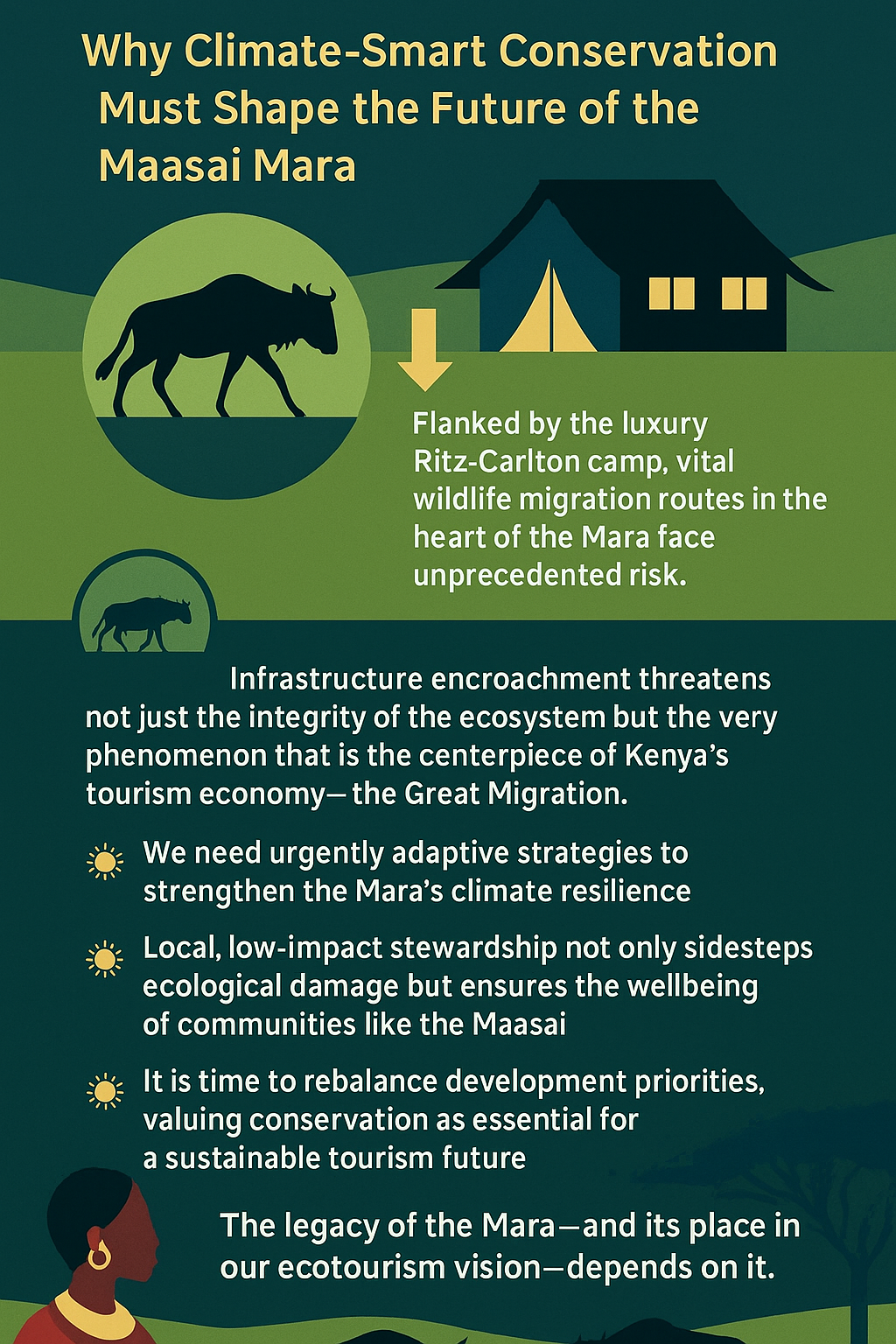
The Maasai Mara, one of the last remaining wild frontiers of Africa’s Great Migration and a cornerstone of Kenya’s ecotourism economy, now faces one of the gravest threats in its recent history—not from drought, poaching, or climate change alone, but from unchecked commercial expansion. A controversial plan to construct a high-end hotel complex and convention centre within the fragile Pardamat Conservation Area has triggered fierce opposition from environmental experts, conservancy leaders, tourism stakeholders, and sections of the local Maasai community. The development, backed by county government actors and private investors, was initially celebrated as a boost to job creation and conference tourism. But critics warn it could irreversibly damage the very ecosystem that draws visitors—and revenue—to the region.
At the heart of the concern is the ecological fragility of the Pardamat area, a critical corridor for wildebeest, elephants, and other migratory species. The proposed construction site borders sensitive wildlife routes and overlaps with communal land managed under an innovative conservation model that merges livestock grazing with wildlife protection. Experts argue that the scale and permanence of such infrastructure threaten to fragment habitat, displace species, and compromise the authenticity of the Mara’s wilderness appeal. Already, irregular land sales, fencing, and proliferation of unregulated camps have altered key migratory paths—choking the ecosystem and undermining decades of community-led conservation gains.
What the Mara needs is not another luxury venue, but a decisive pivot toward climate-smart, community-anchored ecotourism. This means planning developments in harmony with nature, prioritizing low-impact, mobile tourism models, and bolstering scientific land-use policies that preserve migratory corridors and biodiversity integrity. Kenya’s international tourism reputation—and its ability to withstand climate volatility—depends on how well we defend and innovate around natural heritage sites like the Mara. The future must be shaped not by profit margins alone, but by policies rooted in ecological wisdom, community ownership, and a long-term vision for a resilient, inclusive conservation economy.
References:
Spa Opportunities Marriott to open luxury safari camps in Kenya under JW Marriott and Ritz-Carlton brands, with architecture by LW Design
The Star Narok county defends Ritz-Carlton Safari Camp amid conservation criticism
The Standard County contests claims that new safari camp is obstructing wildlife
Kenya’s 2025 pesticide ban is more than a policy shift—it’s an overdue confrontation with dangerous agrochemical practices that have long gone unchecked. At the heart of the crackdown is Mancozeb, a fungicide so entrenched in Kenyan agriculture that it’s sprayed like water on tomatoes, potatoes, and maize. Yet this widely used chemical breaks down into ethylene thiourea (ETU)—a probable human carcinogen linked to thyroid harm and reproductive toxicity. Mancozeb has already been banned across the European Union and flagged by multiple global health authorities, but until now, it continued to flow into Kenyan markets with barely a check. Now, alongside Mancozeb, Kenya has also moved to restrict or suspend other hazardous products including chlorpyrifos, acephate, glyphosate, and dimethoate—compounds associated with cancer risks, neurotoxicity, endocrine disruption, and acute poisoning in both humans and animals. In withdrawing 77 toxic products and tightening rules on 202 more, the government is finally rejecting the toxic trade imbalance that treats African countries as chemical dumping grounds. The new policy aligns Kenyan regulation with international best practice: no pesticide can be registered here unless it’s also legal in its country of origin and in developed economies like the EU, USA, Canada, or Australia. It’s a turning point—but not without blowback.
A Report by K24TV
For years, Mancozeb symbolized Kenya’s regulatory inertia: cheap, accessible, and unchallenged despite the mounting science against it. Farmers, often unaware of its dangers, sprayed it without masks or gloves, storing the residues in their homes, their soil, and their food. Chlorpyrifos, a widely used insecticide linked to developmental harm in children, and glyphosate, a herbicide under global scrutiny for carcinogenicity, have followed similar trajectories—popular with farmers but flagged by scientists and health agencies. Now, the state faces a high-stakes transition. Smallholders reliant on these chemicals are being urged toward Integrated Pest Management (IPM) and agroecological alternatives. Yet less than 10% of Kenyan farmers use biopesticides, and most lack training, equipment, or trust in new inputs. The Pest Control Products Board, emboldened by fresh legislation, is finally flexing its oversight powers. But enforcement remains patchy, and counterfeit products exploit the regulatory vacuum. Mancozeb isn’t just a pesticide—it’s a case study in how economic expediency once overrode health and environmental responsibility. That era, Kenya now claims, is ending.
Timing is crucial. The EU is cracking down on residue limits. Kenya’s vegetable exports—once worth KSh 100 billion—have already taken a hit. If the country wants to stay competitive and credible, aligning with global safety standards is not optional. Mancozeb’s fall is both symbolic and strategic: it’s a warning to other harmful substances still in circulation—like profenofos, carbendazim, and triazophos—and a test of whether Kenya can enforce its own reform. This is where political will must hold—beyond press briefings and regulatory memos. Farmers need practical support. Consumers need transparency. And regulators must resist the pressure of well-funded pesticide lobbies looking to reverse course. Kenya has declared its direction. Now the country must walk it—with clarity, speed, and resolve—before the next generation pays the price in poisoned soil, sickened bodies, and lost trade.
References:
Trade World News Kenya Bans Import of 50 Pesticide Brands for Safer Farming
The Standard State cracks down on harmful pesticides, bans 77 products
The Star Civil society demand full disclosure of banned pesticides, calls for safer agricultural reforms
The Star 77 pesticides banned in Kenya as 202 others restricted – CS Kagwe
Kenya News Agency State urged to make to make public list of banned pesticides
Kenyans.co.ke Kenya Bans Use of Pesticides Not Approved in Europe, USA, Canada & Australia
A shocking new report has just been released, sending alarm bells ringing across Kenya. Environmental activists are urgently warning that many children’s toys currently on sale are riddled with cancer-causing chemicals, most notably phthalates, according to the groundbreaking ‘Dangerous Fun: A Price of Play’ study. This investigation, conducted by CEJAD, ARNIKA, and IPEN, meticulously analyzed a range of popular PVC plastic toys – from dolls and inflatable playthings to teething rings and even a Spiderman costume – and the results are deeply disturbing. Every single toy tested contained phthalates, insidious chemicals used to soften plastic, alongside a cocktail of other hazardous substances including UV stabilizers, chlorinated paraffin, and toxic heavy metals. These aren’t just trace amounts; the inflatable Spiderman suit was found to be saturated with these dangerous additives at levels far exceeding safe limits. This revelation demands immediate attention from every parent and caregiver in Kenya: the very items we entrust to our children for joy and development may be silently poisoning them.
A Report by Curiosity Chronicles
The medical implications of these findings are profound and deeply concerning. Phthalates are not inert substances; they are known endocrine disruptors, meaning they interfere with the delicate hormonal systems that govern growth, development, reproduction, and even the immune system. Exposure to these chemicals, particularly during the critical developmental stages of childhood, has been linked in numerous scientific studies to a terrifying array of health problems. These include an increased risk of certain cancers, harm to children’s reproductive development, impaired immune system function, and potential damage to the liver and kidneys. Young children are especially vulnerable as they often mouth toys, leading to direct ingestion of these toxins. Furthermore, exposure can occur through skin contact and inhalation of chemical vapors released from the plastic. The fact that all tested toys contained phthalates underscores a widespread and systemic problem, demanding urgent action to protect the health and future of Kenyan children who are unknowingly being exposed to these hazardous substances through their everyday playthings.
This is not a matter to be taken lightly. The time for complacency is over. Parents must be empowered with knowledge to make informed choices, and this report serves as a stark wake-up call. We urgently need comprehensive public awareness campaigns to educate families about the dangers lurking in these seemingly harmless toys and how to identify safer alternatives. Simultaneously, policymakers and the Kenya Bureau of Standards must act decisively to strengthen regulations on the chemical content of children’s products, ensuring stricter limits and thorough enforcement to prevent these toxic toys from reaching our markets. Manufacturers and retailers must also be held accountable for the safety of their products, prioritizing the health of children over profit. The ‘Dangerous Fun’ report has laid bare a serious threat to the well-being of Kenya’s youngest citizens. We must collectively demand and enact immediate changes to ensure that play remains a source of joy and development, not a pathway to potential life-threatening illnesses. The health of our children is non-negotiable.
References:
Jijuze Children’s Health at Risk: The Impact of Endocrine-Disrupting Chemicals in Personal Care Products
The Star Your child’s toys may contain cancer-causing chemicals, activists warn
The impending transformation of the Rironi – Mau Summit road is generating considerable excitement across Kenya and the East African region, promising a significant leap forward in connectivity and economic prosperity. This ambitious infrastructure project, upgrading the existing congested two-lane highway into a modern four-lane dual carriageway spanning approximately 175 kilometers, is not just about easing traffic; it’s a strategic move to solidify Kenya’s position as a pivotal trade and transport hub . As a crucial segment of the Northern Corridor, this road links the bustling port of Mombasa to landlocked neighbors like Uganda, Rwanda, Burundi, South Sudan, and the Democratic Republic of Congo, making its upgrade a matter of regional economic significance . For the millions who rely on this route, the promise of drastically reduced travel times, potentially halving the journey between major centers like Nakuru and Nairobi, offers not just convenience but also increased productivity and access to opportunities . This development follows a somewhat turbulent path, with an initial agreement with a French consortium being cancelled before the project was recently awarded to a Chinese firm, signaling a shifting landscape in Kenya’s infrastructure partnerships . The groundbreaking, slated for June 2025 with a targeted completion by June 2027, marks a renewed commitment to tackling the persistent congestion that has long plagued this vital artery.
A Report by Citizen Digital
The ripple effects of this enhanced connectivity are expected to extend far beyond smoother commutes, significantly boosting Kenya’s tourism and manufacturing sectors. Western Kenya boasts an array of natural wonders, from the flamingo-filled Lake Nakuru National Park to the vast plains of the Maasai Mara, attractions that will become more accessible with reduced travel times . This improved access is anticipated to draw more domestic and international tourists, injecting vital revenue into local economies and creating employment opportunities in the hospitality and service industries . Simultaneously, the manufacturing sector stands to gain immensely from a more efficient transportation network . The seamless movement of raw materials and finished goods is crucial for industrial growth, and the upgraded Rironi – Mau Summit road promises to streamline supply chains, lower logistics costs, and enhance the competitiveness of Kenyan-made products . This project aligns with the government’s broader vision for infrastructure-led economic growth, recognizing that efficient transport links are fundamental to unlocking the full potential of various sectors and fostering both national and regional trade . The anticipated creation of approximately 1,500 jobs during the construction phase and another 200 during operation further underscores the project’s potential to empower local communities.
Beyond the immediate economic benefits, the Rironi – Mau Summit road upgrade is poised to deliver significant social advantages, improving the quality of life for countless Kenyans. Enhanced connectivity translates to better access to essential services such as healthcare and education, particularly for those living in the regions along the corridor . For instance, the Rongai Level 4 Hospital in Nakuru County is expected to provide more timely care to accident victims due to its proximity to the upgraded highway . Moreover, improved road infrastructure in rural areas has been shown to positively impact household well-being and facilitate access to markets for farmers and small businesses, potentially increasing incomes and reducing social isolation . While the project has undergone environmental and social impact assessments, ensuring mitigation measures are in place will be crucial to address potential negative impacts such as land acquisition and disruption to local livelihoods . Overall, the Rironi – Mau Summit road project represents a transformative undertaking with the potential to catalyze economic growth, enhance regional integration, and deliver tangible improvements to the lives of Kenyans by providing safer, faster, and more reliable transportation .
References:
Nation Construction of Rironi-Mau summit four lane road begins in June
Nation Ruto: Dualling of Nairobi-Nakuru highway to start next year
Nation Murkomen: We will build Rironi-Mau Summit highway without toll fees, debt
The Eastleigh Voice Rironi-Mau Summit road upgrade to begin in June, completion set for 2027
Kenyans.co.ke KeNHA to Expand Nairobi-Nakuru-Mau Summit Highway to Four Lanes, Completion Set for 2027
KBC Rironi-Mau Summit Road expansion to begin in June after Cabinet nod
Lake Nakuru National Park, a renowned Kenyan wildlife sanctuary and UNESCO World Heritage Site, is facing a multifaceted crisis. While celebrated for its breathtaking scenery and diverse wildlife, the park is grappling with encroachment, illegal fishing, and escalating sociopolitical and moral conflicts. These issues are intertwined with the adverse effects of pollution, primarily from untreated sewage and industrial waste discharged into the lake from Nakuru town. This pollution not only contaminates the water and renders the fish unsafe for human consumption but also disrupts the delicate balance of the ecosystem, threatening the survival of various species and the livelihoods of surrounding communities.
A Report by Nakuru Today
The presence of fish in Lake Nakuru, once a predominantly saline lake, adds another layer of complexity to this crisis. The introduction of fish, primarily tilapia, can be traced back to an accidental spill from a fish farm uphill in the 1960s. This incident, coupled with the rising water levels that began in 2010, transformed the lake’s environment, making it more habitable for freshwater fish. The rising waters also submerged riparian land, displacing communities and intensifying human-wildlife conflicts. As a result, many residents turned to fishing as a source of livelihood, leading to a surge in illegal fishing activities despite the ban and health risks associated with consuming contaminated fish.
This situation has given rise to a clash between conservation efforts and the socioeconomic needs of local communities. While the Kenya Wildlife Service (KWS) enforces regulations against fishing and encroachment, impoverished communities view the lake as a vital resource for survival. This tension is further exacerbated by allegations of brutality and abuse of power by KWS officers against individuals caught fishing . Addressing this crisis requires a comprehensive approach that prioritizes pollution control as a means to restore the lake’s ecosystem and ensure the safety of the fish. This would pave the way for regulated fishing activities that benefit local communities while upholding conservation goals. Furthermore, fostering dialogue and collaboration between KWS and the community, ensuring ethical conduct within KWS, and promoting alternative livelihood opportunities are crucial steps towards achieving a sustainable and just solution.
Mtaa Wangu Nakuru X Space discussion reveals deeper issues in Lake Nakuru fishing menace
Kenya News Agency Uncertain future for wildlife and native plant species at Lake Nakuru National Park as invasive plant species wipe out grasslands and strangle natural fauna
Radio Baraza The Threat to Nakuru’s Green Belt: Human Encroachment Endangers a Vital Ecosystem
Many people often prefer mineral water rather than tapped water, boiled water or any other type of drinking water. There is often the misconception that mineral water is safer in terms of hygienic standards. How true is this? In as much as bottled water has many pros, it has a number of cons as well. These limitations have effects on the environment as well as the health of an individual. The hazards arise from the large number of plastics manufactured in order to package the mineral water, which is detrimental to both the consumer and the surroundings. Bottled water poses a number of hazards to the environment and the end user.
How does bottled water affect the environment? Due to the sheer number of plastic bottles being manufactured annually, the energy required to manufacture and transport these bottles to the market severely drains fossil fuels. The production of plastics is usually unregulated and therefore causing strain to the environment. Also, plastic is non-biodegradable and therefore it is not advisable to dispose plastics. It has been proposed that plastics should be washed and reused or recycled in the production of bottles for mineral water. This compromises the quality of the water due to the fact that phthalate leaches its way into the water as the bottle gets older. Phthalate is a harmful chemical used in the production of plastics that is known to contaminate contents of a product packaged in plastic; if it has been recycled a number of times. This chemical has been known to cause damage to the liver and kidneys. We are also not sure about the hygienic standards of the bottled water. This is because most of them are bottled at the source and therefore the water bodies are not enclosed hence cannot inhibit the public for using or tampering with the water, hence contamination of the water.
In a nutshell, bottled water is not the best option. It strains the environment as well as causes environmental pollution among other health hazards. The best alternative is tap water as it saves on resources since there is no need of packaging as well as reduces the hazards caused by bottled water. The Kenyan authorities should plan to provide safe drinking water for the citizens in order for them to develop trust in tap water. The reason why many people in the country do not consume tap water is because it is mostly not entirely treated and hence not safe enough for consumption. The government should therefore plan to come up with effective and functioning water treating plants in order to provide clean and safe water for Kenyans.


 Jijuze