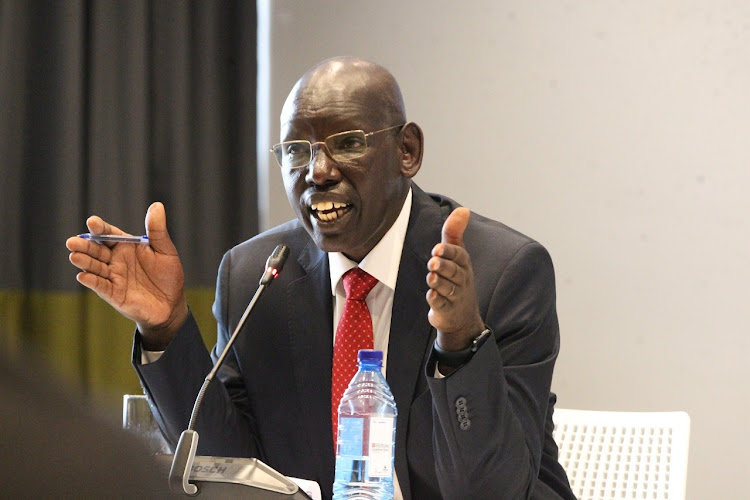
Importance of Stakeholder Engagement in Kenya’s CBC Rollout

As the countdown to January 6, 2025, continues, the challenges of transitioning Grade 9 learners under Kenya’s Competency-Based Curriculum (CBC) remain pressing but not insurmountable. Choosing this moment to abandon the CBC would only deepen the disruption experienced throughout the education sector. Instead, it is crucial to address the systemic gaps that currently hinder the curriculum’s success. Paramount to these efforts is the need for timely and transparent disbursement of the KSh 15.3 billion allocated for infrastructure and resources. Schools must complete critical projects to accommodate the new cohort of learners adequately. Simultaneously, a renewed focus on teacher training is vital; educators must be equipped with the skills necessary to deliver the CBC effectively. Without this commitment to human capital development, the curriculum risks becoming little more than policy rhetoric.

KTN Report

Parents and communities play a pivotal role in this transition, serving as essential stakeholders in the education process. It is crucial for parents to actively engage with schools and view educational reforms as a shared responsibility. As the saying goes, “if you think education is expensive, try ignorance,” underscoring the importance of investing in future generations. Therefore, parents must participate actively, even amidst holiday distractions, by supporting their children’s learning journey. Local leaders and non-governmental organizations can support these efforts by leveraging resources and providing technical expertise where needed, especially in marginalized areas. A community-driven approach is key to ensuring a sustainable and inclusive rollout that benefits all learners.

On a broader scale, Kenya must critically evaluate its approach to educational reform. Drawing insights from successful models, like Finland’s competency-based education, can offer valuable guidance. However, these insights must be adapted meaningfully to reflect Kenya’s socio-economic realities. Developing tailored solutions requires engaging educators, parents, and learners in the reform process, creating a curriculum that resonates with the nation’s specific needs. As Kenya progresses, the necessary shift from short-term fixes to a comprehensive and holistic educational strategy, encompassing infrastructure, teacher training, and curriculum development, will be vital. Addressing these foundational issues will allow the CBC to transform into a tool for equitable and effective education. The upcoming January transition presents a crucial opportunity for Kenya to reaffirm its commitment to educational excellence and establish a solid foundation for its learners’ futures.

References:

Nation Grade 9: Staring at a crisis

Kenyans.co.ke Education Ministry Ready for Grade 9 Transition

Nation Move swiftly to avert looming Grade 9 crisis

The Standard 50 days to Grade 9 rollout: Are schools ready for CBC transition?

The Kenya Times Govt Addresses Looming Crisis in Schools Ahead of Reopening

The Star Ruto: We’re ready for Grade 9 transition in 2025

Nation Ruto says government is ready for Grade 9, but reality on the ground is different

Nation Why Grade 9 roll-out could be chaotic for schools

Kenya News Agency Kenya-Finland strategizes on CBC implementation

The Star Finland partners with Kenya to enhance CBC

Challenges Facing Kenya’s Grade 9 Education Transition

With less than a month before Grade 9 learners resume studies on January 6, 2025, the readiness of Kenya’s education system remains a significant concern. Many schools are struggling with infrastructural challenges, with some yet to begin construction of new classrooms, while others lag behind schedule. This delay has been compounded by the government’s slow disbursement of funds to support the transition. Even where construction is underway, reports of shoddy workmanship have emerged as contractors, working on tight budgets or without funds, race against time. These logistical shortcomings have left education stakeholders, including parents and teachers, questioning the feasibility of a smooth transition to the final stage of Junior Secondary School (JSS). Staffing shortages have also compounded the problem, as the recruitment of 46,000 teachers since 2023 has barely scratched the surface of the human resource needs in schools under the Competency-Based Curriculum (CBC).

Citizen Digital Report

The issues plaguing the Grade 9 rollout reflect broader systemic challenges inherent in implementing CBC. Since its introduction, CBC has faced criticism over inadequate preparation and a lack of alignment with local realities. Kenya’s model has largely drawn inspiration from foreign systems, particularly Finland’s acclaimed competency-based education, yet it lacks the supportive structures that underpin success in such contexts. Finland’s achievements are rooted in a robust system of teacher training, well-equipped facilities, and motivated educators, elements that remain weak or absent in Kenya’s education landscape. Sub-Saharan Africa’s broader experience with competency-based curricula offers cautionary lessons. In countries like Tanzania, Rwanda, and Zambia, the transition to CBC has been marred by poor understanding among teachers, inadequate training, and insufficient resources. Many educators in these regions have reverted to traditional teaching methods, highlighting the gap between lofty aspirations and ground realities.

The parallels are striking. Kenya’s educators face similar challenges, with a significant proportion lacking the training needed to implement CBC effectively. Parents, too, have expressed frustration with what they perceive as a rushed and poorly communicated rollout. Meanwhile, resource constraints remain a glaring issue, leaving many schools ill-equipped to handle the transition. The lessons from other African nations emphasize the dangers of importing education systems without tailoring them to local needs. In Kenya, just as in Zambia, Rwanda, and Tanzania, teachers struggle to adapt to a curriculum designed for contexts vastly different from their own. While the government continues to assure stakeholders that CBC will transform the country’s education system, the reality on the ground suggests that urgent interventions are needed to avert chaos when Grade 9 resumes.

References:

Nation Grade 9: Staring at a crisis

Kenyans.co.ke Education Ministry Ready for Grade 9 Transition

Nation Move swiftly to avert looming Grade 9 crisis

The Standard 50 days to Grade 9 rollout: Are schools ready for CBC transition?

The Kenya Times Govt Addresses Looming Crisis in Schools Ahead of Reopening

The Star Ruto: We’re ready for Grade 9 transition in 2025

Nation Ruto says government is ready for Grade 9, but reality on the ground is different

Nation Why Grade 9 roll-out could be chaotic for schools

Kenya News Agency Kenya-Finland strategizes on CBC implementation

The Star Finland partners with Kenya to enhance CBC

Kenya’s Educational Overhaul: Navigating CBC Classroom Expansion and Beyond

Kenya’s education reform, anchored in the Competency-Based Curriculum (CBC), has been marked by a bold infrastructural push aimed at addressing significant classroom shortages. The introduction of CBC created a pressing need for more classrooms to handle the “double transition”—the 2023 integration of both 8-4-4 and CBC students into secondary schools. To meet this challenge, the government initially allocated KSh 8 billion in 2021, a move designed to construct 10,000 new classrooms across the country. The project, spearheaded by the late Education CS George Magoha, was critical in alleviating the infrastructural gaps caused by the shift in curriculum. Despite some progress, the initiative was marred by delays attributed to corruption, mismanagement of funds, and contractor inefficiencies. By mid-2022, about 6,500 classrooms had been completed, leaving significant work to meet the transition’s demands. Magoha’s urgency in pushing contractors ahead of the August elections underscored the government’s commitment to addressing this educational bottleneck, even amid these challenges.

Office of Innovation for Education

As the CBC took deeper root in Kenya’s education system, the focus shifted to junior secondary learners, particularly those in Grade 9. By 2023, the government increased its efforts by allocating an additional KSh 7.5 billion for more classrooms, with the goal of constructing 15,000 new ones by 2025. This funding was further bolstered by a KSh 9 billion commitment from the World Bank to support the rapid expansion. However, this infrastructure race was not just about adding physical spaces; it highlighted Kenya’s broader ambition of transitioning its education system to accommodate CBC fully. Efforts were intensified with pilot Grade 9 assessments rolled out in 2024, testing the system’s readiness for large-scale implementation. However, despite significant strides, gaps remained, especially in rural areas where construction was lagging behind. This led to a national debate on how best to manage the situation, with suggestions that high schools, already better equipped, should take on Grade 9 learners.

Looking ahead, the state’s preparation of 17,000 classrooms for the upcoming Grade 9 cohort in 2025 is a testament to Kenya’s determination to overhaul its education system. Nevertheless, the journey is far from smooth. The rapid expansion has put immense pressure on both financial and human resources, as Kenya grapples with how to scale the infrastructure while maintaining educational quality. Teacher shortages, inadequate training for CBC implementation, and regional disparities in school facilities remain critical concerns. Analysts warn that without proper long-term planning, the CBC rollout may exacerbate existing inequalities in the education sector. The focus, therefore, must shift beyond brick-and-mortar solutions to a comprehensive strategy that addresses teacher training, curriculum development, and equitable distribution of resources. How well Kenya navigates these challenges will determine the success of its ambitious educational reform in the years to come.

References:

Kenya News Agency Government to disburse Sh7.5 Billion for construction of additional grade 9 classrooms

Nation All you need to know about Knec Grade 9 assessment pilot starting on Monday

The Star State readies 17,000 classrooms for Grade 9 learners

The Standard High schools best suited to host Grade 9 students

Kenya News Agency CS George Magoha commissions CBC classrooms

The Standard CS George Magoha gives two-day ultimatum of building CBC classrooms

Capital News CS Magoha says remaining 3,500 CBC classrooms to be completed before Aug election

Nation 4,000 classrooms for junior secondary ready, says Magoha

The Standard CS Magoha tells contractors to complete school projects before elections

Capital News Govt to unveil Sh8bn budget for 10,000 additional classrooms


Smooth Transition for Grade 9: Balancing Logistical Challenges and Academic Needs in Kenya

As Kenya gears up for the transition of Grade 9 learners, set for 2025, the government is facing a major logistical challenge. To address the expected increase in student numbers, the Ministry of Education has announced the construction of 16,000 new classrooms. This initiative is part of a broader effort to enhance the educational infrastructure, including the recruitment of 20,000 teachers to support the junior school curriculum. The move aims to ensure that the educational needs of the new cohort are met in a timely and efficient manner.

Belio Kipsang – Principal Secretary, Ministry of Education

A significant debate centers around whether Grade 9 learners should be housed in primary or secondary schools. The Ministry of Education, grappling with a current shortfall of 15,021 classrooms, is working on infrastructure expansion within existing primary school settings. However, there are concerns about the readiness of these institutions to accommodate the increased student population. The Ministry’s stance is largely influenced by logistical constraints and the need for a smooth transition, despite some advocacy for placing these students in secondary schools to better align with their developmental and educational needs.

School principals have voiced strong opinions on this matter, advocating for the relocation of Grade 9 to secondary schools. They argue that secondary schools are better equipped with the necessary facilities and resources to cater to older students. The principals believe that the shift would provide a more suitable environment for the academic and social development of these learners. However, this proposal comes with its challenges, including the need for substantial government investment in infrastructure and human resources. To ensure a smooth transition, it is recommended that the government establishes clear timelines and maintains transparency throughout the planning and implementation phases, thereby preventing any potential disruptions or crises.

References:

Nation Concern over readiness by State to launch Grade Nine

The Star 5000 learners commence Knec’s Grade 9 pilot assessment test in 235 schools

The Standard High schools best suited to host Grade 9 students

The Star Belio: We’ll construct 16,000 classes for Grade 9 learners

The Standard Grade 9 to remain in primary despite secondary school push

Nation Why Principals want Grade 9 moved to secondary schools

The Standard Major clash over hosting of Grade Nine learners as transition looms

Education Bill, a step towards vision 2030

Education is a very imperative factor towards economic and social development. Most of the industrialized countries are characterized by a large number of erudite citizens. Since primary school education was made free in Kenya, after the 2002 General elections, many of the children affected by poverty got the opportunity to acquire education. Although numerous were still locked out either because of the long distances from available schools to their homes or because of the negligence of some parents especially those from rural communities who do not value education. A lot of brilliant students were therefore denied their right to education. Fortunately, this will soon be a tale of the past if the education bill that was recently tabled in parliament is to be passed. The bill is intended to make education free and compulsory to every child.

The bill states that education should be free and compulsory to every child, and parents should enroll any child of school going age to a nearby primary school. It also states that no child should be held back until he/she completes basic education. If a child fails to attend school on a regular basis or is not enrolled in any school, the parent or guardian is to face up to one year jail sentence or a fine of 5,000 shillings. The bill also outlines that only a cabinet secretary, through a gazette notice, will exempt any child’s admission to a school. Toting up to that, the cabinet secretary in consultation with the National Education Board and County Education Board will establish primary and secondary institutions within a radius of 3 kilometers of every residential area. This will curb the problem of schools being inaccessible to some children, particularly those in rural areas.

This bill could transform the lives of many Kenyans. There are countless children unfairly deprived of education and for some, it is due to the negligence of their parents. This will also increase opportunities for the girl child to be educated as well as eliminate their early marriages since some communities are notorious for holding the belief that educating the girl child is a waste of time and resources. Additional opportunities for education will also promote economic development. This is because education increases invention and innovation. Many scholars will also be enrolled in secondary schools and this will open scholarship opportunities for secondary education. If these students pass well, they will be sponsored by various institutions and organizations for their secondary education and for some even their tertiary education. Therefore the education bill is a colossal step towards development in Kenya.

EDUCATION | Strike by Public University Dons Persists

“Public Universities are part of the government and it was government’s wish that all its workers are well remunerated. As government, we want to see that the university staff is paid well. I appeal to unions, not to use the weapon of strike menacingly, but as a weapon of last resort,” said the Prime Minister, Raila Odinga, as he brokered negotiations to call off a similar strike by the University Academic Staff Union (UASU), last year.

The government’s failure to honor its pledges to civil servants, gives reason to the re-current strikes in public institutions. The University Academic Staff Union (UASU) cited stalled implementation of new salaries and allowances, as the reasons for the strike. Last year, Finance Permanent Secretary, Joseph Kinyua, “presented a signed letter to his Higher Education counterpart, Professor Crispus Kiamba, committing the government to pay the last installment of 2008/09 – 2009/10 financial years, collective bargaining agreements…” Capital FM website reported.  Recently on October 19th varsity dons signalled a strike with the union chairman Samuel Kubasu, saying lecturers expected the new pay rise to be between 30-40 per cent. httpv://www.youtube.com/watch?v=ru9IicNR46Y&feature=fvsr            The impasse at the universities arose after the authorities failed to respond to demands for a salary increase, whose negotiation started in 2009, but stalled mid-stream.” Meanwhile, Mr. Justice Paul Kosgei, of the Industrial Court ruled that, “pending the hearing and determination of an application filed by the Inter-University Council Consultative Forum, the lecturers should not engage in any activity likely to paralyze learning at higher institutions.” allAfrica.com reported. Despite the ruling, the strike continues. Egerton University becomes the latest institution to be closed, and students sent home as the lecturers strike proceeds into day 3. Going into the second week of the strike, the situation is expected to worsen following Thursday night’s unfruitful talks, involving the Prime Minister, Raila Odinga, seeking to arrive at a compromise.

With this new constitutional dispensation, and in this age and time, some things were bound to happen; on one hand, the citizenry would become more aware of their civil rights, thus demanding them, where they previously would not, and on the other, the government would fail to own up to its pledges, more so during this time, that you can only hide a little or none, from the public’s watchful eyes. What a risky area to begin a crisis? Education is the key. Whoever is concerned with its safe-keeping should be careful lest it breaks.

References:

Court Halts Lecturers’ Strike allAfrica.com Novermber 9, 2011

Strike Cripples Varsity Exams and Graduation November 9, 2011

All the Sides to Blame for Unnecessary Strikes November 9, 2011

Judge Rules Varsity Dons Strike Illegal Novermber 10, 2011

Varsity lecturers’ signal strike October 19, 2011

Kenya university dons call off strike April 8, 2010


EDUCATION | Boarding schools in Kenya should strive to be friendlier.

Most Kenyans have been to a boarding school either for their primary or secondary level education. To most, their experience in these institutions is an ordeal they would rather not talk about. This is because, with the intent of ensuring academic excellence, they tend to be too stern on their students. Therefore they acquire the opposite results. Some schools even go to the extent of banning their students from talking to their parents or relatives when they come to school, it is still indefinite why they put in place such restrictions while students get relieved and motivated when they are able to talk to their relatives when they come to school, because it is viewed as a relief from the routine. So when they are denied with this opportunity they end up being distracted and bitter. Hence automatically making them less productive in school.

Most of the schools where the administration is strict to students, mostly do not yield positive results at the end of the day and also there is usually misbehaving at the slightest exposure to “freedom”. Also, many pupils end up sneaking from school and thus exposing them to danger. The reasons why boarding schools should be friendlier is because students are more motivated to study. Also, most schools forbid their students from carrying additional food stuff to school. The food offered in school may not be enough to satisfy them. Hence they end up having low concentration levels in class or become fruitless due to hunger. Others even resolve to sneak out of school to seek for food exposing them to many risks. For instance, recently a student of Koelel High school met his death after sneaking school in search for food. Most of these institutions also deny leave out permits to their students. A student might be seriously sick and most schools lack proper medication amenities. They deny their students permission and hence the health of the patients deteriorate and therefore leading to deaths in school.

In conclusion, boarding facilities in Kenya for secondary and primary education should provide for their students a sociable environment. Being strict does not equal to performance. Instead it leaves the students frustrated and stressed. Therefore do not perform to their full academic potential. Some of the rules are bizarre, for instance in most schools scholars are not allowed to greet their relatives leave alone speaking to them when they come to school for whatever the reasons. This is very baseless. Therefore such institutions should consider loosening up a little when it comes to their rules. If they are really in pursuit of academic excellence, as hostility only makes them deter academically.

http://www.sikizwa.com/life in a Kenyan boarding school

Fraud in the Ministry of Education

More than 100 people, including top civil servants may face graft charges following a new forensic audit by the government revealing fraud involving Sh4.2 billion in the Education Ministry.

The Deputy Prime Minister Uhuru Kenyatta disclosed findings that alleged Sh4.2 billion intended for the Free Primary Education Programme (FPEP) is unaccounted for. Kenyatta, who is also the Finance Minister, handed over the audit report to the Criminal Investigation Department (CID) Director, Ndegwa Muhoro. Daily Nation website reported that, “according to Finance Minister Uhuru Kenyatta, the officials (in the Ministry of Education) not only stole the money, but also manipulated the records to hide the theft.” On one hand, Education Minister Prof. Sam Ongeri has sided with Uhuru Kenyatta in saying, “the focus was not going to be on prosecutions alone, but also on the recovery of the money, with the real possibility that some of the assets of those found guilty may be seized”, Daily Nation reported. On the other hand, Kenya Anti-Corruption Commission (KACC) Director, PLO Lumumba was reported accusing Uhuru Kenyatta of “putting on a show for the World Bank…” The article goes on to read that “Lumumba said Kenya is trying to look good before the world, whereas it is not, adding that the launch and handover of the report to the CID was meant to please the World Bank officials who are in the country to inspect the projects they sponsor.”  Last year, the U.K. Department For International Development (DFID) terminated its financial support to the Ministry of Education in Kenya citing, “It is vital that U.K. aid money is being spent on its intended purpose. We could not be sure this was happening and also we have stopped direct funding to the Ministry of Education in Kenya,” following a statement made by the DFID concerning allegations that some officials in the Ministry misappropriated the fund. Prior to the statement by the DFID, Prime Minister Raila Odinga suspended Ongeri from office for a period of three months following a report by PricewaterhouseCoopers Kenya and  Internal Auditor General, which “laid credible foundations…” African Press International (API) website reported. However, President Kibaki later annulled the suspension.

In 1970, Abba Eban, an Israeli diplomat, said, “history teaches us that men and nations behave wisely once they have exhausted all other alternatives.” Maybe this time the culprits involved in the scam will face the law. ‘Big and small fish’ alike all should be prosecuted, because only then will the government inch closer to recovering the lost billions and more so, toward ending the culture of impunity.

References:

How free education billions were stolen Daily Nation June 16, 2011

Heat over missing billions for schools The Standard June 14, 2011

DFID Halts Funding for Kenyan Education Ministry Devex March 16, 2010

Ministers Ongeri, Ruto suspended by PM Raila over graft: Will his action breed powerful

enemies and destroy his chances to seek presidency come 2012? African Press International February 14, 2010