The Financial Ghost Deficit—Climate Risk and Funding Cuts

The final frontier of the malaria fight is as much about economics and topography as it is about biology. As temperatures rise, malaria is climbing into highland areas where populations lack natural immunity . Research shows that “U-shaped” valleys in these regions are five times more likely to host parasites than steeper “V-shaped” valleys, as their flat floors provide stagnant water for vector breeding.

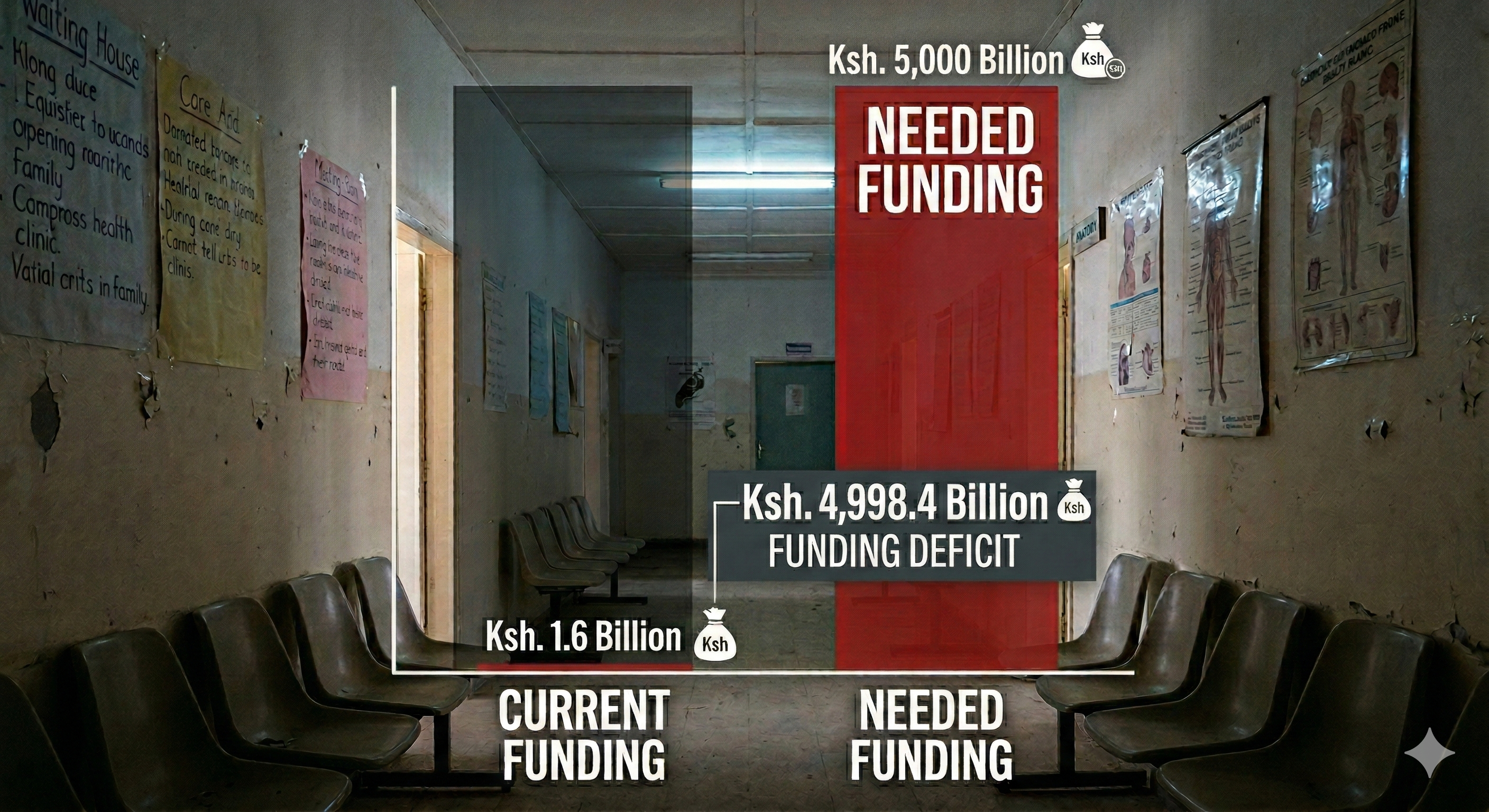
While Kenya’s 2023-2027 strategy aims for a 90% reduction in deaths, these goals are currently balanced on the edge of a financial abyss . In 2024, global malaria funding reached only $3.9 billion—less than half of what is needed annually. Abrupt 2025 US funding cuts have triggered a “cascading collapse” in health infrastructure, with nearly 25,000 community health workers in Kenya facing imminent layoffs .

Without sustainable, government-led financing models, the health system remains vulnerable to unplanned disruptions. To secure a malaria-free future, Kenya must pivot toward local manufacturing of diagnostics and vaccines while integrating climate data into every level of health governance. The line between a breathtaking view of elimination and a dangerous resurgence is currently dependent on filling these “ghost deficits” in aid.

References:

Human Rights Watch Donor Nation Cuts to Global Health Financing Affect Millions

Physicians for Human Rights “The System is Folding in on Itself”: The Impact of U.S. Global Health Funding Cuts in Kenya

The Subsidy Unlocked

💰 KSh 2,500 Fertilizer: How to Bypass the Queues and Get Your Share

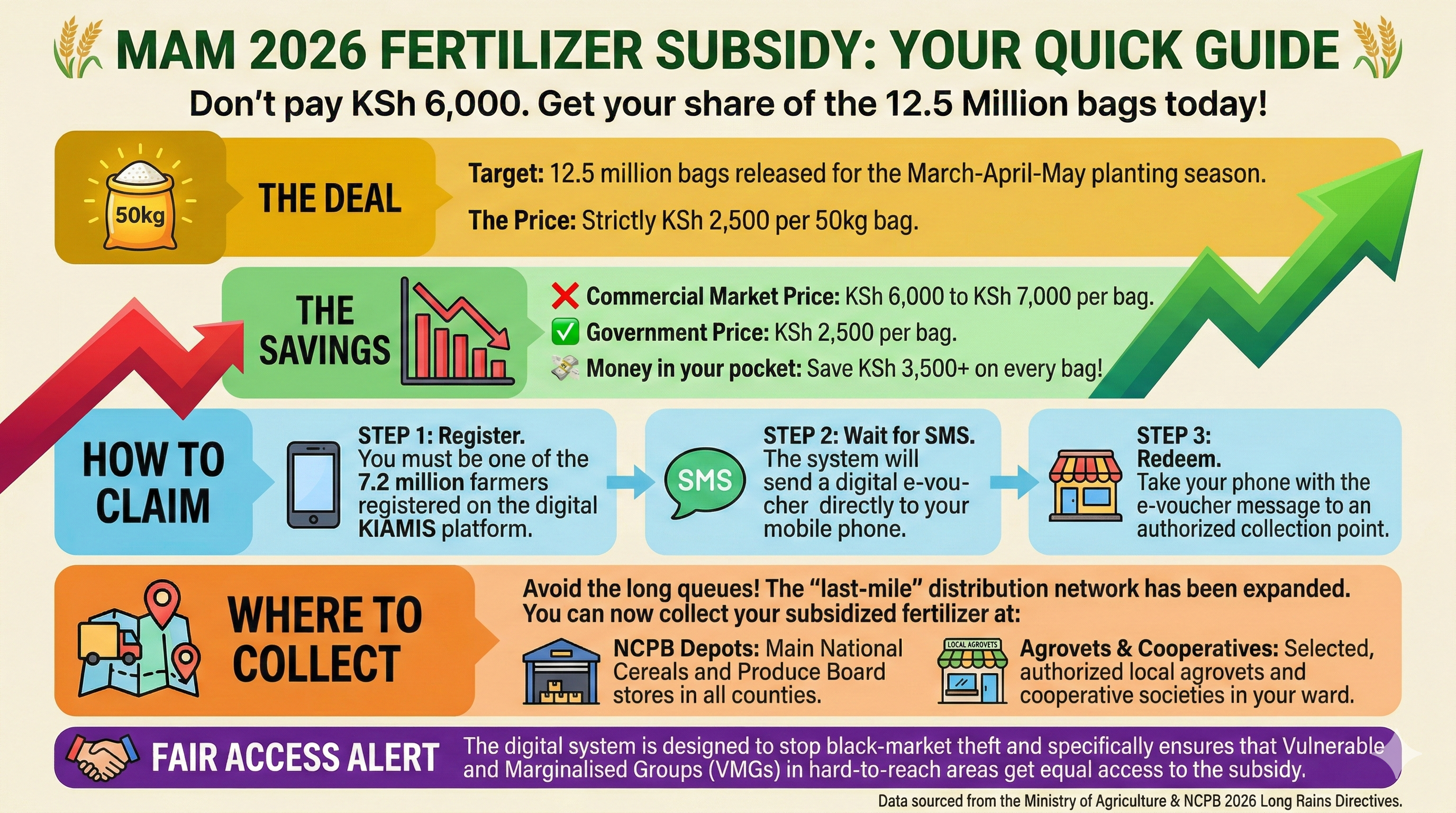
The government has released 12.5 million bags of subsidized fertilizer for the 2026 Long Rains, capping the price at KSh 2,500 per bag (down from market rates of KSh 6,000+).

The Catch? You Must Be Digital. Gone are the days of just showing up at the NCPB.

  1. Register: Ensure you are listed on the KIAMIS (Kenya Integrated Agricultural Management Information System) platform.
  2. Wait for the SMS: You will receive an e-voucher on your phone.
  3. Collect: Go to your nearest NCPB depot or registered agro-vet agent.

References:

Streamline Operation Long Rains: State Floods Market with 12.5 Million Bags of Subsidized Fertilizer

Ratin Agriculture Ministry Flags Off Major Fertiliser Distribution to Strengthen Food Security

The Cold Pulse of Kenyamware: Where River Gucha Meets Local Grit

In the quiet, fog-drenched highlands of Nyamira County lies Kenyamware, a place where the morning air is so sharp it feels like a physical presence. As the sun struggles to pierce through the thick white veil of the “Nyamira cold,” the day begins with the rhythmic sound of the Gucha River—the county’s longest waterway, stretching nearly 150km before eventually feeding the vast basin of Lake Victoria. Standing here, you realize that this river isn’t just a scenic backdrop; it is the primary lifeblood of the Gusii highlands, carving a path through the heart of a community that has mastered the art of survival along its winding banks.

A Jijuze Eco-Tour in Kenyamware, Nyamira County, Kenya.

Along these very banks, the Gucha’s water fuels a bustling corridor of small-scale, artisanal industries that represent the backbone of the region’s manual economy. Kenyamware serves as a micro-industrial hub where the scent of fresh sawdust from local lumbering sites mingles with the earthy aroma of wet clay from the nearby brick-making kilns. Rather than massive factories, this is an economy of the hands—a decentralized network of producers transforming the river’s silt and the highland timber into the literal building blocks for the ongoing construction boom in Nyamira and beyond.

As the fog finally retreats to reveal a landscape painted in hues of gold and amber, it becomes clear that Kenyamware holds a profound, untapped beauty. It is a moment of stillness that captures the essence of the Jijuze spirit: finding the extraordinary in the everyday. However, for these hidden gems to truly thrive, we must bridge the gap between this rural charm and the global traveler through a stronger uptake of local and international tourism on modern e-platforms. By putting places like Kenyamware on the digital map, we ensure that Nyamira’s quiet power isn’t just witnessed by the few, but celebrated by the many.

The Secret Deal: Why Transparency Matters

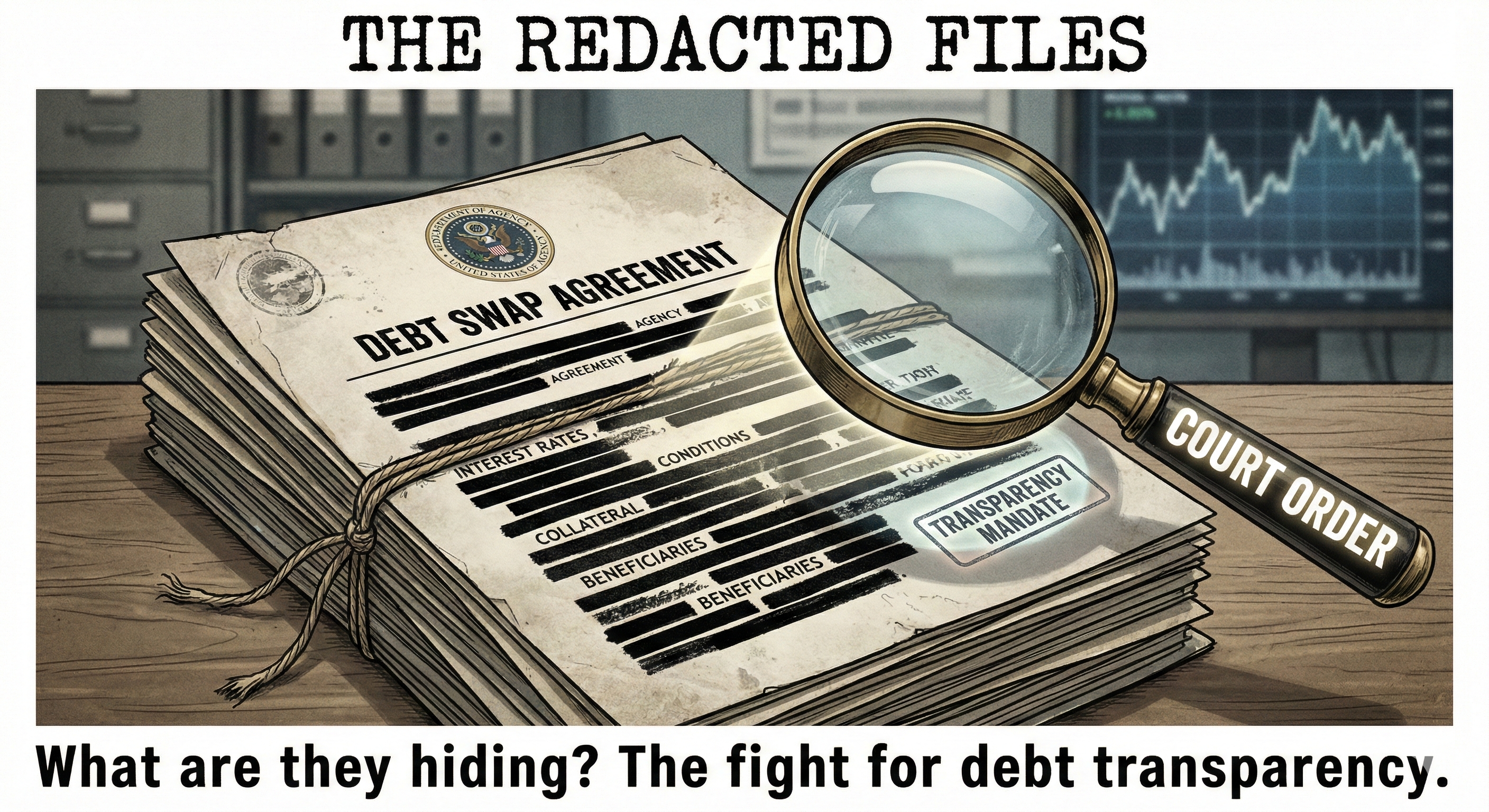
Despite the high stakes, the specific terms of the debt-for-food swap remain shrouded in secrecy, sparking legal battles and civil society alarm. A case filed at the East African Court of Justice, Wanjiru Gikonyo v The Attorney General, challenges the government’s refusal to disclose the full details of sovereign debt agreements. Litigants argue that committing future tax revenues and “savings” to long-term projects without public participation is unconstitutional. The lack of a public dashboard detailing exactly how the Sh129 billion will be spent creates a “transparency deficit” that invites mismanagement.

This opacity exacerbates the “sovereignty paradox.” By allowing the US-DFC and WFP to dictate the terms of expenditure, Kenya is effectively admitting that its own institutions cannot be trusted. While external conditionality acts as a safeguard against local corruption, the public remains in the dark about what exactly has been signed away. Are there hidden fees? What are the penalties for non-compliance? Without full disclosure, the Kenyan taxpayer is a passenger in a vehicle being driven by foreign creditors.

Transparency is not just a legal formality; it is the only disinfectant strong enough to prevent the “bureaucratic consignment” of funds. Civil society is demanding that the Treasury publish every shilling of the “savings” and every project beneficiary. Until then, the debt swap remains a “black box”—a deal negotiated in boardrooms in Washington and Nairobi, with the bill sent to the citizen who has no say in the menu.

References:

Afronomics Law Sovereign Debt News Update No. 147: The Promises and Transparency Pitfalls of Kenya’s $1 Billion Debt-for-Food Swap

The Institute for Social Accountability The High Court has ordered the National Treasury to disclose critical information on Kenya’s bilateral loans and sovereign bonds.