Nairobi Rising—A Multi-Billion Shilling Gamble on the Future

Nairobi is currently undergoing an Sh80 billion transformation under the “Nairobi Rising” agenda, an ambitious intergovernmental pact designed to pull the capital out of its cycle of disaster. The roadmap includes a Sh25 billion overhaul of the city’s drainage and a Sh33 billion investment in expanding sewer systems and restoring polluted waterways. This represents the most significant attempt in recent history to decouple the city’s stormwater from its sewage, a move intended to end the perennial outbreaks of cholera and typhoid that follow every flood.
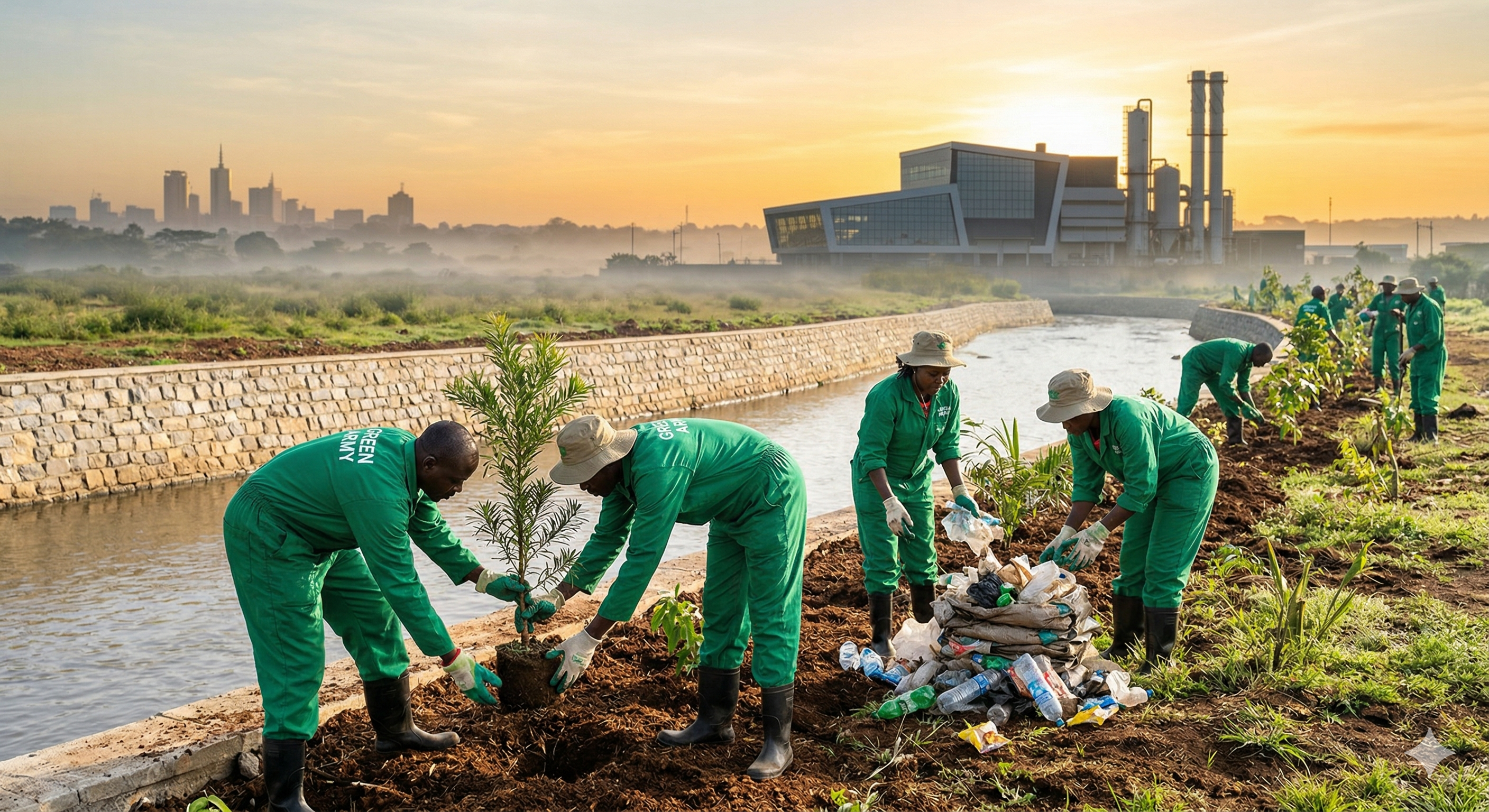
A central pillar of this new vision is the decommissioning of the notorious Dandora dumpsite. Long a source of environmental and health risks, Dandora is slated to be replaced by a modern waste-to-energy plant in Ruai that will generate between 45 and 70 megawatts of electricity. By transitioning to a circular economy, the government hopes to eliminate the plastic debris that currently chokes the city’s drains, which costs an estimated KES 4.5 billion annually in reactive mitigation.

However, the success of “Nairobi Rising” hinges on institutional reform and accountability. The plan includes the creation of a specialized Nairobi Metropolitan Police Unit to enforce zoning laws and protect reclaimed riparian land, but critics warn of the “financial hangover” left by previous interventions. For the residents of Nairobi, the stakes could not be higher; as the April 2026 waste management launch approaches, the city is betting billions that it can finally build the resilience needed to survive its own growth.

References:

Capital News Sewerage and Sanitation Take Centre Stage in Nairobi’s Sh80bn Development Plan

People Daily Ruto unveils plan for a major overhaul of Dandora dumpsite

Big 3 Africa Nairobi Waste to Energy Transformation
The “No Retreat” Policy—The Human Cost of Riparian Reclamation

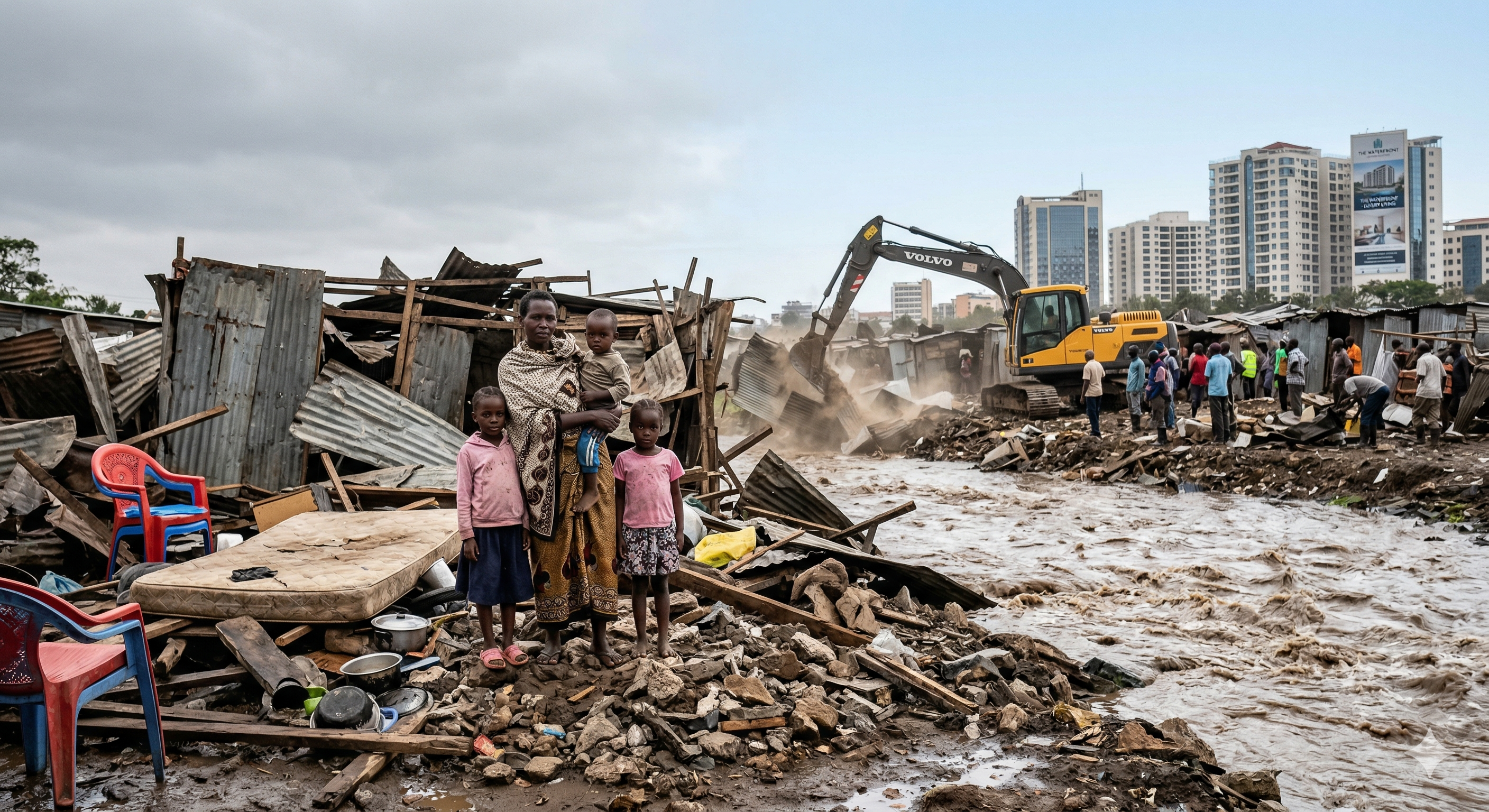
In the wake of the March 2026 floods, Governor Johnson Sakaja issued a “no retreat” order for the demolition of illegal structures along Nairobi’s riverbanks. This aggressive reclamation strategy, aimed at restoring the city’s natural waterways, has targeted hotspots from Westlands to the downstream zones of the Nairobi River. While the government frames these actions as essential flood mitigation, the bulldozers have sparked a fierce debate over “environmental justice” and the selective enforcement of the law.

The human cost of these evictions is profound, particularly for the “twice-displaced” women of settlements like Mukuru. Many families who lost their homes to floodwaters were subsequently met with state-led demolitions, often with only 48 hours’ notice. While the government offered a one-time facilitation fee of KES 10,000 ($75), residents and advocacy groups have slammed the amount as a “grossly inadequate” pittance that fails to secure stable housing in a city where they have lived for decades.

The legal battle is now shifting to the courts, where residents of the River Bank settlement near Gikomba recently secured a stay order against further demolitions. Petitioners argue that the government’s reliance on a “blanket” 30-meter riparian buffer is scientifically untenable and discriminates against the poor while leaving high-end developments in similar zones untouched. As the Nairobi Rivers Regeneration Project pushes forward with its Sh50 billion mandate, the city must decide if “order and dignity” can be achieved without sacrificing the rights of its most vulnerable citizens.

References:

Capital News Sakaja orders demolition of illegal riverbank structures as flood mitigation works begin

Nairobi Times COURT BLOCKS DEMOLITION OF HOUSES BUILT ALONG NAIROBI RIVER RIPARIAN LAND.

HIC Evicted and Forgotten: The Gendered Consequences of Nairobi’s Riparian Evictions

Climate Whiplash—When Infrastructure Meets Volatility

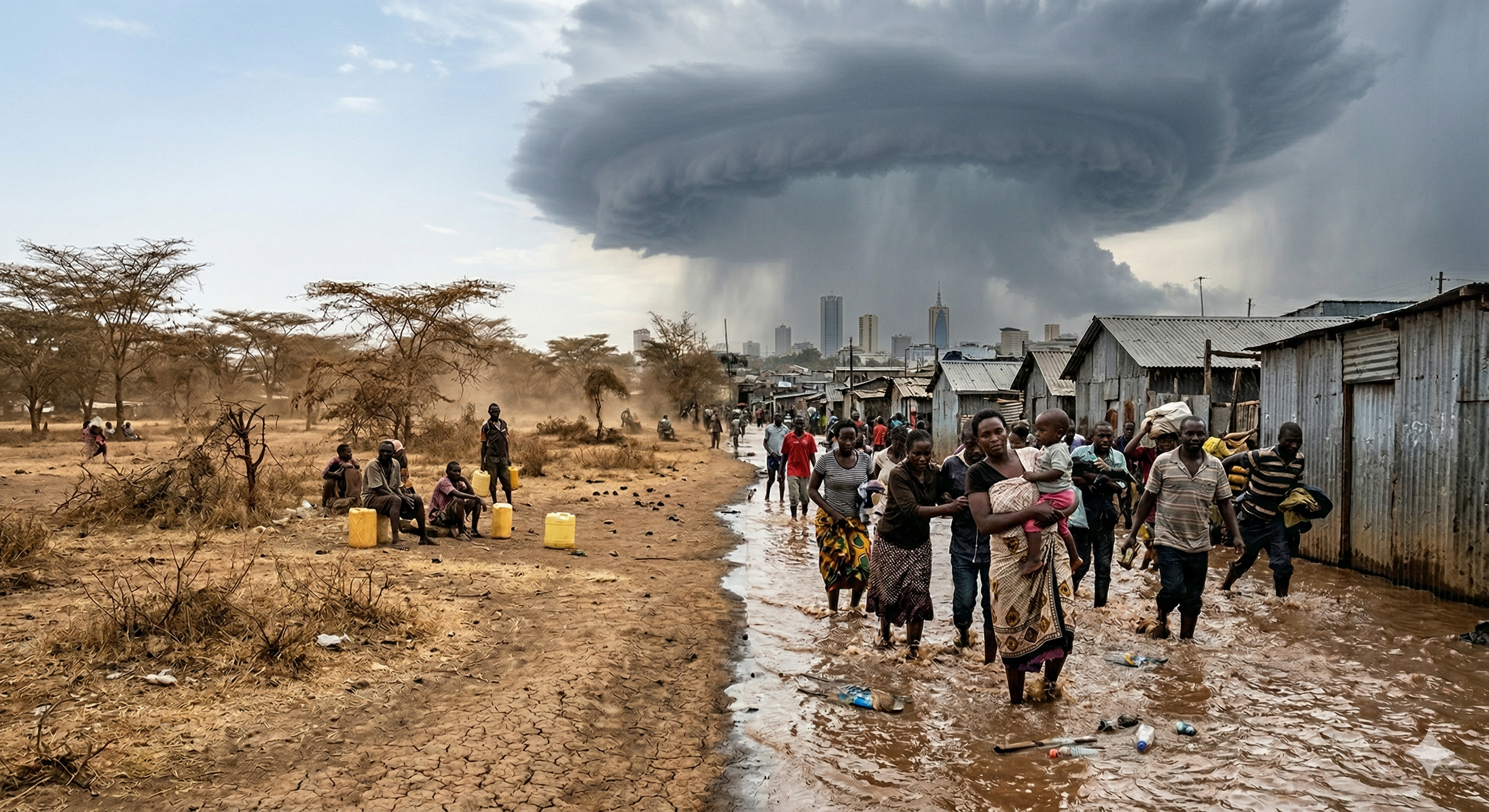
Nairobi has entered a perilous era of “climate whiplash,” where bone-dry droughts are abruptly terminated by high-intensity “long rains” that the city’s infrastructure is fundamentally unequipped to handle. Scientific assessments confirm that the climate crisis has increased the intensity of extreme rainfall in East Africa by approximately 40%. This volatility means that the “once-in-a-century” floods of the past are becoming our annual reality, yet our drainage networks remain trapped in the 20th century, designed for historical patterns that no longer exist.

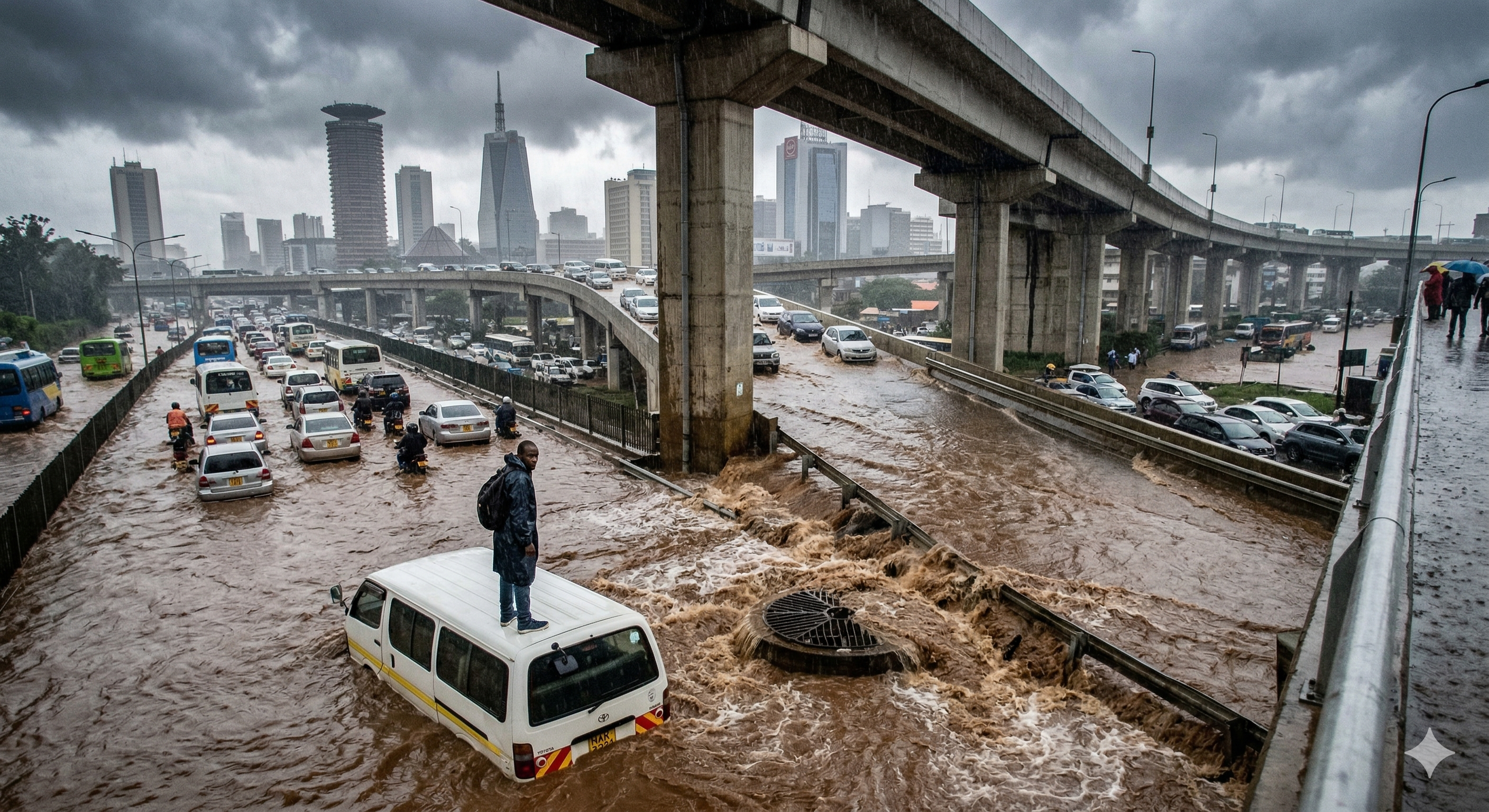
The MAM (March-April-May) rains of 2024 and the recent 2026 deluges have laid bare a systemic collapse. While upscale neighborhoods like Runda face property damage and traffic paralysis, the fallout in settlements like Mathare and Mukuru is existential, with over 200,000 people displaced nationally in 2024 alone. The tragedy is compounded by a failure to translate early warnings from the Meteorological Department into proactive evacuations, leaving residents to face rising waters with zero meaningful preparation.

This infrastructure deficit creates a “water paradox”: even as floods submerge the streets, taps in major estates run dry. The intense runoff carries such high levels of silt and organic debris that treatment plants at Ngethu and Sasumua are forced to shut down, unable to process the turbid water. This cycle of flood-induced scarcity underscores the urgent need for modernized filtration and massive retention reservoirs, as the city’s reliance on aging systems makes it a victim of its own climate-altered environment.

References:

Inside Climate News Following Months of Drought, Floods in Kenya Kill More Than 40 People

Greenpeace Deadly Kenyan floods show urgent need to build climate resilience

Streamline Nairobi’s Water Paradox: Infrastructure Failure Amidst Excessive Rainfall

The Physics of Failure—Understanding Peak Discharge

Nairobi’s drowning is not merely a matter of bad luck; it is a mathematical certainty dictated by the hydrological principle of peak discharge. Defined by the formula Q=CiA, the volume of water rushing through our streets (Q) is a direct product of rainfall intensity (i), the drainage area (A), and the runoff coefficient (C). In a natural landscape, the earth acts as a sponge, but Nairobi’s rapid transformation into a “concrete jungle” has spiked the runoff coefficient to lethal levels. When surfaces become impermeable, water that should have been absorbed is instead weaponized into destructive surface runoff.

The catastrophic flash floods of March 2026 provided a grim laboratory for this principle. Within a single 24-hour window, a staggering 112mm of rain fell on the capital—representing over 120% of the entire monthly average for March. Because the city’s expansion has prioritized high-density “non-porous” development, the runoff has nowhere to go but down, inundating low-lying informal settlements. This technical reality means that even moderate rains now generate peak flows that exceed the capacity of archaic culverts designed decades ago for a much smaller, greener city.

As the Nairobi River repeatedly bursts its banks, the “fragmented responsibility” between national and county governments ensures that these bottlenecks remain unaddressed. While the science of Q=CiA is clear, the governance of drainage maintenance is anything but, with conflicting schedules and a lack of digitized master plans. Without a fundamental shift in how we manage the city’s surface permeability, Nairobi remains a city where the next rainstorm is not just a weather event, but a predictable hydrological disaster.

References

Assessment of Flash Floods in the Streets of Nairobi A Research Paper by Wachira Silvia Wanjiru, Nairobi University

Streamline Drowning In Neglect: The Urgent Battle For Nairobi’s Drainage Systems

The Guardian Weather tracker: At least 10 dead in Nairobi after a month’s rain falls in 24 hours

The Financial Ghost Deficit—Climate Risk and Funding Cuts

The final frontier of the malaria fight is as much about economics and topography as it is about biology. As temperatures rise, malaria is climbing into highland areas where populations lack natural immunity . Research shows that “U-shaped” valleys in these regions are five times more likely to host parasites than steeper “V-shaped” valleys, as their flat floors provide stagnant water for vector breeding.

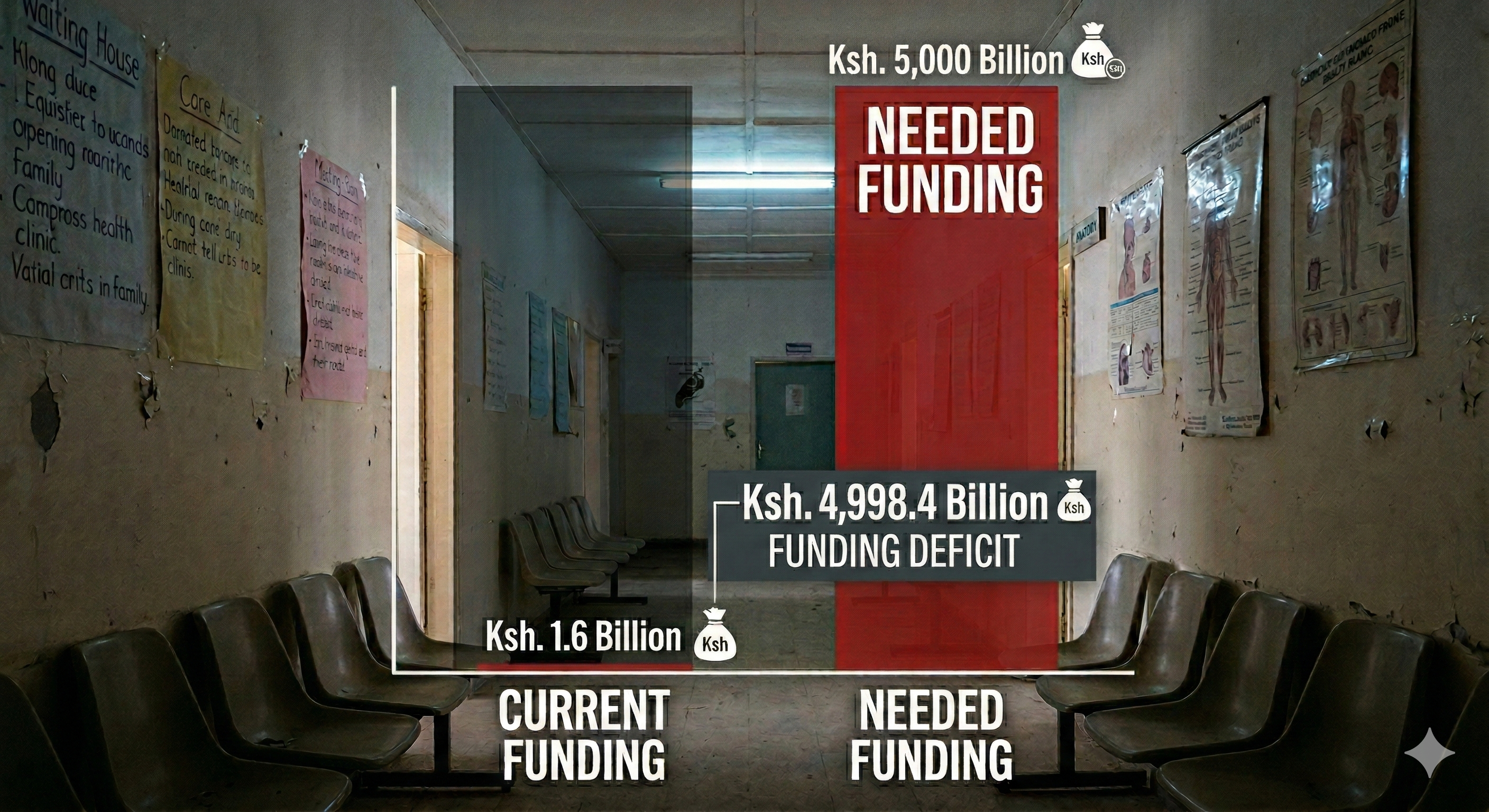
While Kenya’s 2023-2027 strategy aims for a 90% reduction in deaths, these goals are currently balanced on the edge of a financial abyss . In 2024, global malaria funding reached only $3.9 billion—less than half of what is needed annually. Abrupt 2025 US funding cuts have triggered a “cascading collapse” in health infrastructure, with nearly 25,000 community health workers in Kenya facing imminent layoffs .

Without sustainable, government-led financing models, the health system remains vulnerable to unplanned disruptions. To secure a malaria-free future, Kenya must pivot toward local manufacturing of diagnostics and vaccines while integrating climate data into every level of health governance. The line between a breathtaking view of elimination and a dangerous resurgence is currently dependent on filling these “ghost deficits” in aid.

References:

Human Rights Watch Donor Nation Cuts to Global Health Financing Affect Millions

Physicians for Human Rights “The System is Folding in on Itself”: The Impact of U.S. Global Health Funding Cuts in Kenya

The Antibody Bypass—Ending the Adherence Struggle

When a child is discharged from the hospital after severe malaria, they enter an “adherence abyss”. The current standard of care—Post-Discharge Malaria Chemoprevention (PDMC)—requires families to manage a complex three-month pill regimen, a task that often fails due to logistical barriers and drug stockouts. This leaves vulnerable, still-recovering children at a heightened risk of re-infection or death if they contract the disease again.

KEMRI is currently co-leading the HEKIMA project to test a groundbreaking alternative: monoclonal antibodies (mAbs). Unlike vaccines, a single injection of a lab-made antibody like MAD21-101 provides immediate, months-long protection without the need for daily medication . This is a fundamentally different way to stop infection before it starts, particularly for children from poorer households who struggle with long-term treatment schedules.

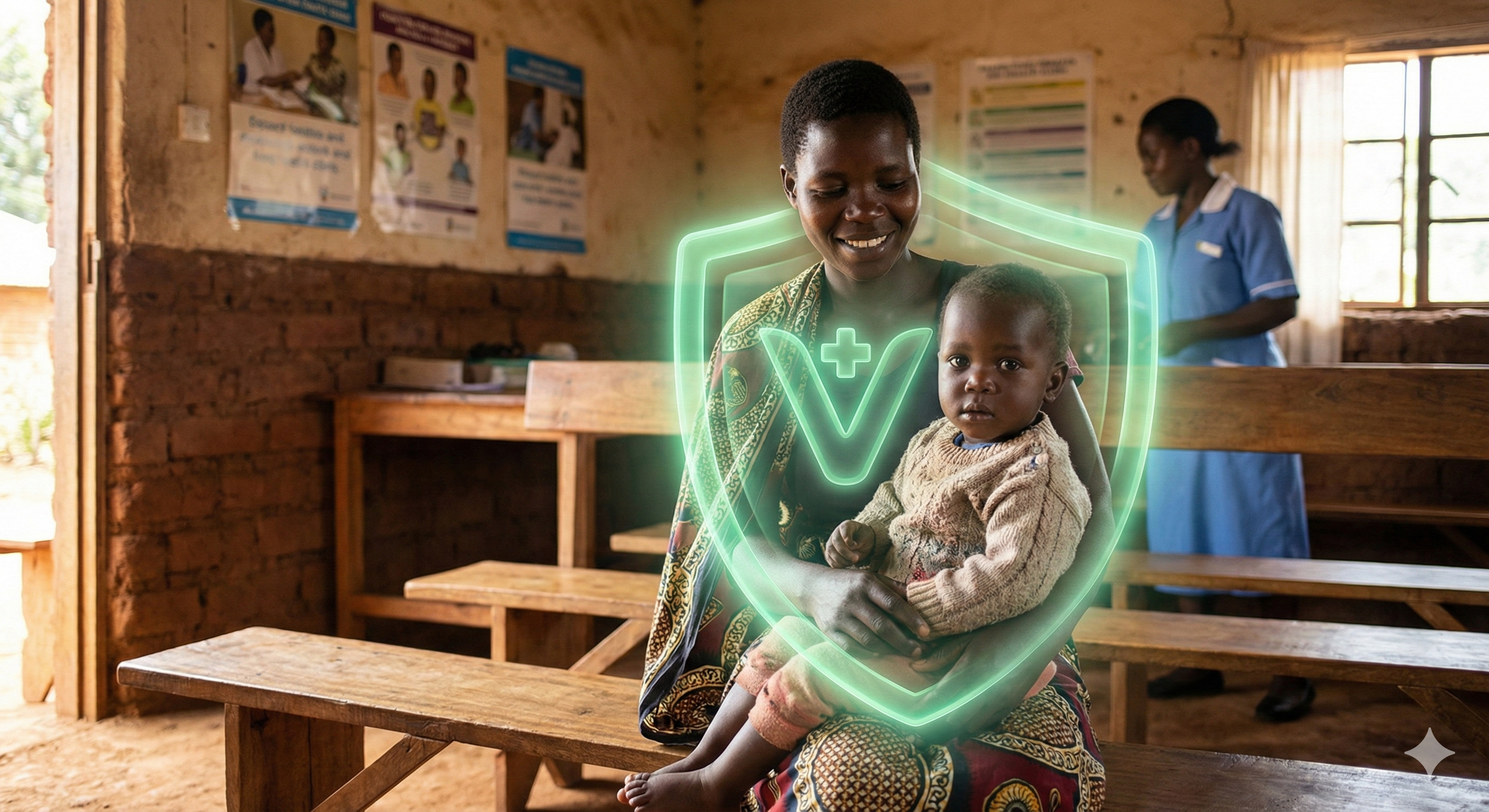
The science behind these antibodies is precise; MAD21-101 targets a “hidden” weak spot (the pGlu-CSP epitope) exposed only during a split-second of the parasite’s life cycle. Because this target is different from the one used by current vaccines, these antibodies could be used in combination to provide a “double shield” against infection. The challenge now lies in reducing production costs and ensuring these “monoclonal shields” are accessible to those who need them most .

References:

University of Bergen HEKIMA | The HEKIMA projects’s objective is to generate evidence on the cost-effectiveness, community acceptability, and health system feasibility of implementing the new treatment.

National Institute of Health Potential new target for malaria discovered

The Vaccine Frontier—New Shields and Systemic Gaps

Kenya’s role as a pioneer in the Malaria Vaccine Implementation Programme has already saved lives, with a 13% reduction in child mortality observed in pilot regions. We are now entering a new phase with the rollout of the R21/Matrix-M vaccine, which is more cost-effective at approximately $3 per dose and boasts nearly 75% efficacy . Beyond vaccines, the 2025 approval of “Coartem Baby” marks the first treatment specifically formulated for infants weighing as little as 2kg .

However, the effectiveness of these high-tech “shields” is threatened by systemic disconnects. A fourth dose is required in the second year of life to maintain protection, yet many families face logistical and financial barriers to returning to the clinic . There is a persistent risk that advanced tools are being deployed in facilities plagued by drug stockouts and aging bed nets that have exceeded their three-year lifespan .

The 2024 El Niño rains served as a reminder of how quickly these systemic gaps can be exposed, causing spikes in transmission among children in poverty-stricken areas with poor drainage . While vaccines offer a high public health impact, their success is tied to the strength of the underlying health system. Without consistent investment in routine care and the replacement of old infrastructure, the protection offered by these new tools risks waning just as the parasite’s resistance rises .

References:

World Health Organisation Malaria vaccines (RTS,S and R21)

Access to Medicine Foundation Prioritising children in the fight against antimalarial resistance

The Interconnected Enemy—Mosquito Adaptations and Urban Invasions

The war against malaria is shifting because the carrier itself is evolving. Groundbreaking research by KEMRI and the Wellcome Sanger Institute has revealed that Anopheles funestus, one of Africa’s most prolific vectors, is far more genetically interconnected across equatorial Africa than previously understood . This genetic “highway” means that resistance mutations present as early as the 1960s are intensifying and spreading across borders with ease, allowing the species to outpace traditional mosquito control tools .

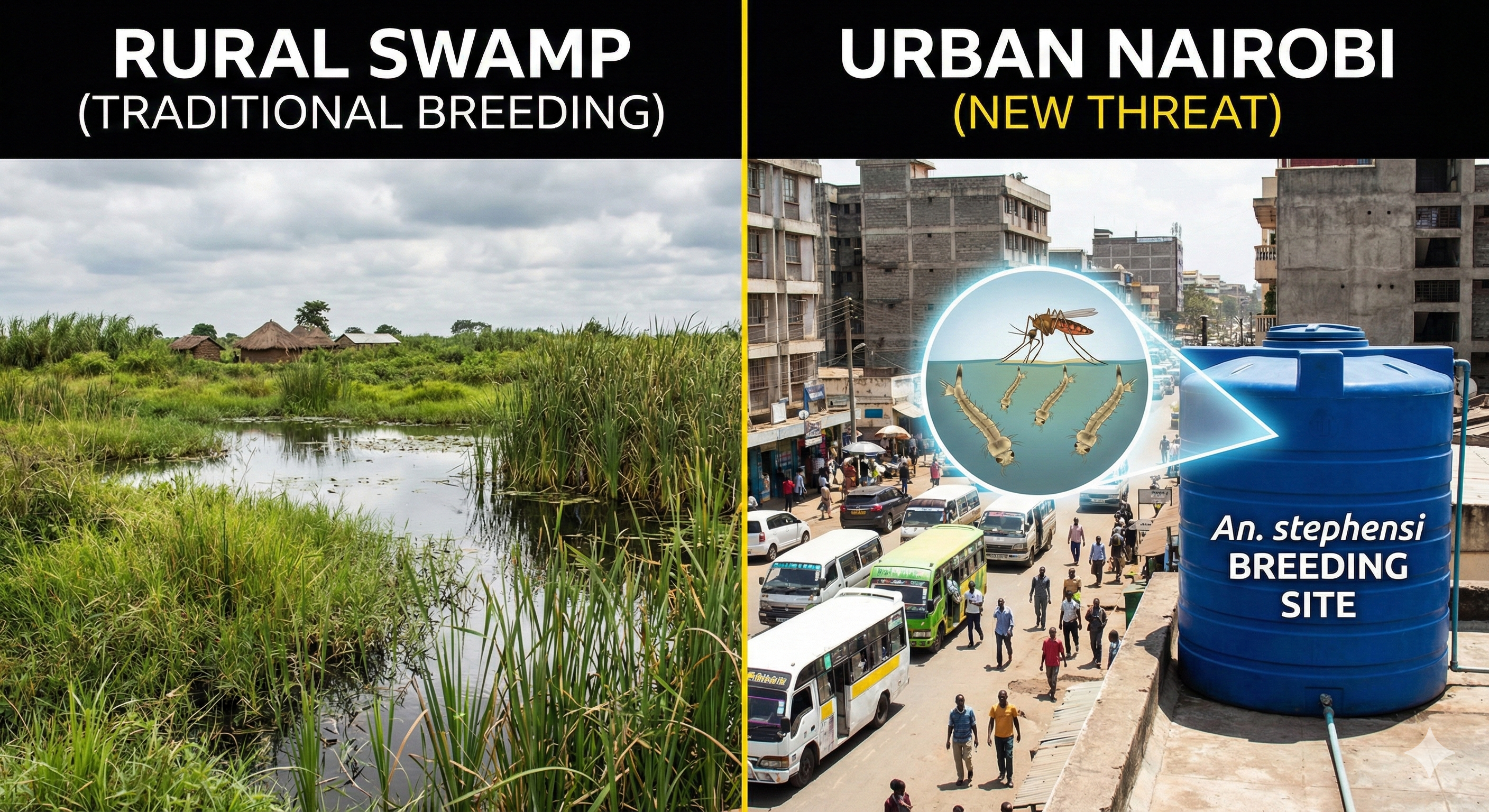
Simultaneously, Kenya is facing an invasion by Anopheles stephensi, an invasive urban vector detected in nine African countries. Unlike native mosquitoes, this invader thrives in man-made containers in cities like Nairobi, bringing malaria into informal settlements already struggling with an escalating crisis of drug resistance . This development creates a new frontline where the disease can strike year-round, unconstrained by traditional rural transmission seasons .

Looking back at the most recent Global Antimicrobial Awareness Week, held between November 18 and 24, 2025, KEMRI researchers provided a grim reality check for urban health centers. Surveillance data from Nairobi’s Mama Lucy Kibaki Hospital revealed that more than 45 percent of typhoid fever cases are now linked to multidrug-resistant Salmonella Typhi, while a staggering 99 percent of Vibrio cholerae strains from recent outbreaks showed similar resistance patterns . This creates a “double front” clinical nightmare: in densely populated informal settlements, healthcare providers are now forced to navigate a diagnostic maze where a patient presenting with a fever could be suffering from a malaria parasite that clears slowly due to genetic mutations, or a bacterial infection that has acquired “drug-defying” genes capable of defeating even our last-line antibiotics . As we prepare for the 2026 awareness week later this year, the priority is no longer just controlling a single disease, but building a multi-pathogen stewardship program that can protect vulnerable populations from this emerging convergence of biological threats .

References:

KEMRI KEMRI Scientists In Landmark Genetic Adaptations of Malaria Transmitting Mosquito Study

KEMRI KEMRI’s Warns of Escalating AMR Crisis in the Country

The Molecular Mutiny—Inside the Parasite’s New Defenses

While Kenya has celebrated a drop in national malaria prevalence from 8% to 6%, a silent mutiny is occurring at the genetic level. Investigative surveillance in eight Western Kenyan counties has confirmed the emergence of k13 gene mutations—specifically A675V, C469Y, and R561H—which confer partial resistance by delaying how fast the parasite is cleared from the blood. Siaya County currently stands as a unique hotspot, harboring all three validated mutations simultaneously, a signal that the parasite is successfully adapting to our primary defense: Artemisinin-based Combination Therapy (ACT).

Research shows evidence of drug-resistant malaria | CGTN Africa

The prevalence of these mutations is shifting regionally, with the A675V mutation rising from 1% in 2022 to approximately 5% in 2023. This specific mutation is predominant in Uganda, suggesting a trans-border biological migration that mirrors the movement of communities across the Lake Victoria region. History warns us that the collapse of a first-line drug, much like chloroquine in the late 20th century, typically leads to a catastrophic spike in mortality across the continent.

Experts describe this as an “evolutionary certainty,” meaning that even our most effective tools will eventually face failure. To counter this, scientists are racing to authorize next-generation, non-artemisinin therapies like ganaplacide-lumefantrine, which achieved positive Phase 3 results in late 2025. For now, the focus remains on scaling up molecular surveillance to catch these “drug-defying” genes before they spread to the rest of the country.

References:

The Scientist The Malaria Fight Evolves: How to Outsmart the World’s Deadliest Parasite

KEMRI | Wellcome Trust Rising K13 validated artemisinin resistance mutations in Western Kenya