KENYA FOOD SECURITY | A critical view

Co-Author :  Victor Daniels

On February 22, 2010, a senior policy analyst with the Kenya Institute for Public Policy Research and Analysis (KIPPRA), was quoted saying, “we have a challenge in the management of our public affairs [and] the management of our food stocks. Sometimes we are exporting food yet we later need to import. There is failure to learn from best practices, to invest in knowledge and transform that knowledge into action.”

According to OneWorld UK, the UN “estimates that 3.5 million Kenyans will require food assistance, a figure that may rise before the end of 2011.” However, the assessments updated on July, 2011, “exclude the Somali refugees located in the Dadaab camps in eastern Kenya whose plight is managed as an international refugee crisis, as distinct from Kenya’s national food insecurity.” Scholars have blamed the looming food crisis in Kenya, not only on the failure of successive seasonal rains, but also on poor standards of governance, and mismanagement of the agriculture sector, coupled with lack of political goodwill. Providing credit facilities to farmers, setting up micro-irrigation schemes, and cash transfers to poor farmers, as well as effecting input subsidies are just but a few ways to begin the comprehensive process, to realize food security in Kenya.
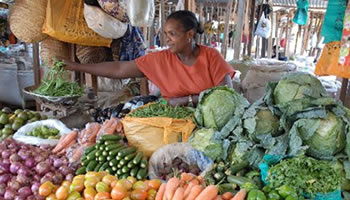
Kenya Food Security

In light of the above, an economy should be based on a long-lasting, reliable system, not on slavery, and coercion. Our economy relies on greed, and a serious lack of thought about consequences. That is a very unstable sort of economy. A lucid socio-economic analysis of the mechanisms of exploitative processes in the Kenyan economy brings out Kenya’s predicament in the light of under-hand shady policy making, which is not exclusively Marxist, but still draws heavily on that school of thought. Even before the fall of the KANU regime, the prices of prime commodities such as tea, sugar, rice, and maize, have constantly been rising, which creates a conflict of interests considering we locally produce the same. Where does the buck stop? Can we still interpret this, as Kenya’s success story? Are the Kenyan food policies a success in terms of growth, or total output? The time has come to reappraise agricultural pricing policies in general, so that agriculture makes its optimum contribution to maximizing gross national production. For maize, the Kenyan staple grain, the producer’s selling price should be reviewed, and be set at the relevant export parity price. The consumer price should be down to a comfortable level, thus, the price should be set at the producer’s selling price, plus marketing costs- incurred in distributing the maize to consumers. It is true that costs are rising, but then, if a justified investment policy was directed for export, we would expect the abolition of domestic marketing, thus, providing comfortable floor and ceiling prices. Starvation in most Kenyan regions remains to haunt us due to the government’s sub-standard reckoning, without political goodwill for the Kenyan people. Well known Members of Parliament, politicians, senior civil servants, and business men affiliated to high echelons of power, have repeatedly been accused with controversial maize and sugar imports and exports, but still, calls to prosecute the alleged suspects, go unheeded. Impunity and indecisiveness, thrives at high levels of governance, and on the miseries of the citizenry, where justice refers to how deep your pockets are. Budgetary allocation for the Ministry of State for Development of Northern Kenya and Other Arid Lands is irrelevant, if the people meant to be protected by the same, are dying of acute food shortage, and malnutrition. The chronic famine situation in Kenya, signals a malfunction in the governance of the Kenyan democracy. Kenya truly needs, a decentralized system, of running State affairs. Focus should be on the people and their strengths, instead of importing western innovations, and ideologies. Since we should be the change we want to see, we should put an end to popularistic politics, and deal with real issues affecting Kenyans on the ground, in a comprehensive manner.

References:

Food Security in Kenya-briefing OneWorld UK, July, 2011

Experts voice food security concerns IRIN Africa, February 22, 2010

Outrage over rising food and fuel prices IRIN Africa, April 20, 2011


HELP FEED A HUNGRY CHILD

Like Daniel Toroitich Arap Moi’s Facebook page (http://www.facebook.com/danieltoroiticharapmoi1) and for EVERY NEW LIKE, from NOW until the END of this month, he will match it up with Kshs100/= AND DONATE IT TOWARDS THE RELIEF EFFORTS OF THE HUNGER STRICKEN PEOPLE. SO TELL YOUR FRIENDS TO LIKE HIS PAGE AND LETS ALL HELP FEED A HUNGRY CHILD.

Reference:

http://www.facebook.com/danieltoroiticharapmoi1

THE STATE OF DROUGHT IN KENYA | Turning Adversity into Opportunity

A recent report by the government indicated that, livestock worth 64.2 billion in the ASAL areas, has been wiped out as the region experiences the worst drought in 60 years. “A quarter of the country’s zebu herd in ASAL areas of 14 million animals is lost and the worst is possibly yet to come” Daily Nation reported.

A brief on investment opportunities available in Kenya, accredited by the Ministry of State for Planning National Development and Vision 2030 stated that, “livestock production in the ASAL accounts for nearly 90% of the employment opportunities and nearly 95% of the family incomes. It also accounts for about 45% of the Agricultural GDP.”  Though natural calamities such as drought cannot be controlled, its effects can be anticipated, thus loss of people’s lives and property as a result of the same can adequately be subdued. Isn’t it wrong in the face of the fact that, 75% of Kenya’s livestock are in the ASAL areas, whereas they are served with less than 10% of livestock service staff? What sense is in losing 64bn on one hand, and soliciting for aid funds to a tune of 1bn on the other? If that is anything to go by, then we have surely settled for less than survival. It is envisioned in the Kenya’s Vision 2030, to increase farmers income, create employment, and reduce malnutrition and food insecurity. Investing in the livestock sector, especially in the North Eastern Province (NEP), may be a good place to begin. “The development of a fully fledged export industry for processed livestock products, would doubtless have the greatest impact on the economy, and welfare of the NEP and its people” ReSAKSS, 2008. The article titled, Investment Opportunities for Livestock in the North Eastern Province of Kenya: A Synthesis of Existing Knowledge, further points out that strengthening of the institutions that, “ensure political stability, public security and protection of investment and ownership would induce investors to contribute to the development of the NEP through investment in the livestock sector.”

Mandera Livestock Market


It is not too late to begin, for all is not lost. It is true that one doesn’t appreciate the value of what they have, till it is lost. But the fool is the one who sits back and stands to lose, even more. Challenges are there, for the ones who are ready to take them. Turning the current drought adversity into an opportunity for growth, can begin with just a simple step as laying down commercially oriented road networks, into the NEP.


What’s Your Say?

References:

Drought wipes out herd worth Sh64bn Daily Nation August 7, 2011

Investment Opportunities Google Docs (as of) August 10, 2011

Investment Opportunities for Livestock in the North Eastern Province of Kenya: A Synthesis of Existing Knowledge ReSAKSS, 2008


ENGLISH PREMIER LEAGUE | Man United beat Man City 3 – 2 [Video]

Nani’s 94th minute goal settled a mouthwatering Community Shield as Manchester United came back from two goals down to win the encounter by 3 goals to 2. The win sends United to their 19th Community Shield win; matching their Barclays Premier League record tally.

City had gone ahead at the end of the first half, with goals form Lescott, and a 25 yard shot from Dzeko easily beating United’s keeper, De Gea. It appeared quite unfortunate for United to go down by two goals having completely outplayed their City rivals. Ferguson’s response was to make three changes, bringing on new signing, Phil Jones, and Jonny Evans to replace Ferdinand and Nemanja Vidic at the back, and introducing Tom Cleverley into his midfield. Smalling reduced the deficit from close range when Young’s free-kick narrowly evaded Lescott. Six minutes later, came the equalizer, with Rooney, Nani and Cleverley opening City up with numbing series of short passes before Nani beat Joe Hart with a clever chip.  The match looked certain for penalties, when Nani kept his cool in a one-on-one situation to beat Hart for the second time right in the last minute. United were by far the better side, taking the game to their opponents and in the end they were the worthy winners.

With young player already impressing, the manager is set to have a headache in choosing his starting eleven. With Scholes’ role still up for grabs; Cleverly proved he is ready to take up the position by being a key figure in United’s come back.

References:
Manchester City 2 Manchester United 3: Nani stars as champions’ comeback stuns rivals in Wembley showdown Man City 2 – 3
Man City 2 – 3 Man Utd

COCA-COLA | Going juicy!

With the intent of expanding production capacity and diversify into other product ranges, coca-cola will invest 5 billion shillings in Kenya over the next three years. The firm’s East  Africa general Manager Mr. Peter Njonjo said that the juice market has a huge market potential and hence contracted about 37,000 farmers to grow mangoes and passion fruits for the company. The firm seeks to start manufacturing juice products in addition to the soft drinks. He stated that some of the investments would go to improving the beverage services plants in Nairobi and Kisumu. To their benefit, this investment will provide a ready and steady market as well as a source of raw materials.

This is good news for the farmers, consumers, as well as the company. This is because farmers will share profits and incur less loss because of the subsidized cost in terms of farming expenditures. The farmers will also have an increase of income. If the materials are available locally, the company will experienced decreased cost of production which is good news for the consumers as the products will be purchased at cheaper prices.

This gesture will contribute greatly to economic growth of Kenya. The choice of investing in farmers will increase the national income and therefore generate more revenue for the country. Farmers will also have a feeling of security. Thumbs up to Coca-cola company as this is directly giving back to society. Farmers are also encouraged to take this opportunity to improve their income.

References:

Coca Cola to invest Sh5 billion in Kenya to grow its product range

EDUCATION | First term to begin in September

After noting that the schools’ academic year is clashing with the government’s financial year, it has been proposed that the schools’ first term to start in September . This is because schools have experienced difficulty in running smoothly due to lack of funds. Mostly, the funds are released to the schools towards the end of the term, which is an inconvenience. In the proposed system, schools’ first term will commence in September and end in November, Second term will start in January end in March, Then third term from May to July.

Therefore, according to the proposal, it is convenient for first term to start in September, after the parliament has passed the budget and funds released by the Treasury for the public schools. If the recommendation is passed, both the primary and secondary schools are expected to adopt this system like the public universities. Although it is unclear whether private primary and secondary institutions are expected to adopt this system as well.

The proposed system is acceptable because in the current one; students who are not sitting for the national examinations are mostly expected to leave school until the examination period is over. In the suggested system, however, students will go for their holiday except for the candidates who will sit for their examinations during this period. The system will therefore, provide smooth running of schools and lack of funds for a new academic year will be long gone affair. What is your opinion on this?

Reference:

Kenyan schools may open for first term in September

2014 WORLD CUP DRAW | Harambee Stars vs. Seychelles

When the draw for the 2014 world cup qualifiers was conducted on the 30th of July 2011, the Kenya national soccer team was among a group of 24 lowly ranked teams in the continent set to face it out before joining a group stages for a chance to taste glory in Brazil. The stars ranked 130th in the latest FIFA rankings are set to square it out with the tiny Indian ocean island of Seychelles’ known better for its tourism than for its football prowess. The stars should have an easy task advancing into the group stages if Seychelles’’ current placing in the rankings 197 is anything to go by. However in football anything is bound to happen and for this reason the stakeholders should ensure the team prepares enough in time for the 11th of November clash away before a return fixture in Nairobi four days later.

If the stars cross the Seychelles hurdle they will join Nigeria, Malawi and the winner of the tie between Namibia and Djibouti in group F to fight it out for first place. The winner of the group will join nine other group winners in five two legged ties with the winners representing Africa in the 2014 FIFA world cup. Nigeria and Malawi who are ranked higher than Kenya pose the biggest threat at that stage. In the recent past Nigeria has proven to be our perennial rival when it comes to world cup qualification each time the super eagles flying above our stars. The latest being the 3-2 defeat at the hands of the West Africans in Nairobi during the qualifications for the 2010 world cup. There are lots of positives that the current national team can build on from that encounter and possibly take us all the way to Rio bearing in mind the fact that we were leading only for our defensive frailties to let us down.

The stars have a good chance of making it through to face off with the big boys of African football for a chance to play in Brazil .However that will only happen if preparations start early.

References:
Super eagles in Harambee Stars’ way, Daily Nation, 2nd August2011
Kenya 2 Nigeria 3: match report, The Telegraph, 14th Nov 2009
Road to Brazil, standardmedia, 2nd August 2011

THE ALCOHOL BILL | The pros’ and cons’

The alcohol bill better known as the Mututho law, is the bill that was passed by parliament a few months ago. The private member’s bill was nicknamed ‘Mututho law’ after the Member of parliament who came up with the bill. The law states that drinking hours on weekdays are between 5-11pm and no selling of alcohol before 2pm on weekends. The law also prohibits establishments selling alcohol from being located 300 meters within the schools. The law is aimed at controlling the consumption of alcohol.

Bases on the fact that a flamboyant portion of the country’s revenue comes from alcoholic drinks; it is questionable if the law is doing more good than harm. First, in terms of the economy, there is less productivity among employees. They are either distracted because of going through the day without their favorite drink, or they have to leave the work premises early in order to hit the bar at the drinking hours. There is also loss of jobs and revenue especially due to the regulation on the location of drinking joints near academic institutions. Many bars have had to close down temporarily or permanently because of this.

Let us not forget that most of the drinkers are moderate drinkers. Although, looking at the bright side, the good news is that there will be reduced alcohol-related problems and alcohol related problems among the youth; this is according to the anti-alcohol campaigners. All in all it is up to an individual. The law cannot conquer irresponsible drinking. Even with the law in place people still over-engage in alcohol. It should be uplifted for the sake of the economy.

References:
A counter to Mututho Law
Misery in Kenya as Mututho law bites
‘Mututho’ Law cannot deal with alcohol abuse

SOCIAL MEDIA | Why Kenyan firms should embrace social media

If you are wondering what social media is, it basically refers to the use of web based and mobile technologies to turn communication into an interactive dialogue. Many firms in the market today need to embrace this trend in technology, mainly because it is cheaper and feedback is not delayed. Social media can take on many different forums, such as web blogs, internet forums, and micro blogs. Examples of social media are the likes of you tube, twitter, Facebook, and many others.

How will they benefit from this? Apart from relatively cheaper advertising, social media could use this to place promotions over social networking sites. For instance, a firm could have a fun page on Facebook and place available promotions. Also, because of the interactive nature of social networks, a firm can use this to their advantage to manage their reputation. By this they keep an eye on conversations going on and respond to them. Social media can also be used to collect feedback or suggestion to a firm on their products or services, or how the firm should operate in favor of its consumers. Social media is also decentralized, therefore, it lays a foundation for globalization and publicity of a firm.

These are just a few ways a firm can use social media. It is appropriate for marketing and publicity. Many companies have gone online in Kenya, therefore, the use of social media is just an icing on the cake. Also, consumers are now purchasing commodities online. Therefore, the companies are able to attract vast markets. Because of its utility, social media is accessible to anyone, and easy to use. It is also available to the public with little or no cost. To sum up, the greatest and most productive way a firm can use social media is by managing their reputation. Consumers can air complaints, offer suggestions and feedback freely without feeling intimidated.

References:
Social Media

7 Rules of Social Media and Creating Trust Around Your Brand

Social media and online PR.