Analyzing Kenya’s Missed Opportunities with AfCFTA

Kenya’s ongoing political instability has placed significant strain on its economic and trade ambitions, particularly regarding cross-border trade with key markets like the Democratic Republic of Congo (DRC). While the DRC has emerged as one of Kenya’s fastest-growing export markets, growing by 13% in 2022, constant political infighting has stifled progress in both logistical development and strategic policy implementation. Political uncertainty acts as a barrier to trade growth, as seen globally where countries facing internal instability often experience slowdowns in foreign direct investment and cross-border transactions. Kenya is no exception, with its frequent politicking undermining confidence and delaying necessary reforms for enhanced trade facilitation.

ECON Report

Moreover, Kenya’s missed opportunities in the African Continental Free Trade Area (AfCFTA) demonstrate the far-reaching effects of political distractions on economic potential. AfCFTA presents a platform to eliminate tariffs and open regional markets, but Kenya’s slow adoption of this framework has allowed competitors like Tanzania to secure stronger positions in markets like the DRC. Tanzania has capitalized on Kenya’s political distractions, establishing a robust $2.2 billion trade route that has made it a more attractive trading partner. This is a direct consequence of Kenya’s political landscape, which detracts from the economic focus needed to compete on a regional scale.

Scholars have long emphasized the negative impact of political instability on trade, citing it as a non-tariff barrier that increases transaction costs and discourages investment. When a nation’s politics are in turmoil, businesses face heightened risks, from logistical disruptions to fluctuating policies that can hinder long-term trade relationships. Kenya’s political uncertainties, paired with its underdeveloped logistical infrastructure, continue to dampen its economic outlook. Addressing these issues, including political cohesion and logistical improvements, would not only enhance Kenya’s position in the DRC but also unlock broader opportunities within the AfCFTA​.

References:

Nation DRC now Kenya’s fastest growing EAC export front

The North Africa Post Tanzania-DRC-Kenya corridors vital to expanding intra-regional trade, contributing to AfCFTA success

Business Daily DRC now Kenya’s fastest-growing EAC export market

EHS Tanzania’s $2.2 billion trade route to DRC threatens Kenya’s trade influence in East Africa – experts say

The EastAfrican Power-starved DRC mining firms turn to imports, renewables

BBC DR Congo joins East Africa trade bloc: Who gains?

KIPPRA Promoting Sustainable Export Trade in Kenya: Unlocking Opportunities with AfCFTA


Kenya’s Trade Challenges Amid Political Instability

Kenya’s economic landscape has recently been overshadowed by an incessant wave of political drama and populist rhetoric, which has undeniably diverted attention from fundamental economic issues, particularly in the realm of cross-border trade. At the heart of these economic shifts is the Democratic Republic of Congo (DRC), which has emerged as a fast-growing export market for Kenya and a key player in East African regional trade. With the DRC joining the East African Community (EAC), Kenya expected to solidify its dominance in the region’s export landscape. However, the country’s engagement in political theatrics, combined with challenges in policy implementation, has led to a noticeable decline in its trade performance. This has opened the door for other nations, especially Tanzania, to make substantial gains in the DRC, overtaking both Kenya and Uganda as major trade partners.

KTN News Report

In recent times, Tanzania’s strategic focus on improving trade corridors with the DRC, notably the $2.2 billion trade route investment, has paid off handsomely. The expansion of Tanzanian exports to the DRC threatens Kenya’s traditional influence, particularly in the lucrative mining sector, which is now pivoting toward renewables​. In contrast, Kenya’s trade policy has lacked the same degree of focus and innovation, partially due to the country’s internal struggles with political stability and governance. According to a 2023 briefing by the European Parliament on Kenya’s trade relations, the country has historically played a significant role in intra-African trade. Still, political gridlock has stymied its ability to capitalize on emerging opportunities​. While Kenya remains a strong regional player, its recent trade surplus of Ksh42 billion with Africa does little to mask the under-performance compared to its regional peers, with Tanzania poised to make further gains.

The DRC’s rapid growth as Kenya’s key export destination within the EAC bloc is a double-edged sword. On one hand, Kenya has benefited from increased exports to the DRC, driven by agricultural products like tea and other raw materials​. On the other, political instability, rising costs of doing business, and Kenya’s deteriorating trade policy framework have limited the country’s ability to leverage its geographic and economic position fully. Instead, countries like Tanzania, which have been more focused on infrastructure and logistics, are edging out Kenya in the competition for dominance in Central African markets. In a time of internal strife, Kenya risks losing further ground unless immediate corrective action is taken to refocus on economic fundamentals.

References:

The Citizen DRC overtakes Kenya, Uganda as Tanzania’s leading export market

The EastAfrican DRC overtakes Kenya, Uganda as Tanzania’s leading export market

The EastAfrican DRC now Kenya’s fastest-growing EAC export market

Business Daily Why DRC is fertile hunting ground for Kenyan firms

Somali Magazine Congo (DRC) Ranked the most Rapidly Expanding export Market for Kenya within EAC

The Future of UDA: Succession Challenges Ahead

As the relationship between President Ruto and Deputy President Gachagua continues to evolve, the future of the United Democratic Alliance (UDA) becomes increasingly precarious. What initially appeared as minor differences in governance style has now escalated into a significant leadership struggle. Gachagua’s consolidation of power in the Mt. Kenya region, coupled with his growing public presence, signals broader ambitions that may eventually clash with Ruto’s agenda. While the president remains focused on implementing his economic reforms, Gachagua is methodically building an independent power base that could reshape the internal dynamics of UDA.

Citizen Digital Report

The growing rift between the two leaders reflects the broader challenge of leadership succession within political parties in Kenya. Historically, leadership transitions have rarely been smooth, often marred by tribalism, personal rivalries, and a lack of formal processes to resolve disputes. As Gachagua solidifies his influence, the risk of a fragmented UDA increases. Political observers have noted that this type of leadership rivalry is not unique to Kenya, as other African political parties have struggled with similar issues. Without mechanisms to mediate these conflicts, the party risks internal implosion, particularly as Gachagua’s ambitions continue to rise.

Additionally, other key figures in UDA, such as Kithure Kindiki, who was once considered for the running mate position, may find themselves as kingmakers in this evolving power struggle. Kindiki, who has largely kept a low profile since being passed over in 2022, remains a respected figure within the party and could play a crucial role in shaping UDA’s future direction. His supporters, still nursing grievances from the 2022 election cycle, could realign with factions disillusioned by the Ruto-Gachagua fallout. Looking ahead, the absence of a clear succession mechanism in UDA, coupled with these internal divisions, sets the stage for a potentially splintered ruling coalition ahead of the 2027 elections. The next few years will be critical for UDA as it navigates this delicate balance of power​.

References:

The Standard Why Gachagua’s survival depends on ending alliance with Ruto

The Star Gachagua: Our 17-hour talk and how Ruto settled on me as DP

Shahidi DP Ruto Nominates Mathira MP Rigathi Gachagua As His Running Mate

Mpasho Ruto: Reason I chose Gachagua as my deputy

Nairobi Wire DP Ruto Explains Why He Chose Gachagua Over Kindiki as Running Mate

The Star DP Ruto picks Rigathi Gachagua as his running mate

The Star Kindiki, Gachagua leave Ruto residence as deputy naming hits snag

Pulse Live Details of the heated 17-hour standoff on Ruto’s running mate

Nation DP Ruto explains why he settled on Rigathi Gachagua as his running mate

Ruto-Gachagua: Tensions Emerge in Kenya’s Leadership

As the Ruto-Gachagua administration settled into power, early signs of tension between the president and his deputy began to surface. While the two leaders publicly presented a united front, their divergent approaches to governance became increasingly clear. Rigathi Gachagua, who had been a staunch defender of Mt. Kenya’s economic and political interests, quickly positioned himself as the de facto leader of the region. His approach was bold, often emphasizing the region’s historical marginalization and demanding a greater share of national resources. Gachagua’s assertiveness appeared to overshadow Ruto’s broader national vision, which focused on economic reforms and bottom-up development for all Kenyans.

Citizen Digital Report

The growing divergence in their agendas became more apparent as Gachagua’s influence expanded within the Mt. Kenya region. Political observers noted that his comments and initiatives occasionally seemed to contradict Ruto’s priorities, fueling speculation that the two were not always on the same page. Gachagua’s increasing visibility and strong regional support made it clear that he was not content with being a mere figurehead. Instead, he sought to build an independent power base, sparking concerns within UDA about the unity at the top. This kind of internal power struggle is not unique to Kenya; leadership transitions in democracies are often marked by personal ambition overshadowing collective party goals​.

Looking ahead, UDA faces significant challenges if it cannot reconcile the ambitions of its top leaders. Political analysts, drawing from Helms’ (2020) work on leadership succession, note that when successors begin to outshine their leaders, it often leads to party rifts. Gachagua’s moves to establish himself as a regional kingpin in Mt. Kenya could destabilize the party, particularly if he continues to act independently of the president. In democratic systems, where leaders are supposed to be held accountable by party structures, these kinds of internal conflicts can weaken the party’s electoral chances. The absence of clear succession mechanisms in UDA raises the possibility of deeper divisions as Gachagua’s influence grows​.

References:

Nairobi News Rigathi Gachagua ‘chose’ Ruto because of money
Nairobi Wire DP Ruto Explains Why He Chose Gachagua Over Kindiki as Running Mate

The Star DP Ruto picks Rigathi Gachagua as his running mate

The Star Kindiki, Gachagua leave Ruto residence as deputy naming hits snag

Pulse Live Details of the heated 17-hour standoff on Ruto’s running mate

Nation DP Ruto explains why he settled on Rigathi Gachagua as his running mate

The Star Speculations rife as Ruto to name running mate anytime

Ruto’s Running Mate: Gachagua’s Strategic Gamble Explained

At the height of the 2022 election season, Kenya’s political landscape was buzzing with speculation. The biggest question on everyone’s mind was who Deputy President William Ruto would choose as his running mate. Among the frontrunners were Kithure Kindiki, a professor and seasoned lawyer from Tharaka-Nithi, and Rigathi Gachagua, the fiery MP from Mathira. Political pundits expected Kindiki to be the likely pick due to his technocratic demeanor, but Ruto surprised many when he announced Gachagua as his running mate on May 15, 2022. This decision was not only pivotal for his campaign but also a strategic gamble with long-term implications for the United Democratic Alliance (UDA) party.

NTV Report

The decision to pick Gachagua over Kindiki was not without controversy. Sources close to the negotiations revealed heated debates within Ruto’s camp. Both Gachagua and Kindiki had their respective strengths, but in the end, Ruto’s decision came down to securing the crucial Mt. Kenya vote. Gachagua, with his deep grassroots connections and strong regional backing, seemed like the best bet. Kindiki’s supporters were disappointed, quietly nurturing grievances that would later play into the party’s internal dynamics. Despite Ruto’s attempt to pacify the situation by hinting that Kindiki had a future role in his administration, tensions simmered beneath the surface.

The early signs of conflict over the running mate choice are crucial in understanding the future leadership struggles within UDA. Leadership succession, particularly in democracies, often revolves around balancing the ambitions of powerful party members. Helms (2020) argues that successful leadership transitions in democratic regimes rely on institutionalized processes that limit individual power grabs. In UDA, however, the decision to bypass Kindiki in favor of Gachagua demonstrated the fragility of internal party democracy. This lack of a clear succession plan sowed the seeds of future tension, and as the party moved into government, these tensions were bound to resurface​.

References:

The Star Gachagua: Our 17-hour talk and how Ruto settled on me as DP

Shahidi DP Ruto Nominates Mathira MP Rigathi Gachagua As His Running Mate

Mpasho Ruto: Reason I chose Gachagua as my deputy

Nairobi Wire DP Ruto Explains Why He Chose Gachagua Over Kindiki as Running Mate

The Star DP Ruto picks Rigathi Gachagua as his running mate

The Star Kindiki, Gachagua leave Ruto residence as deputy naming hits snag

Pulse Live Details of the heated 17-hour standoff on Ruto’s running mate

Nation DP Ruto explains why he settled on Rigathi Gachagua as his running mate

The Star Speculations rife as Ruto to name running mate anytime

The Star Ruto hints Kindiki is his possible successor in 2032


Comprehensive Approach to Kenya’s Civil Service and Pension Reform

The pension crisis in Kenya’s civil service, a deep-rooted issue stretching back to 2009 under President Mwai Kibaki’s administration, continues to intensify. Initially, the government raised the retirement age from 55 to 60 years, a move intended to delay the financial burden of pensions. However, this merely postponed the inevitable strain on the treasury, as evidenced by the 2014 crisis when 20,000 civil servants neared retirement. Today, the situation is even more dire, with 85,000 public servants approaching retirement age, putting immense pressure on an already overstretched pension system. Compounding the problem are the government’s recent actions, such as freezing salary increments, which have fueled widespread discontent among civil servants. Many workers, facing severe reductions in their take-home pay due to high deductions, have resorted to strikes and go-slows, protesting poor pay and working conditions. The government’s attempts to manage the bloated wage bill, amid a labor market that is increasingly strained, have only further complicated the crisis, highlighting the urgent need for comprehensive reform.

Citizen Digital Report

To navigate this crisis, Kenya can look to international examples of successful pension and civil service reforms. Sweden’s pension reform in the 1990s offers a valuable model. Faced with an unsustainable pension burden, Sweden transitioned from a defined-benefit system to a defined-contribution system, where pensions are directly linked to contributions made during an individual’s working life. This reform not only stabilized the pension system but also encouraged longer working lives, thereby reducing the pension burden on the state. Similarly, Brazil’s civil service reforms in the early 2000s addressed a looming public sector pension crisis by raising the retirement age, increasing employee contributions, and capping pension benefits. These measures proved effective in stabilizing Brazil’s pension system and alleviating fiscal pressure. Kenya could adopt a similar multifaceted approach, gradually shifting to a defined-contribution pension system while implementing necessary adjustments to the retirement age, employee contributions, and benefits caps to address both the immediate and long-term challenges.

However, pension reform alone will not suffice. Kenya must also undertake broader civil service restructuring to address the underlying causes of the bloated wage bill and pervasive labor unrest. This restructuring should include measures to streamline the civil service, improve efficiency, and ensure that salaries and benefits are sustainable over the long term. Without such comprehensive reforms, Kenya risks perpetuating a cycle of financial crises and workforce dissatisfaction, which could ultimately undermine the effectiveness and stability of its public sector. The government must act decisively, drawing on international experiences and adapting them to Kenya’s specific context, to secure the long-term viability of the civil service while addressing the immediate needs of its workforce.

References:

Nation Strike season? Nightmare for government as civil servants’ go-slow looms

Nation Civil servants challenge government freeze on salary increment 

The Star Kenya’s civil service is ageing, but adjustments aren’t being made

The Star Pension dilemma as more civil servants hit retirement age

The Standard Treasury faces expenditure crisis as 20,000 Kenya’s civil servants set to retire

Nation Pension crisis deepens with 85,000 public servants set to retire

Adani Group in Kenya: Balancing Economic Benefits and National Interests

Adani Group, led by Gautam Adani, has been making significant moves into Kenya’s infrastructure, particularly in the aviation and energy sectors. Recently, the conglomerate proposed a $1.84 billion investment to manage and expand Nairobi’s Jomo Kenyatta International Airport (JKIA) through a 30-year concession deal. This proposal, part of Adani’s broader push into Africa, has sparked widespread controversy in Kenya, with concerns raised over the transparency and potential risks to national sovereignty. Kenyan MPs and aviation workers have voiced strong opposition, fearing that the deal could lead to job insecurity, undervaluation of strategic assets, and a loss of control over critical infrastructure.

Citizen Digital Report

The controversy surrounding Adani is exacerbated by the troubling track record highlighted in the Hindenburg Research report, which alleges widespread fraud, stock manipulation, and money laundering. These dubious practices have raised serious concerns about Adani’s financial integrity and long-term viability, prompting Kenyan authorities to approach the conglomerate’s intentions with caution. The group’s aggressive expansion strategy, often outpacing regulatory scrutiny, further amplifies these fears, suggesting potential conflicts of interest and ethical lapses.

In addition to the airport deal, Adani has secured approval for a $900 million power transmission line project in Kenya, underscoring the group’s growing influence over the country’s critical infrastructure sectors. While these investments could bring economic benefits, they also carry the risk of monopolization and financial instability. The approval of the power project, coupled with the airport deal, indicates Adani’s positioning to dominate key national assets in Kenya, raising alarms about the potential for reduced national control and increased dependency on a single foreign entity.

Kenyan President William Ruto’s inconsistent stance on the Adani deal has further fueled public mistrust, complicating the situation and amplifying calls for greater transparency. As Adani advances its plans and secures approvals, it is crucial that Kenyan authorities rigorously vet these deals. Transparency, public consultation, and robust regulatory oversight are essential to ensuring that Kenya’s national interests are protected and that the long-term implications of Adani’s involvement are fully understood. Given the extensive controversies surrounding Adani’s operations, Kenya must approach these deals with caution, rigorously evaluating any agreement with the Adani Group to align with its long-term economic goals and preserve the integrity of its vital infrastructure.

References:

The Star MPs want Adani JKIA deal stopped

Aviation A2Z Aviation Staff Calls Off Strike against Adani Group in Kenya

The Star Aviation workers suspend strike for one week

OCCRP Kenya’s President Ruto: There is no Airport Deal with Adani Group

Business Daily Proposed Adani, JKIA deal risky and morally unfair to taxpayers

The Kenyan Wall Street Inside Adani’s US$ 1.84 Billion JKIA Proposal

Nation Kenya sued over tycoon Adani JKIA deal

Techcabal Adani Energy gets approval for a $900 million power transmission line in Kenya 

The Hindu Business Line Adani group’s Africa push, submits investment proposal for Nairobi airport

The Standard Secrets of 30-year Adani deal to takeover JKIA in November

The EastAfrican India’s Adani sets up Kenyan subsidiary amid push for JKIA deal

Pulse Live Adani sets up new Kenyan company to manage airports [Shareholding details]

Hindenburg Research Adani Group: How The World’s 3rd Richest Man Is Pulling The Largest Con In Corporate History, 2023

Kenyan Politics: Raila Odinga, William Ruto, and the Ever-Changing Alliances Landscape

The 2005 referendum on Kenya’s proposed constitution was more than just a vote; it was a pivotal moment that redefined the country’s political alliances and set the stage for future power struggles. Raila Odinga and William Ruto, then key figures in the opposition, found common cause in their opposition to President Mwai Kibaki’s draft constitution. The proposed document was seen by many as flawed, favoring the incumbent’s administration. Rallying under the “Orange” banner, which symbolized their resistance, Raila and Ruto spearheaded a campaign that resonated with a significant portion of the electorate. Their victory, which culminated in the rejection of the constitution, not only signaled the birth of the Orange Democratic Movement (ODM) but also established Raila as a formidable force in Kenyan politics. The referendum catalyzed a new era of political realignments, where former allies became rivals and the landscape of Kenyan politics became increasingly fluid and unpredictable.

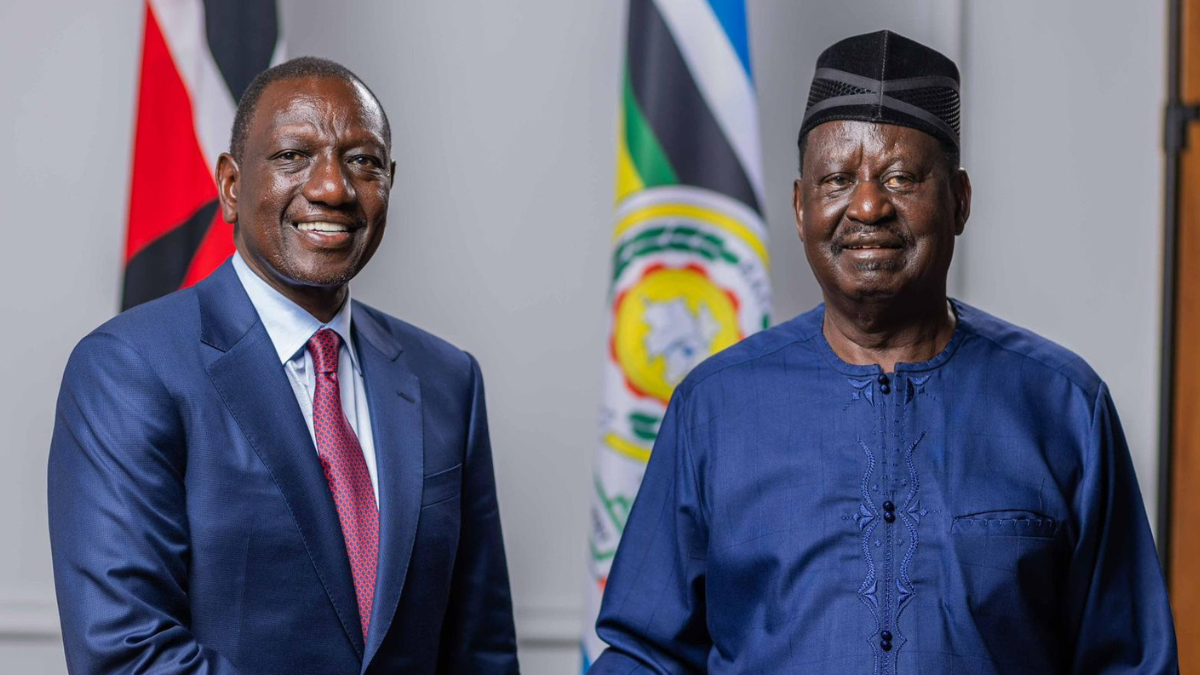
President Ruto and Raila at the launch of Raila’s AUC bid at State House – Nairobi

Fast forward to the present, and the political dynamics in Kenya have taken an unexpected turn, revealing the cyclical nature of political allegiances. Raila Odinga, who has long been a mainstay in Kenyan politics, is now setting his sights on the international stage with his bid for the African Union Commission (AUC) chairmanship. What is perhaps most surprising is the support he has garnered from President William Ruto, his long-time political adversary. This alliance, which would have been unthinkable just a few years ago, underscores the strategic calculations at play in Kenya’s political arena. For Raila, Ruto’s backing is crucial as it not only bolsters his candidacy but also provides a sense of national unity that could strengthen his position on the continental stage. For Ruto, supporting Raila may serve to consolidate his own power by easing domestic tensions and sidelining a potential competitor in the next general election. This pragmatic alliance highlights the fluidity of Kenyan politics, where today’s adversaries can quickly become tomorrow’s allies if the circumstances are right.

The implications of this alliance are far-reaching and could significantly reshape Kenya’s political landscape. Raila’s pursuit of the AUC chairmanship has left a potential power vacuum within ODM, a party that has been synonymous with his leadership for nearly two decades. This could lead to a reorganization within the party, with emerging leaders vying to fill the void, or it could trigger the formation of new alliances as political players reposition themselves for the future. Meanwhile, the Kenyan electorate is left to grapple with the ramifications of this newfound camaraderie between two of the country’s most influential leaders. On one hand, the alliance could bring a period of political stability, reducing the polarization that has characterized recent elections. On the other hand, there is a risk that voters, particularly those who have been loyal to Raila or Ruto based on their opposition to the other, may feel disillusioned or betrayed. This evolving narrative is a testament to the ever-changing nature of Kenyan politics, where alliances are as much about survival as they are about ideology, and where the next chapter is always just one unexpected alliance away.

References:

Capital News Ruto Hosts Historic Launch of Raila’s AU Commission Chairmanship Candidacy

The EastAfrican Raila Odinga: ‘My heart is ready, my hands are steady’ for AUC top job

The Star Raila arrives at State House ahead of his AUC bid launch

Nation Show of might as Ruto unveils Raila AUC bid

The Star Raila launches website to promote his AUC job bid

The Star [PHOTOS] Ruto officially launches Raila’s AUC bid at State House

The Nairobi Law Monthly Raila’s handshakes with opponents greatly cost his supporters

Nation United stand in vote against 2005 constitution gave birth to Orange

The Standard How referendum campaigns gave birth to ODM


Ruto’s Unfulfilled Promises and the Impact on Kenyan Citizens

In the realm of political leadership, the consequences of overpromising can be profound, leading to difficult decisions that may prioritize short-term gains over long-term welfare. President William Ruto’s governance in Kenya bears striking similarities to the biblical account of Herod the tetrarch, whose rash promise led to a morally compromising decision. This analysis explores how Ruto’s ambitious promises, much like Herod’s fateful vow, have placed him in a tight spot, forcing decisions that appease certain groups at the expense of the broader populace. Herod’s story is a cautionary tale of how a leader’s words can become a trap. When he promised to grant Herodias’ daughter whatever she wished, Herod did not anticipate the moral dilemma he would face when she asked for the head of John the Baptist. Despite his reluctance, Herod felt compelled to honor his promise to maintain his authority and avoid public embarrassment. Similarly, Ruto’s leadership has been marked by a series of promises that, once made, have proven difficult to keep. The grand visions he laid out during his campaign—ranging from economic reforms to social justice—have created high expectations among the Kenyan people. However, the reality of governance has revealed the challenges in fulfilling these commitments, leading to a growing sense of disillusionment among the populace.

Africa News Report

According to reports from The Nation and The Standard, this gap between Ruto’s promises and the outcomes on the ground has become increasingly evident. Many of the ambitious goals set by his administration have remained unachieved, leading to public frustration and criticism. The unfulfilled promises are not just political missteps; they have real consequences for the people, particularly in areas such as employment, economic stability, and social equity. Much like Herod, who found himself trapped by his own words, Ruto faces the challenge of managing the expectations he has set. His administration’s focus has often shifted towards maintaining political alliances and managing public perception rather than addressing the underlying issues that the promises were meant to resolve. This has led to decisions that seem more about preserving power than serving the broader interests of the Kenyan people, mirroring Herod’s decision to prioritize his reputation over justice.

KTN News Report

The consequences of such a leadership approach are far-reaching. Just as Herod’s actions resulted in the death of an innocent man to uphold a thoughtless promise, Ruto’s governance risks sidelining the needs and welfare of ordinary citizens. The pressure to deliver on promises, particularly when they are unattainable, can lead leaders to make decisions that are more about appeasing specific groups or maintaining political stability than addressing the real needs of the population. This analysis underscores the importance of careful, realistic promises in leadership. The story of Herod and the current challenges faced by Ruto serve as reminders that overpromising can compromise a leader’s integrity and effectiveness. For a global readership, the lesson is clear: leaders must be mindful of the weight of their words, as they will ultimately be held accountable for the promises they make, and the decisions taken to uphold them can have lasting impacts on society.

References:

Nation The promises versus reality: President Ruto’s rough road ahead

The Standard Ruto’s missteps, broken promises cause untold suffering to Kenyans

Nation The appeal of elsewhere: Of Ruto’s promises and reality

The Standard Wandayi: Ruto’s regime has failed Kenyans with its empty promises

People Daily Queries over Ruto empty promises after Gen-Z demos

The Star AJUOK: Why Ruto has become master of false promises

People Daily With no cogent plan, pact with Raila may buy Ruto time

Nairobi News International Women’s Day: 7 promises to women Ruto has not kept


Kenya’s Governance Crisis: Using Legal Frameworks to Silence Dissent

In recent years, Jimi Wanjigi, once regarded as Kenya’s most feared oligarch, has experienced a dramatic fall from grace, with the state employing various tactics to curtail his influence and silence his criticisms. Wanjigi, who was once a shadowy figure wielding immense power behind the scenes, has become a target of state machinery. This shift began when his relationship with the ruling elite soured, leading to a series of events that point to a broader pattern of intimidation against dissenters in Kenya. The state’s strategy seems to revolve around using legal frameworks and court processes as tools of political retribution, aiming to quash opposition voices and maintain control over the narrative.

Citizen Digital Report

The analysis of recent media coverage reveals a concerted effort by the Kenyan government to use the judiciary as a weapon against Wanjigi. From the fallout over the Standard Gauge Railway (SGR) project, where Wanjigi allegedly lost favor with powerful allies, to the multiple legal summons and court appearances he now faces, the pattern is clear: the courts are being leveraged to harass and weaken those who challenge the status quo. The media reports show a continuous escalation of state action against Wanjigi, including police summons, publicized court battles, and the orchestration of highly visible legal confrontations. These actions align with broader trends observed in Kenya, where the judiciary is increasingly used to stifle dissent and intimidate those who seek to expose governmental malfeasance.

This pattern of using legal and judicial means to intimidate is not unique to Wanjigi; it reflects a growing trend in Kenya where the state appears to weaponize the law to suppress criticism. As seen in the media reports, Wanjigi’s high-profile clashes with the government, including his dramatic court appearances and the recent confrontations over the rejected Finance Bill 2024 and the Nane Nane protests, underscore a broader issue of governance in Kenya. The persistent legal challenges faced by Wanjigi and others who oppose the regime highlight a troubling trajectory in which the state, rather than addressing concerns raised by critics, opts to punish them through a series of strategically timed and publicized legal actions. This strategy not only serves to neutralize opposition figures like Wanjigi but also sends a chilling message to others who might consider speaking out against government wrongdoing.

References:

The Standard How death and SGR fallout forced Jimi Wanjigi out of the dark power circle

Nation Jimi Wanjigi: Kenya’s most feared oligarch

The Standard Wanjigi: Man who wielded influence, now at odds with government

The Star Police summon Jimi Wanjigi for grilling over Nane Nane demos

Nation Jimi Wanjigi’s high-stakes drama: Ruto’s government wants to eliminate me