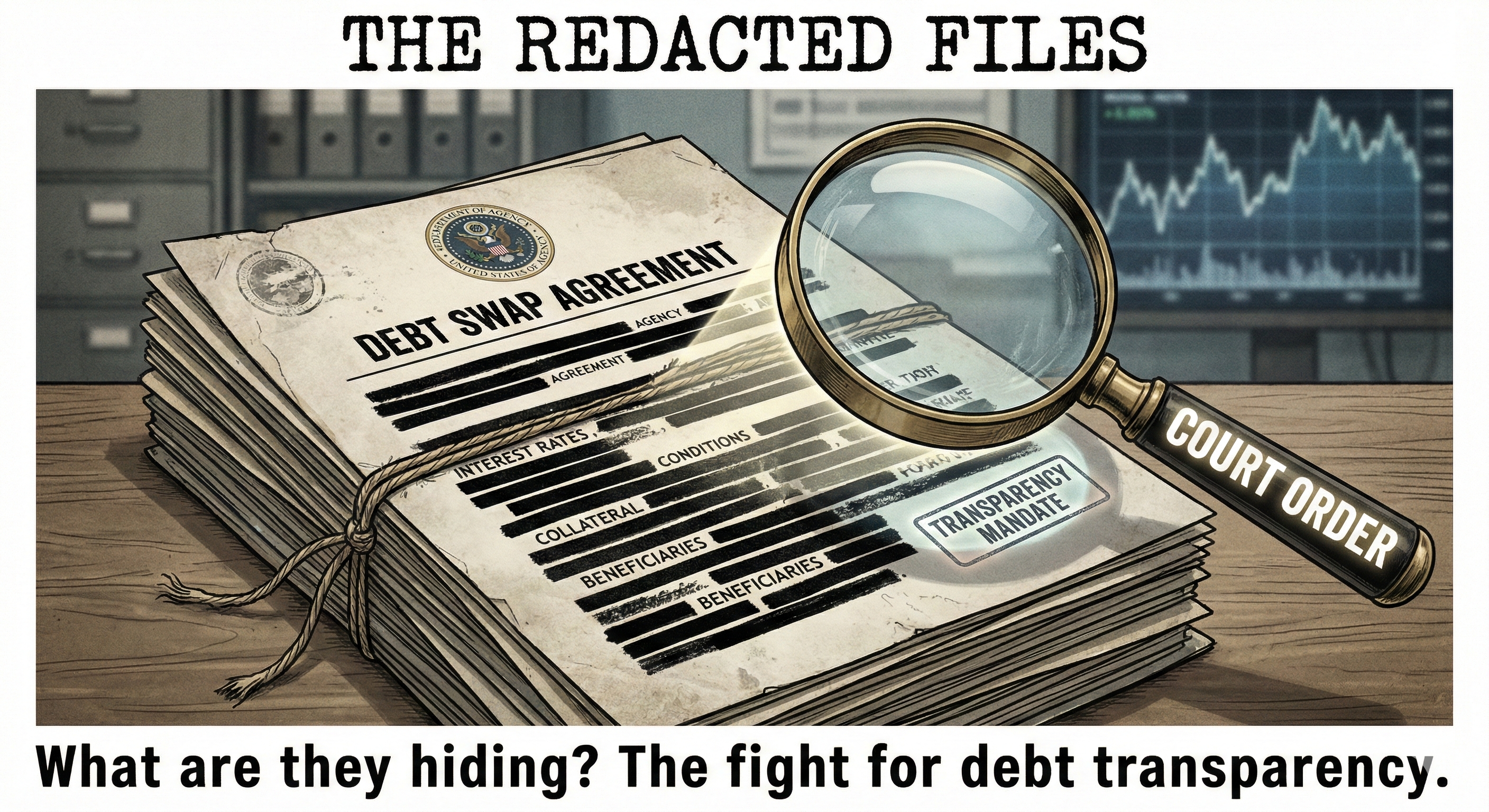
Despite the high stakes, the specific terms of the debt-for-food swap remain shrouded in secrecy, sparking legal battles and civil society alarm. A case filed at the East African Court of Justice, Wanjiru Gikonyo v The Attorney General, challenges the government’s refusal to disclose the full details of sovereign debt agreements. Litigants argue that committing future tax revenues and “savings” to long-term projects without public participation is unconstitutional. The lack of a public dashboard detailing exactly how the Sh129 billion will be spent creates a “transparency deficit” that invites mismanagement.
This opacity exacerbates the “sovereignty paradox.” By allowing the US-DFC and WFP to dictate the terms of expenditure, Kenya is effectively admitting that its own institutions cannot be trusted. While external conditionality acts as a safeguard against local corruption, the public remains in the dark about what exactly has been signed away. Are there hidden fees? What are the penalties for non-compliance? Without full disclosure, the Kenyan taxpayer is a passenger in a vehicle being driven by foreign creditors.
Transparency is not just a legal formality; it is the only disinfectant strong enough to prevent the “bureaucratic consignment” of funds. Civil society is demanding that the Treasury publish every shilling of the “savings” and every project beneficiary. Until then, the debt swap remains a “black box”—a deal negotiated in boardrooms in Washington and Nairobi, with the bill sent to the citizen who has no say in the menu.
References:
Afronomics Law Sovereign Debt News Update No. 147: The Promises and Transparency Pitfalls of Kenya’s $1 Billion Debt-for-Food Swap
The Institute for Social Accountability The High Court has ordered the National Treasury to disclose critical information on Kenya’s bilateral loans and sovereign bonds.
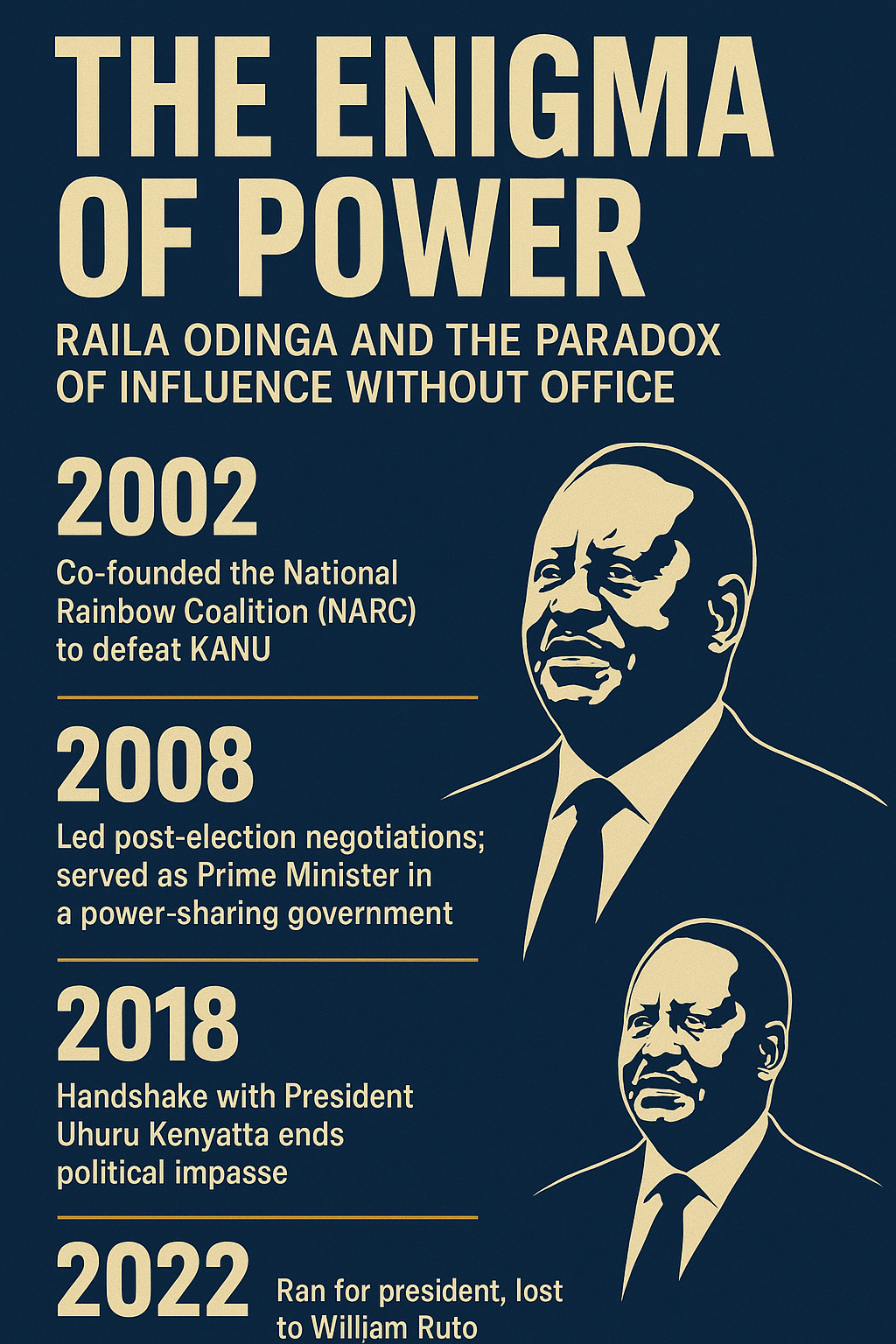
History rarely rewards those who come close — but in Raila Odinga’s case, proximity itself became the point of power. For more than four decades, Raila lived at the edge of power yet shaped every regime from within the shadows of opposition. He was, as The Africa Report aptly put it, “the man who lost every election but won Kenya’s democracy.” From the twilight of Daniel arap Moi’s rule to the dawn of Kenya’s multiparty renaissance, Raila’s defiance never waned — earning him both fear and reverence in equal measure. In 2002, when KANU’s dominance finally cracked, it was his dramatic declaration of “Kibaki Tosha” that propelled Mwai Kibaki to State House and ushered in the first peaceful transfer of power in Kenya’s history. Yet even in victory, Raila remained the outsider: betrayed by broken coalition promises, sidelined by those he helped elect. Still, he never relinquished the moral authority of the people’s voice. In 2005, his “Orange” movement defeated Kibaki’s draft constitution — a rare case of an opposition leader reshaping national destiny without holding office. And when the 2007 elections collapsed into violence, it was again Raila’s resilience that forced Kenya back from the brink, transforming a disputed vote into a dialogue for survival. Through pain, loss, and endurance, he became less a politician and more a barometer of Kenya’s democratic conscience — the man who could lose and still lead.
Raila’s power was never institutional; it was cultural, narrative, and profoundly human. He understood Kenya’s pulse — and weaponised symbolism like few before him. His aliases — Agwambo, Tinga, Baba — transcended politics, morphing into collective identities of resistance, belonging, and hope. His supporters saw in him their own unfulfilled promise; his rivals, a reminder that legitimacy cannot be decreed. Each administration that followed — from Kibaki to Kenyatta to Ruto — has been shaped, challenged, or legitimised by Raila’s political presence. As Prime Minister in the 2008 Grand Coalition, he co-supervised the nation’s reconstruction after post-election chaos and championed reforms that birthed the 2010 Constitution — arguably his greatest institutional legacy. That charter redefined Kenyan governance, devolving power to the counties and embedding civil rights into law, echoing the principles for which he had once been jailed. Later, his controversial 2018 “Handshake” with President Uhuru Kenyatta ended months of unrest following the disputed 2017 polls and restored political calm — though it also fractured his traditional support base. Yet, even that act reinforced his lifelong philosophy: that peace, not position, defines statesmanship. His later appointment as the African Union’s High Representative for Infrastructure confirmed his continental stature — a statesman recognised beyond Kenya’s borders for blending political endurance with technocratic vision.
In the end, Raila Odinga’s paradox was not that he failed to capture the presidency, but that he redefined what power itself means in a fragile democracy. His defeats never diminished his influence; they amplified it. Every president who took office did so under the long shadow of his moral authority. He forced institutions to evolve, compelled courts to assert independence, and transformed the vocabulary of opposition into the grammar of governance. In his twilight years, even adversaries acknowledged that Kenya’s political story could not be told without him — that every victory or reform bore his fingerprints somewhere beneath the surface. He was both architect and agitator, healer and heretic, rebel and reformer. Raila Odinga never occupied State House, but he changed what it stood for — from a fortress of fear to a house answerable to its citizens. And as the nation continues to wrestle with the legacy of leadership and legitimacy, his life offers a sobering truth: that true power is not seized, but earned — and sometimes, it lives longest in the hands of those who never hold the crown.
References:
The Africa Report Raila Odinga: The man who lost every election but won Kenya’s democracy
The Star Raila Odinga: The man who changed Kenya without ever ruling it
The Star Most consequential politician in history of Kenya bows out
All Africa Kenya Mourns Raila Odinga ‘The President’ It Never Had
TRT World Raila Odinga: Kenya’s political enigma never left the stage
Kenya has long positioned itself as a key mediator in East Africa, with a foreign policy prioritizing peaceful coexistence and regional stability, evidenced by its involvement in organizations like IGAD and the EAC . While historically successful in mediating conflicts, such as the Sudanese Comprehensive Peace Agreement in 2005, recent diplomatic forays under President Ruto have encountered significant headwinds . Initiatives in the Democratic Republic of Congo, including bringing the DRC into the EAC and leading the EAC Regional Force, have been marred by accusations of bias and a lack of trust from Kinshasa, particularly concerning the handling of rebel groups . Similarly, Kenya’s hosting of Sudanese Rapid Support Forces meetings has drawn strong condemnation from the Sudanese government, which views it as a hostile act, further damaging Kenya’s image as a neutral broker in regional disputes . These challenges underscore a potential shift in regional perceptions of Kenya’s diplomatic impartiality, which could have implications for its ongoing efforts in other conflict zones.
A Report by Citizen Digital
Against this backdrop, Kenya launched the Tumaini Initiative in May 2024, a high-level mediation process aimed at addressing the protracted crisis in South Sudan by engaging hold-out groups that did not sign the 2018 peace agreement . Led by veteran mediator General Lazarus Sumbeiywo, the initiative seeks to reboot the existing peace deal, extend its implementation timeline, and potentially pave the way for delayed elections . While initial talks saw agreement on a negotiation agenda focusing on the root causes of the conflict, the identity of parties, the relationship with the existing peace agreement, and power-sharing arrangements, the process has faced significant hurdles . Key opposition groups, such as the South Sudan Opposition Movement Alliance (SSOMA), have rejected the Kenyan mediation, arguing that it fails to address the fundamental issues fueling the conflict . This skepticism, coupled with the deep-seated political instability, the ongoing humanitarian crisis exacerbated by the war in Sudan, and the slow progress in implementing the 2018 agreement, casts a shadow over the potential for the Tumaini Initiative to achieve a comprehensive and lasting peace.
The effectiveness of Kenya’s diplomatic mission in South Sudan hinges on several critical factors, including its ability to rebuild trust and demonstrate neutrality, foster a truly inclusive dialogue that addresses the grievances of all stakeholders, and secure sustained commitment from South Sudanese leaders . International reaction to the Tumaini Initiative has been cautiously supportive, with organizations like the UN emphasizing the importance of regional support from Kenya while also expressing growing concern over the deteriorating situation in South Sudan . Expert analysis suggests that while the initiative offers a glimmer of hope by aiming to address the root causes of the conflict, the history of failed peace talks and the persistent lack of political will among South Sudanese leaders remain significant obstacles . Ultimately, for Kenya’s efforts to yield lasting results, a concerted and collaborative approach involving regional and international partners, coupled with a genuine commitment from all South Sudanese parties to prioritize peace and stability over political gains, will be essential to navigate the complex landscape and break the cycle of conflict.
References:
Aljazeera Peacemaker or peacebreaker? Why Kenya’s good neighbour reputation is marred
Cabinet reshuffles, a common feature in many developing democracies, often reflect a complex interplay between the need for governmental competence and the pressures of political maneuvering, as evidenced by the recent changes in the Kenyan administration. Defined as alterations in the executive branch’s composition, these reshuffles can be driven by various factors, including the desire to enhance government performance, address corruption, consolidate political power, reward loyalty, respond to public pressure, or signal policy shifts. The Kenyan cabinet reshuffle of March 2025, which saw key figures like Aden Duale moved to the Ministry of Health and Justin Muturi dismissed from his role in Public Service, exemplifies this dynamic. While the stated reasons often revolve around improving service delivery and aligning with the government’s agenda, underlying motivations frequently involve political considerations such as managing internal dissent, rewarding allies, and strategically positioning individuals within the executive. This constant reshuffling raises fundamental questions about the balance between appointing technically skilled individuals and ensuring political loyalty in the pursuit of effective governance.
A Report by Citizen Digital
The motivations behind frequent cabinet reshuffles in developing democracies are multifaceted, often stemming from a blend of administrative and political imperatives. In the Kenyan context, the reassignment of Aden Duale to the Health Ministry to address challenges within the Social Health Authority suggests an attempt to improve government performance in a critical sector. However, the dismissal of Justin Muturi, following his public criticism of the government and subsequent accusations of incompetence from President Ruto, highlights the significance of political loyalty and the management of dissenting voices within the cabinet. Academic literature supports this observation, noting that leaders in developing democracies often prioritize consolidating political power and rewarding loyalty, sometimes at the expense of technical competence. This “loyalty-competence trade-off” is a recurring dilemma where leaders balance the need for effective governance with the imperative of maintaining political stability and control. The Kenyan reshuffle, with its mix of stated performance objectives and apparent political motivations, underscores this complex dynamic.
The frequent occurrence of cabinet reshuffles can have significant consequences for governance and public perception in developing democracies like Kenya. While intended to inject new impetus or address specific challenges, these changes can also lead to instability within government ministries, disrupting policy continuity and hindering the development of long-term strategic planning. When ministers are frequently moved or replaced, the time required for new appointees to gain expertise and build effective working relationships can impede the overall effectiveness of governance. Furthermore, if the public perceives these reshuffles as being driven primarily by political expediency rather than a genuine commitment to improved governance, it can erode public trust in government institutions and the democratic process. The Kenyan example, with its swift dismissal of a cabinet secretary after public disagreement, risks reinforcing perceptions of a system where loyalty trumps competence, potentially impacting public confidence and the long-term stability of the nation’s governance.
References:
The Star Duale moved to Health ministry in new Cabinet changes
KBC President Ruto drops Muturi in new cabinet changes
Kenya’s decision to mutually end its $3.6 billion loan arrangement with the International Monetary Fund (IMF) marks a significant shift in the nation’s approach to economic management, primarily driven by a confluence of unmet fiscal targets and mounting public discontent . The existing Extended Fund Facility (EFF) and Extended Credit Facility (ECF) arrangement, while having disbursed a substantial $3.12 billion, faced a critical juncture with its ninth review, which ultimately was not pursued . The core issue stemmed from Kenya’s inability to meet specific fiscal obligations stipulated under the program, leading to the cancellation of a significant $850 million payment . This failure to adhere to the agreed-upon spending and revenue collection benchmarks highlighted the challenges President Ruto’s administration encountered in balancing the demands of fiscal discipline with the socio-political realities on the ground . Compounding these difficulties were the widespread public protests against the Finance Bill of 2024, a piece of legislation designed to boost government revenue in line with IMF recommendations but which proposed tax hikes on essential goods, triggering significant public outcry and ultimately its withdrawal . Despite this setback, Kenya has already initiated discussions with the IMF for a new loan agreement, indicating a continued recognition of the necessity for external financial support as the nation grapples with a considerable debt burden.
A Report by NTV Kenya
The abrupt termination of the IMF program carries significant implications for Kenya’s already strained economic landscape, particularly concerning its high levels of debt and the stability of its financial markets . With a debt-to-GDP ratio exceeding sustainable thresholds and a substantial portion of government revenue already committed to debt servicing, the discontinuation of IMF funding introduces a potential funding gap that could further exacerbate these vulnerabilities . While the government has sought alternative financing through a loan from the UAE and the restructuring of Eurobonds, these measures may come with increased borrowing costs and potential foreign exchange risks . Experts also anticipate that the absence of the IMF program’s oversight could lead to renewed pressure on the Kenyan Shilling and the external sector, potentially impacting inflation and investor confidence . The IMF itself had previously assessed Kenya’s public debt as being at a high risk of distress, and the termination of the program could intensify these concerns, making future access to international capital markets more challenging and potentially increasing the long-term risk of default .
Looking ahead, Kenya faces a period of economic uncertainty that will require careful navigation and strategic policy decisions . The government will likely need to implement further austerity measures, including budget cuts and enhanced domestic revenue collection, to compensate for the lost IMF funding and maintain fiscal credibility . The success of these measures, coupled with the ongoing negotiations for a new IMF loan agreement targeted for finalization by November 2025, will be crucial in determining Kenya’s economic trajectory . Building public trust and ensuring transparency in the implementation of fiscal reforms will be paramount, especially in light of the recent widespread protests against IMF-backed austerity measures . Ultimately, Kenya’s ability to achieve long-term economic stability and inclusive growth will depend on its commitment to fiscal discipline, equitable revenue mobilization, and sound governance practices in the absence of the previous IMF program.
References:
News Central Kenya Abandons Existing IMF Programme in Pursuit of New Loan Agreement
Further Africa Kenya and IMF Drop Loan Review and Move Toward New Financing Deal
Daba Finance Kenya Faces IMF Setback After $800M Review Falls Through
Aljazeera What do the IMF and foreign debt have to do with Kenya’s current crisis?
The Eastleigh Voice Gen Z anti-tax demos dented Kenya’s GDP growth prospect for 2025 – IMF
African Business IMF exit and eurobonds raise questions over Kenyan debt
Kenya finds itself at a pivotal point in its foreign policy journey, striving to reconcile its aspirations for a more inclusive approach with the enduring reality of presidential dominance . While President Ruto champions a “whole-of-society” approach, involving Parliament, the Judiciary, and civil society in foreign policy decisions, the long-standing centralization of authority in the presidency raises questions about the government’s commitment to inclusivity . This tension is further complicated by domestic political pressures, regional security challenges , and the evolving global landscape, where the rise of new powers like China demands greater diplomatic agility and strategic foresight .
A Report by Thee Alpha House
Adding to this complexity, Ruto’s recent foreign policy actions, such as deploying troops to Haiti, have sparked controversy, raising concerns about prioritizing external interventions over domestic needs and aligning too closely with Western interests . This has fueled public discontent and raised questions about Kenya’s commitment to non-alignment and pan-Africanism . Moreover, Kenya faces the increasing influence of non-state actors, such as NGOs and multinational corporations, which can exert significant influence on policy through advocacy and economic power.
Despite these challenges, Kenya has opportunities to enhance its foreign policy effectiveness. The recently approved Foreign Policy 2024 outlines a comprehensive vision for international engagement, focusing on economic diplomacy, peace diplomacy, and diaspora diplomacy, among other areas. It also emphasizes strengthening the Ministry of Foreign Affairs and improving training for diplomatic staff. To navigate this complex landscape effectively, Kenya should embrace evidence-based policymaking, enhance public diplomacy, increase citizen engagement, and foster strategic foresight, drawing from global best practices and addressing the contradictions in its foreign policy to emerge as a leader in Africa and a respected voice on the world stage.
References:
KBC Kenya’s foreign policy is determined by the President, says Wetang’ula
The interplay between church, state, and society in Kenya has reached a critical juncture under the Kenya Kwanza administration led by President William Ruto. Rooted in the constitutional principle of separating church and state while safeguarding religious freedoms, this relationship has become a focal point of public debate, particularly due to the president’s high-profile monetary contributions to churches. While Ruto has framed these donations as acts of faith and moral responsibility, critics argue they exemplify transactional politics, aiming to secure political loyalty and influence. This practice has sparked widespread discontent among Kenyans, many of whom see it as a dissonance between the administration’s austerity rhetoric and the economic struggles faced by citizens. Historically, the church in Kenya has been a moral compass and a voice for justice, advocating for democratic reforms and human rights. However, the perception of co-optation by political interests risks eroding this vital role.
Obama gives a speech on the importance of Church and State separation – Video Courtesy: Rita Brown
The church’s enduring influence on Kenyan society places it at the heart of these debates. While some religious leaders have embraced Ruto’s overtures, others, particularly within the Catholic Church, have criticized the government’s inaction on systemic issues like corruption and human rights abuses. This tension reflects broader concerns about the church’s ability to maintain its prophetic voice amid the allure of political entanglements. Furthermore, tragedies such as the Shakahola massacre, where religious freedoms were misused with devastating consequences, underscore the need for a careful balance between protecting religious liberty and ensuring responsible governance. Despite Ruto’s opposition to state regulation of churches, calls for oversight to prevent abuse and protect vulnerable populations continue to grow. These challenges highlight the complex role of the church as both a partner to the state and an independent advocate for justice in society.
The broader implications of this relationship extend to Kenya’s political and social fabric. Ruto’s donations, seen as emblematic of a patronage culture, reflect deeper concerns about governance and the prioritization of symbolic gestures over substantive solutions to socio-economic issues. For a global audience, Kenya’s experience offers a case study in the risks and opportunities of church-state engagement. While collaboration between these institutions can address societal challenges, the erosion of the church’s independence undermines its credibility and moral authority. As Kenya navigates this delicate balance, the need for transparent governance, ethical leadership, and a focus on structural reforms is paramount. Without these measures, the evolving dynamics between church and state risk compromising the integrity of both institutions and the well-being of the society they aim to serve.
References:
The Star Church and state must work together for Kenyans – Ruto
The Conversation Kenya’s churches have a powerful political voice – they fill a vacuum left by politicians
BBC How Kenya’s evangelical president has fallen out with churches
Nation State not in competition with church, President Ruto says
The Standard Church and state: When religion turns into a worldly tool
The East African Kenyan Catholic Church calls out Ruto on rights abuse, graft
Nation Ruto: No state regulation of Kenyan churches
BBC Catholic Church rejects $40,000 from Kenya’s president
In 2021, President William Ruto mandated that all Kenyan government agencies onboard their payment systems onto the eCitizen platform using a unified PayBill number. This move aimed to enhance transparency, reduce corruption, and centralize revenue collection. The directive leveraged Kenya’s already significant digital infrastructure, including the widespread use of mobile money, to improve public service delivery. The eCitizen platform, launched in 2014, integrates over 270 services into a digital framework that eliminates inefficiencies like pilferage and bureaucratic delays. The transition has delivered measurable gains, with non-tax revenue increasing by KES 8.6 billion in a year and monthly collections crossing KES 2 billion. Users have benefited from the convenience of making payments remotely, and government agencies have experienced fewer operational inefficiencies. However, some agencies have resisted compliance, preferring independent systems, and systemic challenges during periods of high demand have occasionally hindered user satisfaction.
KBC Report
Despite its promise, the directive has drawn criticism, primarily for its neglect of Kenya’s digital divide. Rural and economically disadvantaged communities often lack the infrastructure, smartphones, or digital literacy required to access eCitizen services, leaving many excluded from essential government functions. Instances of systemic failure, where users were unable to complete critical transactions, have heightened public frustration and raised questions about the platform’s reliability. Additionally, centralizing payments has exposed bottlenecks, particularly during periods of peak activity such as school fee payments. Critics argue that these issues could have been mitigated with better infrastructure, comprehensive user training programs, and broader stakeholder engagement during implementation. Resistance from certain government agencies further complicates the directive’s full realization, as they remain reluctant to cede control of previously independent revenue streams.
President Ruto’s directive is emblematic of Kenya’s ambition to lead in digital governance, showcasing the potential of mobile money and centralized systems in modernizing public service delivery. The integration of mobile payments has bolstered compliance and convenience, demonstrating that digital solutions can drive economic efficiency and transparency. However, the government must address systemic challenges to ensure inclusivity, robustness, and trust in the platform. By investing in infrastructure, reducing the digital literacy gap, and fostering collaborative implementation with all stakeholders, the eCitizen platform could evolve into a model of equitable and efficient governance. Without these measures, the risk remains that the digital transformation will exacerbate inequalities rather than mitigate them, leaving Kenya’s most vulnerable populations behind.
References:
MSN William Ruto orders KPLC, other state agencies to shift to single eCitizen pay bill
Business Daily State eyes more income with Sh689m e-Citizen allocation
The Star State directs national school parents to pay fees via e-citizen
Nation Ruto’s directive on single pay point for all govt services challenged
Business Daily Single paybill lifts non-tax collection by Sh8.6bn
Business Daily Monthly e-Citizen revenue crosses Sh2bn mark under single paybill
The broader implications of Deputy President Rigathi Gachagua’s impeachment extend far beyond his individual fate. The unfolding political drama signals a moment of significant realignment within the ruling Kenya Kwanza coalition. Historically, impeachments in East Africa have served as tools for managing political transitions and consolidating power. Gachagua’s removal would open the door for new political figures to emerge and challenge the existing power structure within the coalition. This is particularly relevant as Kenya approaches future elections, with key players already positioning themselves for leadership roles within a post-Gachagua political landscape.
KTN News Report
According to sources close to the impeachment proceedings, President Ruto has been directly involved in the decision-making process, demonstrating his commitment to reforming the coalition and addressing internal dissent. The move may also be seen as an effort by President Ruto to assert his authority and restore confidence among Kenya Kwanza supporters (Nation Africa, “Deputy President Rigathi Gachagua Impeached”). The impeachment of Gachagua has sparked intense debate within the coalition, with some members calling for greater accountability and others questioning the motivations behind the move. The potential consequences are far-reaching, including reshaping political alliances and influencing the trajectory of Kenya’s leadership. As the nation grapples with the challenges of leadership, succession, and governance, the outcome of Gachagua’s impeachment will have significant implications for the country’s future. Should he be removed, it will be seen as a significant victory for his political opponents, but it may also open a new chapter of uncertainty within the Kenya Kwanza coalition.
In light of these developments, it is crucial to consider the broader lessons from this moment in Kenya’s political history. Gachagua’s impeachment serves as a reminder that impeachments are deeply political processes, often used to manage power transitions and consolidate authority. The consequences of his potential removal will be felt for years to come, reshaping the country’s political landscape and influencing the path forward. Regardless of the outcome, this moment marks a pivotal shift in Kenya’s political history, as the nation navigates the complexities of leadership succession, governance, and political realignment.
References:
Nation Deputy President Rigathi Gachagua impeached
ABC News Kenya’s deputy president defends himself before impeachment
RFI Kenya’s deputy president faces impeachment as ruling coalition fractures
The impeachment motion against Deputy President Rigathi Gachagua is the culmination of a series of political missteps and growing public disillusionment. Despite his attempts to halt the process through legal means, the momentum behind his ouster seems unstoppable. Key legal provisions under Article 150 of Kenya’s Constitution provide a clear framework for removing the Deputy President on grounds of gross misconduct, a violation of the Constitution, or inability to perform official duties. Critics argue that Gachagua’s leadership has fallen short of these standards, with accusations of incompetence and mismanagement forming the basis of the impeachment. As Parliament debates his future, Gachagua finds himself in a precarious position, relying on his dwindling political allies to defend him against a rising tide of opposition.
Citizen Digital Report
In the broader context of East African politics, deputy leaders often become scapegoats for larger systemic issues within the government. Historically, East African countries have witnessed several instances where deputies were removed to pacify internal dissent or to realign political interests. Kenya, in particular, has a history of strained relationships between presidents and their deputies, with the infamous fallout between President Moi and Vice President Mwai Kibaki in March 1988, serving as a key example. Gachagua’s case mirrors these historical struggles, as his weakening influence within the coalition and failure to effectively navigate political alliances have made him vulnerable to impeachment. His perceived failure to secure Mt. Kenya’s political interests, combined with deteriorating relations with President Ruto, has created an opening for his political adversaries.
The national reactions to Gachagua’s potential ouster have been deeply polarized, with regional leaders and citizens offering mixed responses. In his Mt. Kenya stronghold, many accuse him of abandoning the region’s interests, aligning too closely with President Ruto’s Rift Valley faction. This sense of betrayal has been a significant factor in the push for his impeachment. However, Gachagua still retains some support in the Rift Valley, though even here, the mood is shifting. Public participation forums held across the country last weekend showed that many citizens favor his removal, signaling a desire for a change in leadership. This groundswell of public opinion, coupled with mounting political pressure, points to a likely impeachment. For Gachagua, the parliamentary debate represents not just a fight for political survival but a reckoning with the broader frustrations felt by many Kenyans over Kenya Kwanza’s governance.
References:
Reuters Kenya’s deputy president asks court to halt his impeachment
RFI Kenya’s deputy president faces impeachment as ruling coalition fractures
Nation Martha Karua: Ruto, Gachagua should be impeached
ABC News Kenya’s deputy president defends himself before impeachment
 Jijuze