Combatting Fraud in Kenya’s Tourism: A Growing Threat

Kenya’s tourism industry, a vital pillar of the economy and a top foreign exchange earner, is now battling a growing reputational threat: sophisticated fraud targeting unsuspecting travelers. According to the latest sector review, a surge in fake booking websites, impersonated tour operators, and fraudulent payment channels is eroding visitor trust and undermining the gains made in post-pandemic recovery. Many of these scams operate with alarming polish—using stolen branding, cloned websites, and even counterfeit licenses to lure victims into paying for non-existent safaris, hotel stays, or cultural tours. Victims, often diaspora Kenyans and international tourists planning high-value itineraries, only discover the deceit upon arrival, when their bookings prove fake and their funds unrecoverable. The Kenya Tourism Board (KTB) and sector associations have flagged these schemes as a systemic risk that, if unchecked, could tarnish Kenya’s image as a safe, reliable destination.
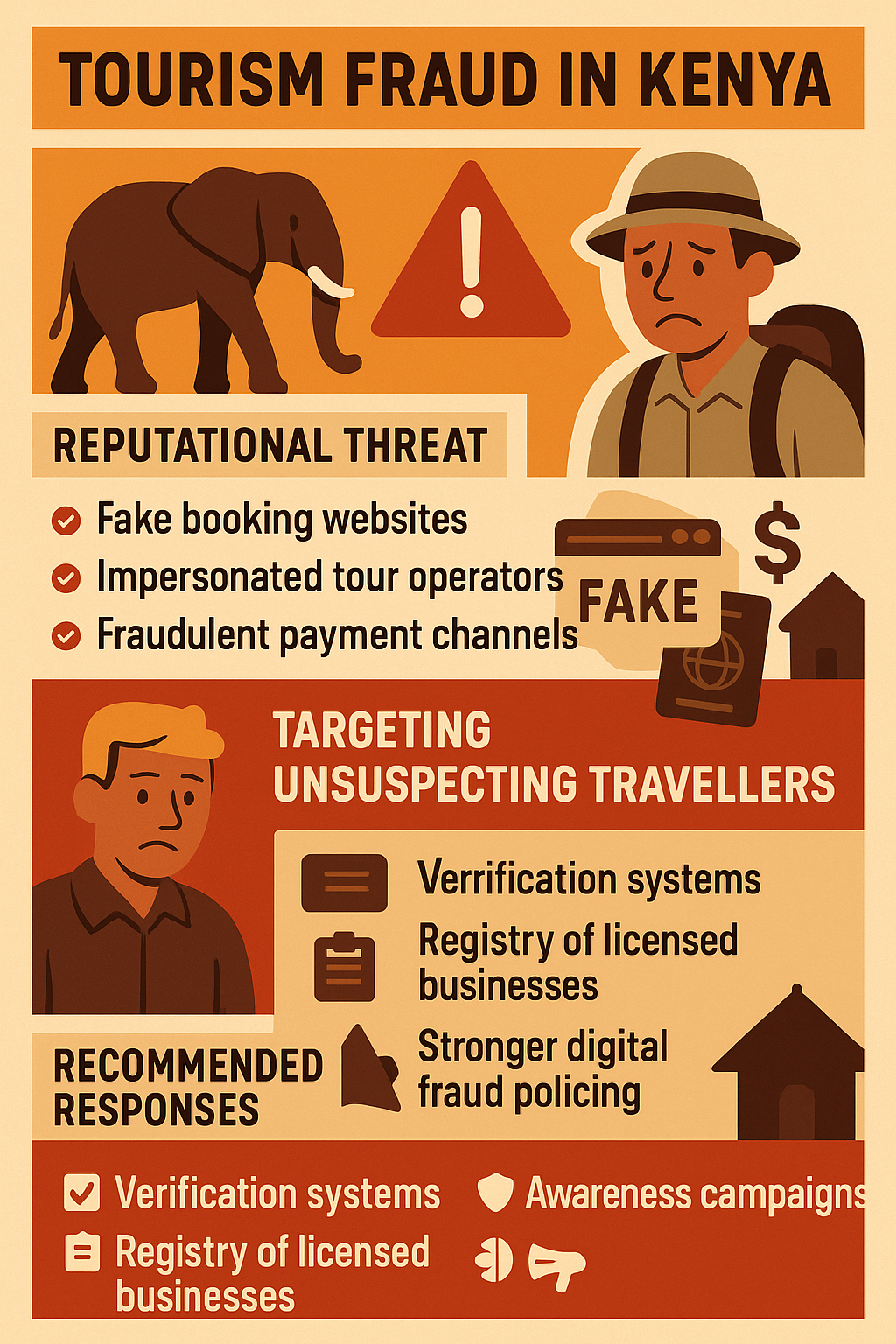
Industry stakeholders stress that the challenge is compounded by gaps in regulatory oversight, slow cross-border law enforcement cooperation, and limited consumer awareness in key source markets. Fraudsters exploit these vulnerabilities, targeting peak travel seasons and leveraging digital marketing channels to reach large audiences with minimal traceability. Tour operators report that such scams not only cause financial loss but also drive potential travelers toward competing destinations perceived as safer or better regulated. Its important to note that while Kenya’s tourism marketing campaigns have successfully reignited global interest, this momentum risks being reversed if fraud-related horror stories dominate travel forums and social media. Experts recommend a multi-pronged response: real-time verification systems for operators, a central registry of licensed tourism businesses accessible to the public, stronger digital fraud policing, and targeted awareness campaigns in both domestic and foreign markets.

To its credit, the government has begun aligning with these recommendations, with the Ministry of Tourism working alongside the Communications Authority, cybercrime units, and private-sector stakeholders to roll out verification platforms and consumer education drives. Pilots for an online “Tourism Trust Mark” are already underway, enabling travelers to authenticate operators before making payments. Additionally, diplomatic missions are being engaged to circulate fraud alerts in high-risk markets, while tourism associations are exploring partnerships with payment processors to flag suspicious transactions. These initiatives, if scaled and sustained, could restore confidence and reinforce Kenya’s brand as a secure, trustworthy destination. In an increasingly competitive global tourism landscape, safeguarding the integrity of the travel experience is no longer optional—it’s a prerequisite for growth. Kenya’s long-term competitiveness will hinge not just on the beauty of its landscapes, but on the trustworthiness of the path visitors take to reach them.

References:

Kenyans.co.ke DCI Arrest Suspect After Greek Tourist Loses Ksh3.6 Million in Maasai Mara Scam

Government of Canada Kenya travel advice

Action Fraud Kenya Romance Scam

Shian Safaris How to Avoid Being Conned on Your Travels in Kenya

Understanding Kenya’s eTA Troubles: What Travelers Need to Know

Kenya’s ambitious shift to a universal Electronic Travel Authorization (eTA) system on January 1, 2024, was meant to be a game-changer for tourism, projecting an image of digital efficiency and openness. The vision—replacing traditional visas with an online pre-authorization—was sold as “visa-free” travel for the world, echoing President William Ruto’s promise of easier entry and smoother travel. Yet, what travelers encountered was a reality at odds with the marketing: mandatory paid applications, detailed documentation requirements, and unpredictable processing times. For visitors from over 40 countries that once enjoyed genuine visa-free access, the change felt less like liberation and more like an unexpected hurdle. Industry insiders describe the rollout as a “bait and switch” that has not only dented Kenya’s reputation but also triggered fears of retaliatory entry restrictions abroad. This mismatch between promise and practice was compounded in March 2025 when the government quietly replaced a stable Swiss-developed system with a locally built platform plagued by downtimes, payment failures, and technical glitches—sparking a multi-million dollar lawsuit and months of operational chaos.

A Report by iVisa

The fallout has been costly. Tour operators, hotels, and airlines have all reported significant losses as delays, application failures, and the absence of a functional support framework have disrupted itineraries and led to cancellations. Airlines face fines of KES 1 million per passenger without valid eTA documentation, a policy that has left many travelers stranded at departure gates. While Kenya recorded a record-breaking Sh 452 billion in tourism revenue in 2024—driven largely by post-pandemic recovery and aggressive marketing—the eTA crisis has cast a long shadow. The country’s visa openness ranking plunged from 29th to 46th in Africa, eroding hard-earned goodwill and weakening its competitive edge against rivals like Ghana and Rwanda, which have fully opened their borders. Industry leaders, including the Kenya Association of Travel Agents (KATA) and the Kenya Tourism Federation (KTF), warn that unless systemic fixes are made, Kenya’s target of five million annual visitors by 2027 could be jeopardized. Their calls range from establishing an emergency “crisis desk” for stranded travelers to temporarily reinstating visas on arrival while the digital system is repaired.

In response to mounting pressure, the government has introduced notable policy reversals, exempting most African and Caribbean nationals from eTA requirements and promising faster approvals for others. At the same time, industry stakeholders and the Tourism Ministry are working to embed risk management into the process—introducing contingency measures such as backup server capacity, offline verification protocols at airports, and dedicated “rapid response” teams to assist travelers facing last-minute clearance issues. While KATA’s August 2025 meeting with Tourism CS Rebecca Miano confirmed that some operational bottlenecks remain for non-exempt travelers, these interventions are designed to ensure that no visitor’s trip is derailed by system errors or delays. The emphasis now is on creating a safety net that preserves the integrity of Kenya’s digital entry framework while protecting the traveler’s experience. In an era where seamless digital access is part of a destination’s brand, these safeguards—paired with transparent communication—are key to restoring confidence and reinforcing Kenya’s identity as a warm, accessible, and world-class destination.

References:

The Permanent Mission of the Republic of Kenya to the United Nations Implementation of Electronic Travel Authorization (eTA) in Kenya

Kenya Association of Travel Agents Tourism industry raises concerns over ETA system delays

eVisa How Foreigners Will Apply For Kenya ETA Before Visiting (Visa-Free Kenya)

Aljazeera ‘Bait and switch’: Why Kenya’s no-visa policy is drawing pushback

Kenya Association of Travel Agents KATA Meets Tourism CS Rebecca Miano to Address Sector Challenges and Strengthen Collaboration