Empowering Kenya’s Informal Waste Pickers for a Sustainable Future

Long before policymakers coined terms like “Extended Producer Responsibility” or “circular economy,” Kenya’s informal waste pickers were already living that reality — only without recognition, protection, or pay equity. Every dawn, thousands of men and women descend upon dumpsites from Dandora to Mombasa, armed with hooks, sacks, and unmatched resilience. They are the invisible workforce behind the country’s fragile recycling system, recovering up to 80 percent of all plastics that ever get recycled. Yet, despite this colossal contribution, their average earnings remain trapped between KSh 30–50 per kilogram, with no health insurance, no stable contracts, and little policy voice. It’s a moral contradiction and an economic inefficiency rolled into one: the very people enabling Kenya’s environmental survival are surviving on its margins. The system is built on their sweat, but not their dignity.

The irony deepens when you follow the plastic’s trail. Once the pickers sell to small middlemen, the material ascends through aggregation points — like Mr. Green Africa’s sorting hubs — and ends up feeding multinational supply chains that boast of “sustainable sourcing.” At every stage, the profit margins grow — except for the people who initiate the cycle. Yet without these workers, Kenya’s plastic waste problem would quadruple overnight. Their local intelligence — knowing which streets yield high-value PET, which neighborhoods mix organics with plastics — is the kind of human data even the best AI sorting systems can’t replicate. In cities like Nairobi, where waste management systems are perpetually underfunded, informal networks fill the void that government institutions have left wide open. The question isn’t whether they matter; it’s whether we’ll ever pay them like they do.

To unlock Kenya’s circular future, policymakers must stop treating informal pickers as peripheral players and start embedding them in the national waste economy. That means formal recognition, access to microfinance, integration into municipal contracts, and training to adapt to upcoming high-tech recycling plants. When hybrid models like enzymatic recycling and pyrolysis eventually take root, the quality of feedstock — clean, segregated plastics — will be the single biggest success factor. And who’s best positioned to ensure that? The same waste pickers who’ve been sorting Kenya’s chaos by hand for decades. Investing in their safety, tools, and professionalization isn’t charity — it’s infrastructure. The day we place their expertise at the center of policy, Kenya’s recycling revolution will finally have the spine it needs.

References:

Africa News Nairobi-based Company Turns Plastic Waste into Eco-Friendly Bricks

The Standard Program to address welfare of Kenyan waste pickers starts

Daily Nation Kenya picked to lead Africa’s plastic waste revolution

WWF Lifetime cost of plastic 10 times higher for low-income countries than rich ones, revealing crippling inequities in plastics value chain

Heinrich Böll Stiftung Garbage collectors who are treated like trash

Daily Nation It is a struggle for recognition and inclusivity

The Future Grid: Where Africa’s Power and Politics Collide.

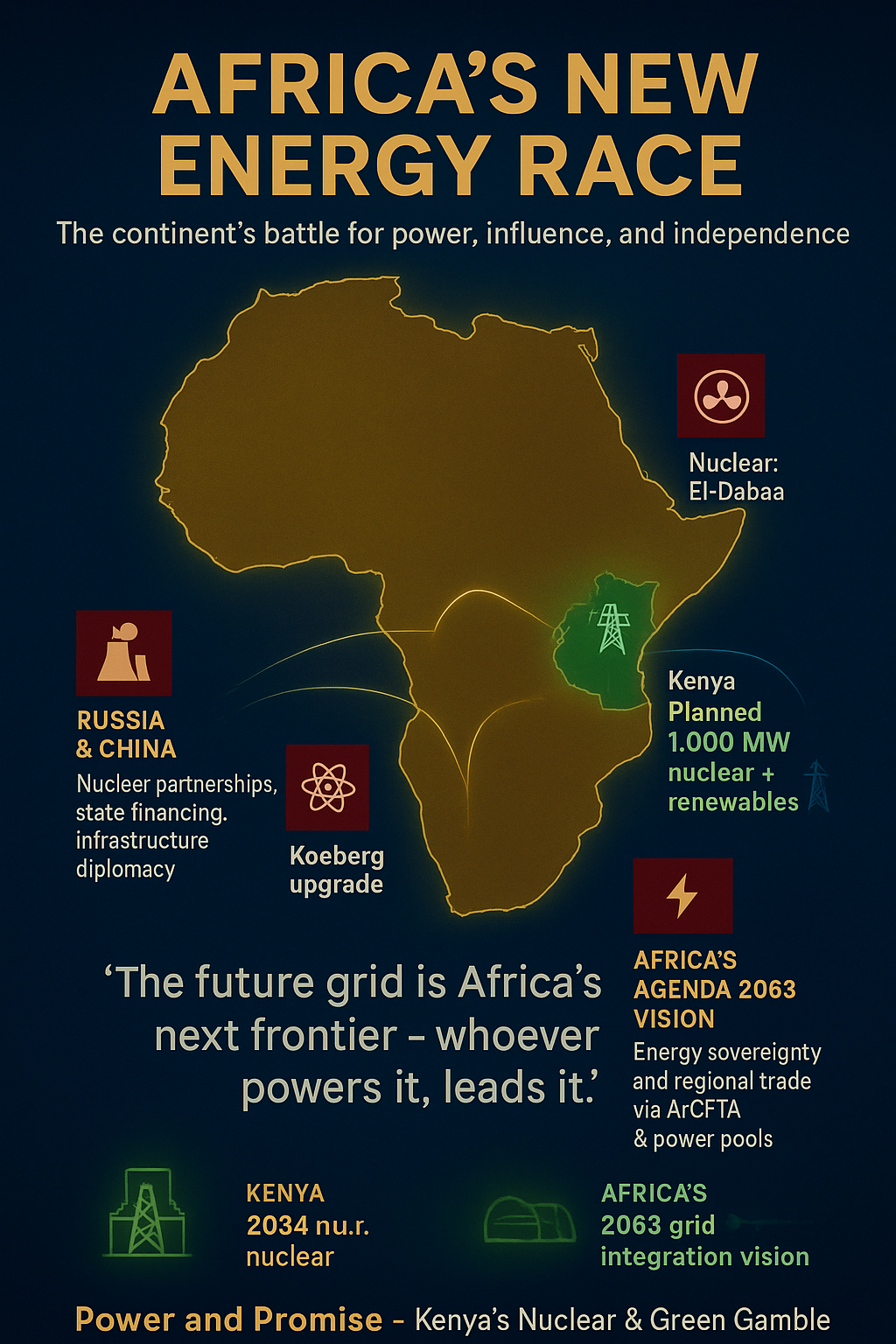
Africa’s energy landscape is shifting faster than at any time in its postcolonial history. From North Africa’s nuclear ventures to Southern Africa’s hydrogen ambitions, the continent is quietly constructing a new map of power — one defined not by oil reserves, but by grid capacity and global alliances. Russia and China are embedding influence through nuclear partnerships; the United States and Europe counter with renewables and clean-tech financing. Across the continent, energy has become the new currency of diplomacy. The story is no longer about light bulbs and power stations — it’s about sovereignty, soft power, and survival. And in this unfolding drama, Kenya stands at the intersection of ambition and caution, armed with geothermal prowess, nuclear dreams, and the burden of fiscal fragility.

Kenya’s choices now echo far beyond its borders. Once hailed as Africa’s renewable beacon, the nation’s dual pursuit of nuclear energy and grid modernization could redefine East Africa’s energy future — or divide it. Egypt’s El-Dabaa reactor is already nearing completion; South Africa is upgrading its Koeberg plant; and Uganda and Ghana are moving from feasibility to formal partnerships. Kenya, strategically perched in the Eastern Africa Power Pool, holds the potential to become a regional energy exporter, a stabilizer in a volatile market. Yet that promise hinges on policy discipline and trust — two currencies Kenya is struggling to sustain. Its fiscal instability, opaque power contracts, and political indecision risk eroding the credibility needed to lead the continental transition. The dream of an integrated African grid may depend less on megawatts and more on governance — and Kenya’s ability to align vision with viability.

The next decade will determine whether Kenya emerges as a powerful nation or merely a powered one. To lead Africa’s energy race, it must balance ambition with accountability, geopolitics with pragmatism. This is not just about building reactors or expanding wind farms — it’s about mastering the grid as an instrument of economic independence and continental diplomacy. The nuclear plant, if realized, will stand not merely as a symbol of technological progress, but as a test of strategic maturity. For Africa, and Kenya especially, the energy race is no longer about who generates power — it’s about who commands it. The atom, the turbine, and the tariff are now the instruments of influence. Kenya’s gamble could define not just its own future, but the direction of Africa’s entire energy destiny.

References:

Sollay Kenyan Foundation Navigating the Challenges of Kenya’s Energy Crisis in 2025

Semafor Africa’s top bank has a fresh chance to bet on nuclear

Observer Research Foundation Advantage China in Africa’s nuclear energy market race

Intellinews More than 20 African countries exploring potential of nuclear energy – IAEA report

IEA Kenya’s energy sector is making strides toward universal electricity access, clean cooking solutions and renewable energy development

Daily Nation Why Kenya is losing its position as regional energy sector leader

Kenya’s Labor Crisis: Governance Failure and Fiscal Discipline

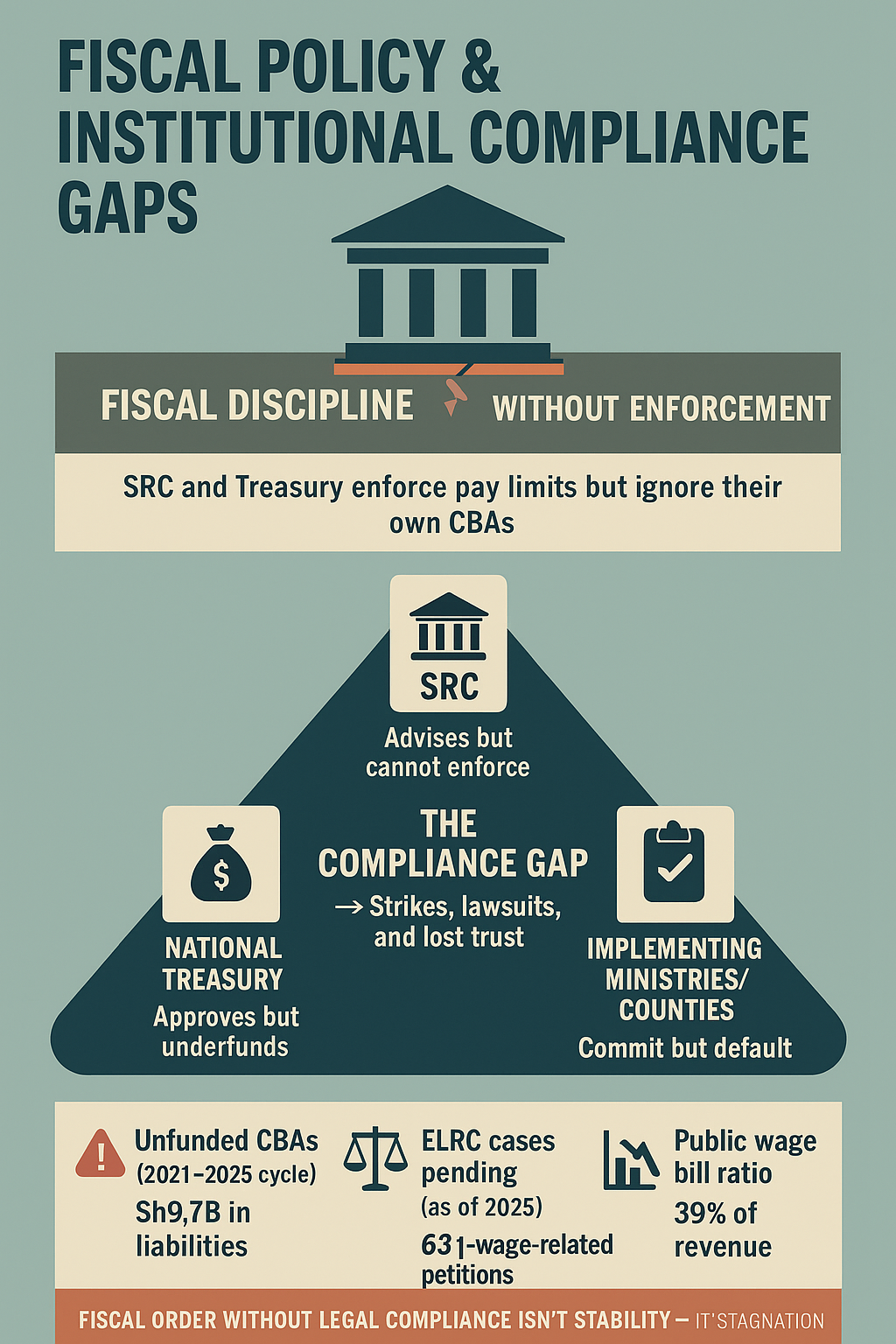
At the heart of Kenya’s endless labor unrest lies a contradiction the state has refused to confront: it preaches fiscal discipline while institutionalizing non-compliance. The Salaries and Remuneration Commission (SRC) — the body constitutionally mandated to manage public wage policy — has become a paradox of design: all authority, no enforcement. It issues guidelines that ministries and counties cite when cornered but ignore when expedient. Its circulars on pay harmonization and job evaluation are routinely undermined by politically negotiated allowances, ad hoc promotions, and extra-legal CBAs signed under pressure. The result is a regulatory void where fiscal control is performative and accountability optional. SRC’s power is largely symbolic — a watchdog muzzled by law and outpaced by politics — while the wage bill continues to balloon, not because of policy ignorance, but because institutions have learned how to outmaneuver oversight.

The National Treasury sits at the center of this dysfunction, weaponizing scarcity while mismanaging prioritization. Its annual insistence on fiscal prudence rings hollow against a record of delayed disbursements, unpaid CBA arrears, and selective funding of politically strategic programs. Treasury’s budgeting cycle has effectively become a tool of containment — a means to manage unrest rather than reform systems. When doctors, teachers, or civil servants strike, it is rarely due to wage greed; it is because their legally negotiated agreements remain unfunded despite formal approval. The Treasury’s pattern of signing off on CBAs without allocating corresponding funds has turned the entire labor framework into a credibility trap. Each unhonored agreement erodes faith not just in the fiscal system, but in the idea that government commitments are binding at all. This chronic underfunding blurs the line between austerity and abdication — and in doing so, transforms fiscal caution into a breeding ground for revolt.

The compliance gap that emerges from this broken triangle — SRC, Treasury, and the implementing ministries or counties — is not administrative; it is existential. Each actor claims procedural innocence while collectively ensuring systemic failure. Ministries invoke budget ceilings; counties plead disbursement delays; SRC blames its limited mandate — and the Labor Ministry, the one body meant to arbitrate, has devolved into a crisis registrar. This institutional buck-passing is now a defining feature of Kenya’s governance culture. It explains why industrial action has become cyclical, why courts are perpetually mediating CBAs, and why public trust continues to collapse. Investors see it too: the volatility of Kenya’s labor market is not caused by worker militancy, but by the state’s refusal to honor its own laws. The strikes are symptoms — the disease is compliance failure dressed up as fiscal discipline. Until Kenya reforms the machinery of accountability between its fiscal and labor institutions, economic stability will remain an illusion built on broken promises.

References:

Daily Nation How bloated wage bills are choking counties and stalling development

Daily Nation A nation of protests and strikes

Business Daily Civil servants sue SRC over freezes on pay reviews

Experience Ethical Travel: Watamu’s Blueprint for Climate-Smart Tourism

Watamu is no longer just a coastal getaway—it’s a case study in what community-powered, climate-smart tourism can look like for Africa. As Kenya’s tourism sector projects a historic KSh1.2 trillion contribution in 2025, Watamu stands out not only for its natural beauty, but for how it’s transforming development from the ground up. Local associations, women’s groups, and marine conservationists are leading the charge—turning beach cleanups, turtle protection, and plastic recycling into viable economic engines. This is not your typical resort town: here, environmental sustainability and economic inclusion go hand in hand. And for Kenyans living abroad, it offers a deeply meaningful opportunity to participate in rebuilding an economy that reflects both cultural pride and ecological urgency.

A Report by Taylor & Jordan Travel

Watamu is tapping into the global shift toward regenerative tourism—experiences that give back, not just take. Whether it’s community-run mangrove boardwalks, youth-led heritage tours, or conservation-linked seafood ventures, the town offers immersive, ethical travel that aligns with the values of many in the diaspora. Tourists are not just spectators here—they are contributors to a system that protects biodiversity and empowers local livelihoods. As the region attracts new interest for sustainable investments, Kenya’s diaspora is uniquely positioned to shape its trajectory: by supporting homegrown enterprises, backing eco-innovation, or simply choosing to travel with intention.

This is the moment for the diaspora to come home differently. Not just to visit—but to invest, collaborate, and amplify what Watamu is building. It’s a model that doesn’t just respond to climate change—it adapts and thrives through it. With marine spatial planning underway and local governance strengthening, the blueprint is clear: Kenya’s coastal future can be green, inclusive, and profitable. But it needs champions—especially those abroad who understand that tourism isn’t just about where you go, but what you leave behind. Watamu is not asking for charity—it’s offering a partnership in purpose.

References:

Hospitality Net Kenya’s Travel & Tourism Sector Set to Inject a Record KSh1.2TN in 2025

UNEP In beach town’s battle against plastic, echoes of a global crisis

KBC Tour Operators anticipate increased in arrivals

Oceanic Society How the Circular Economy Protects Nature and Tourism Business in Coastal Kenya

Conservation Challenges in Kenya’s Maasai Mara Region

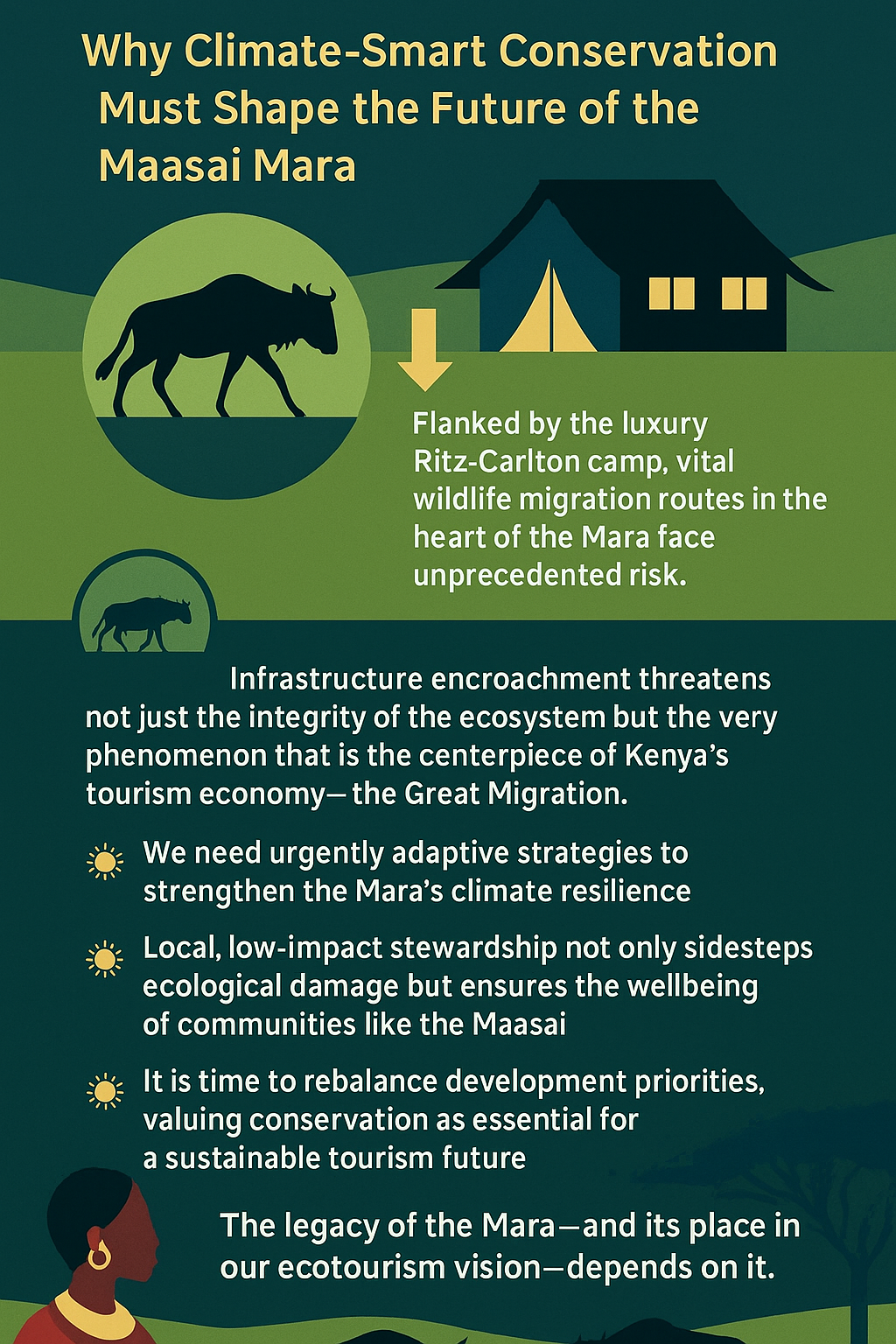
The Maasai Mara, one of the last remaining wild frontiers of Africa’s Great Migration and a cornerstone of Kenya’s ecotourism economy, now faces one of the gravest threats in its recent history—not from drought, poaching, or climate change alone, but from unchecked commercial expansion. A controversial plan to construct a high-end hotel complex and convention centre within the fragile Pardamat Conservation Area has triggered fierce opposition from environmental experts, conservancy leaders, tourism stakeholders, and sections of the local Maasai community. The development, backed by county government actors and private investors, was initially celebrated as a boost to job creation and conference tourism. But critics warn it could irreversibly damage the very ecosystem that draws visitors—and revenue—to the region.

At the heart of the concern is the ecological fragility of the Pardamat area, a critical corridor for wildebeest, elephants, and other migratory species. The proposed construction site borders sensitive wildlife routes and overlaps with communal land managed under an innovative conservation model that merges livestock grazing with wildlife protection. Experts argue that the scale and permanence of such infrastructure threaten to fragment habitat, displace species, and compromise the authenticity of the Mara’s wilderness appeal. Already, irregular land sales, fencing, and proliferation of unregulated camps have altered key migratory paths—choking the ecosystem and undermining decades of community-led conservation gains.

What the Mara needs is not another luxury venue, but a decisive pivot toward climate-smart, community-anchored ecotourism. This means planning developments in harmony with nature, prioritizing low-impact, mobile tourism models, and bolstering scientific land-use policies that preserve migratory corridors and biodiversity integrity. Kenya’s international tourism reputation—and its ability to withstand climate volatility—depends on how well we defend and innovate around natural heritage sites like the Mara. The future must be shaped not by profit margins alone, but by policies rooted in ecological wisdom, community ownership, and a long-term vision for a resilient, inclusive conservation economy.

References:

Spa Opportunities Marriott to open luxury safari camps in Kenya under JW Marriott and Ritz-Carlton brands, with architecture by LW Design

The Star Narok county defends Ritz-Carlton Safari Camp amid conservation criticism

The Standard County contests claims that new safari camp is obstructing wildlife

The Ritz Carlton The Ritz-Carlton, Masai Mara Safari Camp

Transforming Nairobi: AI Traffic Management to Combat Congestion

Nairobi is set to revolutionize its traffic management with a Sh7.9 billion investment in an intelligent traffic system (ITS) financed by the Economic Development Cooperation Fund via the Export-Import Bank of Korea. The project will deploy AI-driven technology across 125 intersections—starting with 25 major junctions scheduled for completion by February 2027—in an effort to modernize urban mobility and reduce severe congestion, which currently drains an estimated Sh120 billion from the economy annually. With Kenya’s GDP (PPP) reaching USD 375.36 billion in 2024 and East Africa projected to post 6% regional growth in 2025, this initiative represents a critical step in transforming urban infrastructure. While focusing primarily on general traffic flow management, Nairobi’s plan hints at future phases that could integrate public transport, aligning its long-term vision with regional developments in cities like Addis Ababa and Dar es Salaam, where specialized systems already target bus rapid transit and multimodal transportation networks.

A Report about AI-Powered Smart Traffic Control System by See The Nature

A comparative look at regional systems reveals key differences and opportunities for Nairobi’s ITS. Unlike Dar es Salaam’s ITS, which prioritizes the safety, mobility, and efficiency of its Bus Rapid Transit (BRT) network through real-time data integration for operators and passengers, Nairobi’s initial emphasis remains on managing overall traffic flow. However, adopting elements from Tanzania’s broader national-level ITS strategy could guide future expansions to incorporate public transit more effectively. International best practices underscore Nairobi’s strengths, such as the use of artificial intelligence for real-time traffic control and automated violation detection—tools that could enhance enforcement and reduce the reliance on manual policing. Yet, critical areas need further detailing: adherence to open standards like NTCIP for system interoperability, designing a scalable architecture to support future technological advancements, and outlining clear protocols for data handling and compliance with Kenya’s Data Protection Act 2019. Moreover, the success of this system will hinge on robust internet connectivity (currently at 79%), a reliable fiber optic infrastructure, and comprehensive legal frameworks to govern data security and system operations.

A Report by CGTN Africa

For Nairobi’s ITS to achieve its full potential, a strategic approach incorporating both technical and community-focused recommendations is essential. Authorities should invest heavily in a resilient technological infrastructure—upgrading internet and sensor networks, expanding data processing capabilities, and resolving fiber optic disputes—to ensure that the system can handle the massive data volumes generated. Equally important is the establishment of a strong legal and regulatory framework that not only complies with Kenya’s Data Protection Act but also aligns with national traffic management policies and international standards. Public awareness and training initiatives are crucial; educating citizens on system benefits and new traffic protocols, while training traffic engineers and law enforcement on system management, will foster community acceptance and smooth implementation. In addition, measures to mitigate risks such as power outages, vandalism, and cybersecurity breaches must be integral to the project’s design. By embracing international best practices, encouraging collaboration with cities that have successfully implemented ITS, and focusing on scalability and reliability, Nairobi is poised not only to alleviate congestion but also to emerge as a regional leader in intelligent transportation, paving the way for a smarter, safer, and more sustainable urban future.

References:

The Star Samsung to build Nairobi’s Sh7.9bn intelligent traffic system

Kenyans.co.ke KURA to Begin Construction of AI-Powered Smart Traffic System in Nairobi This April

Business Insider Africa Top 5 largest economies in East Africa ranked

Nairobi Wire Intelligent Transport System Set to Transform Nairobi’s Traffic Flow by 2025

The Citizen DART signs contract to develop intelligent transportation system for BRT

Maize Prices Surge: Impact on Kenya’s Livestock and Food Security

The specter of a significant food crisis is looming over Kenya as a severe maize shortage grips the nation, sending prices soaring and sparking urgent warnings from key industry players. The Poultry Breeders Association of Kenya and the Association of Kenya Feed Manufacturers have jointly raised the alarm, highlighting a dramatic 45% surge in maize prices since the start of the year, with costs projected to climb even further by April. This sharp increase is directly translating to a painful escalation in the cost of living for millions of Kenyans, as maize flour, the staple ingredient for the widely consumed ‘ugali,’ becomes increasingly expensive. For households already struggling with tight budgets, this spike in the price of a fundamental food item poses a significant threat to their food security and overall well-being. The crisis underscores the delicate balance within the nation’s food system and the profound impact that fluctuations in the availability and cost of a single commodity like maize can have on the lives of ordinary citizens.

A Report on How to Plant Maize in Kenya by Citizen Digital

The ramifications of this maize shortage extend far beyond the immediate concerns of household consumption, creating a domino effect throughout the interconnected agricultural sector. The livestock industry, particularly poultry farming, is facing a critical challenge as maize constitutes a primary component of animal feed. The exorbitant rise in maize prices has led to a corresponding surge in the cost of producing animal feed, a burden that is inevitably passed on to farmers. Consequently, consumers are now facing higher prices for essential animal products such as chicken, eggs, meat, and dairy, further compounding the financial strain on families. This intricate link between maize production and the livestock sector demonstrates the vulnerability of the entire food supply chain to disruptions affecting a single key input. The crisis highlights how a shortage in one area of agriculture can trigger price hikes and economic hardship across multiple sectors, ultimately impacting the affordability and accessibility of a wide range of food products for the Kenyan population.

In response to this escalating crisis, industry associations are urgently appealing to the government for immediate intervention, primarily advocating for the waiver of import duties on maize to facilitate increased imports and stabilize the runaway prices. While the government has historically employed measures such as fertilizer subsidies to support local production, the current situation demands swift action to address the immediate supply deficit. The long-term solution, however, lies in building a more resilient and diversified food system. This includes promoting the production and consumption of alternative, nutritious crops to reduce the nation’s heavy reliance on maize, investing in improved storage facilities to minimize post-harvest losses, and adopting sustainable agricultural practices to enhance productivity and withstand future climate shocks. The current maize crisis serves as a stark reminder of the need for a comprehensive and coordinated approach to ensure food security for all Kenyans, safeguarding livelihoods and stabilizing the economy against the volatile nature of agricultural markets and environmental factors.

References:

The Star Industry players warn of imminent food crisis on maize shortage, rising prices

Milling Middle East & Africa Kenya’s maize harvest to surge 15% in 2025/2026:  USDA

Capital Business Maize shortage sparks food crisis as prices soar

KIPPRA Four Ways to Address the Rising Food Prices in Kenya

Busara Groundwork Cultivating resilience: Promoting investment in alternative agricultural products for enhanced food security in Kenya PDF


Challenges in the Global Shift to Electric Vehicles

The global automotive industry is undergoing a significant transformation, with electric vehicles (EVs) at the forefront. However, the transition is proving complex and uneven. Recent events, such as the failed Nissan-Honda merger, highlight the challenges faced by established automakers as they navigate this evolving landscape. Nissan’s search for a new partner, particularly within the U.S. technology sector, underscores the pressure to adapt and compete, especially against the rise of Chinese EV manufacturers. Globally, EV adoption faces hurdles. Surveys reveal significant dissatisfaction among U.S. and Australian EV owners due to inadequate charging infrastructure and high ownership costs, with a considerable percentage expressing a desire to return to gasoline-powered vehicles. This contrasts sharply with Europe, where EV enthusiasm remains much stronger. These discrepancies underscore the critical need for substantial investment in charging infrastructure to keep pace with growing EV demand and address range anxiety, a key concern for potential buyers. Furthermore, the declining resale value of used EVs presents a long-term challenge that requires careful consideration.

The China-Global South Project (CGSP) report

Despite the global uncertainties, Kenya has emerged as a promising market for electric mobility. The country has witnessed a remarkable surge in EV sales, with a significant increase in market share. This growth is attributed to declining EV prices, bringing them closer to parity with traditional internal combustion engine (ICE) vehicles, coupled with government incentives and private sector engagement. Kenya’s burgeoning EV sector, however, faces its own set of challenges. Addressing concerns about charging infrastructure, battery lifespan, and the impact of climate on battery performance is crucial. Exploring secondary uses for EV batteries and investing in research on lithium cell technology tailored to Kenya’s specific conditions could further accelerate adoption. Security concerns, such as vandalism targeting charging stations and batteries, also require immediate attention. The potential of electric and autonomous vehicles to revolutionize Kenya’s transportation sector is significant, offering a pathway to a greener and more efficient future.

The future of electric mobility hinges on strategic initiatives and collaborative efforts. For Kenya to maintain its positive momentum, a concerted approach involving the government, private sector, and research institutions is essential. Stronger policies, tax incentives, and infrastructure development are critical to overcoming existing barriers. Investments in localized battery research and expanding charging networks will further solidify Kenya’s position in the global EV landscape. While global automakers grapple with strategic realignments and consumer hesitancy, Kenya has a unique opportunity to leapfrog traditional automotive models and embrace sustainable transportation. By learning from global successes and addressing the challenges proactively, Kenya can establish itself as a leader in Africa’s electric mobility revolution, driving economic growth and contributing to a cleaner environment.

References:

USA Today Honda, Nissan merger in question amid ‘growing differences’: Reports

Car Expert Nissan looking for new partner as Honda merger falls apart – report

Forbes Honda-Nissan Merger In Serious Trouble After Nissan Rejects Offer

The Star Honda and Nissan in merger talks, reports say

Global Fleet 46% of EV drivers in US likely to return to combustion engines

The Standard The rise of electric and hybrid vehicles in Kenya

Harnessing the Power of Off-Season Vegetable Production: A Boon for Kenyan Agribusiness

In an era marked by fluctuating weather patterns and volatile market demands, leaving fields fallow while waiting for the next planting season is increasingly becoming a missed opportunity for Kenyan farmers. Off-season vegetable production presents a compelling alternative, transforming idle land into a hub of year-round productivity and profitability. By leveraging advanced farming techniques—such as protected cultivation, targeted irrigation, and specialized seed varieties—farmers can maintain high levels of agricultural activity, even when traditional conditions for planting are less favorable. This approach circumvents supply chain gaps and volatile pricing by providing a stable influx of crops during lean periods when demand is high, boosting farm incomes notably.

Arjun Agriculture World Report

Turning fallow fields into productive assets, off-season vegetable production improves land productivity, an especially attractive option for smallholder farmers contending with limited acreage. Through continuous and diverse cropping, this alternative farming method amplifies land output, countering the constraining effects of dwindling land resources. By cultivating diverse, high-value crops continuously, farmers not only elevate their financial prospects but also make significant strides toward enhancing food security. Off-season farming ensures a reliable supply of nutritious vegetables, addressing malnutrition and seasonal food shortages prevalent in rural communities. Technologies such as heat-tolerant plants, cost-effective rain shelters, and plant growth regulators enable farmers to navigate climatic variability while maximizing yields. This strategy not only transforms the landscape of agriculture in Kenya but also epitomizes a paradigm shift towards sustained economic growth through strategic land use.

Addressing the challenges linked to adopting off-season agriculture invites an engaging dialogue on how Kenyan farmers can collectively embrace this transformative strategy. We encourage you, our readers, to share your insights on empowering farmers to turn idle periods into productive opportunities. How can we make necessary investments in infrastructure—like greenhouses and protective shelters—more accessible to smallholders? Maybe innovative solutions such as micro-financing or government-backed subsidies hold the key to unlocking this potential. Additionally, with the heightened pest and disease risks during off-seasons, what role do you see for Integrated Pest Management (IPM) in creating a sustainable pest control ecosystem? Perhaps you have experiences or innovative ideas about training programs to equip farmers with essential skills in water management, crop selection, and sustainable practices. This open conversation is crucial for crafting strategies that make year-round farming a reality. We invite you to contribute your perspectives, share success stories, or propose novel solutions to foster interactive learning and collaboration within the farming community. Your input is vital as we work together to redefine food security and economic resilience in Kenya, nurturing a vibrant and globally competitive agribusiness sector. Join the conversation, inspire change, and help shape a sustainable agricultural future.

References:

Nation Come rain or sunshine, our crops thrive and we sell produce off season

Science Direct Farmer training in off-season vegetables: Effects on income and pesticide use in Bangladesh

Harvest Money Off-Season The Best Time To Grow Vegetables For Profit


Environmental and Health Risks of Bottled Water Consumption

Many people often prefer mineral water rather than tapped water, boiled water or any other type of drinking water. There is often the misconception that mineral water is safer in terms of hygienic standards. How true is this? In as much as bottled water has many pros, it has a number of cons as well. These limitations have effects on the environment as well as the health of an individual. The hazards arise from the large number of plastics manufactured in order to package the mineral water, which is detrimental to both the consumer and the surroundings. Bottled water poses a number of hazards to the environment and the end user.

Recycled drinking water bottle

How does bottled water affect the environment? Due to the sheer number of plastic bottles being manufactured annually, the energy required to manufacture and transport these bottles to the market severely drains fossil fuels. The production of plastics is usually unregulated and therefore causing strain to the environment. Also, plastic is non-biodegradable and therefore it is not advisable to dispose plastics. It has been proposed that plastics should be washed and reused or recycled in the production of bottles for mineral water. This compromises the quality of the water due to the fact that phthalate leaches its way into the water as the bottle gets older. Phthalate is a harmful chemical used in the production of plastics that is known to contaminate contents of a product packaged in plastic; if it has been recycled a number of times. This chemical has been known to cause damage to the liver and kidneys. We are also not sure about the hygienic standards of the bottled water. This is because most of them are bottled at the source and therefore the water bodies are not enclosed hence cannot inhibit the public for using or tampering with the water, hence contamination of the water.

In a nutshell, bottled water is not the best option. It strains the environment as well as causes environmental pollution among other health hazards. The best alternative is tap water as it saves on resources since there is no need of packaging as well as reduces the hazards caused by bottled water. The Kenyan authorities should plan to provide safe drinking water for the citizens in order for them to develop trust in tap water. The reason why many people in the country do not consume tap water is because it is mostly not entirely treated and hence not safe enough for consumption. The government should therefore plan to come up with effective and functioning water treating plants in order to provide clean and safe water for Kenyans.