Kenyan Politics: Raila Odinga, William Ruto, and the Ever-Changing Alliances Landscape

The 2005 referendum on Kenya’s proposed constitution was more than just a vote; it was a pivotal moment that redefined the country’s political alliances and set the stage for future power struggles. Raila Odinga and William Ruto, then key figures in the opposition, found common cause in their opposition to President Mwai Kibaki’s draft constitution. The proposed document was seen by many as flawed, favoring the incumbent’s administration. Rallying under the “Orange” banner, which symbolized their resistance, Raila and Ruto spearheaded a campaign that resonated with a significant portion of the electorate. Their victory, which culminated in the rejection of the constitution, not only signaled the birth of the Orange Democratic Movement (ODM) but also established Raila as a formidable force in Kenyan politics. The referendum catalyzed a new era of political realignments, where former allies became rivals and the landscape of Kenyan politics became increasingly fluid and unpredictable.
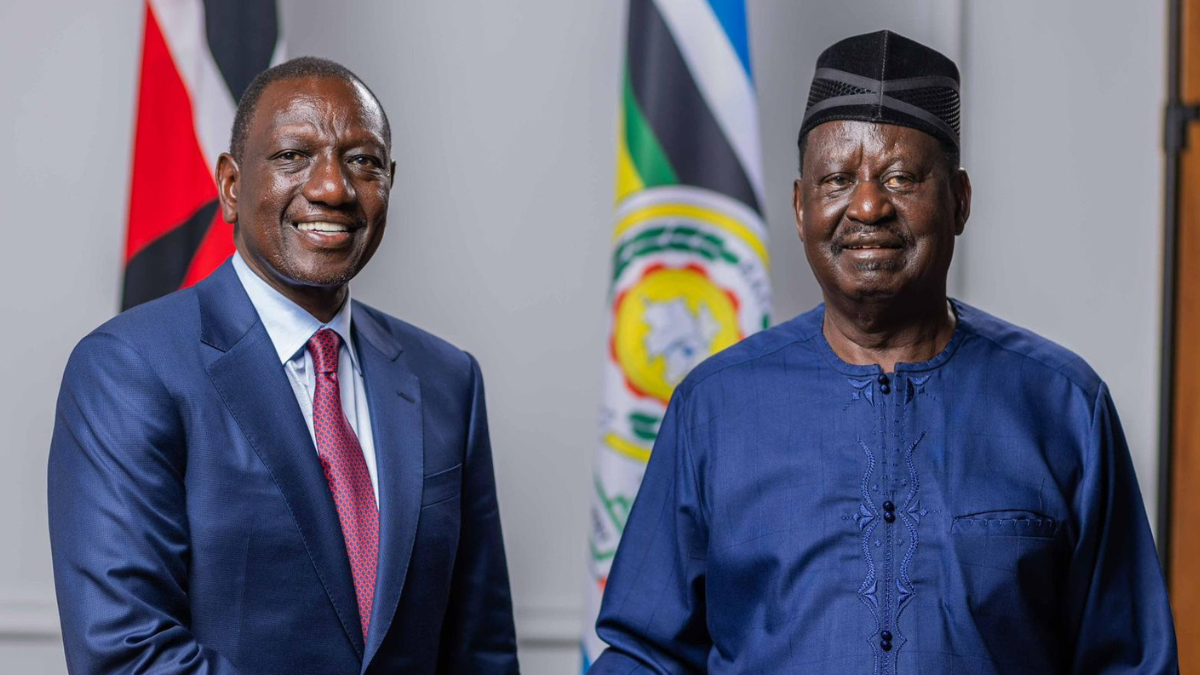
President Ruto and Raila at the launch of Raila’s AUC bid at State House – Nairobi

Fast forward to the present, and the political dynamics in Kenya have taken an unexpected turn, revealing the cyclical nature of political allegiances. Raila Odinga, who has long been a mainstay in Kenyan politics, is now setting his sights on the international stage with his bid for the African Union Commission (AUC) chairmanship. What is perhaps most surprising is the support he has garnered from President William Ruto, his long-time political adversary. This alliance, which would have been unthinkable just a few years ago, underscores the strategic calculations at play in Kenya’s political arena. For Raila, Ruto’s backing is crucial as it not only bolsters his candidacy but also provides a sense of national unity that could strengthen his position on the continental stage. For Ruto, supporting Raila may serve to consolidate his own power by easing domestic tensions and sidelining a potential competitor in the next general election. This pragmatic alliance highlights the fluidity of Kenyan politics, where today’s adversaries can quickly become tomorrow’s allies if the circumstances are right.

The implications of this alliance are far-reaching and could significantly reshape Kenya’s political landscape. Raila’s pursuit of the AUC chairmanship has left a potential power vacuum within ODM, a party that has been synonymous with his leadership for nearly two decades. This could lead to a reorganization within the party, with emerging leaders vying to fill the void, or it could trigger the formation of new alliances as political players reposition themselves for the future. Meanwhile, the Kenyan electorate is left to grapple with the ramifications of this newfound camaraderie between two of the country’s most influential leaders. On one hand, the alliance could bring a period of political stability, reducing the polarization that has characterized recent elections. On the other hand, there is a risk that voters, particularly those who have been loyal to Raila or Ruto based on their opposition to the other, may feel disillusioned or betrayed. This evolving narrative is a testament to the ever-changing nature of Kenyan politics, where alliances are as much about survival as they are about ideology, and where the next chapter is always just one unexpected alliance away.

References:

Capital News Ruto Hosts Historic Launch of Raila’s AU Commission Chairmanship Candidacy

The EastAfrican Raila Odinga: ‘My heart is ready, my hands are steady’ for AUC top job

The Star Raila arrives at State House ahead of his AUC bid launch

Nation Show of might as Ruto unveils Raila AUC bid

The Star Raila launches website to promote his AUC job bid

The Star [PHOTOS] Ruto officially launches Raila’s AUC bid at State House

The Nairobi Law Monthly Raila’s handshakes with opponents greatly cost his supporters

Nation United stand in vote against 2005 constitution gave birth to Orange

The Standard How referendum campaigns gave birth to ODM



Ruto’s Unfulfilled Promises and the Impact on Kenyan Citizens

In the realm of political leadership, the consequences of overpromising can be profound, leading to difficult decisions that may prioritize short-term gains over long-term welfare. President William Ruto’s governance in Kenya bears striking similarities to the biblical account of Herod the tetrarch, whose rash promise led to a morally compromising decision. This analysis explores how Ruto’s ambitious promises, much like Herod’s fateful vow, have placed him in a tight spot, forcing decisions that appease certain groups at the expense of the broader populace. Herod’s story is a cautionary tale of how a leader’s words can become a trap. When he promised to grant Herodias’ daughter whatever she wished, Herod did not anticipate the moral dilemma he would face when she asked for the head of John the Baptist. Despite his reluctance, Herod felt compelled to honor his promise to maintain his authority and avoid public embarrassment. Similarly, Ruto’s leadership has been marked by a series of promises that, once made, have proven difficult to keep. The grand visions he laid out during his campaign—ranging from economic reforms to social justice—have created high expectations among the Kenyan people. However, the reality of governance has revealed the challenges in fulfilling these commitments, leading to a growing sense of disillusionment among the populace.

Africa News Report

According to reports from The Nation and The Standard, this gap between Ruto’s promises and the outcomes on the ground has become increasingly evident. Many of the ambitious goals set by his administration have remained unachieved, leading to public frustration and criticism. The unfulfilled promises are not just political missteps; they have real consequences for the people, particularly in areas such as employment, economic stability, and social equity. Much like Herod, who found himself trapped by his own words, Ruto faces the challenge of managing the expectations he has set. His administration’s focus has often shifted towards maintaining political alliances and managing public perception rather than addressing the underlying issues that the promises were meant to resolve. This has led to decisions that seem more about preserving power than serving the broader interests of the Kenyan people, mirroring Herod’s decision to prioritize his reputation over justice.

KTN News Report

The consequences of such a leadership approach are far-reaching. Just as Herod’s actions resulted in the death of an innocent man to uphold a thoughtless promise, Ruto’s governance risks sidelining the needs and welfare of ordinary citizens. The pressure to deliver on promises, particularly when they are unattainable, can lead leaders to make decisions that are more about appeasing specific groups or maintaining political stability than addressing the real needs of the population. This analysis underscores the importance of careful, realistic promises in leadership. The story of Herod and the current challenges faced by Ruto serve as reminders that overpromising can compromise a leader’s integrity and effectiveness. For a global readership, the lesson is clear: leaders must be mindful of the weight of their words, as they will ultimately be held accountable for the promises they make, and the decisions taken to uphold them can have lasting impacts on society.

References:

Nation The promises versus reality: President Ruto’s rough road ahead

The Standard Ruto’s missteps, broken promises cause untold suffering to Kenyans

Nation The appeal of elsewhere: Of Ruto’s promises and reality

The Standard Wandayi: Ruto’s regime has failed Kenyans with its empty promises

People Daily Queries over Ruto empty promises after Gen-Z demos

The Star AJUOK: Why Ruto has become master of false promises

People Daily With no cogent plan, pact with Raila may buy Ruto time

Nairobi News International Women’s Day: 7 promises to women Ruto has not kept


Kenya’s Governance Crisis: Using Legal Frameworks to Silence Dissent

In recent years, Jimi Wanjigi, once regarded as Kenya’s most feared oligarch, has experienced a dramatic fall from grace, with the state employing various tactics to curtail his influence and silence his criticisms. Wanjigi, who was once a shadowy figure wielding immense power behind the scenes, has become a target of state machinery. This shift began when his relationship with the ruling elite soured, leading to a series of events that point to a broader pattern of intimidation against dissenters in Kenya. The state’s strategy seems to revolve around using legal frameworks and court processes as tools of political retribution, aiming to quash opposition voices and maintain control over the narrative.

Citizen Digital Report

The analysis of recent media coverage reveals a concerted effort by the Kenyan government to use the judiciary as a weapon against Wanjigi. From the fallout over the Standard Gauge Railway (SGR) project, where Wanjigi allegedly lost favor with powerful allies, to the multiple legal summons and court appearances he now faces, the pattern is clear: the courts are being leveraged to harass and weaken those who challenge the status quo. The media reports show a continuous escalation of state action against Wanjigi, including police summons, publicized court battles, and the orchestration of highly visible legal confrontations. These actions align with broader trends observed in Kenya, where the judiciary is increasingly used to stifle dissent and intimidate those who seek to expose governmental malfeasance.

This pattern of using legal and judicial means to intimidate is not unique to Wanjigi; it reflects a growing trend in Kenya where the state appears to weaponize the law to suppress criticism. As seen in the media reports, Wanjigi’s high-profile clashes with the government, including his dramatic court appearances and the recent confrontations over the rejected Finance Bill 2024 and the Nane Nane protests, underscore a broader issue of governance in Kenya. The persistent legal challenges faced by Wanjigi and others who oppose the regime highlight a troubling trajectory in which the state, rather than addressing concerns raised by critics, opts to punish them through a series of strategically timed and publicized legal actions. This strategy not only serves to neutralize opposition figures like Wanjigi but also sends a chilling message to others who might consider speaking out against government wrongdoing.

References:

The Standard How death and SGR fallout forced Jimi Wanjigi out of the dark power circle

Nation Jimi Wanjigi: Kenya’s most feared oligarch

The Standard Wanjigi: Man who wielded influence, now at odds with government

The Star Police summon Jimi Wanjigi for grilling over Nane Nane demos

Nation Jimi Wanjigi’s high-stakes drama: Ruto’s government wants to eliminate me


Addressing Impeachment Challenges: Legal Reforms for Effective Governance in Meru, Kenya

The impeachment of Meru Governor Kawira Mwangaza has been marked by persistent attempts by the Meru County Assembly Members (MCAs) to remove her from office. Accusations of nepotism, illegal appointments, and violation of the constitution led to the first impeachment in December 2022, followed by a second attempt within ten months. Tensions between the governor and the MCAs, fueled by her autocratic leadership style, resulted in repeated impeachment attempts within less than two years. Despite surviving two Senate hearings, a third impeachment attempt has occurred in August 2024, indicating ongoing tensions.

Courtesy : NTV

The County Assembly’s persistent pursuit of impeachment against Governor Mwangaza, despite multiple acquittals by the Senate, reveals their strong opposition based on a perceived marginalization of their role in county governance. They argue that the Governor’s unilateral decision-making has undermined the constitutional principles of checks and balances, leading to conflicts over the Assembly’s oversight role. The Senate’s interventions resulting in Mwangaza’s acquittal have underscored the complexity of Kenya’s devolution framework and the high threshold for removing a county governor. However, this has not resolved the underlying tension, raising concerns about the misuse of impeachment for political vendettas. Efforts to mediate and resolve the dispute through traditional and legal channels, including the involvement of the Njuri Ncheke, have been hindered by internal divisions within the council, reflecting the broader political rift in Meru. This indicates potential inadequacies in addressing political disputes within devolved governments.

The ongoing conflict has exposed the limitations of the current legal framework, which may lack the necessary provisions to effectively mediate such political disputes within county governments. To address this protracted conflict, a more comprehensive approach is needed, involving both legal reforms and enhanced mediation efforts. Strengthening the constitutional guidelines for impeachment, ensuring they are not susceptible to political manipulation, is crucial. Additionally, fostering dialogue between the governor and the MCAs through neutral mediators or national government representatives could help bridge the divide. Legislative amendments might also be necessary to empower county assemblies with oversight while safeguarding the executive’s authority, thus restoring stability and promoting effective governance in Meru.

References:

Nation Njuri Ncheke split over Kawira Mwangaza ouster

The Star Meru Governor Kawira Mwangaza impeached again

The Standard Kawira Mwangaza impeached for third time

Nation Circus in Meru: MCAs table fifth ouster motion against governor Kawira Mwangaza

The Star Meru Governor Kawira Mwangaza survives impeachment

Capital News Governor Kawira Mwangaza survives second impeachment as Senate acquits her

The Star Meru Governor Kawira Mwangaza impeached

Nation Meru Governor Kawira Mwangaza impeached for the second time in 10 months

Nation Events that led to Meru Governor Kawira Mwangaza’s impeachment 

Capital News Senate Committee to start Governor Mwangaza’s impeachment hearing Tuesday

People Daily Meru MCAs impeach Governor Kawira Mwangaza once again

Kenyan Executive Under Fire: Petition Filed for President and Deputy’s Removal

A legal petition has been submitted to the Kenyan courts seeking the removal of President William Ruto and Deputy President Rigathi Gachagua, citing constitutional violations and a breach of public trust. The petition, filed by Migeria Lempaa & Kariuki Advocates, accuses the leaders of incompetence and mismanagement, particularly highlighting the mishandling of economic policies and the discontinuation of vital social programs. The petitioners argue that these actions have resulted in socio-economic instability, undermining the constitutional responsibilities of the executive office.

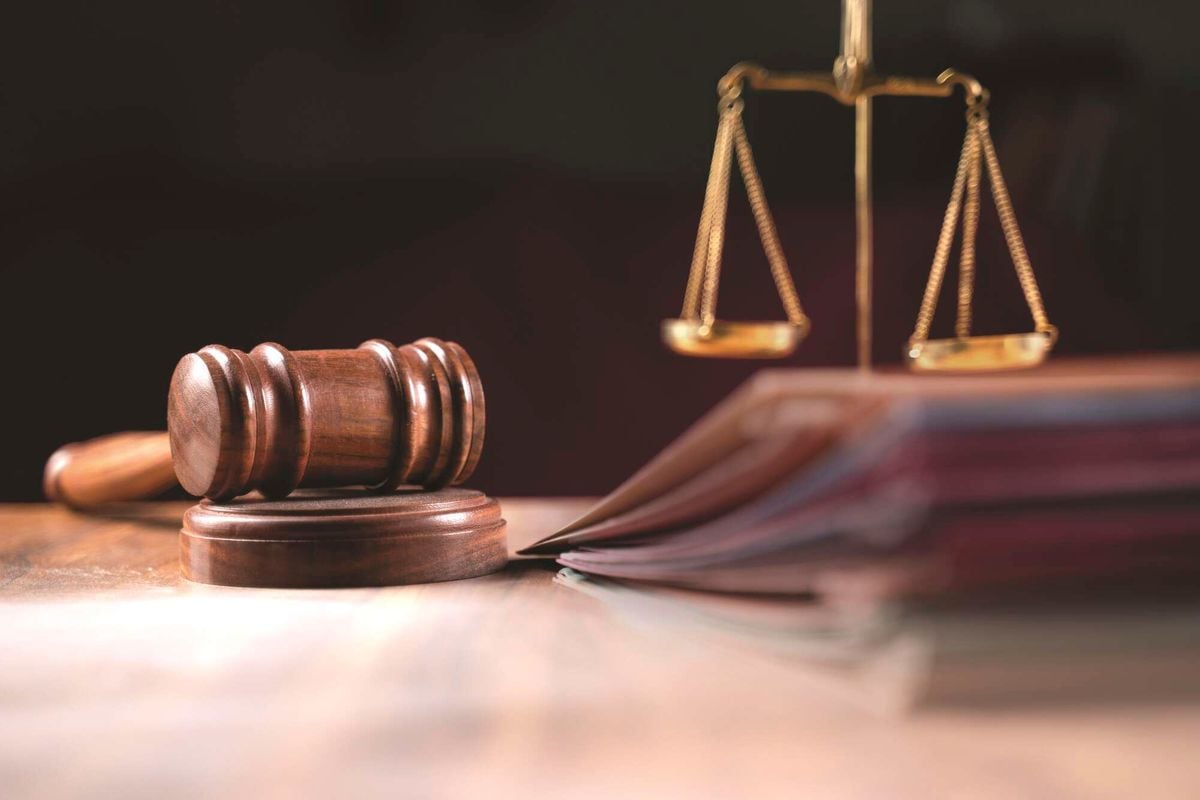
Milimani Law Courts

The allegations hinge on Article 145 of the Kenyan Constitution, which provides grounds for impeachment, including gross misconduct and violation of the Constitution. The petitioners claim that the actions of Ruto and Gachagua meet these criteria, noting their failure to uphold public welfare and constitutional duties. They stress that the administration’s conduct could lead to further unrest and instability, drawing parallels with economic crises in other countries. The call for judicial intervention is seen as a necessary step to uphold governance and prevent further constitutional breaches.

Given the escalating public discontent, it would be prudent for President Ruto to consider reordering his government’s priorities to better align with the needs of the Kenyan populace. This could involve revisiting controversial economic policies and strengthening social support systems. By taking proactive steps to address the concerns raised in the petition, Ruto could mitigate potential political fallout and restore confidence in his administration. A focus on transparency, accountability, and responsiveness to public needs may offer a constructive path forward, potentially averting the need for drastic measures like impeachment or a public referendum.

References:

The Standard Petitioners move to court seeking to oust Ruto, Gachagua

Nairobi Wire Petition Filed to Remove Ruto and Gachagua from Office

Impeaching the Kenyan President is Not Treason, It’s Constitutional Ruth Nashipae Muigai, LLB(Hons). LLM

KLRC Constitution of Kenya: Article 145. Removal of President by impeachment


Kenyan Police Deployment in Haiti: Global Impact and Domestic Implications

Kenyan police have been deployed to Haiti as part of the United Nations Multinational Security Support mission, aimed at restoring stability in the face of escalating gang violence. The mission’s recent success in reclaiming the Auorite Portuaire Nationale (APN) in Port-au-Prince was achieved without any casualties, a significant achievement given the tense situation. During this operation, one of the armored vehicles broke down, requiring repairs on the roadside. This incident, witnessed by local residents, underscored the challenges faced by the contingent, which includes advanced equipment like US-supplied MaxPro trucks, crucial for maintaining security and aiding in humanitarian efforts.

The New Africa Channel

The mission, however, has sparked controversy in Kenya, where there is ongoing domestic unrest and criticism of the government’s decision to prioritize an international peacekeeping mission over local issues. The deployment comes amid a backdrop of economic difficulties and political unrest in Kenya, where protests have turned violent. Critics argue that the government’s focus should be on internal stability, questioning the legality of the deployment given a recent Kenyan court ruling deeming it unconstitutional. Despite this, President William Ruto has defended the mission, framing it as a critical contribution to global peace and security.

Looking ahead, the international community’s involvement in Haiti, including additional troops from various nations, highlights a collective effort to restore order and rebuild essential services. The outcome of this mission will not only impact Haiti’s future stability but will also influence Kenya’s international standing and internal political discourse. As the situation evolves, the mission’s success will be a key factor in shaping both international perceptions of Kenya’s role in global peacekeeping and the domestic debate over resource allocation and governance priorities.

References:

Associated Press Haiti’s prime minister says Kenyan police are crucial to controlling gangs, early days are positive

The Star Kenyan police in Haiti take over port after fierce clash with gangs
Aljazeera More Kenyan police deploy to tackle Haiti violence

VOA Kenyans wonder why police are deployed to Haiti while unrest churns at home

Nation Kenyan officers in Haiti upbeat about success of peace mission

Atlas News Kenya’s Haiti Deployment Is Scoring Victories

Kenya’s Political Landscape: Ruto’s Surprising Move and Good Governance Challenges

Kenya’s President Ruto has taken a surprising step by nominating four Cabinet Secretaries from the opposition party, sparking concerns about the legitimacy of his administration. The move comes as the country grapples with economic challenges and political tensions.

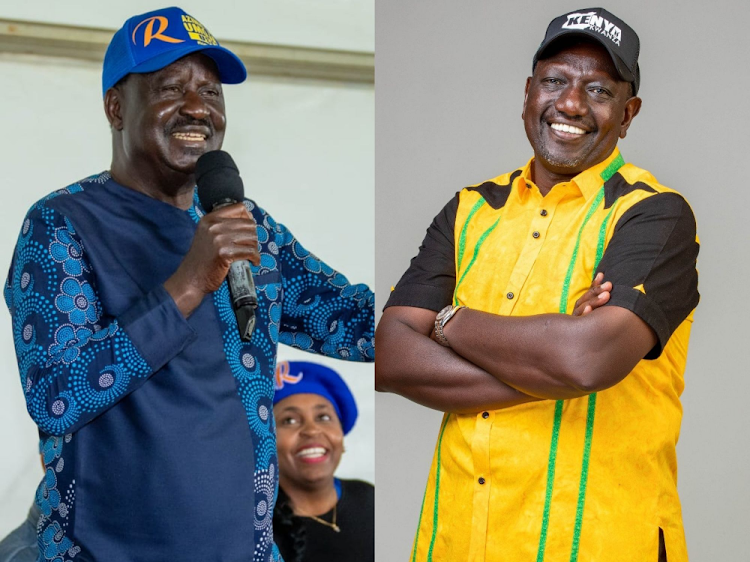
Left: Raila Odinga; Right: President Ruto

Sources close to the ruling party have revealed that the nominations were made without the formal approval of the opposition leader, Raila Odinga, who had previously issued demands for specific issues to be addressed before engaging in dialogue with the government. This development has left many wondering whether the opposition is quietly aligning itself with the government, potentially compromising its independence.

As the situation unfolds, analysts are cautioning that a broad-based government of national unity could have far-reaching implications for Kenya’s democracy. In light of this, it is crucial to examine the concept of good governance and its intersection with human rights. Good governance refers to the process by which public institutions conduct public affairs, manage public resources, and guarantee the realization of human rights in a manner free from abuse and corruption. This requires respecting human rights, ensuring transparency, accountability, responsibility, participatory decision-making, responsiveness to people’s needs, and freedom from corruption.

According to experts, good governance is closely linked to human rights, as human rights standards and principles provide a set of values to guide government actions and a framework for accountability. In turn, good governance is essential for respecting and protecting human rights in a sustainable manner.

The four key areas where good governance and human rights intersect are:

  1. Democratic Institutions: The establishment of strong democratic institutions is critical for ensuring that power is exercised transparently and in accordance with the rule of law.
  2. Public Service Delivery: Good governance requires effective public service delivery, which involves providing essential services to citizens in a fair, equitable, and efficient manner.
  3. The Rule of Law: The rule of law is essential for upholding human rights, as it provides a framework for ensuring that laws are respected and enforced fairly and without discrimination.
  4. Anti-Corruption Efforts: Anti-corruption efforts are vital for preventing the abuse of power and ensuring that public resources are used for the benefit of all citizens.

As Kenya’s government navigates this complex landscape, it is essential to prioritize good governance and ensure that institutions are accountable, transparent, and responsive to the needs of the people. This requires a commitment to upholding human rights, protecting fundamental freedoms, and promoting sustainable development.

References:

The Standard Mixed reactions as Ruto unveils new Cabinet

AllAfrica Kenya: Sifuna Insists ODM Not in Govt Despite Ruto’s Cabinet Picks

AllAfrica Kenya: Ruto Co-Opts ODM Into Govt Naming Joho, Oparanya, Mbadi In Cabinet

Associated Press Kenyan president appoints opposition ministers to his Cabinet amid political unrest

United Nations Human Rights About good governance

United Nations Human Rights OHCHR and good governance

Navigating Change: The Path Ahead for Kenya’s Acting Inspector General of Police

The Kenyan Police Service stands at a crossroads, facing both challenges and opportunities as it enters a new chapter under Acting Inspector General Douglas Kanja. Kanja’s appointment follows the resignation of Japhet Koome, whose tenure was marked by controversy, particularly surrounding the handling of recent anti-government protests.

Former Inspector General of Police – Japhet Koome

Koome took office in November 2022, bringing with him 31 years of experience within the force. He had previously served as Nairobi County Police Commander and Commandant of the National Police Service College in Kiganjo. His appointment was meant to bring stability and reform after a period of political turbulence and public distrust in law enforcement. However, his time in office was overshadowed by escalating tensions between citizens and authorities, fueled by President Ruto’s administration’s introduction of controversial tax hikes.

The protests that erupted in response were met with a heavy-handed police response, resulting in at least 39 deaths according to Kenya’s national rights watchdog. This sparked widespread condemnation both domestically and internationally, with accusations of excessive force and human rights violations leveled against the police. Public outcry intensified, leading to calls for Koome’s resignation and an overhaul of the police force. While President Ruto initially dismissed the protesters, mounting pressure forced him to concede, ultimately accepting Koome’s resignation on July 12th, 2024 and appointing Kanja as Acting Inspector General.

The situation highlights several deeply rooted issues within Kenya: the ever-present struggle for economic justice, concerns over government transparency and accountability, and a history of police brutality that continues to erode public trust. Kanja now faces the daunting task of restoring faith in the police service while addressing these fundamental challenges. His success will depend on his ability to implement meaningful reforms, promote human rights, and build bridges between law enforcement and the communities they serve.

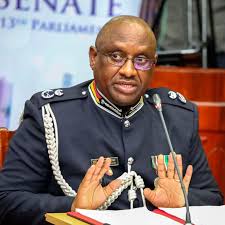
Acting Inspector General of Police – Douglas Kanja

Looking ahead, Kanja’s leadership presents an opportunity for positive change within the Kenyan Police Service. He can prioritize de-escalation tactics during protests, strengthen internal oversight mechanisms to ensure accountability, and invest in community policing initiatives that foster trust and collaboration. It is crucial for him to engage with civil society organizations, human rights groups, and ordinary citizens to understand their concerns and work together towards a more just and equitable society. The road ahead will undoubtedly be challenging, but with commitment, transparency, and a genuine desire to serve the people, Kanja can pave the way for a more effective and ethical police force in Kenya.

References:

Citizen Digital Japhet Koome Sworn In As New Inspector General Of Police

The Star 8 police bosses shortlisted for Deputy Inspector General position

Aljazeera Kenya police chief resigns after criticism over protest crackdown

The Star Police boss IG Japhet Koome resigns

Kenya Kwanza Legal Challenges: Impact on Economic Transformation

President William Ruto’s Kenya Kwanza administration has faced a series of legal challenges that have impeded the implementation of the Bottom-Up Economic Transformation Agenda. In January 2024, the High Court issued an injunction against Ruto’s proposal to deploy police officers to Haiti to combat gang violence, declaring the initiative unconstitutional. The judiciary underscored that there was no legal basis for sending police abroad instead of military personnel, granting the government a 14-day window to file an appeal. This ruling exemplifies the judiciary’s stringent oversight of the executive’s international commitments.

In February 2024, another judicial setback occurred when the court enjoined the funding for a pet housing project, integral to Ruto’s broader affordable housing initiative. The court found the funding mechanism incompatible with constitutional mandates, thus stymying Ruto’s flagship program aimed at alleviating housing shortages. This judgment highlighted the judiciary’s rigorous interpretation of constitutional provisions governing public expenditure and developmental projects, reinforcing the legal scrutiny applied to executive actions.

These judicial rebuffs are part of an ongoing trend where the courts have systematically invalidated various projects and proposals under the Kenya Kwanza agenda. The recurrent legal impediments have substantially hampered the administration’s capacity to implement its strategic plans, underscoring the judiciary’s crucial role in shaping public policy and governance in Kenya. These legal confrontations illustrate the persistent tension between the executive and the judiciary, as Ruto’s administration navigates the intricate constitutional and legal landscape to advance its ambitious policy objectives.

References:

Nation Blocked: Ruto’s never-ending losing streak in court

BBC How Kenya’s judges stood up to President William Ruto

Global Initiative Kenya’s High Court blocks proposal to send police support to Haiti

BBC Kenya housing levy: Blow to William Ruto as court blocks tax

The EastAfrican Ruto furious after court blocks funding for pet housing project

Kenya’s Electoral Reforms: President Ruto Signs IEBC Amendment Bill

President William Ruto’s signing of the Independent Electoral and Boundaries Commission (IEBC) Amendment Bill, attended by his political rival Raila Odinga and Kalonzo Musyoka, marks a significant moment in Kenyan politics given their historically adversarial relationship. The bill, aimed at reconstituting the electoral commission, addresses long-standing issues within Kenya’s electoral system. It mandates the formation of a nine-member selection panel tasked with recruiting commissioners with proven expertise in ICT and accounting, expected to become operational by late October or early November 2024, ensuring a more structured and transparent recruitment process.

President Ruto assents to IEBC Bill

Reactions to the bill’s signing have been mixed, highlighting both support and skepticism. Raila Odinga emphasized the necessity of a unified electoral commission for credible future elections, viewing the bill’s focus on professional qualifications for commissioners as a positive step towards enhancing the commission’s efficiency. However, some public voices have expressed concerns about the implementation timeline and whether the changes will be sufficient to address entrenched electoral issues. This mix of reactions underscores the need for continuous monitoring and engagement from all stakeholders to ensure the new commission’s effectiveness.

The IEBC Amendment Bill represents a crucial step in Kenya’s electoral reforms, providing a framework for addressing systemic issues within the electoral commission. Ensuring the transparent and timely implementation of the new provisions is essential for maintaining public trust in the electoral process. Continuous public engagement and dialogue are necessary to build on this momentum, addressing underlying issues and ensuring a fair and credible environment for future elections. As Kenya moves forward, it is imperative that all stakeholders work together to support the new commission and uphold the integrity of the electoral system.

References:

Tuko Kenyans React as Raila Odinga Joins William Ruto during Signing of IEBC Amendment Bill: “Good Move”

The Star Raila, Kalonzo join Ruto as he assents to IEBC Bill

Nation Ruto assents to IEBC Bill, paves way for hiring of commissioners

Business Daily Stage set for fresh IEBC team as Ruto assents to Bill

The Africa Report Kenya to reconstitute electoral commission as Ruto signs IEBC bill into law