Coast Governors Veto Muguka Sale

President William Ruto has reversed a ban on Muguka, a stimulant linked to drug abuse among young people, which was previously announced by three coastal leaders in Kenya. Ruto directed the Ministry of Agriculture to engage all stakeholders, emphasizing the economic importance of muguka for Embu County, where it brings in significant income. Agriculture CS Mithika Linturi declared the ban by the three governors as invalid, noting that Muguka is legally recognized as a cash crop under existing regulations.

Considering that the County Governor serves as the chief executive officer of the county government in Kenya, and recognizing the dual-level structure of governance comprising the national and county governments, it is within the purview of the County Governor to exercise legislative and executive powers at the county level. In accordance with the principles of devolution enshrined in the Constitution of Kenya, County Governors possess the authority to promulgate and enforce ordinances and regulations that address the specific needs and welfare of their respective communities. Consequently, in situations where such local enactments are demonstrably in the best interest of the county’s populace, the authority of the County Governor to override or modify national legislation may be justified, ensuring that local governance is responsive and tailored to the unique socio-economic and cultural context of the county.

Calls for tougher penalties to combat the sale of illicit brews in Kenya are amplified, emphasizing the need for comprehensive measures from both the Executive and Parliament. The surge in criminal activities linked to the trade is a cause for concern, prompting advocates for stricter enforcement of laws regulating alcoholic beverages. Meanwhile, the Nakuru Bar Owners Association supports government initiatives to eliminate illicit liquor sales, citing concerns over public health and legitimate businesses. In contrast, the sale and consumption of Muguka, a psychotropic substance, present growing concerns, particularly in coastal regions. Pressure mounts on the government to address the social and health consequences associated with Muguka use, including addiction and criminal activities. Efforts to regulate Muguka sales and consumption are underway, but challenges persist in enforcing restrictions and combating its proliferating trade.

In the same way that the unwavering dedication of law enforcement in Bahati, Nakuru County, has tackled the scourge of second-generation alcohol, so too must this steadfast commitment be mirrored at the coast to combat the sale of Muguka. True progress in safeguarding our communities lies in applying consistent zeal and resolve across all regions, recognising that the health and future of our society depend on our collective and equal efforts.

References

The Africa Report Kenya: Ruto’s reversal of muguka ban in coastal region draws criticism

AfroCave Role and Functions of a County Governor in Kenya

Kenya News Agency Ex-MP Calls For Stiffer Penalties To Curb Sale, Consumption Of Illicit Brews
NAIROBI | Graffiti framing Public Opinion

On the City Market wall facing Muindi Mbingu Street, are drawn rare graffiti with a political message for the electorate: “be wise and choose only leaders with the interest of the nation ahead of their own.”

Abel and Buckley (1997) looked at the “writing of graffiti as a psychological phenomenon, a form of communication that is both personal and free of everyday social restraints that normally prevent people from giving uninhibited reign to their thoughts.” [Looking at the Writing on the Wall: A Critical Review and Taxonomy of Graffiti Texts, Jane M. Gadsby (1995)] Habitually, a similar attitude is engendered by the anonymous graffiti artists, in the “City in the Sun.” One such artist exhibits “the reminiscences of a greedy politician…” Daily Nation reported. Chronic poverty and unemployment as well as the epic struggles and conditions of a country’s marginalized people are touted as the main engines that fuel graffiti culture. But is that all there is to it? It has been found out before that”Mainstream media will never say a word of truth…” Thus graffiti is now being used as an alternative channel to the mainstream media, to disseminate the true information, which often was kept back by the latter.” It has thence, been confirmed that somehow, it succeeds in getting the message through to the masses. One professor of English pointed out that “graffiti has played a significant role in framing and times changing public opinion.”

Whether or not graffiti is considered as a medium of revolt against the authorities, or just as a channel for self expression, what is depicted is in clear print, a true and faithful reflection of a people’s attitudes toward a non-yielding system on the one hand, and on the other, a call to action by the ‘infringed’. In a nutshell, thoughts become things.


References:

Writing’s on the wall for greedy MPs Daily Nation March 4, 2012

Looking at the Writing on the Wall: A Critical Review and Taxonomy of Graffiti Texts Jane M. Gadsby (1995)

Graffiti: Expression Unadulterated Irfan Muzaffar Parray


Public opinion Versus Political Influence over the Media

The Hague Suspects (two among them) presidential hopefuls have been accused of engaging with the local media, with an aim of swaying public opinion against the ICC.

The International Crisis Group (ICG), which has been monitoring the Kenyan cases at The Hague, in its report, reveals that the said suspects along with the local media, have employed a scheme casting the “suspects” as victims of the court, and of ‘sinister plots’ by their political opponents, aiming at barring them from participating in the 2012 elections.[“During the recent hearings at The Hague, the media… (Covered the cases as if) Moreno-Ocampo was prosecuting Kenya, not individual suspects.”]

Very well done! That must have worked its way to some level of success I should say. It is however prudent to note that a vast majority of Kenyan youth, who constitute a major sector of the electorate, have matured to be free thinkers, through the teachings of their life experiences, and interpersonal interactions. There has been a collective ‘paradigm-shift’ in the thoughts of today’s Kenyan youth’s-something that is sounding a loud and clear ‘revolution’. The Kenyan youth has realized that this is the ‘age of the mind’, and has started to ‘think’. A famous line goes, “You can fool some people sometimes, but you can’t fool all the people all the time.” The future of this country lies on the hands of the youths of today not on ‘whoever’ frequents the TV screens in the living-rooms at prime-time.

References:

Media in the dock over hague cases All Kenya News 4th March 2012

The Hague judgement causes Uhuru, Ruto sleepless nights The Citizen 5th Mrch, 2012

Kenya’s decision for Syrian regime change is not informed

Kenya’s Ambassador & Permanent Representative at Kenya Mission to United Nations, Macharia Kamau, “cautioned that the UN’s call for Mr. Assad to leave office must not be interpreted as an invitation to Western intervention in Syria, as did occur in Libya in response to a UN resolution adopted last year.”

It is ridiculous to not think that the West’s main agenda is to interfere with the internal affairs of and about Syria! Even so, how much success has the west achieved by intervening in chaotic situations in other states, with the promise of bringing about peace and prosperity? Negligible if any, contrary to the so many cases, where much more violence and destruction, became the order of the day, upon the exit of foreign forces. Look back at Somali, Afghanistan, and in that case, Libya. There’s clearly something aloof. Saudi Arabia’s  U.N. Ambassador, Abdallah Y. Al- Mouallimi, was quoted saying, ” today, the U.N. General Assembly sent a clear message to the people of Syria: the world is with you.” A skeptic person may ask: “Is he really representative of Syria’s people and the situation there?” I would rather Bashar Ja’afari, Syria’s U.N. Ambassador’s comments, which actually state more or less contrary, to Ambassador Abdallah’s. (“The resolution will send a message to extremists that “violence and deliberate sabotage” are acceptable and will lead “to more chaos and more crises.”)

In respect to international law, and in the context of sovereignty of states, it is wrong to impose conditions on a state’s people. “In article 2(7) of the UN Charter, it is stated that the charter gives no competence to the UN or to the UN Members to intervene in matters that are substantially under the neutral jurisdiction of a State.” Syria is not a fallen state, unfortunately, the vote defiles the very spirit of these words. Recall that “in the classic view, international law and democracy are simply not related. International law is to remain neutral vis-à-vis any political model.”

References:

East Africa: Kenya Votes At UN for Syrian Regime Change allAfrica.com 18th February, 2012

Stance on Syria proves China as firm supporter of U.N. Charter: expert xinhuanet.com 17th February 2012

China opposes armed intervention or forcing “regime change” in Syria xinhuanet.com 17th February 2012

Egypt recalls its ambassador to Syria xinhuanet.com 19th February 2012

Syria responds “positively” to Al protocol, proposes minor amendments xinhuanet.com 18th February 2012

UN General Assembly condemns Syria The State 16th February 2012

BILL TO CHANGE 2012 POLL DATE | The Hidden Plot?

Is it pushing the date to 2013? Flashback to 21st July, 2011 and, MP for Kilome, Harun Mwau, in a suit lodged at the High Court in Nairobi, said, “there has been confusion as to when the next general elections shall be held.” Mwau contends that the term of the 10th parliament began on January 15, 2008, and shall end on January 15, 2013.

The cabinet and various members of parliament, across the coalition divide, are of the view that the new constitution preserves the term of the current parliament, until mid-January 2013. Article 262 (10) of the constitution states that: “The National Assembly existing immediately before the effective date shall continue as the National Assembly for the purposes of this constitution for its unexpired term.” Thus, the cabinet recently approved a Constitution Amendment Bill 2011, which seeks to alter the poll date. httpv://www.youtube.com/watch?v=Lmw_ceVMmws  Despite public uproar, Justice and Constitutional Affairs Minister, Mutula Kilonzo says, he will push through the Bill on election date, which sets the date for the next general elections on the third Monday of December, every fifth year of an elections cycle. Transitional provisions promise the current parliament its full tenure. It is however prudent to note that the last ‘contentious general elections’, that produced the 10th parliament, was held before the new constitution came into force. Therefore, it would be more accurate to define the “full tenure” of the 10th parliament, as it would have been defined, if the last constitution was in force. “The issue of an August date has never been contentious. The date was determined after consideration of the wishes of the people of Kenya which included submission that a December date interfered with the festive season when Kenyans travel to places where they may not have registered to vote: coincides with religious festivities and the prevailing weather conditions complicate the logistics of ferrying election materials.” CIC addressed. httpv://www.youtube.com/watch?v=BSOWpxaZSo8 Undoubtedly, the wishes of the people of Kenya, expressed in the constitution, have an upper hand against any one single Bill prepared by a few representatives in government. “CIC wishes to remind Kenyans that what killed reforms in this country were “convenience” amendments of the constitution soon after independence… It is such amendments that Kenyans wanted the constitution to be insulated against.

This issue begs the question: Is this the 10th parliament’s plot to extend its tenure in a quest to collect more campaign monies? Politicians should not blame time for their incompetency to perform required tasks. Rather, they should resign from office already, without wasting any more time. What Kenyans need is authentic people power, not the dumbocracy of political rule.

References:

Mwau Asks Court for 2013 Election Date allAfrica.com July 22, 2011

Why the Next Elections May Be Held in 2013 MENAFN.COM July 31, 2011

Change of 2012 poll date height of mischief, impunity Capital News September 14, 2011

Mutula firm on elections date amendment Capital News September 15, 2011

CIC warns over election date change KBC News September 17, 2011

Mutunga Wants Case On Date of 2012 General Election Speeded Up allAfrica.com October 6, 2011


Raise in Oil Prices, Weak Shilling

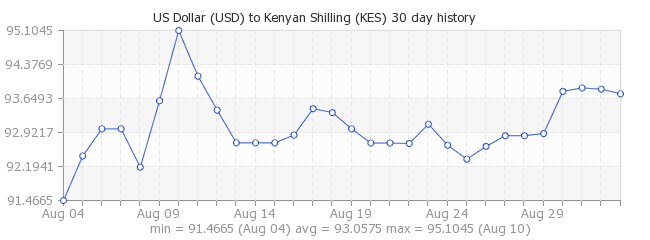
The volatile situation in Libya and the unrest in other Arab States have seen crude oil prices shoot upwards on the global market. These recent developments have inflicted a budgetary shock on Kenya’s oil import projections. The effect of the rising oil prices has been manifested in a weakening Kenyan shilling, compounded by increased political activity over the nomination of key state jobs.

Prime Minister Raila Odinga, in a statement made in parliament said that, “Kenya’s oil import bill could rise by $700 million or 2% of GDP.” The Central Bank of Kenya, increased its key interest rate in an effort to defend the weak shilling and curb rising inflation, saying, “temporary rises in oil and food prices linked to unrest in North Africa and drought at home, were becoming embedded and the inflation rate was set to creep up from 6.5 percent over the next two months.” In reference to a paper commissioned by the Energy Sector Management Assistant Programme (ESMAP) ,“as part of an investigation on energy security issues from the perspective of developing countries…”, the study found out that, “oil importers immediately face a larger import bill and unless the country is already running a surplus, or has extremely large foreign exchange reserves, this must be met by a reduction in total demand for all imported goods, so as to restore balance of payments equilibrium.”

This situation will without doubt exert more pressure on household final consumption expenditure, and in the long-run may lead to a slowdown on investment, thus reduced domestic production. httpv://www.youtube.com/watch?v=y_1JIPxUKEw  Maybe it is high time to embrace the benefits of East African Community common market as this will greatly strengthen the local monetary unit due to enhanced productivity and efficiency in allocation of the factors of production, as well as safeguard against the far reaching effect of budgetary shocks fueled by rise in costs of essential imports.

References:

Kenya raises rates to defend shilling,curb inflation 22/03/2011

Kenya’s shilling weaker vs dollar; politics weighs 4/02/2011

Shilling in loosing streak against major currencies 25/02/2011

The Macroeconomic Effects of Higher Oil Prices (As of March, 2005)

NUCLEAR ELECTRICITY | Kenya’s Nuclear Energy Project

In December 31, 1879, Thomas Edison remarked, “We will make electricity so cheap that only the rich can afford to burn candles”. Kenya’s development agenda Vision 2030 highlights the increase in demand for electricity. Although politically motivated, our ambition to quench the electricity thirst with nuclear power serves as a reminder that we are yet to live up to the dreams of Thomas Edison.

Japan’s nuclear power crisis has ignited a conversation on the country’s seriousness to develop our nuclear energy potential. In this time of rampant global economic growth especially among BRIC nations, there is an even greater need to find new sources of energy, especially green energy sources. Our economy is the 10th largest economy in Africa and will be second to South Africa in developing nuclear energy in the African continent. This development  will be a green solution that will address commercial and residential energy needs. As we explore green energy solutions, we need to remind ourselves the true cost; financial, life or otherwise incurred as we address our insatiable thirst for energy.

httpv://www.youtube.com/watch?v=VJfIbBDR3e8

Our Nuclear Electricity Development Project Executive Chairman Ochilo Ayacko was quoted saying “the incident in Japan only served as a lesson on the safety measures Kenya would adopt”. In the history of nuclear power production there have been several accidents many of which involve human loss and civilian exposure to radiation resulting in generational health defects. The safety of civilians and our environment must be placed above all else, however a good solution for Kenya must also accommodate the long-term storage of radio active waste, a bi-product of nuclear power production. As Kenyans we should ask ourselves, does our plan address our long-term energy needs, safety of our people, safety of our environment (both catastrophic meltdowns and nuclear waste storage), our sovereignty and a comprehensive cost breakdown of green and sustainable alternatives?

References: