Frequent Cabinet Reshuffles in Developing Democracies: Kenya Under Scrutiny

Cabinet reshuffles, a common feature in many developing democracies, often reflect a complex interplay between the need for governmental competence and the pressures of political maneuvering, as evidenced by the recent changes in the Kenyan administration. Defined as alterations in the executive branch’s composition, these reshuffles can be driven by various factors, including the desire to enhance government performance, address corruption, consolidate political power, reward loyalty, respond to public pressure, or signal policy shifts. The Kenyan cabinet reshuffle of March 2025, which saw key figures like Aden Duale moved to the Ministry of Health and Justin Muturi dismissed from his role in Public Service, exemplifies this dynamic. While the stated reasons often revolve around improving service delivery and aligning with the government’s agenda, underlying motivations frequently involve political considerations such as managing internal dissent, rewarding allies, and strategically positioning individuals within the executive. This constant reshuffling raises fundamental questions about the balance between appointing technically skilled individuals and ensuring political loyalty in the pursuit of effective governance.  

A Report by Citizen Digital

The motivations behind frequent cabinet reshuffles in developing democracies are multifaceted, often stemming from a blend of administrative and political imperatives. In the Kenyan context, the reassignment of Aden Duale to the Health Ministry to address challenges within the Social Health Authority suggests an attempt to improve government performance in a critical sector. However, the dismissal of Justin Muturi, following his public criticism of the government and subsequent accusations of incompetence from President Ruto, highlights the significance of political loyalty and the management of dissenting voices within the cabinet. Academic literature supports this observation, noting that leaders in developing democracies often prioritize consolidating political power and rewarding loyalty, sometimes at the expense of technical competence. This “loyalty-competence trade-off” is a recurring dilemma where leaders balance the need for effective governance with the imperative of maintaining political stability and control. The Kenyan reshuffle, with its mix of stated performance objectives and apparent political motivations, underscores this complex dynamic.

The frequent occurrence of cabinet reshuffles can have significant consequences for governance and public perception in developing democracies like Kenya. While intended to inject new impetus or address specific challenges, these changes can also lead to instability within government ministries, disrupting policy continuity and hindering the development of long-term strategic planning. When ministers are frequently moved or replaced, the time required for new appointees to gain expertise and build effective working relationships can impede the overall effectiveness of governance. Furthermore, if the public perceives these reshuffles as being driven primarily by political expediency rather than a genuine commitment to improved governance, it can erode public trust in government institutions and the democratic process. The Kenyan example, with its swift dismissal of a cabinet secretary after public disagreement, risks reinforcing perceptions of a system where loyalty trumps competence, potentially impacting public confidence and the long-term stability of the nation’s governance.

References:

The Star Duale moved to Health ministry in new Cabinet changes

KBC President Ruto drops Muturi in new cabinet changes

National Research University – Higher School of Economics, Moscow, Russia The loyalty-competence tradeoff in dictatorships and outside options for subordinates.

The Constitution Society The Complex Implications of Reshuffles


Kenya’s University Funding Legal Dispute Explained

The Court of Appeal’s recent intervention in the ongoing university funding dispute in Kenya has further complicated an already volatile situation. On March 26, 2025, the appellate court suspended the High Court’s ruling that had previously declared the Variable Scholarship Loan Funding (VSLF) model unconstitutional. This decision temporarily reinstated the controversial funding framework, allowing the government to resume its implementation while the appeal is heard. The suspension was granted based on arguments from the Higher Education Loans Board (HELB) and the Universities Fund (UF), both of which warned that halting the VSLF model would cripple their ability to allocate funds, potentially leading to financial instability and even the closure of multiple institutions. Former HELB Acting CEO Mary Muchoki emphasized in an affidavit that the High Court’s ruling could result in the indefinite closure of universities, underscoring the gravity of the situation. Similarly, former Universities Fund CEO Geoffrey Monari defended the VSLF model as a more equitable and cost-effective funding mechanism, cautioning that the previous decision could trigger a crisis in university financing. By suspending the High Court’s ruling, the Court of Appeal sought to balance the urgent need to sustain university funding with the concerns raised regarding the legality and fairness of the model. However, this move introduces another layer of uncertainty, as universities, students, and policymakers must now navigate an unpredictable legal landscape while awaiting a final resolution.

A Report by KTN News Kenya

To mitigate the immediate fallout and provide transparency, the Court of Appeal issued several directives aimed at ensuring that students, universities, and other stakeholders remain informed about the potential implications of the ongoing legal battle. The court instructed the Attorney General, HELB, and the Kenya Universities and Colleges Central Placement Service (KUCCPS) to disseminate detailed information about the VSLF model to all relevant parties within 14 days. This included clear communication to current beneficiaries and prospective applicants that the funding framework could still be subject to further changes. Additionally, the appellate court mandated the establishment of an appeals mechanism within the same timeframe, allowing students dissatisfied with their funding allocations or categorization to seek redress. These directives were an attempt to address the concerns raised by the High Court regarding the lack of transparency and due process in the implementation of the VSLF model. Nonetheless, the broader financial challenges facing Kenyan universities persist, as public institutions continue to struggle with substantial funding deficits while private universities remain burdened by unpaid government sponsorship funds. Although the temporary reinstatement of the VSLF model might alleviate some immediate financial pressures, the long-term sustainability of higher education funding in Kenya remains a pressing issue that requires a more comprehensive and permanent solution. The shift towards increased household contributions under the VSLF model raises additional concerns about affordability, particularly for students from low-income backgrounds, who now face the prospect of significant debt accumulation through student loans.

The current funding controversy is part of a broader historical shift in Kenya’s higher education financing strategy, transitioning from the Differentiated Unit Cost (DUC) model, which had been in place since 1995, to a more individualized, means-tested approach. Under the DUC model, public universities received block funding based on student enrollment and the costs associated with different academic programs, with the government initially expected to cover 80% of the unit cost. However, persistent underfunding led to financial distress for universities, necessitating alternative approaches. In May 2023, the government introduced the VSLF model, which sought to provide direct funding to students through a combination of scholarships, loans, and household contributions, assessed via a Means Testing Instrument (MTI). While this shift was designed to target financial aid to the most economically vulnerable students and encourage universities to diversify their revenue sources, it has sparked concerns about access and equity. The ongoing legal uncertainties surrounding the VSLF model have further exacerbated these concerns, as students remain unsure about their financial obligations, and universities continue to grapple with inconsistent funding. Moving forward, Kenya must establish a stable, transparent, and equitable university financing system that balances institutional sustainability with student accessibility. This requires strengthening legal frameworks, improving the MTI to ensure fairness, enhancing government investment, and exploring diversified funding sources such as public-private partnerships and alumni contributions. Without such reforms, the country risks entrenching financial instability in its higher education sector, limiting opportunities for students, and undermining national development objectives.

References:

Jijuze Impact of Kenya’s Court Decision on University Funding

The Standard Court of Appeal suspends ruling on university funding model

Kenya News Agency Govt reaffirms commitment to new varsity funding model

All Africa Kenya: COA Temporarily Allows Impementation of New University Funding Model


Kenya’s Oil and Gas Ambitions: Opportunities and Challenges

Kenya is intensifying its efforts to become a significant oil and gas producer, with the government introducing various incentives to attract global investors. This ambition builds on a history of exploration that began in the 1950s and led to the notable discovery of commercially viable oil in the South Lokichar Basin in 2012. Despite this potential, sustained commercial production has remained elusive. The government’s latest strategy involves a licensing round for ten promising oil and gas blocks, scheduled for September 2025. Alongside this, the government is offering tax incentives and flexible terms for Production Sharing Contracts, signaling a strong commitment to developing the sector. Investments in crucial infrastructure, such as the expansion of Lamu Port and the advancement of the Lamu-Lokichar pipeline project, are also underway to support exploration and future production.

A Citizen Digital Report (2022)

However, Kenya’s journey in oil and gas exploration has encountered numerous obstacles. While early efforts identified hydrocarbon presence in basins like Lamu and Anza, they were largely unsuccessful in achieving commercial viability. Logistical challenges, particularly the absence of a reliable pipeline to transport oil from the Turkana region to the coast, have been a major hindrance. Environmental concerns and the critical need for responsible resource management, along with the imperative of fostering positive relationships with local communities, have also posed significant challenges. The substantial oil reserves in the South Lokichar Basin, estimated at 2.85 billion barrels, have yet to be fully exploited due to these infrastructure deficits, coupled with economic uncertainties linked to fluctuating global oil prices and the substantial upfront capital required for development. Regulatory complexities and the evolving global energy landscape, with its increasing emphasis on renewable energy sources, have further complicated the path to commercial production. The recent withdrawal of key partners from the Lokichar project has also added to the existing difficulties.

Experts suggest that while Kenya’s oil and gas sector holds considerable promise, particularly with the untapped potential in various sedimentary basins, realizing this potential depends on effectively addressing the current challenges. Key recommendations for the Kenyan government include accelerating the development of essential infrastructure, most notably the Lokichar-Lamu pipeline, and enhancing the regulatory framework to provide greater clarity and attract sustained investment. Offering competitive fiscal terms, actively pursuing strategic partnerships, and ensuring transparency and good governance within the sector are also deemed crucial. Moreover, prioritizing sustainable and responsible resource management practices, alongside meaningful engagement with local communities and the promotion of local content, are vital for the long-term success and social acceptance of oil and gas development in Kenya. By drawing lessons from international case studies of successful oil and gas development and focusing on these critical areas, Kenya aims to convert its hydrocarbon aspirations into tangible economic progress and development.

References:

The Star Kenya to avail 10 oil and gas blocks to investors

The Standard Kenya to restart licensing of 10 oil and gas blocks in September

AInvest Oil Daily | Kenya Launches Oil Block Bidding, API Reports U.S. Crude Inventory Drop, ONGC Diversifies

Africa Energy Setback for Kenya’s Oil Ambitions as Tullow Oil’s Field Development Plan Faces Rejection

Pumps Africa Oil and Gas Pricing Trends in Africa: Challenges, Opportunities, and Future Outlook

Upstream TotalEnergies and Africa Oil quit Kenya oil project, leaving Tullow without partners

Transforming Nairobi: AI Traffic Management to Combat Congestion

Nairobi is set to revolutionize its traffic management with a Sh7.9 billion investment in an intelligent traffic system (ITS) financed by the Economic Development Cooperation Fund via the Export-Import Bank of Korea. The project will deploy AI-driven technology across 125 intersections—starting with 25 major junctions scheduled for completion by February 2027—in an effort to modernize urban mobility and reduce severe congestion, which currently drains an estimated Sh120 billion from the economy annually. With Kenya’s GDP (PPP) reaching USD 375.36 billion in 2024 and East Africa projected to post 6% regional growth in 2025, this initiative represents a critical step in transforming urban infrastructure. While focusing primarily on general traffic flow management, Nairobi’s plan hints at future phases that could integrate public transport, aligning its long-term vision with regional developments in cities like Addis Ababa and Dar es Salaam, where specialized systems already target bus rapid transit and multimodal transportation networks.

A Report about AI-Powered Smart Traffic Control System by See The Nature

A comparative look at regional systems reveals key differences and opportunities for Nairobi’s ITS. Unlike Dar es Salaam’s ITS, which prioritizes the safety, mobility, and efficiency of its Bus Rapid Transit (BRT) network through real-time data integration for operators and passengers, Nairobi’s initial emphasis remains on managing overall traffic flow. However, adopting elements from Tanzania’s broader national-level ITS strategy could guide future expansions to incorporate public transit more effectively. International best practices underscore Nairobi’s strengths, such as the use of artificial intelligence for real-time traffic control and automated violation detection—tools that could enhance enforcement and reduce the reliance on manual policing. Yet, critical areas need further detailing: adherence to open standards like NTCIP for system interoperability, designing a scalable architecture to support future technological advancements, and outlining clear protocols for data handling and compliance with Kenya’s Data Protection Act 2019. Moreover, the success of this system will hinge on robust internet connectivity (currently at 79%), a reliable fiber optic infrastructure, and comprehensive legal frameworks to govern data security and system operations.

A Report by CGTN Africa

For Nairobi’s ITS to achieve its full potential, a strategic approach incorporating both technical and community-focused recommendations is essential. Authorities should invest heavily in a resilient technological infrastructure—upgrading internet and sensor networks, expanding data processing capabilities, and resolving fiber optic disputes—to ensure that the system can handle the massive data volumes generated. Equally important is the establishment of a strong legal and regulatory framework that not only complies with Kenya’s Data Protection Act but also aligns with national traffic management policies and international standards. Public awareness and training initiatives are crucial; educating citizens on system benefits and new traffic protocols, while training traffic engineers and law enforcement on system management, will foster community acceptance and smooth implementation. In addition, measures to mitigate risks such as power outages, vandalism, and cybersecurity breaches must be integral to the project’s design. By embracing international best practices, encouraging collaboration with cities that have successfully implemented ITS, and focusing on scalability and reliability, Nairobi is poised not only to alleviate congestion but also to emerge as a regional leader in intelligent transportation, paving the way for a smarter, safer, and more sustainable urban future.

References:

The Star Samsung to build Nairobi’s Sh7.9bn intelligent traffic system

Kenyans.co.ke KURA to Begin Construction of AI-Powered Smart Traffic System in Nairobi This April

Business Insider Africa Top 5 largest economies in East Africa ranked

Nairobi Wire Intelligent Transport System Set to Transform Nairobi’s Traffic Flow by 2025

The Citizen DART signs contract to develop intelligent transportation system for BRT

Corporate Investment Driving Kenya’s Fintech Innovations

Kenya’s financial technology sector has emerged as a dominant force in the nation’s economy, fueled by a remarkable surge in corporate investment aimed at fostering innovation and supporting the growth of Micro, Small, and Medium Enterprises (MSMEs). This thriving ecosystem is built upon the bedrock of widespread mobile money adoption, with Kenya boasting one of the highest penetration rates globally, making digital financial transactions a common practice for a vast majority of the population. Recognizing this fertile ground, the corporate sector has stepped in as a crucial catalyst, injecting substantial capital into fintech startups through various avenues, including direct equity investments, the establishment and backing of incubation and acceleration programs, and the formation of strategic alliances. These concerted efforts have not only driven significant investment inflows but have also empowered fintech companies to develop and scale cutting-edge solutions specifically designed to address the unique needs of MSMEs, which form the backbone of the Kenyan economy by employing over 80% of the workforce.

A Report by KTN News Kenya

The impact of this corporate-driven investment in fintech is being felt profoundly by MSMEs across Kenya, primarily through enhanced access to vital financial services that were previously out of reach for many. Fintech innovations, often nurtured and funded by corporate initiatives, are providing working capital solutions, facilitating the adoption of digital payment systems, and offering essential business management tools. Leading corporations such as Safaricom, through its Spark Venture Fund and collaborations like the Spark Accelerator, alongside M-Pesa Africa’s partnerships with Microsoft for digital skills training and Mastercard for expanding digital payment infrastructure, are at the forefront of this transformation. The Co-operative Bank of Kenya’s collaboration with the International Finance Corporation (IFC) to launch tailored financial solutions for MSMEs further underscores the commitment of established financial institutions to this sector. These strategic partnerships and investments are enabling small businesses to overcome traditional barriers to growth, streamline their operations, and tap into broader markets, ultimately contributing to job creation and economic prosperity.

Despite the remarkable progress, the journey of corporate investment in Kenyan fintech and its support for MSMEs is not without its hurdles. Challenges such as navigating the evolving regulatory landscape, managing increasing competition within the fintech space, securing sufficient capital for scaling, and mitigating the ever-present threat of cybersecurity remain significant considerations. However, the opportunities that lie ahead are equally compelling, with fintech possessing the inherent ability to achieve greater reach in underserved areas, foster continuous innovation in financial service delivery, and significantly enhance financial inclusion for individuals and businesses alike. The continued collaboration between corporations and agile fintech startups, exemplified by successful partnerships that are already delivering tangible benefits to MSMEs, signals a promising future for the sector, paving the way for sustained growth, further technological advancements, and a more financially empowered and inclusive Kenyan economy.

References:

The Star Fintech, digital content startups compete for investor backing

FinTech Africa Fintech Emerges as Kenya’s Most Prevalent Tech Startup Sub-Sector

International Finance Corporation ‘Thanks to My Smartphone, Business is Booming’

Safaricom Building The Future With Daring Founders

Startup Blink 445 Top startups in Kenya for March 2025

Maize Prices Surge: Impact on Kenya’s Livestock and Food Security

The specter of a significant food crisis is looming over Kenya as a severe maize shortage grips the nation, sending prices soaring and sparking urgent warnings from key industry players. The Poultry Breeders Association of Kenya and the Association of Kenya Feed Manufacturers have jointly raised the alarm, highlighting a dramatic 45% surge in maize prices since the start of the year, with costs projected to climb even further by April. This sharp increase is directly translating to a painful escalation in the cost of living for millions of Kenyans, as maize flour, the staple ingredient for the widely consumed ‘ugali,’ becomes increasingly expensive. For households already struggling with tight budgets, this spike in the price of a fundamental food item poses a significant threat to their food security and overall well-being. The crisis underscores the delicate balance within the nation’s food system and the profound impact that fluctuations in the availability and cost of a single commodity like maize can have on the lives of ordinary citizens.

A Report on How to Plant Maize in Kenya by Citizen Digital

The ramifications of this maize shortage extend far beyond the immediate concerns of household consumption, creating a domino effect throughout the interconnected agricultural sector. The livestock industry, particularly poultry farming, is facing a critical challenge as maize constitutes a primary component of animal feed. The exorbitant rise in maize prices has led to a corresponding surge in the cost of producing animal feed, a burden that is inevitably passed on to farmers. Consequently, consumers are now facing higher prices for essential animal products such as chicken, eggs, meat, and dairy, further compounding the financial strain on families. This intricate link between maize production and the livestock sector demonstrates the vulnerability of the entire food supply chain to disruptions affecting a single key input. The crisis highlights how a shortage in one area of agriculture can trigger price hikes and economic hardship across multiple sectors, ultimately impacting the affordability and accessibility of a wide range of food products for the Kenyan population.

In response to this escalating crisis, industry associations are urgently appealing to the government for immediate intervention, primarily advocating for the waiver of import duties on maize to facilitate increased imports and stabilize the runaway prices. While the government has historically employed measures such as fertilizer subsidies to support local production, the current situation demands swift action to address the immediate supply deficit. The long-term solution, however, lies in building a more resilient and diversified food system. This includes promoting the production and consumption of alternative, nutritious crops to reduce the nation’s heavy reliance on maize, investing in improved storage facilities to minimize post-harvest losses, and adopting sustainable agricultural practices to enhance productivity and withstand future climate shocks. The current maize crisis serves as a stark reminder of the need for a comprehensive and coordinated approach to ensure food security for all Kenyans, safeguarding livelihoods and stabilizing the economy against the volatile nature of agricultural markets and environmental factors.

References:

The Star Industry players warn of imminent food crisis on maize shortage, rising prices

Milling Middle East & Africa Kenya’s maize harvest to surge 15% in 2025/2026:  USDA

Capital Business Maize shortage sparks food crisis as prices soar

KIPPRA Four Ways to Address the Rising Food Prices in Kenya

Busara Groundwork Cultivating resilience: Promoting investment in alternative agricultural products for enhanced food security in Kenya PDF


Kenya Faces Crisis After USAID Funding Withdrawal

The abrupt cessation of funding from the United States Agency for International Development (USAID) has sent shockwaves through Kenya, marking a significant turning point in the country’s development trajectory. The decision by the US government to terminate approximately 83% of USAID’s global contracts has had an immediate and profound impact, with Kenya ranking as the seventh most affected nation worldwide, underscoring its heavy reliance on donor funding for crucial sectors. The sheer scale of the withdrawal, encompassing the cancellation of numerous projects across health, education, economic development, and governance, has left a void that will be challenging to fill. Organizations on the ground, such as CFK Africa, have reported widespread panic and uncertainty as essential healthcare services, particularly in the fight against HIV/AIDS and tuberculosis, face severe disruptions . The sudden halt has not only jeopardized the continuation of vital programs but has also resulted in significant job losses, with estimates suggesting that at least 35,000 Kenyans working in USAID-funded initiatives are now facing unemployment . This abrupt departure of a major development partner has ignited discussions about the long-term sustainability of Kenya’s development and the urgent need for alternative strategies.  

A Citizen Digital Report

The health sector in Kenya is bearing the brunt of the USAID funding freeze, with potentially devastating consequences for the progress made over the past two decades, particularly in combating the HIV/AIDS epidemic. While the US has allocated $66 million to HIV/AIDS programs in Kenya for 2025, this represents a significant decrease from the $846 million provided in 2023, signaling a concerning downward trend. The World Health Organization (WHO) had earlier warned that Kenya was among several countries at risk of running out of essential HIV drugs due to the aid pause, potentially undoing years of hard-won gains and leading to a resurgence of the disease. The termination has severely impacted the US President’s Emergency Plan for AIDS Relief (PEPFAR), which relies heavily on USAID’s logistical support, leading to an immediate halt in HIV treatment, testing, and prevention services across more than 50 countries. Reports from organizations like Médecins Sans Frontières (MSF) paint a grim picture of service shutdowns and treatment disruptions, leaving millions of vulnerable individuals without access to life-saving medications and care . The situation is further compounded by existing shortages of some HIV drugs within the country, creating a perfect storm that threatens to overwhelm the healthcare system .  

Beyond the immediate crisis in the health sector, the USAID funding cuts are expected to have far-reaching long-term repercussions across Kenya’s social and economic landscape . Programs supporting maternal and child health, tuberculosis and malaria control, water and sanitation, education, and economic development are all facing significant funding shortfalls . The termination of initiatives aimed at improving primary literacy, supporting smallholder farmers, and promoting trade and investment will hinder progress in these crucial areas . The Kenyan government now faces immense pressure to find alternative funding sources and implement sustainable development strategies to mitigate the impact of this significant withdrawal of aid . This necessitates a concerted effort to strengthen domestic resource mobilization, diversify international partnerships, engage the private sector, and foster local innovation to ensure the continued well-being and progress of the nation .

References:

The Star Kenya 7th most affected by US aid freeze

Aljazeera USAID’s demise raises fears for millions of lives across the Global South

Capital Business USAID funding halt to hit Kenya’s economy, social sectors – report

Nation USAID funding cuts disrupt vulnerable rural livelihoods in Turkana

Think Global Health Life After USAID: Africa’s Development, Education, and Health Care

Reliefweb CFK Africa Witnesses Devastating Effects in Kenya from End of U.S. Agency for International Development Support

Willow Health Media USAID Shut for Good: Millions at risk in Kenya, thousands jobless overnight 


What Fueled Kenya Airways’ Profits After Years of Losses?

Kenya Airways, long dubbed the “Pride of Africa,” has finally soared back into profitability in 2024 after an arduous eleven-year drought, reporting a net profit of Sh5.4 billion. This remarkable financial resurgence, a stark contrast to the Sh22.6 billion loss in the previous year, begs the question: what confluence of events truly orchestrated this dramatic turnaround? Was it solely the much-touted “Project Kifaru,” the airline’s recovery strategy emphasizing operational performance and customer service, or did external tailwinds, such as favorable foreign exchange gains amounting to a staggering Sh10.5 billion, play an equally significant role? While passenger numbers and cargo volumes saw encouraging increases, contributing to a rise in revenue, the sustainability of this newfound profitability in the face of ongoing global aviation challenges, including shortages of aircraft and spare parts, remains a key point of inquiry. Could this profit be a fleeting moment of relief, or does it genuinely signal a long-term stabilization for the national carrier?

A Report by Kenya Airways

Delving deeper, a complex web of strategic maneuvers and external market forces that appear to have influenced Kenya Airways’ financial trajectory are evident. The airline’s aggressive cost-cutting measures, including the innovative transformation of Msafiri House into a centralized operations hub and the implementation of a fuel hedging strategy, undoubtedly contributed to the improved bottom line. However, the crucial role of government intervention was significant, with substantial debt restructuring efforts providing much-needed financial alleviation. This raises further questions about the extent to which Kenya Airways’ profitability is dependent on continued state support and whether the airline can truly achieve long-term financial independence. Moreover, with plans for fleet modernization and route expansion underway, how will these ambitious initiatives be financed, and will they ultimately translate into sustained profitability in an intensely competitive African aviation market?

Looking ahead, the future of Kenya Airways remains a subject of both optimism and uncertainty. While the return to profitability has undoubtedly boosted investor confidence, as evidenced by the doubling of the airline’s share price, experts caution that significant challenges persist. The airline’s historical financial instability and the lingering substantial debt burden continue to cast a shadow, prompting questions about the feasibility of attracting a strategic investor by 2025, a key objective for long-term sustainability. Furthermore, the financial woes of its subsidiary, Precision Air, add another layer of complexity, raising concerns about potential risks to Kenya Airways’ investment. As the airline navigates the dynamic landscape of the global and African aviation industries, marked by fluctuating fuel prices and geopolitical tensions, the fundamental question remains: can Kenya Airways truly break free from its legacy of losses and establish a consistently profitable and sustainable future?

References:

The Star KQ’s turnaround: National Carrier posts Sh5.4 billion profit after a decade of losses

Business Insider Africa Kenya Airways posts profit in 2024 after over a decade of losses

Trading View Kenya Airways records profit after more than a decade of losses

Kenya Airways Kenya Airways Records an Operating Profit of KShs 10.5 Billion in Full Year Results


Elfyn Evans Wins 2025 WRC Safari Rally in Kenya

The roar of engines and the thrill of competition at the 2025 World Rally Championship (WRC) Safari Rally Kenya, held in the stunning landscapes of Naivasha, have once again translated into a significant economic victory for the nation, with Britain’s Elfyn Evans clinching the coveted title behind the wheel of his formidable Toyota GR Yaris Rally1. The four-day event, a highlight on the global motorsport calendar, drew tens of thousands of enthusiastic spectators, both local and international, eager to witness the high-octane action. This massive influx of visitors triggered a substantial surge in demand for accommodation, with hotels and lodging facilities in Naivasha reporting full occupancy throughout the rally period, creating a vibrant and bustling business environment. Beyond the immediate financial activity within the host region, the Safari Rally served as a powerful magnet for tourism, attracting a record number of motorsport aficionados and further solidifying Kenya’s position as a premier destination for unique and thrilling experiences. The Kenya Tourism Board’s proactive campaigns, coupled with the inherent allure of the Safari Rally, successfully drew in a significant increase in visitors from the East African region, amplifying the positive impact on the local hospitality sector and demonstrating the growing appeal of motorsports tourism within the community.  

Final Day Highlights by DirtFish

The global spotlight shone brightly on Kenya during the Safari Rally, with broadcasts reaching over 120 million viewers across 70 countries, offering an unparalleled opportunity to showcase the nation’s breathtaking scenery and vibrant culture on an international stage. This extensive media coverage not only elevates Kenya’s global profile but also holds the potential to attract future tourism and investment. The success of the event was further underpinned by the generous financial support of numerous sponsors, including major players like KCB Bank, Betika, Safaricom, and White Cap, demonstrating the strong commercial appeal and value of the Safari Rally. Notably, the Kenyan government continued its efforts to optimize the financial aspects of hosting the rally, significantly reducing expenditure compared to previous years while still anticipating a substantial economic contribution of approximately Sh7 billion to the Kenyan economy. This projected figure underscores the vital role of the Safari Rally as a key economic catalyst, building upon the impressive Sh38 billion contribution from the 2021 edition, highlighting the enduring economic power of this iconic event. Moreover, Toyota’s remarkable performance, culminating in Evans’ victory, marks their fifth consecutive win at the Safari Rally Kenya, a testament to the reliability and prowess of their rally vehicles .  

Head to head run between T. Neuville(Hyundai) vs. Elfyn Evans(Toyota) courtesy of FIA World Rally Championship

Looking beyond the immediate thrills and spills of the race, the Safari Rally acts as a crucial driver for infrastructure development and fosters long-term economic benefits for Kenya. The consistent demand for hospitality services in Naivasha has spurred significant investments in hotels and accommodation facilities, enhancing the region’s capacity to cater to future tourists. Moreover, the rally provides numerous employment opportunities for local communities, from event organization and logistics to supporting the influx of visitors, contributing to enhanced livelihoods across various sectors. The government’s strategic focus on increasing private sector involvement in funding the rally points towards a sustainable future for this prestigious event, ensuring its continued presence in Kenya and its ongoing contribution to the national economy. As Kenya continues to negotiate with the WRC Promoter to extend its hosting rights beyond 2026, the enduring legacy and substantial economic impact of the Safari Rally solidify its importance as a national asset and a key player in the growth of Kenya’s economy.

References:

FIA WRC – Evans/Martin seize Safari Rally Kenya victory to hold record championship lead

Safari Rally Kenya Tens of thousands throng to watch 2025 WRC Safari Rally conclude in Naivasha

KBC Tourism,Business booms as Naivasha basks in WRC Safari Rally Championship

Business Daily WRC Safari Rally is Kenya’s biggest business pitch to the world in 2025


How to Access Subsidized Fertilizer in Kenya

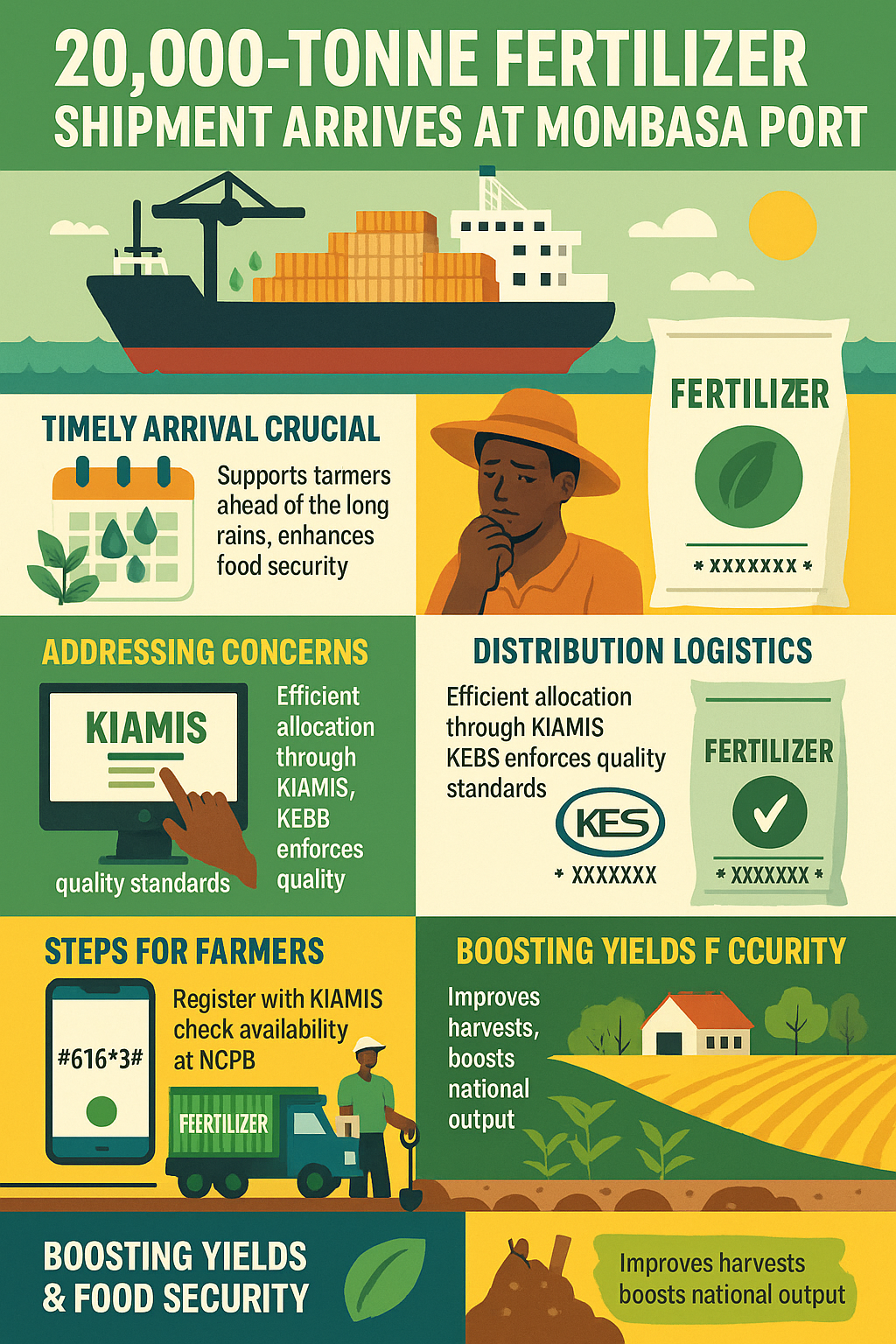
The arrival of a 20,000-tonne fertilizer consignment at Mombasa Port marks a significant milestone in the government’s efforts to support farmers ahead of the long rainy season, a crucial period for agricultural production in Kenya. The timely arrival of this shipment is expected to provide much-needed inputs to enhance food security and boost national yields. An additional 1,300 metric tons of fertilizer is expected soon, further reinforcing the commitment to ensuring farmers have access to essential inputs. However, concerns remain over the lack of transparency regarding the origin and composition of the shipment. The absence of details on the supplier and specific types of fertilizer included in the consignment may limit farmers’ ability to plan effectively, as different soil types and crops require specialized fertilizers for optimal growth. Additionally, past cases of substandard or expired fertilizers in the market have made quality assurance a priority for farmers and stakeholders alike. The government’s approach to addressing these concerns focuses on efficient allocation and swift distribution, primarily managed through the Kenya Integrated Agriculture Management Information System (KIAMIS), ensuring that only registered farmers receive their fair share of subsidized fertilizer.

To guarantee the quality of fertilizer reaching farmers, the Kenya Bureau of Standards (KEBS) plays a critical role in enforcing national quality standards. Farmers are urged to verify the authenticity of their fertilizer by checking for the KEBS Standardization Mark on the packaging and utilizing the SMS verification system by texting the unique code beneath the mark to 20023. This verification step is essential to protect farmers from counterfeit or substandard products that could negatively impact yields. Furthermore, distribution logistics have been carefully structured to ensure that fertilizer reaches key agricultural regions efficiently. The government, in collaboration with the National Cereals and Produce Board (NCPB), is overseeing a multi-modal transportation plan where the fertilizer is first transported from Mombasa to Naivasha by train and then distributed to major farming areas like Uasin Gishu, Bomet, and Nakuru via trucks. This logistical approach is intended to overcome transportation bottlenecks and ensure that farmers across the country receive their fertilizer in time for planting. However, the initial reports do not specify which types of fertilizers—such as Diammonium Phosphate (DAP) or Calcium Ammonium Nitrate (CAN)—are included in the shipment, leaving many farmers uncertain about how best to apply them to different crops. As a result, farmers are encouraged to seek further clarification from NCPB depots or agricultural extension officers before application.

Farmers looking to access the subsidized fertilizer must ensure they are registered with KIAMIS, a digital platform designed to streamline distribution and enhance transparency. Registration can be done through the National Government Administration offices, including local chiefs and village elders, or by dialing *616*3# to confirm or update their details. The use of this system helps prioritize genuine farmers while reducing the risk of fraudulent claims. Once registered, farmers should promptly check with their nearest NCPB depots to inquire about fertilizer availability and collection procedures, as delays in retrieval could affect their planting schedules. Additionally, soil testing is recommended to determine the specific nutrient requirements for different crops, allowing farmers to apply the right type and amount of fertilizer for maximum productivity. Staying informed through official government communication channels, such as the Ministry of Agriculture and NCPB updates, is crucial to keeping track of distribution schedules and additional shipments. With proper planning, timely collection, and strategic application of fertilizer, Kenyan farmers stand to significantly improve yields, contributing to national food security and economic growth.

References:

Kenya News Agency Farmers to receive fertilizer ahead of long rains

The Eastleigh Voice 20,000 tonnes of fertiliser arrive at Mombasa port as planting season starts

KEBS Marks of Quality

All Africa Kenya: Govt Assures Farmers On Subsidy Fertilizer Quality