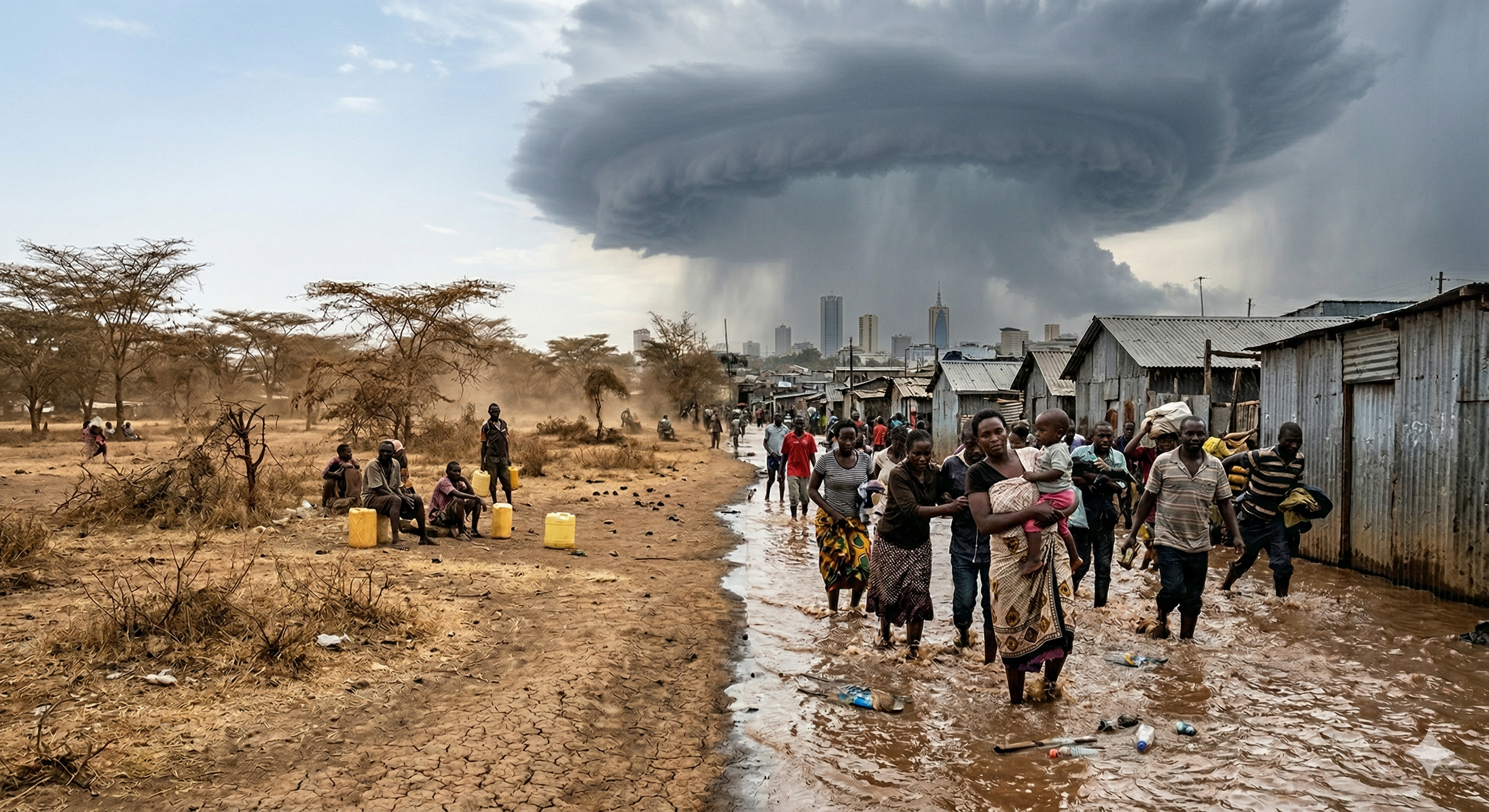
Nairobi Rising—A Multi-Billion Shilling Gamble on the Future

Nairobi is currently undergoing an Sh80 billion transformation under the “Nairobi Rising” agenda, an ambitious intergovernmental pact designed to pull the capital out of its cycle of disaster. The roadmap includes a Sh25 billion overhaul of the city’s drainage and a Sh33 billion investment in expanding sewer systems and restoring polluted waterways. This represents the most significant attempt in recent history to decouple the city’s stormwater from its sewage, a move intended to end the perennial outbreaks of cholera and typhoid that follow every flood.
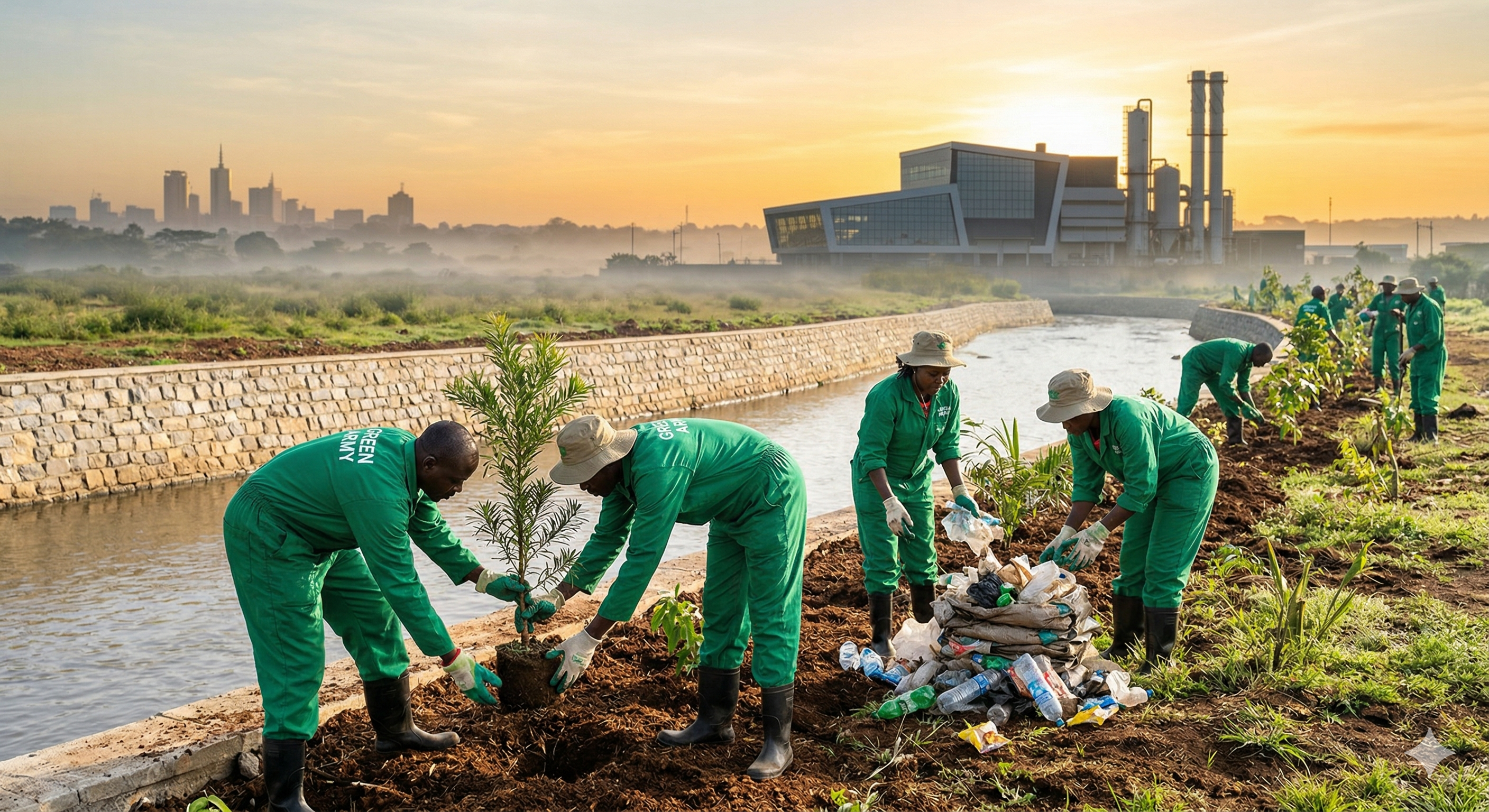
A central pillar of this new vision is the decommissioning of the notorious Dandora dumpsite. Long a source of environmental and health risks, Dandora is slated to be replaced by a modern waste-to-energy plant in Ruai that will generate between 45 and 70 megawatts of electricity. By transitioning to a circular economy, the government hopes to eliminate the plastic debris that currently chokes the city’s drains, which costs an estimated KES 4.5 billion annually in reactive mitigation.

However, the success of “Nairobi Rising” hinges on institutional reform and accountability. The plan includes the creation of a specialized Nairobi Metropolitan Police Unit to enforce zoning laws and protect reclaimed riparian land, but critics warn of the “financial hangover” left by previous interventions. For the residents of Nairobi, the stakes could not be higher; as the April 2026 waste management launch approaches, the city is betting billions that it can finally build the resilience needed to survive its own growth.

References:

Capital News Sewerage and Sanitation Take Centre Stage in Nairobi’s Sh80bn Development Plan

People Daily Ruto unveils plan for a major overhaul of Dandora dumpsite

Big 3 Africa Nairobi Waste to Energy Transformation
The “No Retreat” Policy—The Human Cost of Riparian Reclamation

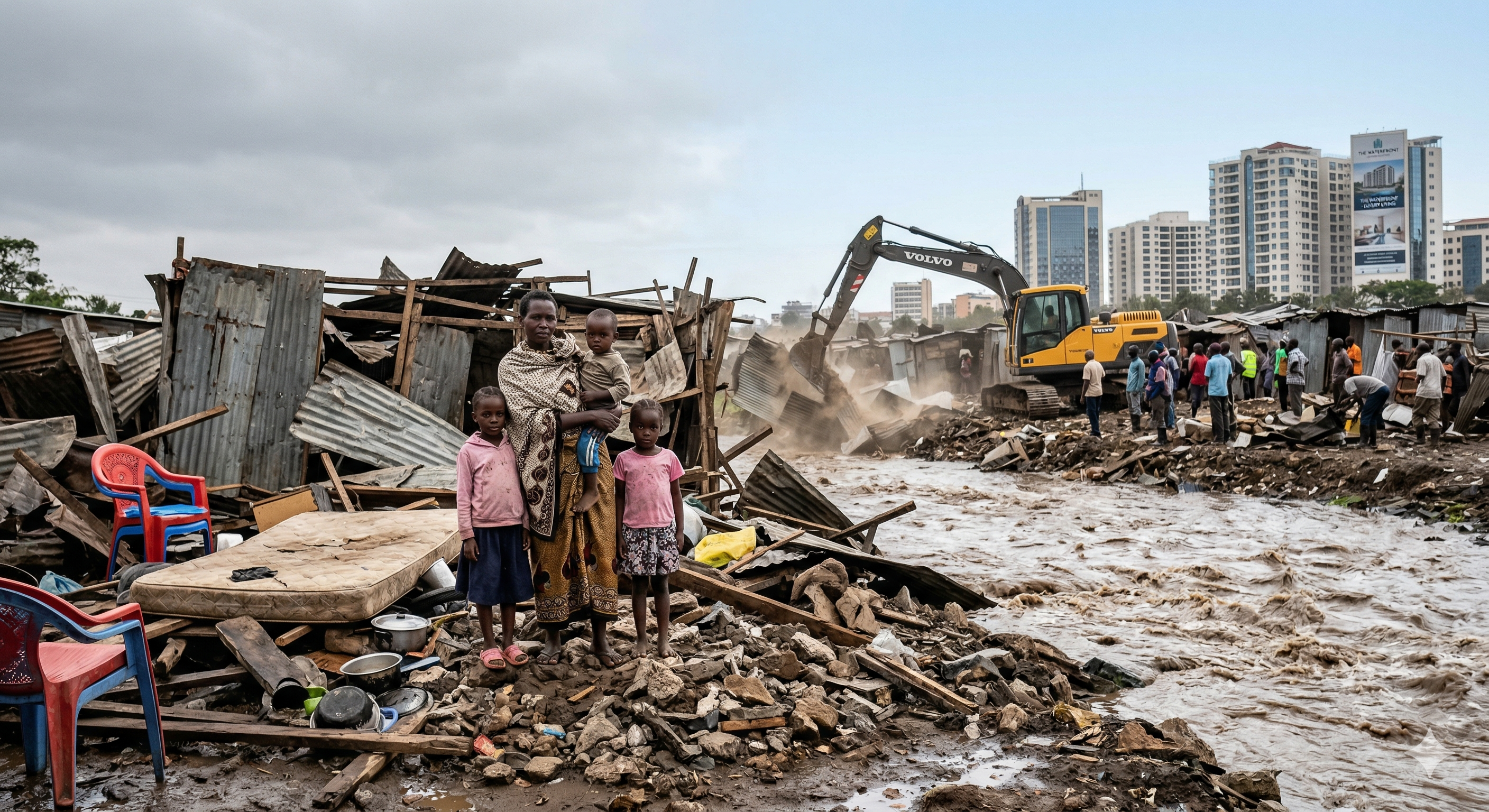
In the wake of the March 2026 floods, Governor Johnson Sakaja issued a “no retreat” order for the demolition of illegal structures along Nairobi’s riverbanks. This aggressive reclamation strategy, aimed at restoring the city’s natural waterways, has targeted hotspots from Westlands to the downstream zones of the Nairobi River. While the government frames these actions as essential flood mitigation, the bulldozers have sparked a fierce debate over “environmental justice” and the selective enforcement of the law.

The human cost of these evictions is profound, particularly for the “twice-displaced” women of settlements like Mukuru. Many families who lost their homes to floodwaters were subsequently met with state-led demolitions, often with only 48 hours’ notice. While the government offered a one-time facilitation fee of KES 10,000 ($75), residents and advocacy groups have slammed the amount as a “grossly inadequate” pittance that fails to secure stable housing in a city where they have lived for decades.

The legal battle is now shifting to the courts, where residents of the River Bank settlement near Gikomba recently secured a stay order against further demolitions. Petitioners argue that the government’s reliance on a “blanket” 30-meter riparian buffer is scientifically untenable and discriminates against the poor while leaving high-end developments in similar zones untouched. As the Nairobi Rivers Regeneration Project pushes forward with its Sh50 billion mandate, the city must decide if “order and dignity” can be achieved without sacrificing the rights of its most vulnerable citizens.

References:

Capital News Sakaja orders demolition of illegal riverbank structures as flood mitigation works begin

Nairobi Times COURT BLOCKS DEMOLITION OF HOUSES BUILT ALONG NAIROBI RIVER RIPARIAN LAND.

HIC Evicted and Forgotten: The Gendered Consequences of Nairobi’s Riparian Evictions

The Grounded Shield—Nairobi’s Disaster Management Crisis

Beneath the headlines of rushing water and leaping flames lies a quieter, more systemic tragedy: the near-total collapse of Nairobi’s emergency response capacity. Despite a population exceeding 4.3 million, the city’s firefighting department was recently revealed to be in a state of terminal neglect. As of late 2024, an astounding 26 out of 31 fire engines and water tankers were grounded, often for issues as trivial as a lack of spare tires or brake components. This leaves the entire metropolis relying on just a handful of operational vehicles during its most vulnerable moments.

This capacity gap is most lethal in the city’s markets and informal settlements. In Gikomba, where the history is “written in flames,” recurrent fires have decimated the livelihoods of thousands of traders who watch their stock turn to ash while waiting for help that arrives “too late to rescue”. The problem is worsened by a non-functional hydrant system; of the 4,500 hydrants scattered across the city, only about 50 are operational, many having been destroyed during road construction or closed to prevent water theft.

The result is what experts call a “ticking time bomb” in urban governance. When a gas truck exploded in Embakasi in early 2024, killing at least three and injuring 280, it highlighted not just a failure of response, but a catastrophic failure of regulation. Despite being denied permits three times, the illegal facility continued to operate in a high-density area, proving that in Nairobi, the distance between a regulatory oversight and a mass casualty event is razor-thin.

References:

The Eastleigh Voice Nairobi’s firefighting capacity in crisis as 26 fire engines remain grounded due to delays in spare parts

Aljazeera Nairobi gas explosion: At least 3 dead, hundreds injured in Kenya’s capital

Daily Nation Sinai fire tragedy:  Death toll rises to seven

Climate Whiplash—When Infrastructure Meets Volatility

Nairobi has entered a perilous era of “climate whiplash,” where bone-dry droughts are abruptly terminated by high-intensity “long rains” that the city’s infrastructure is fundamentally unequipped to handle. Scientific assessments confirm that the climate crisis has increased the intensity of extreme rainfall in East Africa by approximately 40%. This volatility means that the “once-in-a-century” floods of the past are becoming our annual reality, yet our drainage networks remain trapped in the 20th century, designed for historical patterns that no longer exist.

The MAM (March-April-May) rains of 2024 and the recent 2026 deluges have laid bare a systemic collapse. While upscale neighborhoods like Runda face property damage and traffic paralysis, the fallout in settlements like Mathare and Mukuru is existential, with over 200,000 people displaced nationally in 2024 alone. The tragedy is compounded by a failure to translate early warnings from the Meteorological Department into proactive evacuations, leaving residents to face rising waters with zero meaningful preparation.

This infrastructure deficit creates a “water paradox”: even as floods submerge the streets, taps in major estates run dry. The intense runoff carries such high levels of silt and organic debris that treatment plants at Ngethu and Sasumua are forced to shut down, unable to process the turbid water. This cycle of flood-induced scarcity underscores the urgent need for modernized filtration and massive retention reservoirs, as the city’s reliance on aging systems makes it a victim of its own climate-altered environment.

References:

Inside Climate News Following Months of Drought, Floods in Kenya Kill More Than 40 People

Greenpeace Deadly Kenyan floods show urgent need to build climate resilience

Streamline Nairobi’s Water Paradox: Infrastructure Failure Amidst Excessive Rainfall

The Physics of Failure—Understanding Peak Discharge

Nairobi’s drowning is not merely a matter of bad luck; it is a mathematical certainty dictated by the hydrological principle of peak discharge. Defined by the formula Q=CiA, the volume of water rushing through our streets (Q) is a direct product of rainfall intensity (i), the drainage area (A), and the runoff coefficient (C). In a natural landscape, the earth acts as a sponge, but Nairobi’s rapid transformation into a “concrete jungle” has spiked the runoff coefficient to lethal levels. When surfaces become impermeable, water that should have been absorbed is instead weaponized into destructive surface runoff.

The catastrophic flash floods of March 2026 provided a grim laboratory for this principle. Within a single 24-hour window, a staggering 112mm of rain fell on the capital—representing over 120% of the entire monthly average for March. Because the city’s expansion has prioritized high-density “non-porous” development, the runoff has nowhere to go but down, inundating low-lying informal settlements. This technical reality means that even moderate rains now generate peak flows that exceed the capacity of archaic culverts designed decades ago for a much smaller, greener city.

As the Nairobi River repeatedly bursts its banks, the “fragmented responsibility” between national and county governments ensures that these bottlenecks remain unaddressed. While the science of Q=CiA is clear, the governance of drainage maintenance is anything but, with conflicting schedules and a lack of digitized master plans. Without a fundamental shift in how we manage the city’s surface permeability, Nairobi remains a city where the next rainstorm is not just a weather event, but a predictable hydrological disaster.

References

Assessment of Flash Floods in the Streets of Nairobi A Research Paper by Wachira Silvia Wanjiru, Nairobi University

Streamline Drowning In Neglect: The Urgent Battle For Nairobi’s Drainage Systems

The Guardian Weather tracker: At least 10 dead in Nairobi after a month’s rain falls in 24 hours

The Interconnected Enemy—Mosquito Adaptations and Urban Invasions

The war against malaria is shifting because the carrier itself is evolving. Groundbreaking research by KEMRI and the Wellcome Sanger Institute has revealed that Anopheles funestus, one of Africa’s most prolific vectors, is far more genetically interconnected across equatorial Africa than previously understood . This genetic “highway” means that resistance mutations present as early as the 1960s are intensifying and spreading across borders with ease, allowing the species to outpace traditional mosquito control tools .

Simultaneously, Kenya is facing an invasion by Anopheles stephensi, an invasive urban vector detected in nine African countries. Unlike native mosquitoes, this invader thrives in man-made containers in cities like Nairobi, bringing malaria into informal settlements already struggling with an escalating crisis of drug resistance . This development creates a new frontline where the disease can strike year-round, unconstrained by traditional rural transmission seasons .

Looking back at the most recent Global Antimicrobial Awareness Week, held between November 18 and 24, 2025, KEMRI researchers provided a grim reality check for urban health centers. Surveillance data from Nairobi’s Mama Lucy Kibaki Hospital revealed that more than 45 percent of typhoid fever cases are now linked to multidrug-resistant Salmonella Typhi, while a staggering 99 percent of Vibrio cholerae strains from recent outbreaks showed similar resistance patterns . This creates a “double front” clinical nightmare: in densely populated informal settlements, healthcare providers are now forced to navigate a diagnostic maze where a patient presenting with a fever could be suffering from a malaria parasite that clears slowly due to genetic mutations, or a bacterial infection that has acquired “drug-defying” genes capable of defeating even our last-line antibiotics . As we prepare for the 2026 awareness week later this year, the priority is no longer just controlling a single disease, but building a multi-pathogen stewardship program that can protect vulnerable populations from this emerging convergence of biological threats .

References:

KEMRI KEMRI Scientists In Landmark Genetic Adaptations of Malaria Transmitting Mosquito Study

KEMRI KEMRI’s Warns of Escalating AMR Crisis in the Country

Etihad Airways Restarts UAE-Kenya Flights: Boosting Tourism

A few weeks into the resumption of Etihad Airways’ direct flights between Abu Dhabi and Nairobi, the positive impact on regional connectivity and tourism is becoming increasingly evident. After a four-year hiatus due to the COVID-19 pandemic, Etihad has reestablished this crucial air link, operating four weekly flights with its Airbus A320. The airline’s commitment to enhancing economic and cultural ties between the UAE and Kenya is already bearing fruit, with heightened travel activity and renewed interest in the bustling routes between these vibrant cities. This strategic move not only reaffirms Abu Dhabi’s status as a global aviation hub but also provides a significant boost to Kenya’s growing tourism sector, which is key to the country’s economic resurgence.

Business Daily Africa Report

The timing of Etihad’s relaunch synchronizes perfectly with Kenya’s burgeoning tourism industry, which is well on its way to achieving its ambitious goal of welcoming five million visitors in the near future. This development complements Kenya Airways’ forthcoming direct flights from Nairobi to London Gatwick, beginning in July 2025, thereby positioning Nairobi as a pivotal axis for international travel. With accessible routes now open to travelers from the UAE and soon from the UK, Kenya stands ready to offer its rich tapestry of experiences—from the iconic Great Migration in the Maasai Mara to the tranquil sands of Diani and Lamu. The country’s diverse attractions are drawing international tourists eager to explore its natural beauty and vibrant culture, confirming Kenya as a must-visit destination.

Etihad’s return to Nairobi has also spurred significant employment opportunities locally, with the airline actively recruiting Kenyan crew members and pilots. This initiative is in line with the Kenyan government’s objectives to create jobs and enhance economic growth, further underscoring the importance of strong international partnerships. As these new flight routes gain momentum and more visitors flock to Kenya, the increasing air traffic through Nairobi is set to solidify the city’s role as a major travel and commerce hub in sub-Saharan Africa. The ongoing enhancements to both Etihad’s and Kenya Airways’ international networks are not only connecting travelers to unforgettable African adventures but also weaving Nairobi into the broader tapestry of global travel destinations.

References:

The Standard Etihad launches direct flights between Nairobi and Abu Dhabi

AirlineGeeks Etihad Relaunches Nairobi Service

ARGS Etihad Airways opens a new gateway to Kenya with launch of Nairobi flights

Business Daily Etihad Airways postpones return of Abu Dhabi-Nairobi flights

The Kenyan Wall Street Etihad Airways Extends Suspension of Scheduled Flights

Reuters Etihad Airways flights suspended due to coronavirus


Explore Kenya: New Direct Flights from Nairobi to London

Kenya Airways’ new direct flights from Nairobi to London Gatwick, launching on July 2, 2025, offer UK travelers not only convenient access to East Africa but also an invitation to experience Kenya’s world-class tourism. The route, operating three times weekly on a Boeing 787-8 Dreamliner, ensures a premium travel experience with 30 business class and 204 economy class seats. The flights are perfectly timed for traveler convenience, departing Nairobi at night on Wednesdays, Fridays, and Sundays, with morning arrivals at Gatwick. Return flights from Gatwick depart during the day on Mondays, Thursdays, and Saturdays. And with return tickets starting at approximately £720, exploring Kenya’s breathtaking landscapes has never been more accessible.

A nice review of the Boeing 787-8 dreamliner by Dave Mani

Kenya is a land of wonders, offering travelers unforgettable experiences in every corner. As the home of safari tourism, the country is globally renowned for its majestic wildlife encounters, including the awe-inspiring Great Migration in the Maasai Mara. For those seeking tranquility, the sun-kissed beaches of Diani and Lamu provide luxurious coastal retreats, while thrill-seekers can hike the rugged trails of Mount Kenya or indulge in thrilling water sports along the Indian Ocean. Kenya’s cultural vibrancy adds depth to its beauty, with its rich traditions, local cuisines, and the renowned warmth of its people ensuring every traveler feels welcome. With seamless connections from Gatwick to Nairobi and an extensive network across sub-Saharan Africa, Kenya Airways opens the door not only to Kenya’s treasures but to Africa’s diverse destinations.

The addition of Gatwick to Kenya Airways’ UK operations reflects the airline’s vision of positioning Kenya as a premium travel destination for the global market. The new service increases London connectivity to 10 weekly flights, complementing the existing daily Heathrow service. As Allan Kilavuka, CEO of Kenya Airways, highlights, Kenya is not just a destination but a gateway to unforgettable adventures, whether you’re seeking luxury, exploration, or cultural immersion. With direct flights, affordable fares, and an optimized schedule, it has never been easier for UK travelers to answer the call of Kenya. Let this new chapter in connectivity be your gateway to an extraordinary African journey.

References:

ATTA Kenya Airways announces new direct flights between Nairobi and London Gatwick

Kenya Airways Kenya Airways Announces New Route, Nairobi to Gatwick Direct Flights Beginning July 2025

KATA Kenya Airways announces new route, Nairobi to Gatwick direct flights beginning July 2025

MSN Kenya Airways Announces New International Route From Nairobi

Capital Business KQ to launch second London flight hub at Gatwick in 2025

NAIROBI | Graffiti framing Public Opinion

On the City Market wall facing Muindi Mbingu Street, are drawn rare graffiti with a political message for the electorate: “be wise and choose only leaders with the interest of the nation ahead of their own.”

Abel and Buckley (1997) looked at the “writing of graffiti as a psychological phenomenon, a form of communication that is both personal and free of everyday social restraints that normally prevent people from giving uninhibited reign to their thoughts.” [Looking at the Writing on the Wall: A Critical Review and Taxonomy of Graffiti Texts, Jane M. Gadsby (1995)] Habitually, a similar attitude is engendered by the anonymous graffiti artists, in the “City in the Sun.” One such artist exhibits “the reminiscences of a greedy politician…” Daily Nation reported. Chronic poverty and unemployment as well as the epic struggles and conditions of a country’s marginalized people are touted as the main engines that fuel graffiti culture. But is that all there is to it? It has been found out before that”Mainstream media will never say a word of truth…” Thus graffiti is now being used as an alternative channel to the mainstream media, to disseminate the true information, which often was kept back by the latter.” It has thence, been confirmed that somehow, it succeeds in getting the message through to the masses. One professor of English pointed out that “graffiti has played a significant role in framing and times changing public opinion.”

Whether or not graffiti is considered as a medium of revolt against the authorities, or just as a channel for self expression, what is depicted is in clear print, a true and faithful reflection of a people’s attitudes toward a non-yielding system on the one hand, and on the other, a call to action by the ‘infringed’. In a nutshell, thoughts become things.


References:

Writing’s on the wall for greedy MPs Daily Nation March 4, 2012

Looking at the Writing on the Wall: A Critical Review and Taxonomy of Graffiti Texts Jane M. Gadsby (1995)

Graffiti: Expression Unadulterated Irfan Muzaffar Parray


COCA-COLA | Going juicy!

With the intent of expanding production capacity and diversify into other product ranges, coca-cola will invest 5 billion shillings in Kenya over the next three years. The firm’s East  Africa general Manager Mr. Peter Njonjo said that the juice market has a huge market potential and hence contracted about 37,000 farmers to grow mangoes and passion fruits for the company. The firm seeks to start manufacturing juice products in addition to the soft drinks. He stated that some of the investments would go to improving the beverage services plants in Nairobi and Kisumu. To their benefit, this investment will provide a ready and steady market as well as a source of raw materials.

This is good news for the farmers, consumers, as well as the company. This is because farmers will share profits and incur less loss because of the subsidized cost in terms of farming expenditures. The farmers will also have an increase of income. If the materials are available locally, the company will experienced decreased cost of production which is good news for the consumers as the products will be purchased at cheaper prices.

This gesture will contribute greatly to economic growth of Kenya. The choice of investing in farmers will increase the national income and therefore generate more revenue for the country. Farmers will also have a feeling of security. Thumbs up to Coca-cola company as this is directly giving back to society. Farmers are also encouraged to take this opportunity to improve their income.

References:

Coca Cola to invest Sh5 billion in Kenya to grow its product range