The war against malaria is shifting because the carrier itself is evolving. Groundbreaking research by KEMRI and the Wellcome Sanger Institute has revealed that Anopheles funestus, one of Africa’s most prolific vectors, is far more genetically interconnected across equatorial Africa than previously understood . This genetic “highway” means that resistance mutations present as early as the 1960s are intensifying and spreading across borders with ease, allowing the species to outpace traditional mosquito control tools .
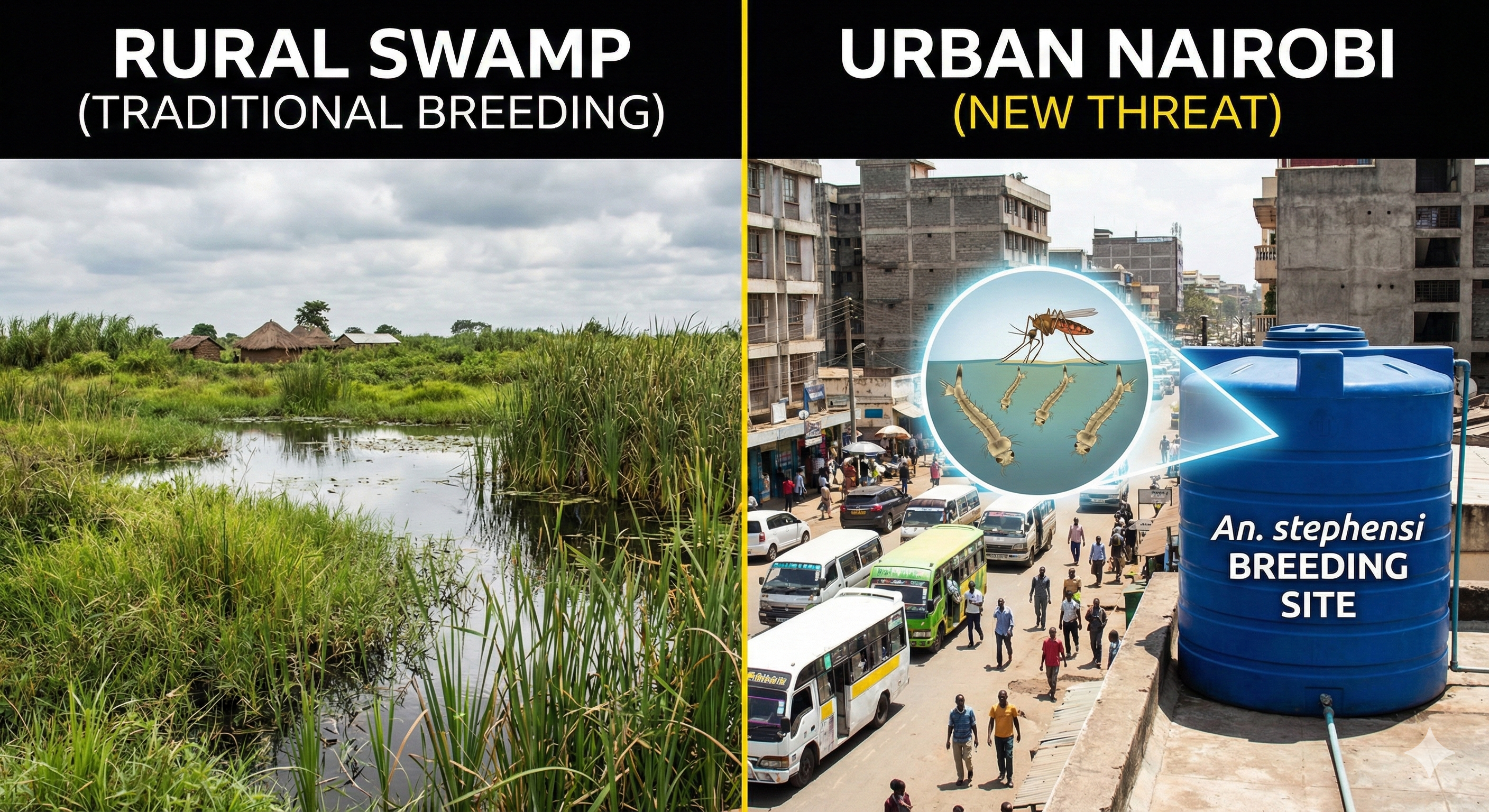
Simultaneously, Kenya is facing an invasion by Anopheles stephensi, an invasive urban vector detected in nine African countries. Unlike native mosquitoes, this invader thrives in man-made containers in cities like Nairobi, bringing malaria into informal settlements already struggling with an escalating crisis of drug resistance . This development creates a new frontline where the disease can strike year-round, unconstrained by traditional rural transmission seasons .
Looking back at the most recent Global Antimicrobial Awareness Week, held between November 18 and 24, 2025, KEMRI researchers provided a grim reality check for urban health centers. Surveillance data from Nairobi’s Mama Lucy Kibaki Hospital revealed that more than 45 percent of typhoid fever cases are now linked to multidrug-resistant Salmonella Typhi, while a staggering 99 percent of Vibrio cholerae strains from recent outbreaks showed similar resistance patterns . This creates a “double front” clinical nightmare: in densely populated informal settlements, healthcare providers are now forced to navigate a diagnostic maze where a patient presenting with a fever could be suffering from a malaria parasite that clears slowly due to genetic mutations, or a bacterial infection that has acquired “drug-defying” genes capable of defeating even our last-line antibiotics . As we prepare for the 2026 awareness week later this year, the priority is no longer just controlling a single disease, but building a multi-pathogen stewardship program that can protect vulnerable populations from this emerging convergence of biological threats .
References:
KEMRI KEMRI Scientists In Landmark Genetic Adaptations of Malaria Transmitting Mosquito Study
KEMRI KEMRI’s Warns of Escalating AMR Crisis in the Country
 Jijuze