Nairobi Protests Against Finance Bill 2024: Impact and Future Prospects

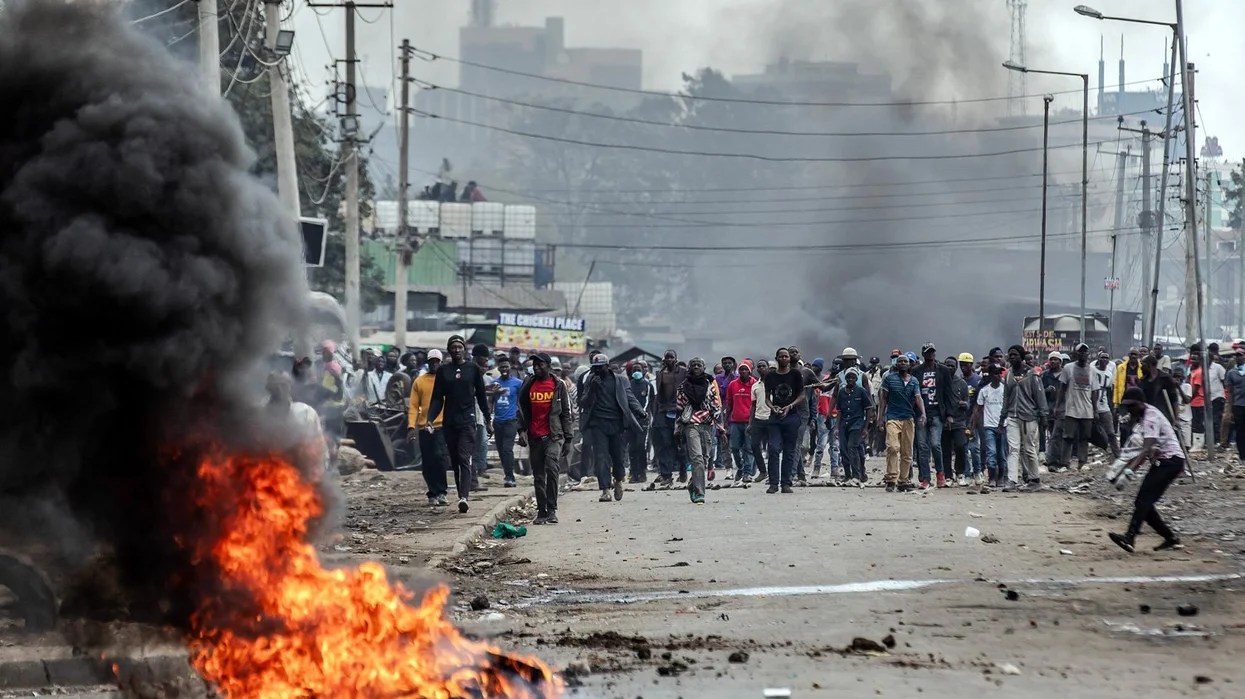
Kenyans took to the streets of Nairobi’s Central Business District (CBD) on Tuesday, voicing their opposition to the contentious Finance Bill 2024. Backed by the Azimio coalition, demonstrators viewed the proposed legislation as punitive and counterproductive to economic stability. Amidst the vibrant chants and calls for reform, the National Assembly’s Finance Committee, feeling the pressure, announced it had dropped several contentious clauses in the bill. Led by Kimani Kuria, the committee stated that the changes were informed by the inflationary pressures confronting many Kenyans, setting the stage for a heated parliamentary session.

Citizen Digital

Amid the protests, questions emerged over the conduct of armed plainclothes police officers infiltrating the crowds. These officers, without uniforms or identification, targeted individuals suspected of leading or participating in the demonstrations. Human rights groups have decried this tactic, citing significant concerns over the apparent violation of constitutional rights. The officers’ actions, characterized by excessive force and lack of clear identification, have ignited calls for greater transparency and accountability from the National Police Service (NPS). The Law Society of Kenya (LSK) condemned the police interference, warning of legal action against unlawful directives and emphasising their commitment to holding violators personally liable.

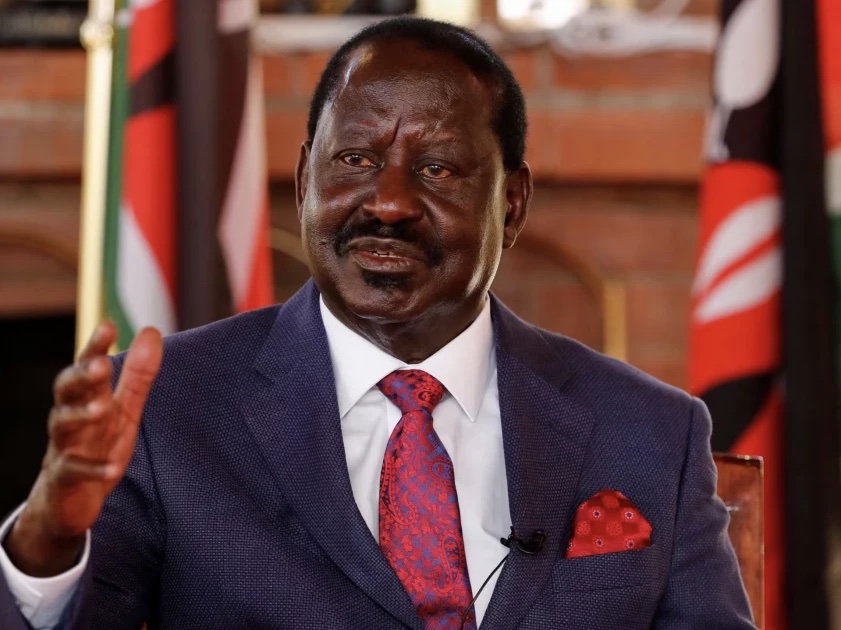
Adding to the tension, ODM leader Raila Odinga expressed his pride in the protesters, particularly moved by a young female demonstrator who spoke passionately on his behalf. “I’m a very proud father today!” Raila declared on X, sharing the video that has since gone viral. The Azimio coalition criticized the government’s tactics, accusing them of playing ‘mind games’ with the public by including contentious proposals seemingly designed to provoke outrage. As MPs prepare for a special session to discuss amendments to the bill, both ruling Kenya Kwanza and opposition Azimio MPs have been summoned by their respective leaderships to firm up positions. The nation watches closely, hoping for a fair and transparent resolution to the ongoing crisis, as demonstrators’ resolve remains unshaken despite the challenges faced during the protests.

References:

Citizen Digital Police Or Goons? Questions Emerge Over Conduct Of Armed Plainclothes Officers At Anti-Finance Bill Protests

The East African MPs drop punitive taxes as protests rock Nairobi


The Global Significance of Mother’s Day and Father’s Day: A Historical Perspective

Mother’s Day, rooted in post-Civil War peace efforts led by Ann Reeves Jarvis, evolved into a significant holiday in 1908 when Anna Jarvis campaigned to honour her own mother, leading to its national recognition by President Woodrow Wilson in 1914. Today, alongside Mother’s Day, we celebrate Father’s Day, a holiday with its own unique origins and significance.

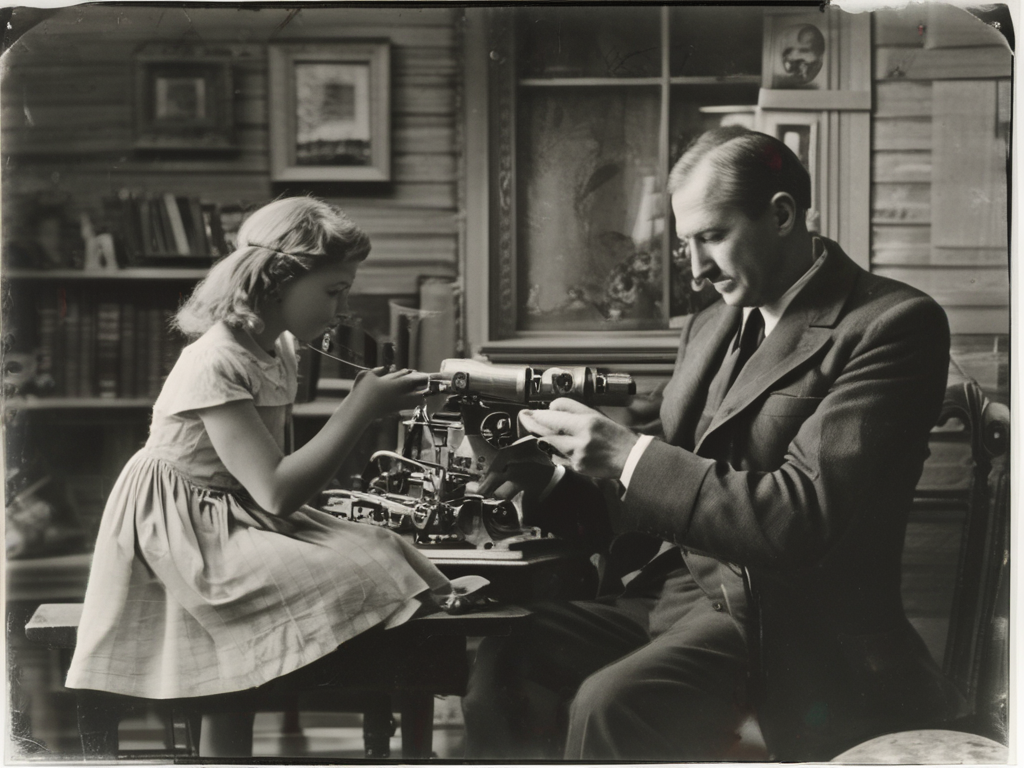
Father’s Day started on July 5, 1908, in West Virginia, honouring men who died in a mining disaster. Inspired by Mother’s Day, Sonora Smart Dodd from Spokane, Washington, proposed an official Father’s Day in 1909. Dodd, one of six children raised by a widower, sought to honour her father, Civil War veteran William Jackson Smart. She advocated for Father’s Day through local churches, the YMCA, and government officials, leading to Washington State celebrating the first statewide Father’s Day on June 19, 1910. Although the holiday initially struggled to gain traction, Dodd’s persistent promotion, supported by trade groups, helped it spread. By the 1930s, national awareness grew, and in 1972, President Richard Nixon officially recognised Father’s Day as a permanent national holiday.

Today, Father’s Day is celebrated globally, reflecting its broad appeal and recognition of fatherhood. In the United States, it is observed on the third Sunday in June, a tradition followed by many countries, including Kenya. Other nations, particularly in Europe and Latin America, honour fathers on St. Joseph’s Day in March. This global reach underscores the universal importance of acknowledging and celebrating the role of fathers in families and society.

References

Wikipedia Father’s Day (United States)

History Father’s Day 2024

US-Kenya Relations Strengthened: President Biden Designates Kenya as Major Non-NATO Ally

On 23rd last month, President Joe Biden hosted a grand White House dinner to honour Kenyan President William Ruto , marking the first state visit by an African leader in nearly 20 years. The event featured a surprise appearance by former US president Barack Obama, emphasising the significance of US-Kenya relations.

Photo Courtesy: Reuters

The state dinner underscored the significance of US-Kenya relations, with President Biden praising Ruto’s bold leadership and announcing Kenya’s designation as a major non-NATO ally, a first for sub-Saharan Africa. This move aims to bolster bilateral ties and recognise Kenya’s growing influence on the global stage. Biden and Ruto also unveiled the “Nairobi-Washington Vision,” a collaborative effort to support debt relief for developing nations and enhance cooperation on critical issues such as health, security, economic stability, cybersecurity, and climate change.

Former President Obama, whose father was born in Kenya, briefly attended the dinner, emphasising the personal and historical significance of the event. His presence symbolised the deep connections between the two nations. The evening’s celebrations not only honoured the longstanding friendship between the US and Kenya but also looked forward to a future of enhanced collaboration and mutual support in tackling global challenges.

References

Independent Barack is back! Obama stops by Biden’s lavish state dinner for Kenyan president

The East African Ruto, Biden announce new investment deals as they seek deeper ties

BBC Biden welcomes Kenya’s leader as US under pressure in Africa


Coast Governors Veto Muguka Sale

President William Ruto has reversed a ban on Muguka, a stimulant linked to drug abuse among young people, which was previously announced by three coastal leaders in Kenya. Ruto directed the Ministry of Agriculture to engage all stakeholders, emphasizing the economic importance of muguka for Embu County, where it brings in significant income. Agriculture CS Mithika Linturi declared the ban by the three governors as invalid, noting that Muguka is legally recognized as a cash crop under existing regulations.

Considering that the County Governor serves as the chief executive officer of the county government in Kenya, and recognizing the dual-level structure of governance comprising the national and county governments, it is within the purview of the County Governor to exercise legislative and executive powers at the county level. In accordance with the principles of devolution enshrined in the Constitution of Kenya, County Governors possess the authority to promulgate and enforce ordinances and regulations that address the specific needs and welfare of their respective communities. Consequently, in situations where such local enactments are demonstrably in the best interest of the county’s populace, the authority of the County Governor to override or modify national legislation may be justified, ensuring that local governance is responsive and tailored to the unique socio-economic and cultural context of the county.

Calls for tougher penalties to combat the sale of illicit brews in Kenya are amplified, emphasizing the need for comprehensive measures from both the Executive and Parliament. The surge in criminal activities linked to the trade is a cause for concern, prompting advocates for stricter enforcement of laws regulating alcoholic beverages. Meanwhile, the Nakuru Bar Owners Association supports government initiatives to eliminate illicit liquor sales, citing concerns over public health and legitimate businesses. In contrast, the sale and consumption of Muguka, a psychotropic substance, present growing concerns, particularly in coastal regions. Pressure mounts on the government to address the social and health consequences associated with Muguka use, including addiction and criminal activities. Efforts to regulate Muguka sales and consumption are underway, but challenges persist in enforcing restrictions and combating its proliferating trade.

In the same way that the unwavering dedication of law enforcement in Bahati, Nakuru County, has tackled the scourge of second-generation alcohol, so too must this steadfast commitment be mirrored at the coast to combat the sale of Muguka. True progress in safeguarding our communities lies in applying consistent zeal and resolve across all regions, recognising that the health and future of our society depend on our collective and equal efforts.

References

The Africa Report Kenya: Ruto’s reversal of muguka ban in coastal region draws criticism

AfroCave Role and Functions of a County Governor in Kenya

Kenya News Agency Ex-MP Calls For Stiffer Penalties To Curb Sale, Consumption Of Illicit Brews

Education Bill, a step towards vision 2030

Education is a very imperative factor towards economic and social development. Most of the industrialized countries are characterized by a large number of erudite citizens. Since primary school education was made free in Kenya, after the 2002 General elections, many of the children affected by poverty got the opportunity to acquire education. Although numerous were still locked out either because of the long distances from available schools to their homes or because of the negligence of some parents especially those from rural communities who do not value education. A lot of brilliant students were therefore denied their right to education. Fortunately, this will soon be a tale of the past if the education bill that was recently tabled in parliament is to be passed. The bill is intended to make education free and compulsory to every child.

The bill states that education should be free and compulsory to every child, and parents should enroll any child of school going age to a nearby primary school. It also states that no child should be held back until he/she completes basic education. If a child fails to attend school on a regular basis or is not enrolled in any school, the parent or guardian is to face up to one year jail sentence or a fine of 5,000 shillings. The bill also outlines that only a cabinet secretary, through a gazette notice, will exempt any child’s admission to a school. Toting up to that, the cabinet secretary in consultation with the National Education Board and County Education Board will establish primary and secondary institutions within a radius of 3 kilometers of every residential area. This will curb the problem of schools being inaccessible to some children, particularly those in rural areas.

This bill could transform the lives of many Kenyans. There are countless children unfairly deprived of education and for some, it is due to the negligence of their parents. This will also increase opportunities for the girl child to be educated as well as eliminate their early marriages since some communities are notorious for holding the belief that educating the girl child is a waste of time and resources. Additional opportunities for education will also promote economic development. This is because education increases invention and innovation. Many scholars will also be enrolled in secondary schools and this will open scholarship opportunities for secondary education. If these students pass well, they will be sponsored by various institutions and organizations for their secondary education and for some even their tertiary education. Therefore the education bill is a colossal step towards development in Kenya.

NAIROBI | Graffiti framing Public Opinion

On the City Market wall facing Muindi Mbingu Street, are drawn rare graffiti with a political message for the electorate: “be wise and choose only leaders with the interest of the nation ahead of their own.”

Abel and Buckley (1997) looked at the “writing of graffiti as a psychological phenomenon, a form of communication that is both personal and free of everyday social restraints that normally prevent people from giving uninhibited reign to their thoughts.” [Looking at the Writing on the Wall: A Critical Review and Taxonomy of Graffiti Texts, Jane M. Gadsby (1995)] Habitually, a similar attitude is engendered by the anonymous graffiti artists, in the “City in the Sun.” One such artist exhibits “the reminiscences of a greedy politician…” Daily Nation reported. Chronic poverty and unemployment as well as the epic struggles and conditions of a country’s marginalized people are touted as the main engines that fuel graffiti culture. But is that all there is to it? It has been found out before that”Mainstream media will never say a word of truth…” Thus graffiti is now being used as an alternative channel to the mainstream media, to disseminate the true information, which often was kept back by the latter.” It has thence, been confirmed that somehow, it succeeds in getting the message through to the masses. One professor of English pointed out that “graffiti has played a significant role in framing and times changing public opinion.”

Whether or not graffiti is considered as a medium of revolt against the authorities, or just as a channel for self expression, what is depicted is in clear print, a true and faithful reflection of a people’s attitudes toward a non-yielding system on the one hand, and on the other, a call to action by the ‘infringed’. In a nutshell, thoughts become things.


References:

Writing’s on the wall for greedy MPs Daily Nation March 4, 2012

Looking at the Writing on the Wall: A Critical Review and Taxonomy of Graffiti Texts Jane M. Gadsby (1995)

Graffiti: Expression Unadulterated Irfan Muzaffar Parray


Public opinion Versus Political Influence over the Media

The Hague Suspects (two among them) presidential hopefuls have been accused of engaging with the local media, with an aim of swaying public opinion against the ICC.

The International Crisis Group (ICG), which has been monitoring the Kenyan cases at The Hague, in its report, reveals that the said suspects along with the local media, have employed a scheme casting the “suspects” as victims of the court, and of ‘sinister plots’ by their political opponents, aiming at barring them from participating in the 2012 elections.[“During the recent hearings at The Hague, the media… (Covered the cases as if) Moreno-Ocampo was prosecuting Kenya, not individual suspects.”]

Very well done! That must have worked its way to some level of success I should say. It is however prudent to note that a vast majority of Kenyan youth, who constitute a major sector of the electorate, have matured to be free thinkers, through the teachings of their life experiences, and interpersonal interactions. There has been a collective ‘paradigm-shift’ in the thoughts of today’s Kenyan youth’s-something that is sounding a loud and clear ‘revolution’. The Kenyan youth has realized that this is the ‘age of the mind’, and has started to ‘think’. A famous line goes, “You can fool some people sometimes, but you can’t fool all the people all the time.” The future of this country lies on the hands of the youths of today not on ‘whoever’ frequents the TV screens in the living-rooms at prime-time.

References:

Media in the dock over hague cases All Kenya News 4th March 2012

The Hague judgement causes Uhuru, Ruto sleepless nights The Citizen 5th Mrch, 2012

Kenya’s decision for Syrian regime change is not informed

Kenya’s Ambassador & Permanent Representative at Kenya Mission to United Nations, Macharia Kamau, “cautioned that the UN’s call for Mr. Assad to leave office must not be interpreted as an invitation to Western intervention in Syria, as did occur in Libya in response to a UN resolution adopted last year.”

It is ridiculous to not think that the West’s main agenda is to interfere with the internal affairs of and about Syria! Even so, how much success has the west achieved by intervening in chaotic situations in other states, with the promise of bringing about peace and prosperity? Negligible if any, contrary to the so many cases, where much more violence and destruction, became the order of the day, upon the exit of foreign forces. Look back at Somali, Afghanistan, and in that case, Libya. There’s clearly something aloof. Saudi Arabia’s  U.N. Ambassador, Abdallah Y. Al- Mouallimi, was quoted saying, ” today, the U.N. General Assembly sent a clear message to the people of Syria: the world is with you.” A skeptic person may ask: “Is he really representative of Syria’s people and the situation there?” I would rather Bashar Ja’afari, Syria’s U.N. Ambassador’s comments, which actually state more or less contrary, to Ambassador Abdallah’s. (“The resolution will send a message to extremists that “violence and deliberate sabotage” are acceptable and will lead “to more chaos and more crises.”)

In respect to international law, and in the context of sovereignty of states, it is wrong to impose conditions on a state’s people. “In article 2(7) of the UN Charter, it is stated that the charter gives no competence to the UN or to the UN Members to intervene in matters that are substantially under the neutral jurisdiction of a State.” Syria is not a fallen state, unfortunately, the vote defiles the very spirit of these words. Recall that “in the classic view, international law and democracy are simply not related. International law is to remain neutral vis-à-vis any political model.”

References:

East Africa: Kenya Votes At UN for Syrian Regime Change allAfrica.com 18th February, 2012

Stance on Syria proves China as firm supporter of U.N. Charter: expert xinhuanet.com 17th February 2012

China opposes armed intervention or forcing “regime change” in Syria xinhuanet.com 17th February 2012

Egypt recalls its ambassador to Syria xinhuanet.com 19th February 2012

Syria responds “positively” to Al protocol, proposes minor amendments xinhuanet.com 18th February 2012

UN General Assembly condemns Syria The State 16th February 2012

BILL TO CHANGE 2012 POLL DATE | The Hidden Plot?

Is it pushing the date to 2013? Flashback to 21st July, 2011 and, MP for Kilome, Harun Mwau, in a suit lodged at the High Court in Nairobi, said, “there has been confusion as to when the next general elections shall be held.” Mwau contends that the term of the 10th parliament began on January 15, 2008, and shall end on January 15, 2013.

The cabinet and various members of parliament, across the coalition divide, are of the view that the new constitution preserves the term of the current parliament, until mid-January 2013. Article 262 (10) of the constitution states that: “The National Assembly existing immediately before the effective date shall continue as the National Assembly for the purposes of this constitution for its unexpired term.” Thus, the cabinet recently approved a Constitution Amendment Bill 2011, which seeks to alter the poll date. httpv://www.youtube.com/watch?v=Lmw_ceVMmws  Despite public uproar, Justice and Constitutional Affairs Minister, Mutula Kilonzo says, he will push through the Bill on election date, which sets the date for the next general elections on the third Monday of December, every fifth year of an elections cycle. Transitional provisions promise the current parliament its full tenure. It is however prudent to note that the last ‘contentious general elections’, that produced the 10th parliament, was held before the new constitution came into force. Therefore, it would be more accurate to define the “full tenure” of the 10th parliament, as it would have been defined, if the last constitution was in force. “The issue of an August date has never been contentious. The date was determined after consideration of the wishes of the people of Kenya which included submission that a December date interfered with the festive season when Kenyans travel to places where they may not have registered to vote: coincides with religious festivities and the prevailing weather conditions complicate the logistics of ferrying election materials.” CIC addressed. httpv://www.youtube.com/watch?v=BSOWpxaZSo8 Undoubtedly, the wishes of the people of Kenya, expressed in the constitution, have an upper hand against any one single Bill prepared by a few representatives in government. “CIC wishes to remind Kenyans that what killed reforms in this country were “convenience” amendments of the constitution soon after independence… It is such amendments that Kenyans wanted the constitution to be insulated against.

This issue begs the question: Is this the 10th parliament’s plot to extend its tenure in a quest to collect more campaign monies? Politicians should not blame time for their incompetency to perform required tasks. Rather, they should resign from office already, without wasting any more time. What Kenyans need is authentic people power, not the dumbocracy of political rule.

References:

Mwau Asks Court for 2013 Election Date allAfrica.com July 22, 2011

Why the Next Elections May Be Held in 2013 MENAFN.COM July 31, 2011

Change of 2012 poll date height of mischief, impunity Capital News September 14, 2011

Mutula firm on elections date amendment Capital News September 15, 2011

CIC warns over election date change KBC News September 17, 2011

Mutunga Wants Case On Date of 2012 General Election Speeded Up allAfrica.com October 6, 2011


EDUCATION | Strike by Public University Dons Persists

“Public Universities are part of the government and it was government’s wish that all its workers are well remunerated. As government, we want to see that the university staff is paid well. I appeal to unions, not to use the weapon of strike menacingly, but as a weapon of last resort,” said the Prime Minister, Raila Odinga, as he brokered negotiations to call off a similar strike by the University Academic Staff Union (UASU), last year.

The government’s failure to honor its pledges to civil servants, gives reason to the re-current strikes in public institutions. The University Academic Staff Union (UASU) cited stalled implementation of new salaries and allowances, as the reasons for the strike. Last year, Finance Permanent Secretary, Joseph Kinyua, “presented a signed letter to his Higher Education counterpart, Professor Crispus Kiamba, committing the government to pay the last installment of 2008/09 – 2009/10 financial years, collective bargaining agreements…” Capital FM website reported.  Recently on October 19th varsity dons signalled a strike with the union chairman Samuel Kubasu, saying lecturers expected the new pay rise to be between 30-40 per cent. httpv://www.youtube.com/watch?v=ru9IicNR46Y&feature=fvsr            The impasse at the universities arose after the authorities failed to respond to demands for a salary increase, whose negotiation started in 2009, but stalled mid-stream.” Meanwhile, Mr. Justice Paul Kosgei, of the Industrial Court ruled that, “pending the hearing and determination of an application filed by the Inter-University Council Consultative Forum, the lecturers should not engage in any activity likely to paralyze learning at higher institutions.” allAfrica.com reported. Despite the ruling, the strike continues. Egerton University becomes the latest institution to be closed, and students sent home as the lecturers strike proceeds into day 3. Going into the second week of the strike, the situation is expected to worsen following Thursday night’s unfruitful talks, involving the Prime Minister, Raila Odinga, seeking to arrive at a compromise.

With this new constitutional dispensation, and in this age and time, some things were bound to happen; on one hand, the citizenry would become more aware of their civil rights, thus demanding them, where they previously would not, and on the other, the government would fail to own up to its pledges, more so during this time, that you can only hide a little or none, from the public’s watchful eyes. What a risky area to begin a crisis? Education is the key. Whoever is concerned with its safe-keeping should be careful lest it breaks.

References:

Court Halts Lecturers’ Strike allAfrica.com Novermber 9, 2011

Strike Cripples Varsity Exams and Graduation November 9, 2011

All the Sides to Blame for Unnecessary Strikes November 9, 2011

Judge Rules Varsity Dons Strike Illegal Novermber 10, 2011

Varsity lecturers’ signal strike October 19, 2011

Kenya university dons call off strike April 8, 2010