Frequent Cabinet Reshuffles in Developing Democracies: Kenya Under Scrutiny

Cabinet reshuffles, a common feature in many developing democracies, often reflect a complex interplay between the need for governmental competence and the pressures of political maneuvering, as evidenced by the recent changes in the Kenyan administration. Defined as alterations in the executive branch’s composition, these reshuffles can be driven by various factors, including the desire to enhance government performance, address corruption, consolidate political power, reward loyalty, respond to public pressure, or signal policy shifts. The Kenyan cabinet reshuffle of March 2025, which saw key figures like Aden Duale moved to the Ministry of Health and Justin Muturi dismissed from his role in Public Service, exemplifies this dynamic. While the stated reasons often revolve around improving service delivery and aligning with the government’s agenda, underlying motivations frequently involve political considerations such as managing internal dissent, rewarding allies, and strategically positioning individuals within the executive. This constant reshuffling raises fundamental questions about the balance between appointing technically skilled individuals and ensuring political loyalty in the pursuit of effective governance.  

A Report by Citizen Digital

The motivations behind frequent cabinet reshuffles in developing democracies are multifaceted, often stemming from a blend of administrative and political imperatives. In the Kenyan context, the reassignment of Aden Duale to the Health Ministry to address challenges within the Social Health Authority suggests an attempt to improve government performance in a critical sector. However, the dismissal of Justin Muturi, following his public criticism of the government and subsequent accusations of incompetence from President Ruto, highlights the significance of political loyalty and the management of dissenting voices within the cabinet. Academic literature supports this observation, noting that leaders in developing democracies often prioritize consolidating political power and rewarding loyalty, sometimes at the expense of technical competence. This “loyalty-competence trade-off” is a recurring dilemma where leaders balance the need for effective governance with the imperative of maintaining political stability and control. The Kenyan reshuffle, with its mix of stated performance objectives and apparent political motivations, underscores this complex dynamic.

The frequent occurrence of cabinet reshuffles can have significant consequences for governance and public perception in developing democracies like Kenya. While intended to inject new impetus or address specific challenges, these changes can also lead to instability within government ministries, disrupting policy continuity and hindering the development of long-term strategic planning. When ministers are frequently moved or replaced, the time required for new appointees to gain expertise and build effective working relationships can impede the overall effectiveness of governance. Furthermore, if the public perceives these reshuffles as being driven primarily by political expediency rather than a genuine commitment to improved governance, it can erode public trust in government institutions and the democratic process. The Kenyan example, with its swift dismissal of a cabinet secretary after public disagreement, risks reinforcing perceptions of a system where loyalty trumps competence, potentially impacting public confidence and the long-term stability of the nation’s governance.

References:

The Star Duale moved to Health ministry in new Cabinet changes

KBC President Ruto drops Muturi in new cabinet changes

National Research University – Higher School of Economics, Moscow, Russia The loyalty-competence tradeoff in dictatorships and outside options for subordinates.

The Constitution Society The Complex Implications of Reshuffles


How to Access Subsidized Fertilizer in Kenya

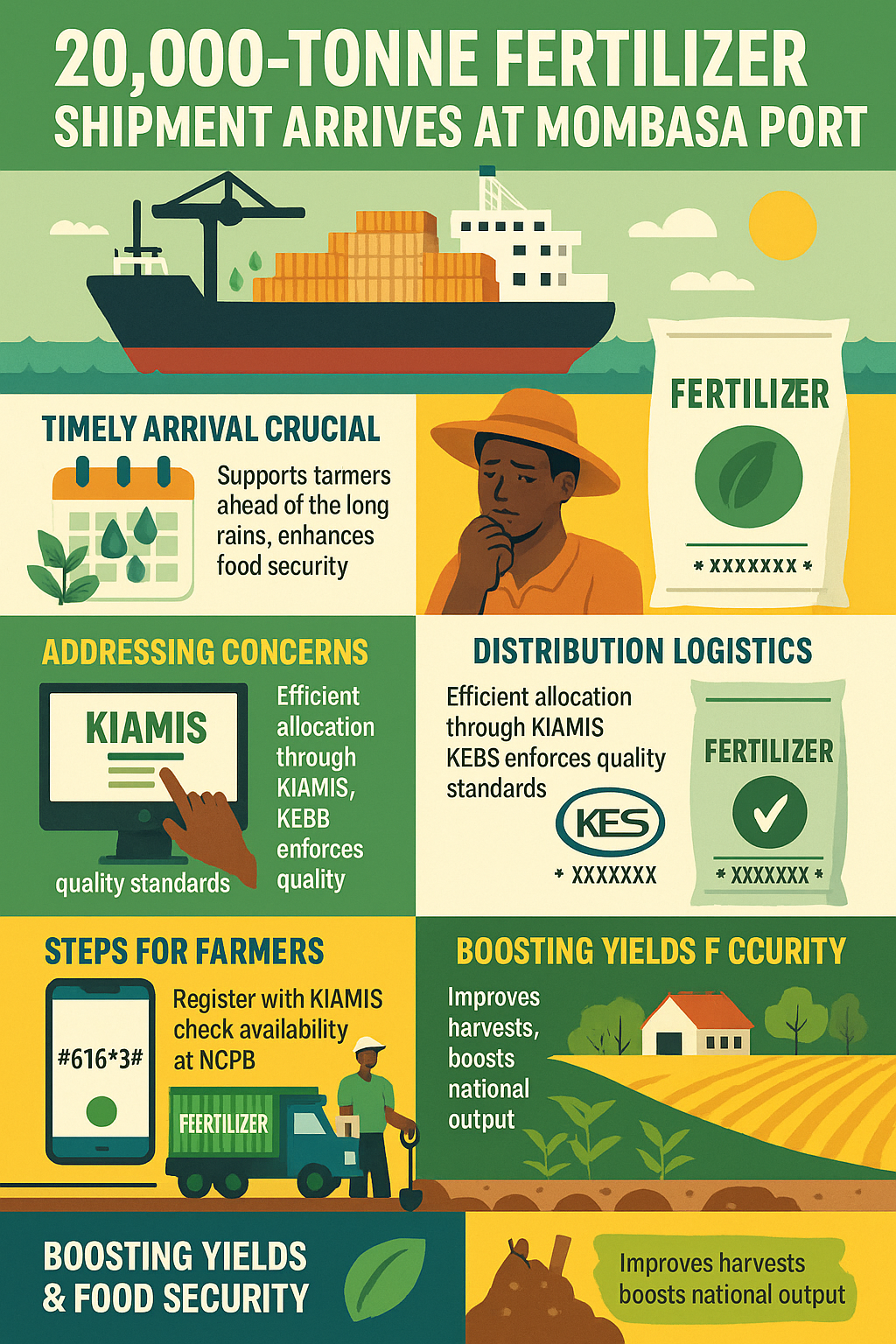
The arrival of a 20,000-tonne fertilizer consignment at Mombasa Port marks a significant milestone in the government’s efforts to support farmers ahead of the long rainy season, a crucial period for agricultural production in Kenya. The timely arrival of this shipment is expected to provide much-needed inputs to enhance food security and boost national yields. An additional 1,300 metric tons of fertilizer is expected soon, further reinforcing the commitment to ensuring farmers have access to essential inputs. However, concerns remain over the lack of transparency regarding the origin and composition of the shipment. The absence of details on the supplier and specific types of fertilizer included in the consignment may limit farmers’ ability to plan effectively, as different soil types and crops require specialized fertilizers for optimal growth. Additionally, past cases of substandard or expired fertilizers in the market have made quality assurance a priority for farmers and stakeholders alike. The government’s approach to addressing these concerns focuses on efficient allocation and swift distribution, primarily managed through the Kenya Integrated Agriculture Management Information System (KIAMIS), ensuring that only registered farmers receive their fair share of subsidized fertilizer.

To guarantee the quality of fertilizer reaching farmers, the Kenya Bureau of Standards (KEBS) plays a critical role in enforcing national quality standards. Farmers are urged to verify the authenticity of their fertilizer by checking for the KEBS Standardization Mark on the packaging and utilizing the SMS verification system by texting the unique code beneath the mark to 20023. This verification step is essential to protect farmers from counterfeit or substandard products that could negatively impact yields. Furthermore, distribution logistics have been carefully structured to ensure that fertilizer reaches key agricultural regions efficiently. The government, in collaboration with the National Cereals and Produce Board (NCPB), is overseeing a multi-modal transportation plan where the fertilizer is first transported from Mombasa to Naivasha by train and then distributed to major farming areas like Uasin Gishu, Bomet, and Nakuru via trucks. This logistical approach is intended to overcome transportation bottlenecks and ensure that farmers across the country receive their fertilizer in time for planting. However, the initial reports do not specify which types of fertilizers—such as Diammonium Phosphate (DAP) or Calcium Ammonium Nitrate (CAN)—are included in the shipment, leaving many farmers uncertain about how best to apply them to different crops. As a result, farmers are encouraged to seek further clarification from NCPB depots or agricultural extension officers before application.

Farmers looking to access the subsidized fertilizer must ensure they are registered with KIAMIS, a digital platform designed to streamline distribution and enhance transparency. Registration can be done through the National Government Administration offices, including local chiefs and village elders, or by dialing *616*3# to confirm or update their details. The use of this system helps prioritize genuine farmers while reducing the risk of fraudulent claims. Once registered, farmers should promptly check with their nearest NCPB depots to inquire about fertilizer availability and collection procedures, as delays in retrieval could affect their planting schedules. Additionally, soil testing is recommended to determine the specific nutrient requirements for different crops, allowing farmers to apply the right type and amount of fertilizer for maximum productivity. Staying informed through official government communication channels, such as the Ministry of Agriculture and NCPB updates, is crucial to keeping track of distribution schedules and additional shipments. With proper planning, timely collection, and strategic application of fertilizer, Kenyan farmers stand to significantly improve yields, contributing to national food security and economic growth.

References:

Kenya News Agency Farmers to receive fertilizer ahead of long rains

The Eastleigh Voice 20,000 tonnes of fertiliser arrive at Mombasa port as planting season starts

KEBS Marks of Quality

All Africa Kenya: Govt Assures Farmers On Subsidy Fertilizer Quality


Benni McCarthy’s Impact on Harambee Stars: A New Era for Kenyan Football

The appointment of Benni McCarthy as the head coach of the Harambee Stars marks a significant moment for Kenyan football, injecting a fresh wave of optimism after a decade characterized by managerial instability. Since 2015, the national team has seen a revolving door of coaches, with an average tenure of less than a year, hindering the development of a consistent playing style and team cohesion . This frequent turnover, as evidenced by the ten different coaches who have taken the helm in the last ten years, underscores the deep-seated challenges that have plagued the Harambee Stars . McCarthy’s arrival, however, brings a palpable sense of anticipation, fueled by his illustrious playing career in Europe and his recent experience as a first-team coach at Manchester United . This impressive pedigree has resonated with both the public and football experts, many of whom hope that McCarthy possesses the tactical knowledge and leadership qualities to finally guide Kenya back to its long-desired “glory days” .  

A Report by Habari 254tv

Despite the initial excitement, McCarthy faces a complex landscape with inherent challenges that could impact his chances of success. A primary concern revolves around his familiarity with the Kenyan football scene and its players, as he admitted to having limited prior knowledge of the current squad . While former Harambee Stars coach Francis Kimanzi has been brought in to provide local expertise and assist with talent identification, the learning curve for McCarthy will be steep . Furthermore, the historical context reveals that coaching changes alone have not been a panacea for Kenyan football’s woes, with systemic issues such as financial instability within the federation and infrastructural deficiencies in player development often undermining even the most promising appointments . Public sentiment, while largely positive, also carries a note of caution, with some fans expressing concern about potential interference from the federation and the need for sustained support beyond just the initial appointment .  

Ultimately, Benni McCarthy’s chances of revitalizing the Harambee Stars hinge on a delicate balance of factors. His proven coaching abilities and commitment to an attacking style of play offer a promising foundation, and the support of key players like captain Michael Olunga is a significant boost . However, the historical instability of the coaching position and the enduring systemic challenges within Kenyan football cannot be ignored . For McCarthy to succeed in bringing sustained success, he will require not only the full backing of the Football Kenya Federation in terms of resources and autonomy but also the patience and understanding of the Kenyan public as he navigates the complexities of the local football environment . While his appointment offers a renewed sense of hope, the journey to reclaiming “glory days” will demand a concerted and sustained effort from all stakeholders to address the multifaceted issues that have historically hindered the Harambee Stars’ progress.  

References:

FIFA McCarthy appointed Kenya coach

The Eastleigh Voice McKinstry’s Kenyan reunion presents clash of similar styles ahead of Gambia’s encounter against Harambee Stars

Pulse Sports Explainer: Why Francis Kimanzi’s deep football knowledge is critical for Benni McCarthy’s Harambee Stars project

Nation Harambee Stars coaches come and go, an average of one every 16 months since 1961


Kenya Ends $3.6 Billion IMF Loan: A Turning Point

Kenya’s decision to mutually end its $3.6 billion loan arrangement with the International Monetary Fund (IMF) marks a significant shift in the nation’s approach to economic management, primarily driven by a confluence of unmet fiscal targets and mounting public discontent . The existing Extended Fund Facility (EFF) and Extended Credit Facility (ECF) arrangement, while having disbursed a substantial $3.12 billion, faced a critical juncture with its ninth review, which ultimately was not pursued . The core issue stemmed from Kenya’s inability to meet specific fiscal obligations stipulated under the program, leading to the cancellation of a significant $850 million payment . This failure to adhere to the agreed-upon spending and revenue collection benchmarks highlighted the challenges President Ruto’s administration encountered in balancing the demands of fiscal discipline with the socio-political realities on the ground . Compounding these difficulties were the widespread public protests against the Finance Bill of 2024, a piece of legislation designed to boost government revenue in line with IMF recommendations but which proposed tax hikes on essential goods, triggering significant public outcry and ultimately its withdrawal . Despite this setback, Kenya has already initiated discussions with the IMF for a new loan agreement, indicating a continued recognition of the necessity for external financial support as the nation grapples with a considerable debt burden.  

A Report by NTV Kenya

The abrupt termination of the IMF program carries significant implications for Kenya’s already strained economic landscape, particularly concerning its high levels of debt and the stability of its financial markets . With a debt-to-GDP ratio exceeding sustainable thresholds and a substantial portion of government revenue already committed to debt servicing, the discontinuation of IMF funding introduces a potential funding gap that could further exacerbate these vulnerabilities . While the government has sought alternative financing through a loan from the UAE and the restructuring of Eurobonds, these measures may come with increased borrowing costs and potential foreign exchange risks . Experts also anticipate that the absence of the IMF program’s oversight could lead to renewed pressure on the Kenyan Shilling and the external sector, potentially impacting inflation and investor confidence . The IMF itself had previously assessed Kenya’s public debt as being at a high risk of distress, and the termination of the program could intensify these concerns, making future access to international capital markets more challenging and potentially increasing the long-term risk of default .  

Looking ahead, Kenya faces a period of economic uncertainty that will require careful navigation and strategic policy decisions . The government will likely need to implement further austerity measures, including budget cuts and enhanced domestic revenue collection, to compensate for the lost IMF funding and maintain fiscal credibility . The success of these measures, coupled with the ongoing negotiations for a new IMF loan agreement targeted for finalization by November 2025, will be crucial in determining Kenya’s economic trajectory . Building public trust and ensuring transparency in the implementation of fiscal reforms will be paramount, especially in light of the recent widespread protests against IMF-backed austerity measures . Ultimately, Kenya’s ability to achieve long-term economic stability and inclusive growth will depend on its commitment to fiscal discipline, equitable revenue mobilization, and sound governance practices in the absence of the previous IMF program.

References:

News Central Kenya Abandons Existing IMF Programme in Pursuit of New Loan Agreement

Further Africa Kenya and IMF Drop Loan Review and Move Toward New Financing Deal

Daba Finance Kenya Faces IMF Setback After $800M Review Falls Through

Aljazeera What do the IMF and foreign debt have to do with Kenya’s current crisis?

The Eastleigh Voice Gen Z anti-tax demos dented Kenya’s GDP growth prospect for 2025 – IMF

African Business IMF exit and eurobonds raise questions over Kenyan debt


Impact of Kenya’s Court Decision on University Funding

Kenya’s ambitious new university funding model, intended to revolutionize higher education financing, remains in a state of uncertainty following a decisive blow from the High Court, which declared it unconstitutional in December 2024. Justice Chacha Mwita cited a lack of legal framework, discriminatory elements based on financial ability, school type, age, and ambiguous criteria like “household income,” and insufficient public participation as key reasons for the ruling, a decision hailed as a victory by students and civil society groups who had long protested the model’s perceived unfairness. The National Student Caucus celebrated the ruling as an opportunity for national reflection on tertiary education funding, echoing the sentiments of thousands of students who had earlier taken to the streets in September 2024, decrying the increased financial burden placed on them and their families, with over 10,000 students even appealing their assigned funding allocations. Parents, too, voiced relief, having expressed fears that the new model would lock out deserving students due to unaffordable costs and flawed categorization through the Means Testing Instrument (MTI). The Kenya Human Rights Commission (KHRC), a key petitioner in the case alongside the Elimu Bora Working Group and a Students’ Caucus, framed the model as a manifestation of “neoliberal” policies that commodify education, emphasizing the need for a funding approach that prioritizes accessibility and equity for all Kenyans, as education is considered a fundamental public good.  

A Report by Citizen Digital

Despite the High Court’s firm stance, the government has swiftly appealed the decision, with Education Cabinet Secretary (CS) Julius Ogamba reaffirming the commitment to the model’s core principles of ensuring no needy student is left behind and highlighting that the government had doubled funding to universities in the past two years. While acknowledging the initial challenges and inaccuracies in the Means Testing Instrument (MTI), the government is actively working on revisions, with a special committee appointed by President William Ruto submitting a preliminary report proposing changes and aiming for a re-introduction by September to coincide with the admission of new first-year students. However, this legal tug-of-war has created a significant impasse, leaving universities in a precarious financial situation. Professor Daniel Mugendi, chair of the Public Universities Vice Chancellors’ Committee, warned of an impending crisis if the matter is not resolved promptly, highlighting the difficulties in running institutions with delayed fund disbursements, especially for first and second-year students who cannot access government support as the allocated funds are held by the Higher Education Loans Board (HELB) and the Universities Fund (UF) awaiting court direction. The Universities Fund (UF) Chief Executive Officer (CEO), Geoffrey Monari, also voiced concerns that the suspension could exacerbate the already mounting public debt for universities, emphasizing the intended benefits of the new model in alleviating financial strain and granting universities independence to commercialize research. Currently, universities are navigating the uncertainty by agreeing not to demand fees from first and second-year students until the issue is resolved through the courts, while relying on the older Differentiated Unit Cost (DUC) model for continuing students.  

As the legal battle continues, stakeholders are actively proposing alternative solutions and voicing their concerns about the long-term implications. Private universities, through the National Association of Private Universities in Kenya (NAPUK), have seized this moment to advocate for a fundamental shift towards a loan-based funding model, suggesting the establishment of a unified National Students Financial Aid Corporation (NSFAC) to streamline financial assistance across both public and private institutions and move away from a “social-welfare orientation.” This proposal reflects a broader debate about the sustainability and equity of higher education financing in Kenya, especially considering historical funding disparities where private universities received significantly less government support under the DUC model. The ongoing uncertainty has left many first and second-year students in limbo, unsure of the fees they will ultimately be required to pay, with some even facing difficulties in enrolling or sitting for exams due to the funding crisis, as universities demand outstanding fees based on the now-unconstitutional band system. Furthermore, an audit report revealed significant operational challenges and management flaws in the initial implementation of the new funding model, including a lack of coordination between key agencies like the UF, HELB, and the Kenya Universities and Colleges Central Placement Service (KUCCPS), raising concerns about the efficiency and fairness of fund allocation and the long-term sustainability of the fund given low loan repayment rates. The path forward remains unclear, but the need for a resolution that addresses both the financial sustainability of universities and the accessibility of higher education for all qualified Kenyan students is more pressing than ever.  

References:

People’s Dispatch Kenya’s High Court delivers blow to neoliberal university funding model

Business Daily Hundreds of students locked out of varsities as finance woes persist

KBC Private Universities offer middle ground proposals on funding model

Nation Ogamba: Improved draft for new varsity funding model ready

Capital News High Court declines to lift orders quashing new University Funding Model

Nation Hundreds fail to report to universities over funding crisis

Kenya’s Healthcare Financing: SHA Performance Review

Six months after its nationwide launch in October 2024, Kenya’s ambitious transition from the National Health Insurance Fund (NHIF) to the Social Health Authority (SHA) and its financing arm, the Social Health Insurance Fund (SHIF), is facing significant challenges, casting a shadow over the nation’s pursuit of Universal Health Coverage (UHC). An early assessment reveals a concerning decline in the implementation’s performance score, dropping from 46 percent in December to a meager 44 percent by February 2025, earning a “poor grade of D” . This regression, highlighted by the Rural and Urban Private Hospitals Association of Kenya (Rupha), points to a deterioration in crucial service delivery areas, notably the financial health of healthcare providers, the functionality of the new system, and the efficiency of outpatient reimbursements . While some progress has been noted in areas like e-contracting and patient verification, these minor advancements are struggling to offset the growing difficulties in critical domains such as claims management and ensuring the financial stability of hospitals and clinics across the country .

A Report by Citizen Digital

A major stumbling block in the initial phase of SHA/SHIF has been the glaring financial instability plaguing healthcare providers due to inconsistent and delayed payments . Alarmingly, nearly half of all healthcare facilities reported receiving irregular payments as of February 2025, with the situation particularly dire for smaller, level two and three hospitals, where a staggering 64 percent reported receiving no payments at all . This precarious financial situation is compounded by a substantial inherited debt of Sh30.9 billion from the NHIF, further straining the already limited resources of the SHA . The significant funding gap between the projected Ksh168 billion needed for full implementation and the mere Ksh6.1 billion allocated to the SHA in the current budget raises serious questions about the long-term sustainability of the scheme . Operational inefficiencies are also hindering progress, with increasing difficulties reported in claims management and the effectiveness of new reimbursement models . Moreover, ongoing system updates and persistent challenges in navigating the SHA portal are impacting service delivery, while public hospitals are grappling with long waiting times and service delays .

Public perception and adoption of the new healthcare system also present considerable hurdles. Despite the mandatory nature of the scheme, registration and active contribution rates remain worryingly low, with only 3.3 million Kenyans actively contributing out of the 19.4 million registered . This is further underscored by the fact that initial voluntary registration fell far short of the government’s target . Public resistance has been fueled by concerns over the new contribution model, which sees salaried workers contributing a higher percentage of their income compared to the previous flat rate under NHIF . This has led to calls for a fairer system, particularly for low-income households . Furthermore, reports indicate a concerning rise in out-of-pocket expenses for patients, particularly in private and faith-based facilities, contradicting the very aim of UHC to reduce the financial burden of healthcare . Coupled with reports of limited coverage and lower reimbursement rates for specialized treatments compared to the NHIF, the initial performance of SHA/SHIF suggests that significant challenges must be urgently addressed to ensure its effectiveness in providing equitable and quality healthcare for all Kenyans .

References:

Nation Explainer: How to make Kenya’s NHIF-SHIF transition less painful

Nation Healthcare reforms suffer setback as SHA performance declines

Nation Bold commitment to Kenya’s healthcare equity and growth

The Future of Kenya’s Car Manufacturing Landscape

The Kenyan automotive industry is currently at a fascinating crossroads, marked by both promising developments and significant headwinds. While experiencing a notable surge in vehicle exports across East Africa, signaling a growing regional demand, the sector is also grappling with the imminent enforcement of stricter age limit regulations for imported used vehicles, creating a compliance rush for dealers. Amidst these dynamics, the local manufacturing scene has witnessed a dramatic turn with the re-entry of Mobius Motors, Kenya’s first homegrown vehicle manufacturer, under new Middle Eastern ownership, sparking hopes for a revitalized domestic production. This positive development, however, is counterbalanced by the announced departure of CMC Motors Group, a long-established player in the East African automotive and agricultural machinery market, citing unsustainable economic pressures. These parallel events underscore the volatile and transformative nature of the industry as it navigates evolving regulations, global competition, and shifting market dynamics.

A Report by Dennis THE NATIONAL

Several key challenges persist within the Kenyan automotive sector, threatening to impede its progress. Vehicle importers are facing a race against time and financial risks associated with the new age limit for used car imports, compounded by foreign currency shortages and potential price inflation. Local automotive manufacturing, even with the anticipated revival of Mobius Motors, continues to struggle against the dominance of cheaper used imports, reliance on foreign components, infrastructure limitations, and a shortage of skilled labor. The ambitious transition towards electric vehicles is also fraught with obstacles, including a limited charging infrastructure, high upfront costs, battery concerns, policy uncertainties, and low public awareness. Furthermore, the intricate import procedures for used cars add another layer of complexity for businesses. The impending exit of CMC Motors introduces additional concerns, potentially leading to job losses and disruptions in the supply of vehicles and agricultural equipment, highlighting the broader economic vulnerabilities within the region.

Looking ahead, the Kenyan automotive industry faces several potential pitfalls that could undermine its long-term sustainability. Economic volatility, inconsistent government policies, and the slow growth of local manufacturing capacity pose significant risks. Lagging infrastructure development, particularly for roads and EV charging, could further hinder the industry’s advancement. Failure to adapt to global automotive trends and increasing regional competition also present considerable challenges. However, with strategic interventions focusing on clear policy frameworks, investment in local manufacturing and infrastructure, skills development, and regional collaboration, Kenya has the potential to overcome these hurdles. The re-emergence of Mobius Motors offers a beacon of hope for local production, while the gap left by CMC Motors could present opportunities for new players. Ultimately, the resilience and adaptability of the Kenyan automotive industry will determine its ability to navigate these complexities and realize its potential as a key contributor to the nation’s economy.

References:

Maudhui House Mobius Motors gears up for a comeback with new model launches

Maudhui House Why CMC Motors Group is closing shop in East Africa

New Vision CMC Motors winds down operations in East Africa

Launch Base Africa From Near-Closure to New Ownership: Kenya’s Mobius Motors Sold to Middle East Investors in Rescue Bid

Autos Kenya Kenya and Japan Forge Industrial Collaboration Through Policy Dialogue

African Development Bank Group, Africa’s Automotive Industry: Potential and Challenges PDF

Business Daily How Kenya can fast-track its automotive manufacturing growth


Kenyan Teachers Face Financial Crisis Amid Rising Deductions

Kenyan teachers are grappling with a severe financial squeeze as rising salary deductions drastically slash their take-home pay, fueling widespread frustration and discontent. A key point of contention is the Social Health Authority (SHA) deduction, introduced in October 2024, which mandates a 2.75% contribution from gross salaries with no cap, replacing the previous National Health Insurance Fund (NHIF) system. Teachers argue that the benefits do not justify the steep increase in costs, particularly when combined with other deductions, including pension contributions, the housing levy, and higher Pay As You Earn (PAYE) taxes. A teacher in Job Group C3, for instance, now takes home as little as Ksh23,936 from a gross salary of Ksh81,584 after deductions—an alarming reduction that makes affording basic necessities increasingly difficult. These financial strains have pushed teachers into the streets, with protests and strikes becoming more frequent as they demand relief from what they perceive as excessive and unfair financial burdens. Adding to their woes, a Ksh27 billion funding shortfall in the education sector has sparked fears of salary delays, compounding the already precarious situation.

A Citizen Digital Report

The financial crisis has also extended into the healthcare sector, where teachers have been hit by severe restrictions imposed by their insurance provider, Minet. In February 2025, teachers from six North Rift counties staged a two-week strike to protest the limitations placed on their access to medical care. Many were barred from seeking treatment outside designated Level 4 and Level 5 hospitals, leading to overcrowding and reduced quality of healthcare. The Kenya National Union of Teachers (KNUT) and the Kenya Union of Post-Primary Education Teachers (KUPPET) issued a 24-hour ultimatum to the Teachers Service Commission (TSC) to address these grievances. Though the strike was called off after negotiations, many teachers remain skeptical about whether lasting solutions will be implemented. Meanwhile, teachers are still reeling from agency fee deductions imposed by the TSC in August 2024, which affected non-unionized primary school teachers, further exacerbating tensions between educators and the government. These financial deductions, coupled with a rising cost of living, have eroded the real value of teacher salaries over the years, even though Kenyan teachers remain among the best paid in East Africa. However, with over 50% of teachers concentrated in lower job groups earning between Ksh16,692 and Ksh29,918, concerns about career stagnation and wage disparity persist.

The government argues that these deductions are necessary to fund critical services and national development programs, yet teachers’ unions have fiercely opposed the lack of consultation and transparency in their implementation. Strikes and protests have become a common feature in the education sector, with KUPPET and KNUT repeatedly demanding better wages, improved working conditions, and a review of the 2021-2025 Collective Bargaining Agreement (CBA). The revised deductions system—implemented in phases since 2023—has seen the introduction of new NSSF rates, a 1.5% housing levy, and the removal of tax reliefs, further squeezing teachers’ earnings. The mounting dissatisfaction highlights a deeper structural issue: the delicate balance between revenue generation and employee welfare. Possible solutions include policy reforms to ease the tax burden on lower-income earners, transparent negotiations between the government and teachers’ unions, and alternative funding mechanisms such as public-private partnerships. As Kenya navigates this crisis, the outcome of these discussions will be critical in determining the future of the country’s education sector and the financial well-being of its teachers.

References:

The Standard Teachers lament over shrinking payslips as SHA deductions begin

Kenyans.co.ke Teachers Threaten Strike in 6 North Rift Counties Over Insurance

Business Daily Payslip deductions set to add burden on struggling Kenyan employees

Kenyans.co.ke Employed Kenyans Face Further Salary Decrease as SHA Deductions Take Effect

Nation Kenyan teachers not that badly paid, data shows

Business Daily Hospitals turn away teachers, police over unpaid claims


Kenyans Trapped: The Dark Reality of Job Scams in Myanmar

Kenyans, desperate for better economic opportunities, are falling prey to elaborate human trafficking schemes that promise lucrative jobs in Southeast Asia. Lured by online advertisements for positions as teachers, translators, or clerks, they pay exorbitant fees for visas and airfare, believing they are embarking on a path to a brighter future. Instead, they are met with a cruel reality upon arrival, trafficked into Myanmar and forced to work in scam compounds run by criminal cartels. These compounds, often located in remote areas controlled by armed groups, become prisons where victims endure horrific conditions, forced to participate in online scams under threat of torture, beatings, and even death . Those who fail to meet their daily quotas face unimaginable cruelty, with accounts of torture involving stun batons, baseball bats, and hot wax poured on wounds. One Kenyan escapee revealed a compound holding approximately 1,000 people of various nationalities, including 23 fellow Kenyans, all subjected to this brutal regime.  

A Report by Mutembei TV on Youtube

The Kenyan government, through the Ministry of Foreign and Diaspora Affairs, is actively working to repatriate its citizens. However, their efforts are hampered by the volatile situation in Myanmar, including the ongoing civil war and the closure of the Thai-Myanmar border following a mass rescue operation . This closure has left 64 rescued Kenyans stranded in makeshift military camps at the border, facing dire conditions with limited access to basic necessities like medical facilities, clean water, and sanitation . While a multi-agency team has finalized plans to facilitate the return of the victims, budget constraints pose a significant challenge, with a reported shortfall in the funds allocated for repatriating Kenyans stranded abroad . The government is also grappling with the issue of Kenyans held for ransom by traffickers, with reports of captors demanding exorbitant sums for their release.

This crisis demands immediate and multifaceted action. The Kenyan government must prioritize the allocation of resources to ensure the safe and swift return of its citizens. Collaboration with international organizations and neighboring countries is crucial to navigate the complexities of the conflict zone and secure the release of those held captive. Furthermore, raising public awareness about the dangers of these scams is paramount. Kenyans must be educated on how to verify job offers and urged to exercise extreme caution when considering overseas employment opportunities. This requires a collaborative effort involving government agencies, media outlets, and community organizations to disseminate information and empower individuals to make informed decisions. Ultimately, this is a call to action for collective responsibility to protect vulnerable Kenyans from falling prey to these ruthless trafficking networks and to ensure their safe return home.  

References:

The East African Dear East Africans, there are no jobs in Thailand – it’s a trapdoor into bondage in Myanmar

The East African More Kenyans rescued from human trafficking in Myanmar amid growing concerns

Kenya News Agency Efforts to repatriate stranded Kenyans in Myanmar underway

Bangkok Post Tortured Kenyan flees Myanmar call scam gang into Thailand

The East African 64 more Kenyans rescued from Myanmar slave camps, stranded at Thailand border


Inclusive Foreign Policy in Kenya: Balancing Power and Engagement

Kenya finds itself at a pivotal point in its foreign policy journey, striving to reconcile its aspirations for a more inclusive approach with the enduring reality of presidential dominance . While President Ruto champions a “whole-of-society” approach, involving Parliament, the Judiciary, and civil society in foreign policy decisions, the long-standing centralization of authority in the presidency raises questions about the government’s commitment to inclusivity . This tension is further complicated by domestic political pressures, regional security challenges , and the evolving global landscape, where the rise of new powers like China demands greater diplomatic agility and strategic foresight .  

A Report by Thee Alpha House

Adding to this complexity, Ruto’s recent foreign policy actions, such as deploying troops to Haiti, have sparked controversy, raising concerns about prioritizing external interventions over domestic needs and aligning too closely with Western interests . This has fueled public discontent and raised questions about Kenya’s commitment to non-alignment and pan-Africanism . Moreover, Kenya faces the increasing influence of non-state actors, such as NGOs and multinational corporations, which can exert significant influence on policy through advocacy and economic power.  

Despite these challenges, Kenya has opportunities to enhance its foreign policy effectiveness. The recently approved Foreign Policy 2024 outlines a comprehensive vision for international engagement, focusing on economic diplomacy, peace diplomacy, and diaspora diplomacy, among other areas. It also emphasizes strengthening the Ministry of Foreign Affairs and improving training for diplomatic staff. To navigate this complex landscape effectively, Kenya should embrace evidence-based policymaking, enhance public diplomacy, increase citizen engagement, and foster strategic foresight, drawing from global best practices and addressing the contradictions in its foreign policy to emerge as a leader in Africa and a respected voice on the world stage.

References:

KBC Kenya’s foreign policy is determined by the President, says Wetang’ula

Sessional Paper No. 1 of 2025 on The Foreign Policy of the Republic of Kenya PDF

Megatrends Afrika Winning Hearts and Minds Abroad or at Home? Kenya’s Foreign Policy under William Ruto

CEPR Evidence-based policymaking in the US and UK

Norwich University 5 Key Approaches to Foreign Policy Analysis