The Secret Deal: Why Transparency Matters

Despite the high stakes, the specific terms of the debt-for-food swap remain shrouded in secrecy, sparking legal battles and civil society alarm. A case filed at the East African Court of Justice, Wanjiru Gikonyo v The Attorney General, challenges the government’s refusal to disclose the full details of sovereign debt agreements. Litigants argue that committing future tax revenues and “savings” to long-term projects without public participation is unconstitutional. The lack of a public dashboard detailing exactly how the Sh129 billion will be spent creates a “transparency deficit” that invites mismanagement.
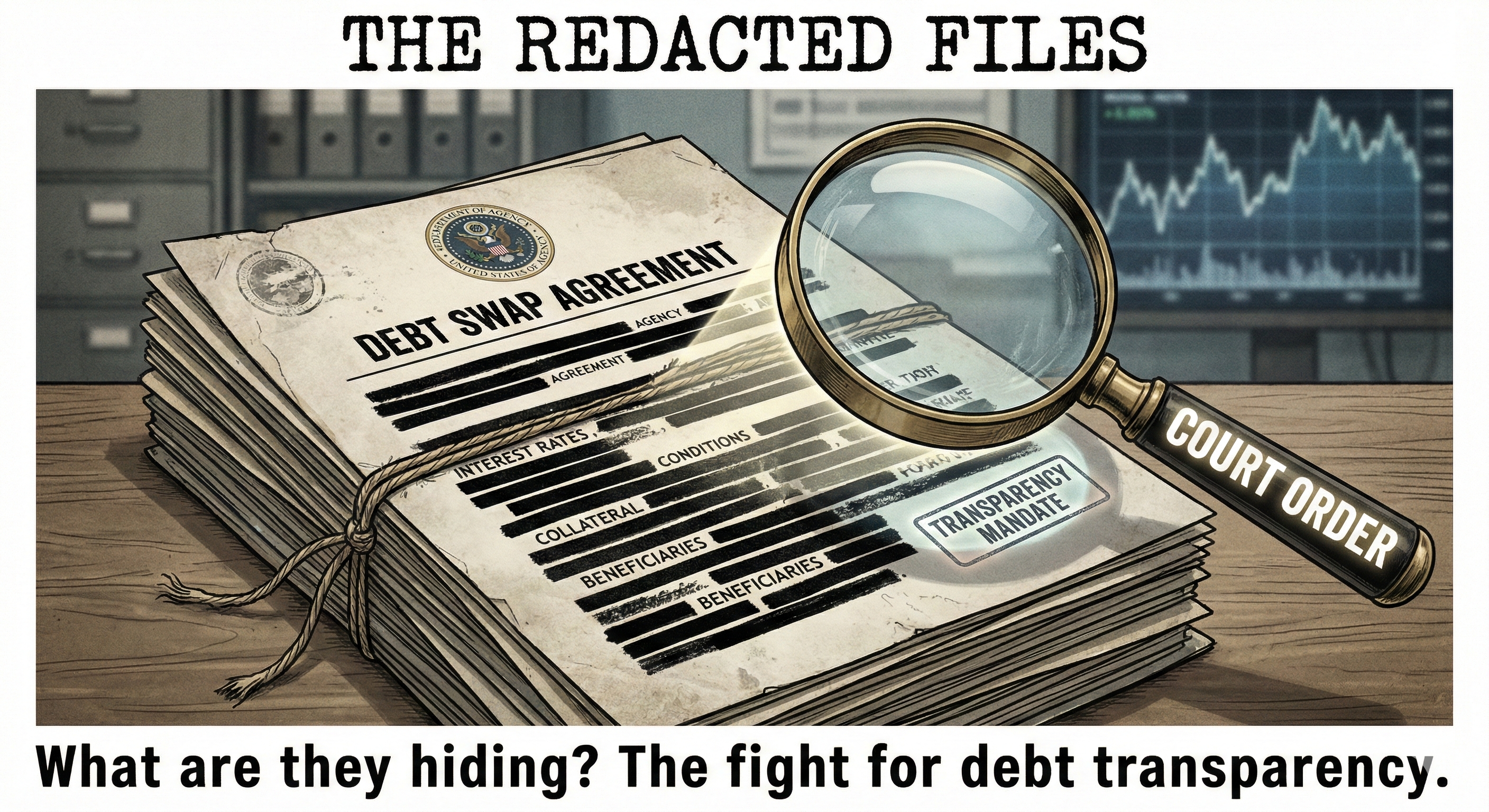
This opacity exacerbates the “sovereignty paradox.” By allowing the US-DFC and WFP to dictate the terms of expenditure, Kenya is effectively admitting that its own institutions cannot be trusted. While external conditionality acts as a safeguard against local corruption, the public remains in the dark about what exactly has been signed away. Are there hidden fees? What are the penalties for non-compliance? Without full disclosure, the Kenyan taxpayer is a passenger in a vehicle being driven by foreign creditors.

Transparency is not just a legal formality; it is the only disinfectant strong enough to prevent the “bureaucratic consignment” of funds. Civil society is demanding that the Treasury publish every shilling of the “savings” and every project beneficiary. Until then, the debt swap remains a “black box”—a deal negotiated in boardrooms in Washington and Nairobi, with the bill sent to the citizen who has no say in the menu.

References:

Afronomics Law Sovereign Debt News Update No. 147: The Promises and Transparency Pitfalls of Kenya’s $1 Billion Debt-for-Food Swap

The Institute for Social Accountability The High Court has ordered the National Treasury to disclose critical information on Kenya’s bilateral loans and sovereign bonds.
The Billion-Dollar Gamble: Inside Kenya’s “Food-for-Eurobond” Swap

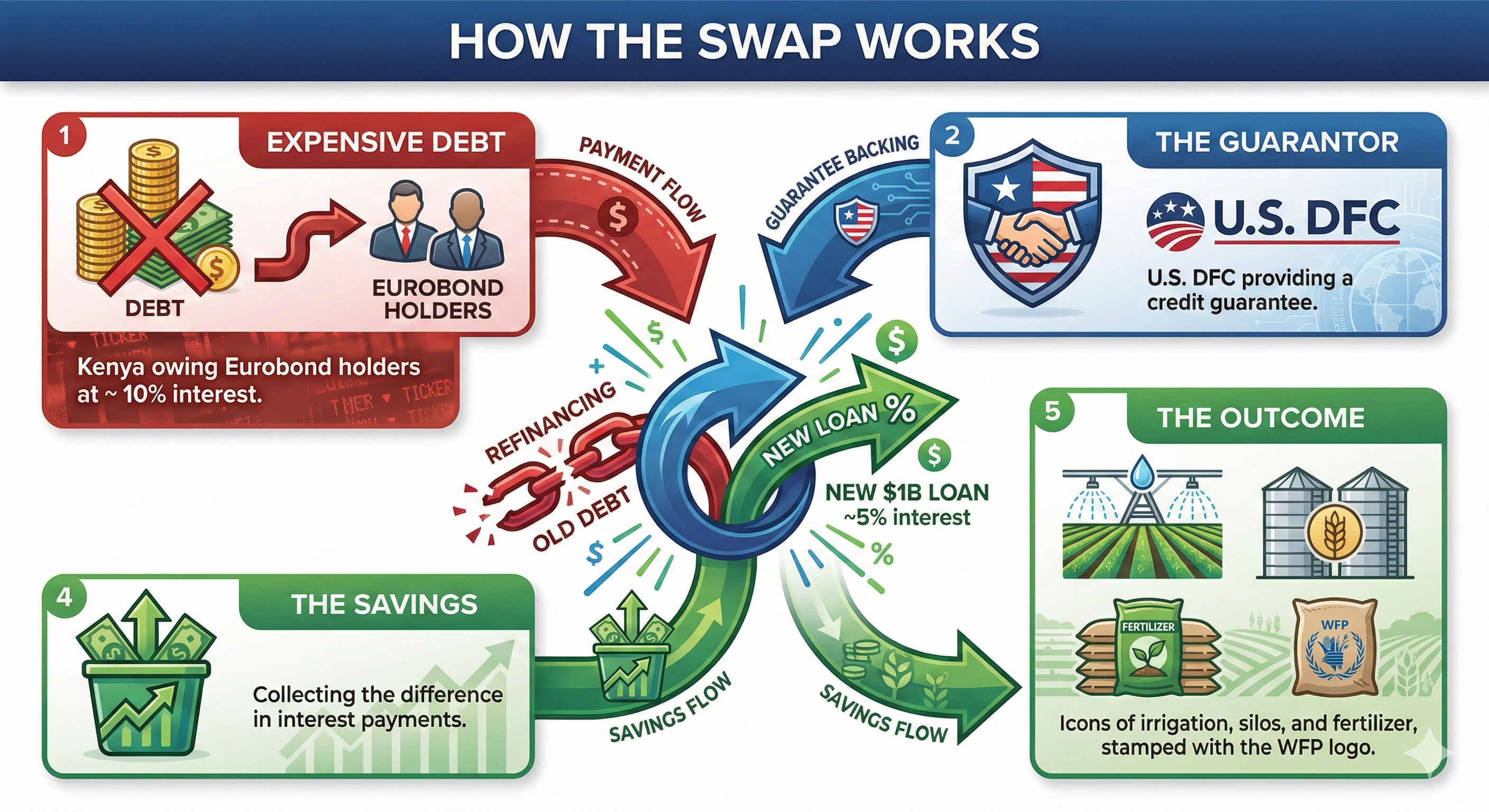
Kenya is on the verge of finalizing a landmark $1 billion (Sh129 billion) debt-for-food security swap, a sophisticated financial maneuver designed to rescue the country from a suffocating liquidity crunch. By leveraging a guarantee from the U.S. International Development Finance Corporation (DFC), the Treasury intends to refinance expensive Eurobond debt with cheaper, concessional loans. The plan is financially astute: it swaps high-interest commercial debt for lower-interest obligations, a move that prompted Moody’s to upgrade Kenya’s credit rating to B3 and stabilize the outlook on the nation’s sovereign debt.

However, the deal comes with a catch that transforms it from a simple refinancing operation into a complex development experiment. The interest “savings” generated from this swap must be ring-fenced and funneled directly into food security projects, managed in partnership with the World Food Programme (WFP). This arrangement effectively outsources a portion of national planning to an international body, admitting that the state needs external discipline to ensure funds aren’t diverted. While this stabilizes the shilling and pleases bondholders, it raises a fundamental question: is this a genuine strategy to feed the nation, or simply financial engineering to avoid default?

The stakes could not be higher. With 3.4 million Kenyans facing acute food insecurity and public debt service consuming over two-thirds of tax revenue, the government is betting that this “financial oil” can mix with the “water” of local agriculture without separating. If successful, it provides fiscal breathing room and lowers input costs for farmers; if it fails, Kenya will be left with the same debt burden and no improvement in the cost of living for the average wananchi.

References:

Business Insider Africa Kenya plans to borrow $1 billion using debt for food swap

CNBC Africa Kenya, US agency to proceed with $1 billion debt-for-food swap

Raise in Oil Prices, Weak Shilling

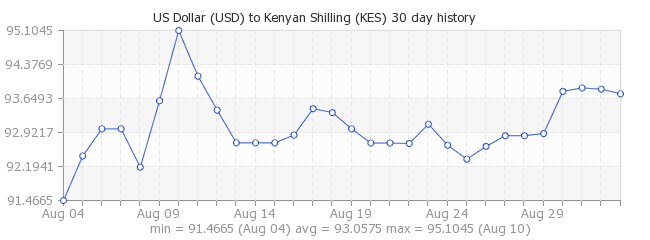
The volatile situation in Libya and the unrest in other Arab States have seen crude oil prices shoot upwards on the global market. These recent developments have inflicted a budgetary shock on Kenya’s oil import projections. The effect of the rising oil prices has been manifested in a weakening Kenyan shilling, compounded by increased political activity over the nomination of key state jobs.

Prime Minister Raila Odinga, in a statement made in parliament said that, “Kenya’s oil import bill could rise by $700 million or 2% of GDP.” The Central Bank of Kenya, increased its key interest rate in an effort to defend the weak shilling and curb rising inflation, saying, “temporary rises in oil and food prices linked to unrest in North Africa and drought at home, were becoming embedded and the inflation rate was set to creep up from 6.5 percent over the next two months.” In reference to a paper commissioned by the Energy Sector Management Assistant Programme (ESMAP) ,“as part of an investigation on energy security issues from the perspective of developing countries…”, the study found out that, “oil importers immediately face a larger import bill and unless the country is already running a surplus, or has extremely large foreign exchange reserves, this must be met by a reduction in total demand for all imported goods, so as to restore balance of payments equilibrium.”

This situation will without doubt exert more pressure on household final consumption expenditure, and in the long-run may lead to a slowdown on investment, thus reduced domestic production. httpv://www.youtube.com/watch?v=y_1JIPxUKEw  Maybe it is high time to embrace the benefits of East African Community common market as this will greatly strengthen the local monetary unit due to enhanced productivity and efficiency in allocation of the factors of production, as well as safeguard against the far reaching effect of budgetary shocks fueled by rise in costs of essential imports.

References:

Kenya raises rates to defend shilling,curb inflation 22/03/2011

Kenya’s shilling weaker vs dollar; politics weighs 4/02/2011

Shilling in loosing streak against major currencies 25/02/2011

The Macroeconomic Effects of Higher Oil Prices (As of March, 2005)