The “No Retreat” Policy—The Human Cost of Riparian Reclamation

In the wake of the March 2026 floods, Governor Johnson Sakaja issued a “no retreat” order for the demolition of illegal structures along Nairobi’s riverbanks. This aggressive reclamation strategy, aimed at restoring the city’s natural waterways, has targeted hotspots from Westlands to the downstream zones of the Nairobi River. While the government frames these actions as essential flood mitigation, the bulldozers have sparked a fierce debate over “environmental justice” and the selective enforcement of the law.
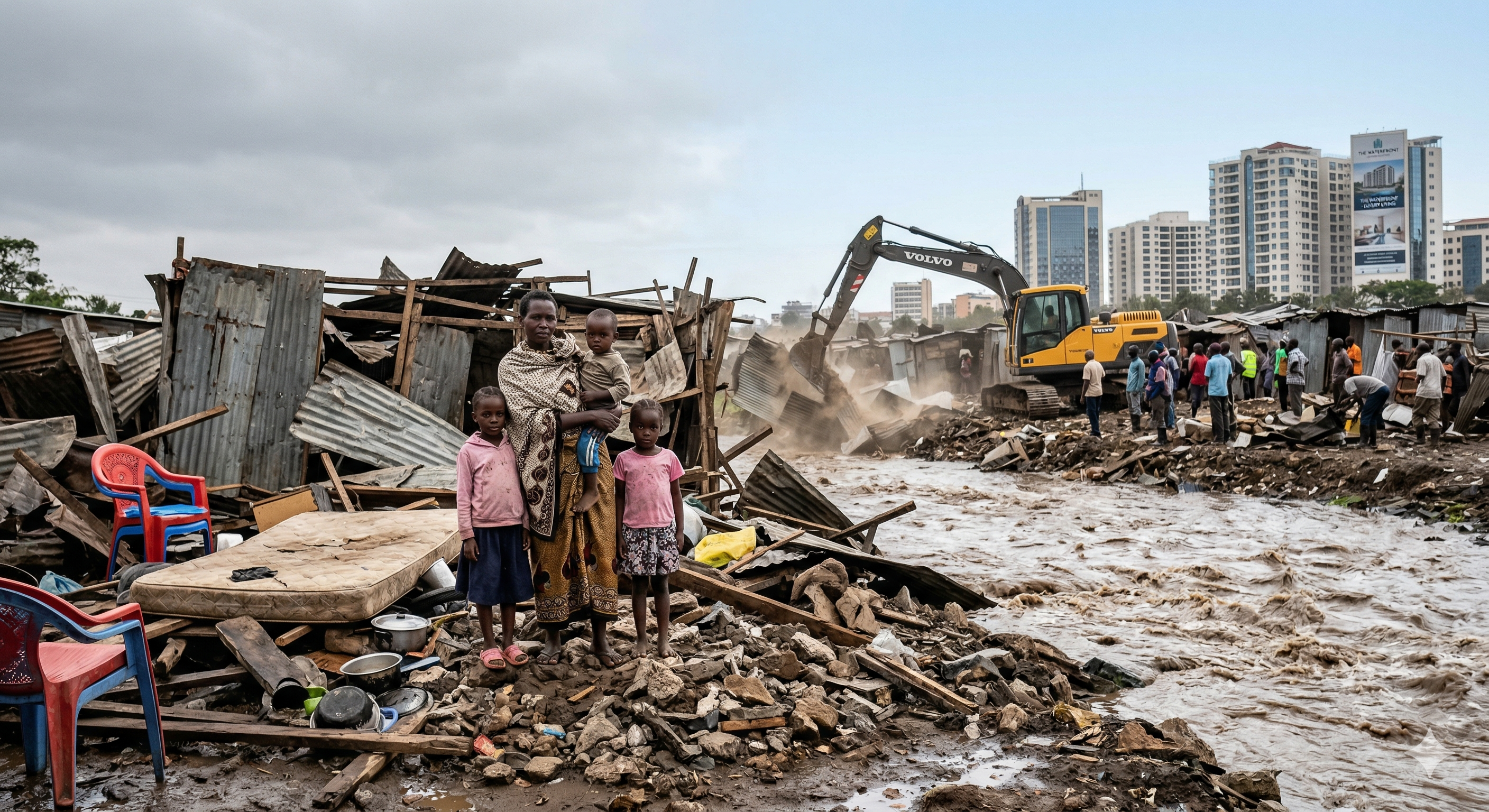
The human cost of these evictions is profound, particularly for the “twice-displaced” women of settlements like Mukuru. Many families who lost their homes to floodwaters were subsequently met with state-led demolitions, often with only 48 hours’ notice. While the government offered a one-time facilitation fee of KES 10,000 ($75), residents and advocacy groups have slammed the amount as a “grossly inadequate” pittance that fails to secure stable housing in a city where they have lived for decades.

The legal battle is now shifting to the courts, where residents of the River Bank settlement near Gikomba recently secured a stay order against further demolitions. Petitioners argue that the government’s reliance on a “blanket” 30-meter riparian buffer is scientifically untenable and discriminates against the poor while leaving high-end developments in similar zones untouched. As the Nairobi Rivers Regeneration Project pushes forward with its Sh50 billion mandate, the city must decide if “order and dignity” can be achieved without sacrificing the rights of its most vulnerable citizens.

References:

Capital News Sakaja orders demolition of illegal riverbank structures as flood mitigation works begin

Nairobi Times COURT BLOCKS DEMOLITION OF HOUSES BUILT ALONG NAIROBI RIVER RIPARIAN LAND.

HIC Evicted and Forgotten: The Gendered Consequences of Nairobi’s Riparian Evictions
The Grounded Shield—Nairobi’s Disaster Management Crisis

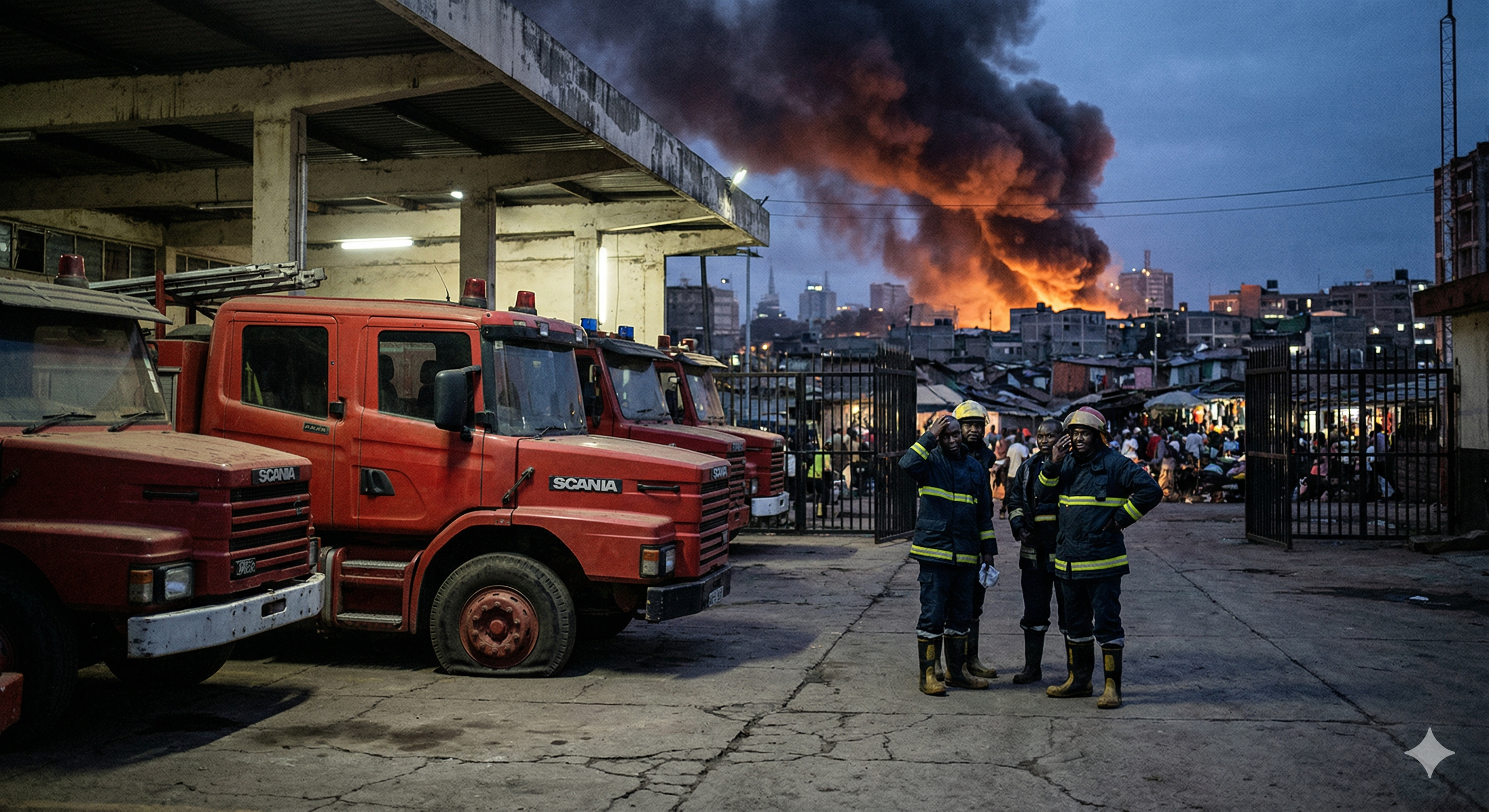
Beneath the headlines of rushing water and leaping flames lies a quieter, more systemic tragedy: the near-total collapse of Nairobi’s emergency response capacity. Despite a population exceeding 4.3 million, the city’s firefighting department was recently revealed to be in a state of terminal neglect. As of late 2024, an astounding 26 out of 31 fire engines and water tankers were grounded, often for issues as trivial as a lack of spare tires or brake components. This leaves the entire metropolis relying on just a handful of operational vehicles during its most vulnerable moments.

This capacity gap is most lethal in the city’s markets and informal settlements. In Gikomba, where the history is “written in flames,” recurrent fires have decimated the livelihoods of thousands of traders who watch their stock turn to ash while waiting for help that arrives “too late to rescue”. The problem is worsened by a non-functional hydrant system; of the 4,500 hydrants scattered across the city, only about 50 are operational, many having been destroyed during road construction or closed to prevent water theft.

The result is what experts call a “ticking time bomb” in urban governance. When a gas truck exploded in Embakasi in early 2024, killing at least three and injuring 280, it highlighted not just a failure of response, but a catastrophic failure of regulation. Despite being denied permits three times, the illegal facility continued to operate in a high-density area, proving that in Nairobi, the distance between a regulatory oversight and a mass casualty event is razor-thin.

References:

The Eastleigh Voice Nairobi’s firefighting capacity in crisis as 26 fire engines remain grounded due to delays in spare parts

Aljazeera Nairobi gas explosion: At least 3 dead, hundreds injured in Kenya’s capital

Daily Nation Sinai fire tragedy:  Death toll rises to seven