Impact of Kenya’s Toxic Chemical Policy on Farmers and Exports

Kenya’s 2025 pesticide ban is more than a policy shift—it’s an overdue confrontation with dangerous agrochemical practices that have long gone unchecked. At the heart of the crackdown is Mancozeb, a fungicide so entrenched in Kenyan agriculture that it’s sprayed like water on tomatoes, potatoes, and maize. Yet this widely used chemical breaks down into ethylene thiourea (ETU)—a probable human carcinogen linked to thyroid harm and reproductive toxicity. Mancozeb has already been banned across the European Union and flagged by multiple global health authorities, but until now, it continued to flow into Kenyan markets with barely a check. Now, alongside Mancozeb, Kenya has also moved to restrict or suspend other hazardous products including chlorpyrifos, acephate, glyphosate, and dimethoate—compounds associated with cancer risks, neurotoxicity, endocrine disruption, and acute poisoning in both humans and animals. In withdrawing 77 toxic products and tightening rules on 202 more, the government is finally rejecting the toxic trade imbalance that treats African countries as chemical dumping grounds. The new policy aligns Kenyan regulation with international best practice: no pesticide can be registered here unless it’s also legal in its country of origin and in developed economies like the EU, USA, Canada, or Australia. It’s a turning point—but not without blowback.

A Report by K24TV

For years, Mancozeb symbolized Kenya’s regulatory inertia: cheap, accessible, and unchallenged despite the mounting science against it. Farmers, often unaware of its dangers, sprayed it without masks or gloves, storing the residues in their homes, their soil, and their food. Chlorpyrifos, a widely used insecticide linked to developmental harm in children, and glyphosate, a herbicide under global scrutiny for carcinogenicity, have followed similar trajectories—popular with farmers but flagged by scientists and health agencies. Now, the state faces a high-stakes transition. Smallholders reliant on these chemicals are being urged toward Integrated Pest Management (IPM) and agroecological alternatives. Yet less than 10% of Kenyan farmers use biopesticides, and most lack training, equipment, or trust in new inputs. The Pest Control Products Board, emboldened by fresh legislation, is finally flexing its oversight powers. But enforcement remains patchy, and counterfeit products exploit the regulatory vacuum. Mancozeb isn’t just a pesticide—it’s a case study in how economic expediency once overrode health and environmental responsibility. That era, Kenya now claims, is ending.

Timing is crucial. The EU is cracking down on residue limits. Kenya’s vegetable exports—once worth KSh 100 billion—have already taken a hit. If the country wants to stay competitive and credible, aligning with global safety standards is not optional. Mancozeb’s fall is both symbolic and strategic: it’s a warning to other harmful substances still in circulation—like profenofos, carbendazim, and triazophos—and a test of whether Kenya can enforce its own reform. This is where political will must hold—beyond press briefings and regulatory memos. Farmers need practical support. Consumers need transparency. And regulators must resist the pressure of well-funded pesticide lobbies looking to reverse course. Kenya has declared its direction. Now the country must walk it—with clarity, speed, and resolve—before the next generation pays the price in poisoned soil, sickened bodies, and lost trade.

References:

Trade World News Kenya Bans Import of 50 Pesticide Brands for Safer Farming

The Standard State cracks down on harmful pesticides, bans 77 products

The Star Civil society demand full disclosure of banned pesticides, calls for safer agricultural reforms

The Star 77 pesticides banned in Kenya as 202 others restricted – CS Kagwe

Kenya News Agency State urged to make to make public list of banned pesticides

Kenyans.co.ke Kenya Bans Use of Pesticides Not Approved in Europe, USA, Canada & Australia

Maize Prices Surge: Impact on Kenya’s Livestock and Food Security

The specter of a significant food crisis is looming over Kenya as a severe maize shortage grips the nation, sending prices soaring and sparking urgent warnings from key industry players. The Poultry Breeders Association of Kenya and the Association of Kenya Feed Manufacturers have jointly raised the alarm, highlighting a dramatic 45% surge in maize prices since the start of the year, with costs projected to climb even further by April. This sharp increase is directly translating to a painful escalation in the cost of living for millions of Kenyans, as maize flour, the staple ingredient for the widely consumed ‘ugali,’ becomes increasingly expensive. For households already struggling with tight budgets, this spike in the price of a fundamental food item poses a significant threat to their food security and overall well-being. The crisis underscores the delicate balance within the nation’s food system and the profound impact that fluctuations in the availability and cost of a single commodity like maize can have on the lives of ordinary citizens.

A Report on How to Plant Maize in Kenya by Citizen Digital

The ramifications of this maize shortage extend far beyond the immediate concerns of household consumption, creating a domino effect throughout the interconnected agricultural sector. The livestock industry, particularly poultry farming, is facing a critical challenge as maize constitutes a primary component of animal feed. The exorbitant rise in maize prices has led to a corresponding surge in the cost of producing animal feed, a burden that is inevitably passed on to farmers. Consequently, consumers are now facing higher prices for essential animal products such as chicken, eggs, meat, and dairy, further compounding the financial strain on families. This intricate link between maize production and the livestock sector demonstrates the vulnerability of the entire food supply chain to disruptions affecting a single key input. The crisis highlights how a shortage in one area of agriculture can trigger price hikes and economic hardship across multiple sectors, ultimately impacting the affordability and accessibility of a wide range of food products for the Kenyan population.

In response to this escalating crisis, industry associations are urgently appealing to the government for immediate intervention, primarily advocating for the waiver of import duties on maize to facilitate increased imports and stabilize the runaway prices. While the government has historically employed measures such as fertilizer subsidies to support local production, the current situation demands swift action to address the immediate supply deficit. The long-term solution, however, lies in building a more resilient and diversified food system. This includes promoting the production and consumption of alternative, nutritious crops to reduce the nation’s heavy reliance on maize, investing in improved storage facilities to minimize post-harvest losses, and adopting sustainable agricultural practices to enhance productivity and withstand future climate shocks. The current maize crisis serves as a stark reminder of the need for a comprehensive and coordinated approach to ensure food security for all Kenyans, safeguarding livelihoods and stabilizing the economy against the volatile nature of agricultural markets and environmental factors.

References:

The Star Industry players warn of imminent food crisis on maize shortage, rising prices

Milling Middle East & Africa Kenya’s maize harvest to surge 15% in 2025/2026:  USDA

Capital Business Maize shortage sparks food crisis as prices soar

KIPPRA Four Ways to Address the Rising Food Prices in Kenya

Busara Groundwork Cultivating resilience: Promoting investment in alternative agricultural products for enhanced food security in Kenya PDF


KENYA FOOD SECURITY | A critical view

Co-Author :  Victor Daniels

On February 22, 2010, a senior policy analyst with the Kenya Institute for Public Policy Research and Analysis (KIPPRA), was quoted saying, “we have a challenge in the management of our public affairs [and] the management of our food stocks. Sometimes we are exporting food yet we later need to import. There is failure to learn from best practices, to invest in knowledge and transform that knowledge into action.”

According to OneWorld UK, the UN “estimates that 3.5 million Kenyans will require food assistance, a figure that may rise before the end of 2011.” However, the assessments updated on July, 2011, “exclude the Somali refugees located in the Dadaab camps in eastern Kenya whose plight is managed as an international refugee crisis, as distinct from Kenya’s national food insecurity.” Scholars have blamed the looming food crisis in Kenya, not only on the failure of successive seasonal rains, but also on poor standards of governance, and mismanagement of the agriculture sector, coupled with lack of political goodwill. Providing credit facilities to farmers, setting up micro-irrigation schemes, and cash transfers to poor farmers, as well as effecting input subsidies are just but a few ways to begin the comprehensive process, to realize food security in Kenya.
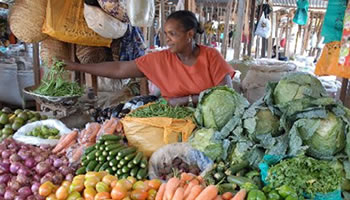
Kenya Food Security

In light of the above, an economy should be based on a long-lasting, reliable system, not on slavery, and coercion. Our economy relies on greed, and a serious lack of thought about consequences. That is a very unstable sort of economy. A lucid socio-economic analysis of the mechanisms of exploitative processes in the Kenyan economy brings out Kenya’s predicament in the light of under-hand shady policy making, which is not exclusively Marxist, but still draws heavily on that school of thought. Even before the fall of the KANU regime, the prices of prime commodities such as tea, sugar, rice, and maize, have constantly been rising, which creates a conflict of interests considering we locally produce the same. Where does the buck stop? Can we still interpret this, as Kenya’s success story? Are the Kenyan food policies a success in terms of growth, or total output? The time has come to reappraise agricultural pricing policies in general, so that agriculture makes its optimum contribution to maximizing gross national production. For maize, the Kenyan staple grain, the producer’s selling price should be reviewed, and be set at the relevant export parity price. The consumer price should be down to a comfortable level, thus, the price should be set at the producer’s selling price, plus marketing costs- incurred in distributing the maize to consumers. It is true that costs are rising, but then, if a justified investment policy was directed for export, we would expect the abolition of domestic marketing, thus, providing comfortable floor and ceiling prices. Starvation in most Kenyan regions remains to haunt us due to the government’s sub-standard reckoning, without political goodwill for the Kenyan people. Well known Members of Parliament, politicians, senior civil servants, and business men affiliated to high echelons of power, have repeatedly been accused with controversial maize and sugar imports and exports, but still, calls to prosecute the alleged suspects, go unheeded. Impunity and indecisiveness, thrives at high levels of governance, and on the miseries of the citizenry, where justice refers to how deep your pockets are. Budgetary allocation for the Ministry of State for Development of Northern Kenya and Other Arid Lands is irrelevant, if the people meant to be protected by the same, are dying of acute food shortage, and malnutrition. The chronic famine situation in Kenya, signals a malfunction in the governance of the Kenyan democracy. Kenya truly needs, a decentralized system, of running State affairs. Focus should be on the people and their strengths, instead of importing western innovations, and ideologies. Since we should be the change we want to see, we should put an end to popularistic politics, and deal with real issues affecting Kenyans on the ground, in a comprehensive manner.

References:

Food Security in Kenya-briefing OneWorld UK, July, 2011

Experts voice food security concerns IRIN Africa, February 22, 2010

Outrage over rising food and fuel prices IRIN Africa, April 20, 2011


Drought Situation in East Africa

In August 2010, World Meteorological Organization (WMO) and the National Oceanic and Atmospheric Administration Climate Prediction Center (NOAA/CPC), both, officially declared a La Nina event.

Sea Surface Temperature (SST) measurements in 2010 indicated rapid cooling, thus yielding “a moderate La Nina event…” projected to last for 9 to 12 months, Famine Early Warning Systems Network (FEWSNET) reported. “La Nina events are generally associated with drier than normal conditions in the eastern sector of East Africa, and wetter than normal conditions in the western and northern sector of the region.” FEWSNET reported. According to National Aeronautics and Space Administration (NASA), the La Nina phenomenon results in “drought over most parts of East Africa and floods and lush vegetation in Australia and other parts of southeast Asia.” guardian.co.uk reported. Jan de Leeuw, the Operating Project Leader (OPL) in the Vulnerability and sustainability in pastoral and agro-pastoral systems within ILRI’s People, Livestock and Environment theme (PLE) was put on record saying, “this La Nina event is one of the strongest since the 1970s.” Meanwhile, Daily Nation reported that “Kenya has been listed among countries facing the world’s worst food security crisis in the eastern horn of Africa.” Further afield, Associated Press (AP) reported that, “UN officials sounded the alarm Tuesday about a deepening humanitarian crisis in East Africa caused by a severe drought and fighting in Somalia…” Approximately 10 million people in northern Kenya, Ethiopia, Somalia, Eritrea and South Sudan need urgent humanitarian assistance as the region experiences the worst drought in 60 years. An estimated 1,300 Somali refugees stream into Dadaab refugee camp daily following continued conflict in Somali, coupled with severe drought. The situation on the ground is getting worse as the world’s largest refugee camp- Dadaab, in Kenya has been forced to house people, four times its full capacity.

I echo Kimani wa Njuguna’s opinion on Tuesday that, “Rather than being preoccupied with weighty bread and butter issues which will add value to the lives of Kenyans, we have seen most elected leaders concentrating on non-issues like singing to the tune of tribal kingpins, how to escape paying taxes, and the 2012 elections.” Real issues are on the ground; drought, a looming food shortage, high inflation, delayed constitutional implementations, and so on. “A pessimist sees the difficulty in every opportunity; an optimist sees the opportunity in every difficulty”, Winston Churchill said. The Kenyan Government should savor the opportunity to act decisively and do something significant to comprehensively take care of the current drought situation.

What’s your say?

The Conversation begins…

References:

Kenya in urgent need of food aid, says US Daily Nation July 11, 2011

La Nina blamed for east African drought guardian.co.uk July 14, 2011

UN struggling to cope with East Africa drought Associated Press July 12, 2011

Executive Brief: La Nina and Food Security in East Africa August 2010 FEWSNET as of July 14, 2011

East African drought ‘worst in 60 years’ Channel 4 News June 28, 2011

Leaders must get their priorities right and put food security at top of agenda Daily Nation:-Opinion July 12, 2011