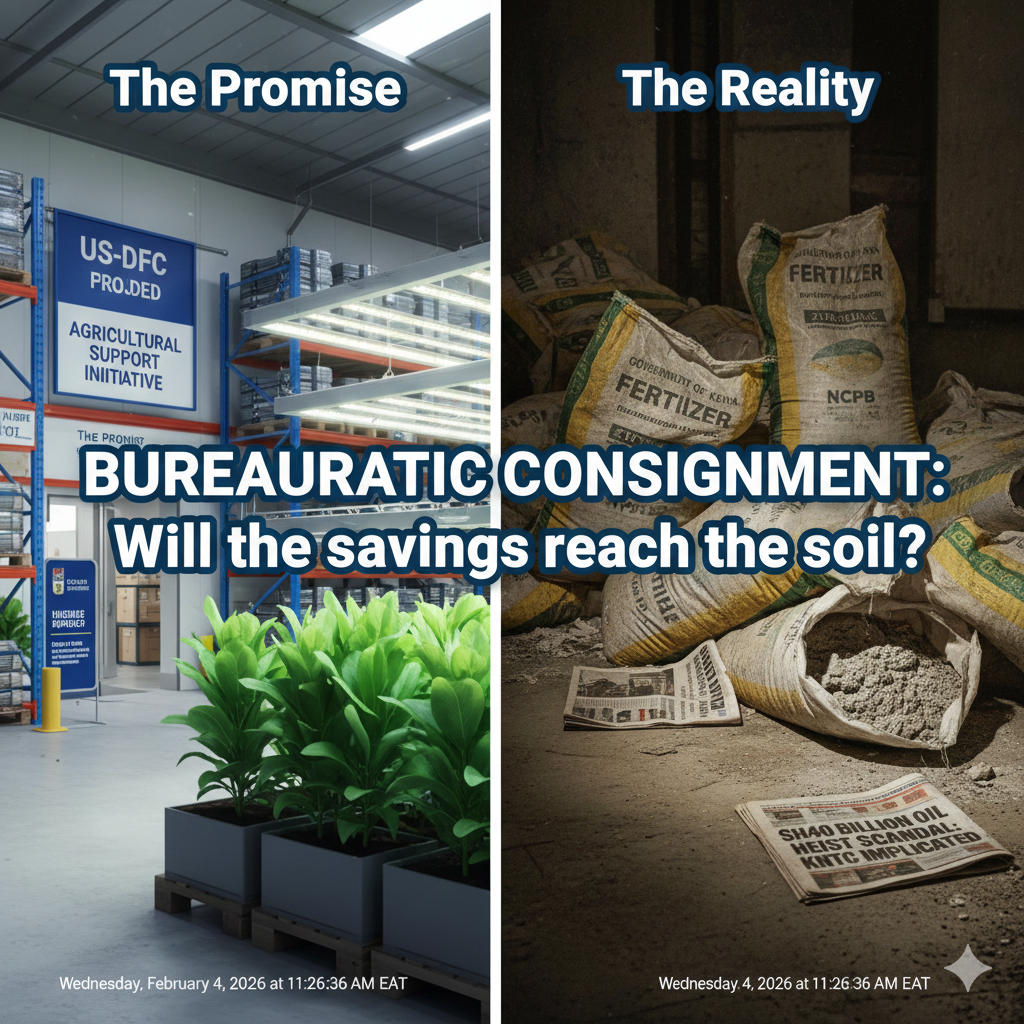
The “Food-for-Eurobond” deal relies on a dangerous assumption: that savings from international debt relief can navigate the treacherous waters of Kenya’s local bureaucracy without being looted. History suggests this is an “oil and water” scenario—liquid finance attempting to mix with a rigid, opaque system. The recent scandals at the Kenya National Trading Corporation (KNTC) and the National Cereals and Produce Board (NCPB) serve as grim warnings. In the KNTC edible oils scandal, tax waivers meant to lower prices were captured by politically connected firms, resulting in a Sh16.5 billion loss with no benefit to the consumer.
Similarly, the NCPB’s recent distribution of “fake fertilizer”—bags filled with quarry dust—demonstrates how easily “agricultural support” can be weaponized against the farmers it is meant to help. If the swap funds are channeled through these same “bureaucratic consignments,” the initiative risks becoming another slush fund for cartels. The involvement of the World Food Programme (WFP) is intended to act as an “emulsifier,” forcing accountability into the system, but their oversight powers will be tested against deeply entrenched patronage networks.
Experts warn that without a radical overhaul of state agencies, the “savings” will evaporate before they buy a single bag of genuine fertilizer or build a working silo. The structural disconnect between the Treasury’s high-level deal-making and the Ministry of Agriculture’s operational failures remains the single biggest risk. Unless the government bypasses these compromised intermediaries, perhaps by funding private sector credit guarantees instead of direct procurement, the “oil” of finance will float to the top, leaving the “water” of development murky and stagnant.
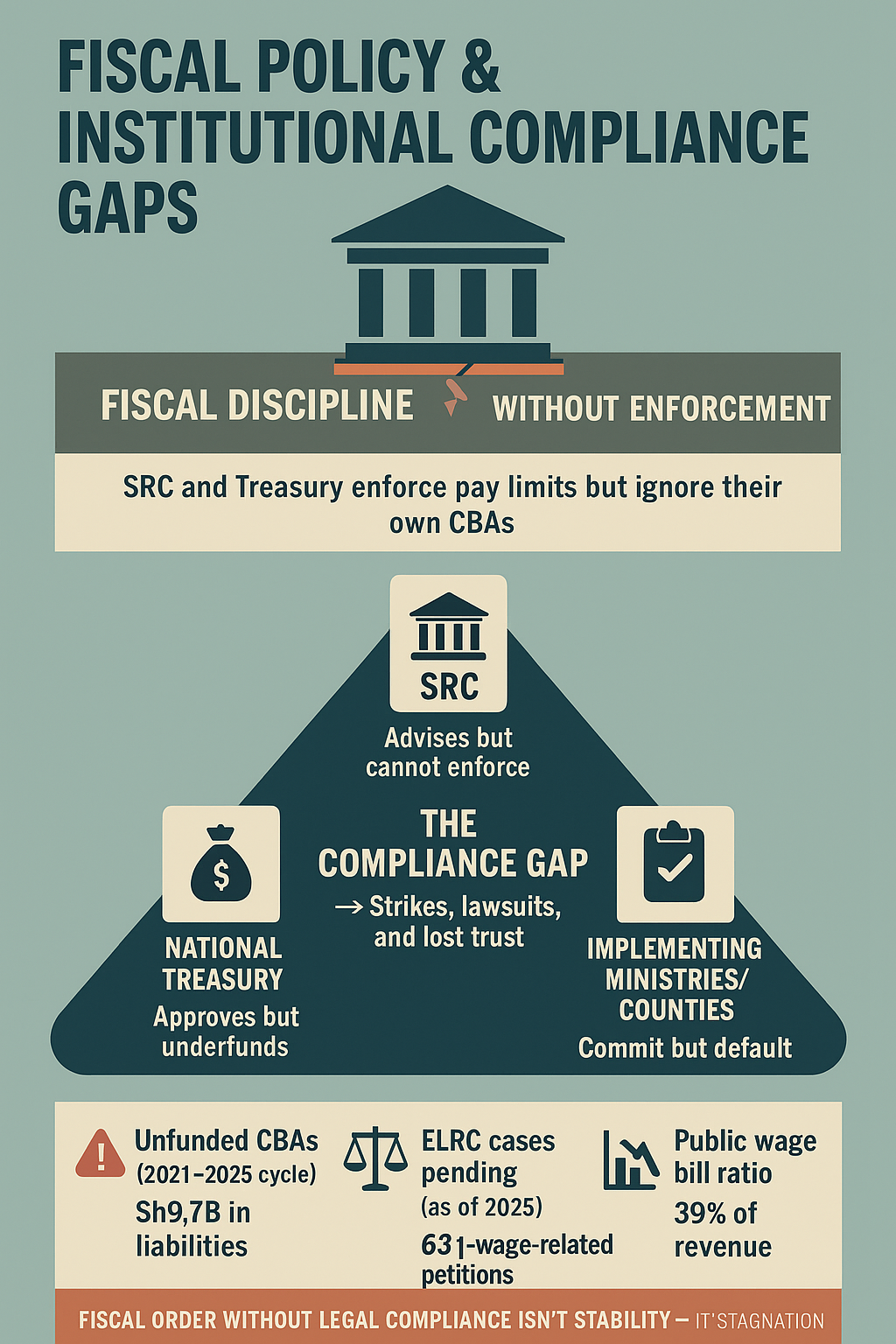
At the heart of Kenya’s endless labor unrest lies a contradiction the state has refused to confront: it preaches fiscal discipline while institutionalizing non-compliance. The Salaries and Remuneration Commission (SRC) — the body constitutionally mandated to manage public wage policy — has become a paradox of design: all authority, no enforcement. It issues guidelines that ministries and counties cite when cornered but ignore when expedient. Its circulars on pay harmonization and job evaluation are routinely undermined by politically negotiated allowances, ad hoc promotions, and extra-legal CBAs signed under pressure. The result is a regulatory void where fiscal control is performative and accountability optional. SRC’s power is largely symbolic — a watchdog muzzled by law and outpaced by politics — while the wage bill continues to balloon, not because of policy ignorance, but because institutions have learned how to outmaneuver oversight.
The National Treasury sits at the center of this dysfunction, weaponizing scarcity while mismanaging prioritization. Its annual insistence on fiscal prudence rings hollow against a record of delayed disbursements, unpaid CBA arrears, and selective funding of politically strategic programs. Treasury’s budgeting cycle has effectively become a tool of containment — a means to manage unrest rather than reform systems. When doctors, teachers, or civil servants strike, it is rarely due to wage greed; it is because their legally negotiated agreements remain unfunded despite formal approval. The Treasury’s pattern of signing off on CBAs without allocating corresponding funds has turned the entire labor framework into a credibility trap. Each unhonored agreement erodes faith not just in the fiscal system, but in the idea that government commitments are binding at all. This chronic underfunding blurs the line between austerity and abdication — and in doing so, transforms fiscal caution into a breeding ground for revolt.
The compliance gap that emerges from this broken triangle — SRC, Treasury, and the implementing ministries or counties — is not administrative; it is existential. Each actor claims procedural innocence while collectively ensuring systemic failure. Ministries invoke budget ceilings; counties plead disbursement delays; SRC blames its limited mandate — and the Labor Ministry, the one body meant to arbitrate, has devolved into a crisis registrar. This institutional buck-passing is now a defining feature of Kenya’s governance culture. It explains why industrial action has become cyclical, why courts are perpetually mediating CBAs, and why public trust continues to collapse. Investors see it too: the volatility of Kenya’s labor market is not caused by worker militancy, but by the state’s refusal to honor its own laws. The strikes are symptoms — the disease is compliance failure dressed up as fiscal discipline. Until Kenya reforms the machinery of accountability between its fiscal and labor institutions, economic stability will remain an illusion built on broken promises.
References:
Daily Nation How bloated wage bills are choking counties and stalling development
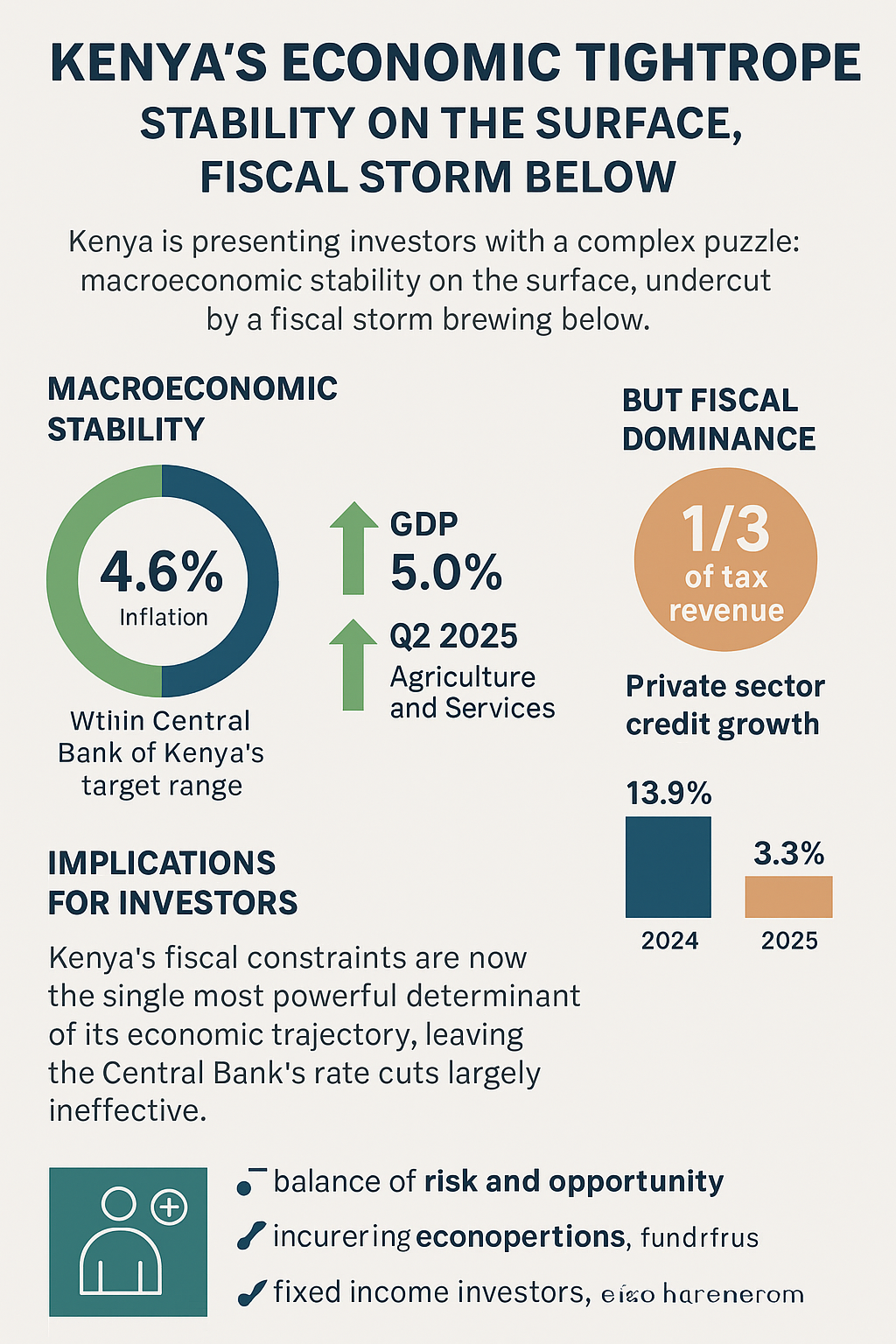
Kenya’s economy is presenting investors with one of its most complex puzzles yet: macroeconomic stability on the surface, undercut by a fiscal storm brewing beneath. Inflation stands at a steady 4.6%—comfortably within the Central Bank of Kenya’s target range—granting policymakers room for monetary easing. GDP data also reflects resilience, with Q2 2025 growth at 5.0%, led by agriculture and a robust services sector. Yet behind these encouraging numbers lies a sobering reality: fiscal dominance. With interest payments now consuming roughly a third of all tax revenue, the government’s borrowing appetite is crowding out private credit. Commercial banks, chasing high-yield government paper, have little incentive to lower lending rates for businesses, leaving private sector credit growth crippled at barely 3.3%, down from 13.9% just a year ago.
This squeeze is not just an abstract statistic; it defines the contours of Kenya’s medium-term investment landscape. The government projects a 5.3% full-year expansion, but global institutions remain unconvinced. The IMF and World Bank forecast growth at 4.8% and 4.5% respectively, citing weak private sector consumption, a sluggish credit channel, and a high risk of debt distress. Kenya’s fiscal constraints are now the single most powerful determinant of its economic trajectory, leaving the Central Bank’s rate cuts largely ineffective. The implication for investors is clear: headline GDP growth masks a structural imbalance where state borrowing sets the price of credit and private enterprise takes a back seat.
The balance of risk and opportunity lies in how investors position themselves. Kenya’s external buffers—rising remittances, strong agricultural exports, and narrowed current account deficit—are encouraging, but remain fragile, as all three are highly exposed to global downturns. For fixed income investors, short-duration government paper offers yield but carries sovereign risk that cannot be ignored. For equities, defensive plays in export-driven agribusiness, technology, and digital services stand out, while firms reliant on domestic mass-market credit may falter. Direct investment opportunities exist in renewable energy, climate-linked finance, and tech, sectors less tied to domestic fiscal strain. For corporate strategists, survival hinges on operational efficiency, alternative financing, and robust risk management to cushion external shocks. Kenya stands at a decisive juncture: without credible fiscal consolidation, its growth story risks becoming a cycle of constrained resilience. For investors, the key lies not just in reading the numbers, but in recognizing the limits of resilience when credit and capital are structurally captured by the state.
Kenya is on the edge of a pivotal financial reckoning. In the wake of the 2024 Finance Bill’s withdrawal and amid a battered economy, the International Monetary Fund (IMF) has demanded a sweeping corruption audit before any further disbursement of financial aid. At stake is more than KSh 100 billion in support tied to Kenya’s Extended Fund Facility, Extended Credit Facility, and Resilience and Sustainability Facility—aid that could help stabilize an economy reeling from debt, inflation, and political distractions. The collapse of the 2024 Finance Bill, triggered by nationwide protests over tax hikes, left a gaping fiscal hole. Now, the IMF wants answers before money moves. Between June 16 and 30, a Governance Diagnostic mission wrapped up in Nairobi. While Treasury insists the audit is not a precondition for funding, international observers say its findings will heavily influence future negotiations. The IMF has drawn a clear line: no serious anti-corruption reforms, no fresh credit.
IMF Demands corruption audit on Kenya
The Kenyan public feels the consequences every day. For ordinary wananchi, the stalled billions aren’t just digits on a spreadsheet—they represent hospital beds without medicine, classrooms without books, roads that end in dust, and a tax burden growing heavier on already strained shoulders. Years of unchecked corruption have gutted public institutions, forcing citizens to pay more for less while a well-connected elite evades accountability. The protests of June 2024 were not merely about a finance bill—they were about a social contract broken. Corruption doesn’t just steal money; it steals opportunity, trust, and dignity. It pushes more families below the poverty line and leaves critical sectors like education and healthcare in permanent crisis. Every act of embezzlement is a tax on hope. And now, Kenya must confront that cost head-on.
Yet as this economic standoff unfolds, the political class seems to be campaigning rather than governing. With two years until the 2027 general elections, the air is already thick with premature rallies and succession battles. This relentless politicking is not just tone-deaf—it undermines policy coherence and economic recovery. Critics argue that Kenya risks squandering a historic opportunity to reset its governance priorities. The IMF’s demand for a corruption audit is not just a bureaucratic checkbox; it is a test of political will. Whether the government embraces or evades the findings of the Governance Diagnostic will speak volumes. Kenya is at a crossroads. What lies ahead will depend on whether its leaders prioritize reform over rhetoric, the public over politics, and accountability over access to short-term cash. The world is watching. But more importantly, Kenyans are waiting.
References:
Mariblock Kenya fails IMF review, forfeits $850M disbursement
In a move that has dramatically altered Kenya’s trade dynamics with the United States, the Trump administration imposed a blanket 10% tariff on imports from most nations, including Kenya, effective April 2025. This action effectively nullified the longstanding preferential treatment Kenya enjoyed under the African Growth and Opportunity Act (AGOA), a Congressional framework set to expire in September 2025. The result has been a sharp contraction in Kenya’s export competitiveness, particularly in the apparel and agricultural sectors, which together accounted for a significant share of exports to the U.S. The Central Bank of Kenya (CBK) estimates the country could lose as much as USD 100 million annually in export revenue—a loss that represents over 13% of Kenya’s total exports to the U.S. The textiles and apparel industry, which employs tens of thousands in Export Processing Zones (EPZs), faces the steepest consequences, with squeezed margins threatening factory closures and mass layoffs. Compounding this is the complex global trade environment, where some of Kenya’s competitors face even steeper tariffs—suggesting a theoretical competitive edge—but domestic cost disadvantages like high energy prices and infrastructure bottlenecks could prevent Kenya from capitalizing on this.
A Report by Citizen TV Kenya
The introduction of the tariffs also triggered immediate market reactions, particularly on the Kenyan Shilling (KES), which depreciated upon the announcement, reflecting investor anxiety and a broader loss of confidence. While the KES had been strengthening in early 2025 due to improved foreign exchange reserves, tight monetary policy, and robust diaspora remittances, the tariffs introduced new downward pressures through trade disruption and a worsening current account balance. Analysts project a continued depreciation trend through 2025, with some forecasts suggesting the KES could reach as low as 155 to the dollar. Factors contributing to this outlook include high external debt servicing obligations, the CBK’s decision to pursue accommodative monetary policy—cutting rates to stimulate domestic demand—and narrowing interest rate differentials with the U.S., which could dampen investor appetite for KES-denominated assets. Although inflation is largely under control and remittances remain strong, these buffers may not fully offset the structural pressures introduced by disrupted trade flows and persistent macroeconomic imbalances. Moreover, Kenya’s exposure to external shocks remains high, and market sentiment continues to react swiftly to any signals of instability or shifts in U.S. policy.
A Report by NBC News
In response to these mounting pressures, the Kenyan government has adopted a multi-pronged strategy centered on diplomatic engagement, trade diversification, and internal economic reforms. Efforts are underway to secure a waiver from the 10% tariff through negotiations with U.S. officials, although progress remains uncertain. Simultaneously, Kenya is accelerating its participation in the African Continental Free Trade Area (AfCFTA), which offers a long-term avenue to diversify trade partnerships within Africa. However, AfCFTA implementation faces its own hurdles, including infrastructure gaps, non-tariff barriers, and complex rules of origin that limit short-term gains. Beyond the continent, Kenya is looking to strengthen trade ties with the European Union, with whom it signed an Economic Partnership Agreement in 2023, and explore new opportunities in Asia and the Middle East. On the domestic front, the government is considering measures to support affected sectors, including targeted incentives for exporters and investments in value addition. Nonetheless, these responses may take time to yield meaningful relief. With AGOA’s expiry nearing and no replacement framework yet secured, Kenya’s vulnerability to abrupt shifts in U.S. trade policy has been laid bare, reinforcing the urgent need to build a more resilient, diversified, and self-sufficient export economy.
References:
Capital Business Shilling falls amid uncertainty over US tariff hikes
Capital Business Kenya risks losing Sh14bn in exports to U.S. after 10pc tariff
The Star Kenya to diversity trade ties, push for more intra-Africa trade – CS Kinyanjui.
Serrari U.S. Hits Kenya with 10% Export Tariff Amid Shifting Global Trade Dynamics
The Standard Trump tariffs threaten Kenya’s Sh72b exports
All Africa Africa: How the New U.S. Tariffs Were Calculated and What They Mean for AGOA Trade Deal
Kenya’s financial technology sector has emerged as a dominant force in the nation’s economy, fueled by a remarkable surge in corporate investment aimed at fostering innovation and supporting the growth of Micro, Small, and Medium Enterprises (MSMEs). This thriving ecosystem is built upon the bedrock of widespread mobile money adoption, with Kenya boasting one of the highest penetration rates globally, making digital financial transactions a common practice for a vast majority of the population. Recognizing this fertile ground, the corporate sector has stepped in as a crucial catalyst, injecting substantial capital into fintech startups through various avenues, including direct equity investments, the establishment and backing of incubation and acceleration programs, and the formation of strategic alliances. These concerted efforts have not only driven significant investment inflows but have also empowered fintech companies to develop and scale cutting-edge solutions specifically designed to address the unique needs of MSMEs, which form the backbone of the Kenyan economy by employing over 80% of the workforce.
A Report by KTN News Kenya
The impact of this corporate-driven investment in fintech is being felt profoundly by MSMEs across Kenya, primarily through enhanced access to vital financial services that were previously out of reach for many. Fintech innovations, often nurtured and funded by corporate initiatives, are providing working capital solutions, facilitating the adoption of digital payment systems, and offering essential business management tools. Leading corporations such as Safaricom, through its Spark Venture Fund and collaborations like the Spark Accelerator, alongside M-Pesa Africa’s partnerships with Microsoft for digital skills training and Mastercard for expanding digital payment infrastructure, are at the forefront of this transformation. The Co-operative Bank of Kenya’s collaboration with the International Finance Corporation (IFC) to launch tailored financial solutions for MSMEs further underscores the commitment of established financial institutions to this sector. These strategic partnerships and investments are enabling small businesses to overcome traditional barriers to growth, streamline their operations, and tap into broader markets, ultimately contributing to job creation and economic prosperity.
Despite the remarkable progress, the journey of corporate investment in Kenyan fintech and its support for MSMEs is not without its hurdles. Challenges such as navigating the evolving regulatory landscape, managing increasing competition within the fintech space, securing sufficient capital for scaling, and mitigating the ever-present threat of cybersecurity remain significant considerations. However, the opportunities that lie ahead are equally compelling, with fintech possessing the inherent ability to achieve greater reach in underserved areas, foster continuous innovation in financial service delivery, and significantly enhance financial inclusion for individuals and businesses alike. The continued collaboration between corporations and agile fintech startups, exemplified by successful partnerships that are already delivering tangible benefits to MSMEs, signals a promising future for the sector, paving the way for sustained growth, further technological advancements, and a more financially empowered and inclusive Kenyan economy.
References:
The Star Fintech, digital content startups compete for investor backing
FinTech Africa Fintech Emerges as Kenya’s Most Prevalent Tech Startup Sub-Sector
Kenya Airways, long dubbed the “Pride of Africa,” has finally soared back into profitability in 2024 after an arduous eleven-year drought, reporting a net profit of Sh5.4 billion. This remarkable financial resurgence, a stark contrast to the Sh22.6 billion loss in the previous year, begs the question: what confluence of events truly orchestrated this dramatic turnaround? Was it solely the much-touted “Project Kifaru,” the airline’s recovery strategy emphasizing operational performance and customer service, or did external tailwinds, such as favorable foreign exchange gains amounting to a staggering Sh10.5 billion, play an equally significant role? While passenger numbers and cargo volumes saw encouraging increases, contributing to a rise in revenue, the sustainability of this newfound profitability in the face of ongoing global aviation challenges, including shortages of aircraft and spare parts, remains a key point of inquiry. Could this profit be a fleeting moment of relief, or does it genuinely signal a long-term stabilization for the national carrier?
A Report by Kenya Airways
Delving deeper, a complex web of strategic maneuvers and external market forces that appear to have influenced Kenya Airways’ financial trajectory are evident. The airline’s aggressive cost-cutting measures, including the innovative transformation of Msafiri House into a centralized operations hub and the implementation of a fuel hedging strategy, undoubtedly contributed to the improved bottom line. However, the crucial role of government intervention was significant, with substantial debt restructuring efforts providing much-needed financial alleviation. This raises further questions about the extent to which Kenya Airways’ profitability is dependent on continued state support and whether the airline can truly achieve long-term financial independence. Moreover, with plans for fleet modernization and route expansion underway, how will these ambitious initiatives be financed, and will they ultimately translate into sustained profitability in an intensely competitive African aviation market?
Looking ahead, the future of Kenya Airways remains a subject of both optimism and uncertainty. While the return to profitability has undoubtedly boosted investor confidence, as evidenced by the doubling of the airline’s share price, experts caution that significant challenges persist. The airline’s historical financial instability and the lingering substantial debt burden continue to cast a shadow, prompting questions about the feasibility of attracting a strategic investor by 2025, a key objective for long-term sustainability. Furthermore, the financial woes of its subsidiary, Precision Air, add another layer of complexity, raising concerns about potential risks to Kenya Airways’ investment. As the airline navigates the dynamic landscape of the global and African aviation industries, marked by fluctuating fuel prices and geopolitical tensions, the fundamental question remains: can Kenya Airways truly break free from its legacy of losses and establish a consistently profitable and sustainable future?
References:
The Star KQ’s turnaround: National Carrier posts Sh5.4 billion profit after a decade of losses
Kenya’s decision to mutually end its $3.6 billion loan arrangement with the International Monetary Fund (IMF) marks a significant shift in the nation’s approach to economic management, primarily driven by a confluence of unmet fiscal targets and mounting public discontent . The existing Extended Fund Facility (EFF) and Extended Credit Facility (ECF) arrangement, while having disbursed a substantial $3.12 billion, faced a critical juncture with its ninth review, which ultimately was not pursued . The core issue stemmed from Kenya’s inability to meet specific fiscal obligations stipulated under the program, leading to the cancellation of a significant $850 million payment . This failure to adhere to the agreed-upon spending and revenue collection benchmarks highlighted the challenges President Ruto’s administration encountered in balancing the demands of fiscal discipline with the socio-political realities on the ground . Compounding these difficulties were the widespread public protests against the Finance Bill of 2024, a piece of legislation designed to boost government revenue in line with IMF recommendations but which proposed tax hikes on essential goods, triggering significant public outcry and ultimately its withdrawal . Despite this setback, Kenya has already initiated discussions with the IMF for a new loan agreement, indicating a continued recognition of the necessity for external financial support as the nation grapples with a considerable debt burden.
A Report by NTV Kenya
The abrupt termination of the IMF program carries significant implications for Kenya’s already strained economic landscape, particularly concerning its high levels of debt and the stability of its financial markets . With a debt-to-GDP ratio exceeding sustainable thresholds and a substantial portion of government revenue already committed to debt servicing, the discontinuation of IMF funding introduces a potential funding gap that could further exacerbate these vulnerabilities . While the government has sought alternative financing through a loan from the UAE and the restructuring of Eurobonds, these measures may come with increased borrowing costs and potential foreign exchange risks . Experts also anticipate that the absence of the IMF program’s oversight could lead to renewed pressure on the Kenyan Shilling and the external sector, potentially impacting inflation and investor confidence . The IMF itself had previously assessed Kenya’s public debt as being at a high risk of distress, and the termination of the program could intensify these concerns, making future access to international capital markets more challenging and potentially increasing the long-term risk of default .
Looking ahead, Kenya faces a period of economic uncertainty that will require careful navigation and strategic policy decisions . The government will likely need to implement further austerity measures, including budget cuts and enhanced domestic revenue collection, to compensate for the lost IMF funding and maintain fiscal credibility . The success of these measures, coupled with the ongoing negotiations for a new IMF loan agreement targeted for finalization by November 2025, will be crucial in determining Kenya’s economic trajectory . Building public trust and ensuring transparency in the implementation of fiscal reforms will be paramount, especially in light of the recent widespread protests against IMF-backed austerity measures . Ultimately, Kenya’s ability to achieve long-term economic stability and inclusive growth will depend on its commitment to fiscal discipline, equitable revenue mobilization, and sound governance practices in the absence of the previous IMF program.
References:
News Central Kenya Abandons Existing IMF Programme in Pursuit of New Loan Agreement
Further Africa Kenya and IMF Drop Loan Review and Move Toward New Financing Deal
Daba Finance Kenya Faces IMF Setback After $800M Review Falls Through
Aljazeera What do the IMF and foreign debt have to do with Kenya’s current crisis?
The Eastleigh Voice Gen Z anti-tax demos dented Kenya’s GDP growth prospect for 2025 – IMF
African Business IMF exit and eurobonds raise questions over Kenyan debt
The Kenyan shilling has exhibited impressive resilience, marking a significant appreciation against major international currencies in recent years. In 2024 alone, the shilling surged by 17.4% against the US dollar, climbing from Ksh 160 per dollar in early 2024 to around Ksh 132 by the year’s end. This remarkable turnaround has been driven by improved foreign exchange reserves, which expanded by 28.2% to USD 9.3 billion, providing a 4.7-month import cover. Key drivers include a surge in diaspora remittances—totaling USD 5.2 billion in 2024—a thriving agricultural export sector, and a narrowing current account deficit supported by strategic trade policies. The currency has remained relatively stable in early 2025, with the exchange rate hovering around Ksh 128–130 per dollar, reinforcing investor confidence and bolstering Kenya’s economic standing.
A Report by the Monetary Policy Committee of the Central Bank of Kenya
A crucial factor in the shilling’s performance has been the Central Bank of Kenya’s (CBK) prudent monetary policies. In early 2025, CBK reduced the Central Bank Rate (CBR) by 50 basis points to 10.75%, aiming to stimulate economic activity while maintaining currency stability. Lower interest rates have enhanced market liquidity, making Kenyan assets more attractive to investors. Additionally, declining treasury bill rates—from an average of 17% in late 2024 to around 15.5% in early 2025—have eased pressure on borrowing costs while reinforcing confidence in local debt markets. Analysts attribute the shilling’s strength to these monetary adjustments, coupled with external factors such as reduced global oil prices and expectations of a new Eurobond issuance. However, concerns persist that the shilling’s appreciation could be overvalued, with some experts warning of potential corrections if CBK interventions ease or external economic conditions shift.
Despite the currency’s strength, several risks threaten its stability in the long run. Slowing economic growth, political uncertainty, and external shocks—such as fluctuating global commodity prices—could put pressure on the shilling. Kenya’s high external debt, exceeding USD 70 billion, remains a critical concern, with recent credit rating downgrades by Fitch and Moody’s raising alarms over the country’s fiscal health. Additionally, while forex reserves are currently robust, sustained stability will depend on Kenya’s ability to maintain strong export performance and remittance inflows. To preserve its gains, the government must prioritize fiscal discipline, economic diversification, and prudent debt management. By addressing these structural challenges, Kenya can ensure a resilient and stable currency, reinforcing its position as a key player in regional and global markets.
References:
CNBC Africa Kenyan shilling firms slightly, traders see more gains ahead
Kenya’s economic trajectory has recently demonstrated remarkable resilience, particularly through the strengthening of the Kenyan shilling, a development largely attributed to the country’s evolving fiscal policies. The government’s strategic economic management, guided by a mix of tax reforms and regional trade initiatives, has played a crucial role in stabilizing the currency and bolstering investor confidence. A centerpiece of this approach is the National Tax Policy, designed to create a stable and predictable tax environment. By addressing inefficiencies within the tax system, policymakers aim to widen the tax base and attract more foreign investment, fostering a climate of economic predictability and long-term growth. These reforms align with the broader objectives of the Bottom-Up Economic Transformation Agenda (BETA), which seeks to lower the cost of living, generate employment, and enhance social security, positioning Kenya on a path toward sustainable economic development.
A Citizen Digital Report
Kenya’s tax system has undergone significant transformation since independence, evolving from a narrow and regressive structure into a more sophisticated framework incorporating income tax, excise duties, and customs levies. The landmark 1973 Income Tax Act has continuously been revised to match international best practices, ensuring that the country remains competitive in a globalized economic environment. More recently, the government introduced a Medium-Term Revenue Strategy aimed at broadening the tax base and ensuring fair taxation across various economic sectors. These administrative and policy-driven reforms are expected to enhance revenue collection, reducing reliance on external borrowing and strengthening national financial stability. Such fiscal discipline is essential not only for economic resilience but also for sustaining long-term development goals, as outlined in Kenya Vision 2030’s Fourth Medium-Term Plan (2023-2027).
Beyond domestic fiscal policies, Kenya has increasingly leveraged regional economic integration to bolster its financial standing. As a key player in the East African Community (EAC), Kenya has prioritized strengthening trade and investment ties within the region, reinforcing its role as an economic powerhouse. These regional partnerships have not only expanded market access for Kenyan businesses but also contributed to currency stability, as cross-border trade boosts foreign exchange reserves. By balancing domestic fiscal discipline with a proactive regional economic strategy, Kenya continues to enhance its economic resilience, demonstrating the potential of well-executed policy frameworks in navigating global financial uncertainties.
 Jijuze