💰 KSh 2,500 Fertilizer: How to Bypass the Queues and Get Your Share
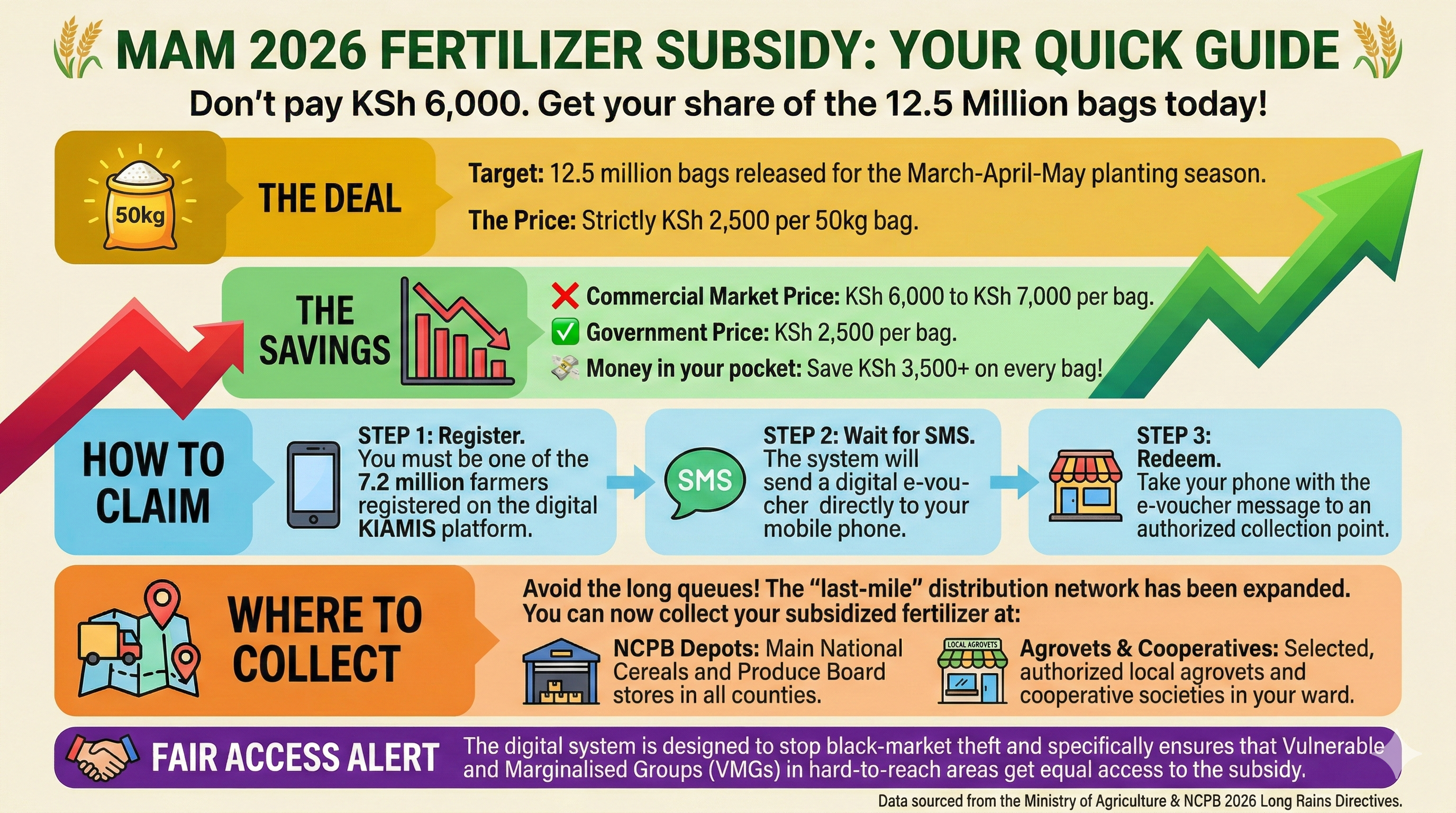
The government has released 12.5 million bags of subsidized fertilizer for the 2026 Long Rains, capping the price at KSh 2,500 per bag (down from market rates of KSh 6,000+).
The Catch? You Must Be Digital. Gone are the days of just showing up at the NCPB.
Register: Ensure you are listed on the KIAMIS (Kenya Integrated Agricultural Management Information System) platform.
Wait for the SMS: You will receive an e-voucher on your phone.
Collect: Go to your nearest NCPB depot or registered agro-vet agent.
References:
Streamline Operation Long Rains: State Floods Market with 12.5 Million Bags of Subsidized Fertilizer
Ratin Agriculture Ministry Flags Off Major Fertiliser Distribution to Strengthen Food Security
The transition from traditional, manual fertilizer distribution to the Kenya Integrated Agriculture Management Information System (KIAMIS) represents one of the most significant shifts in the nation’s agricultural history. As of late 2025, the Ministry of Agriculture has officially taken full ownership of this digital registry, which now hosts data for over 7.1 million smallholder farmers. This digital “handshake” is no longer a mere pilot program but the mandatory gateway for anyone seeking to purchase subsidized DAP, NPK, or CAN fertilizer at the government-capped price of Ksh 2,500. For the Kenyan farmer, this means the end of “analog” vouchers and the birth of a data-driven system where eligibility is determined not by a physical queue, but by a biometric profile and a verified USSD record. However, as Jijuze has discovered, the sheer scale of this migration has created a new set of digital hurdles that many are struggling to navigate.
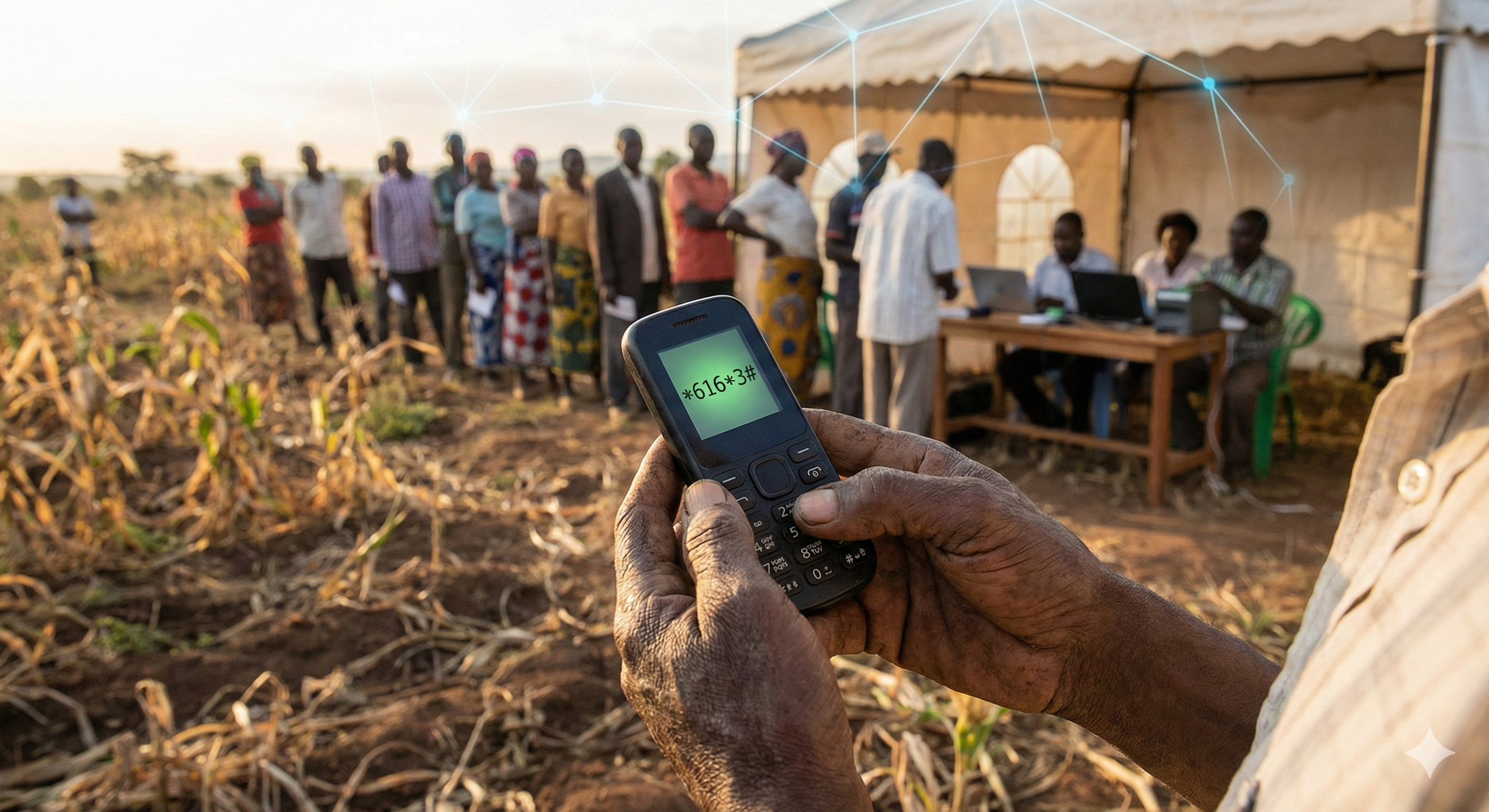
At the heart of this system lies the *616*3# USSD code, a simple string of digits that serves as the farmer’s primary interface with the KIAMIS cloud. When a farmer dials this code, they are not just checking a balance; they are interacting with a complex backend that validates their land acreage, crop type, and regional location. The 2025 updates to the platform have introduced even more granular requirements, including the integration of climate-shock insurance directly into the registration process. This means that for a farmer to receive an e-voucher via SMS, their data must be fully validated by both the local Assistant Chief and the Sub-County Agricultural Officer. We have received reports that thousands of farmers who believed they were “registered” are being turned away at National Cereals and Produce Board (NCPB) depots because their profiles lack these critical secondary validations, highlighting a gap between initial data entry and final system approval.
Government targeting 500,000 farmers in KIAMIS registration drive | KBC Business
For the modern Kenyan smallholder, understanding the “Digital Gatekeeper” is now as essential as understanding the soil itself. The government’s 2025 policy emphasizes that the e-voucher system is designed to eliminate the “middleman” and “ghost farmers” who previously diverted subsidized stocks to the black market. By tying every bag of fertilizer to a specific ID number and a geo-tagged farm, the KIAMIS platform ensures that resources reach the intended hands. Yet, this digital-first approach demands a higher level of technical literacy. Farmers must ensure their mobile numbers are correctly linked to their ID and that they have not exceeded the allocated bags per acre—a limit strictly enforced by the algorithm. As the planting season approaches, the message from the Ministry is clear: the era of walking into a depot with just cash is over; if you are not in the cloud, you are not on the farm.
References:
Jijuze How to Access Subsidized Fertilizer in Kenya
Sacco Review Gov’t rolls out pioneering insurance-integrated fertilizer subsidy to safeguard smallholder farmers
The Kenya Times How Kenyans Can Apply for Govt Fertilizer Subsidy Program
Eagmark Agri-Hub Kenya Takes Ownership of National Digital Farmer Registry
In recent developments within Kenya’s livestock sector, the government has announced a nationwide vaccination campaign, a strategic pivot that could redefine animal husbandry in the country. The initiative, backed by the International Livestock Research Institute (ILRI) and several animal health experts, champions the transition from antibiotic reliance towards a more sustainable vaccination approach. This movement addresses the pressing issue of antimicrobial resistance, aligning Kenyan livestock practices with international standards for sustainable farming. Vaccination programs play a pivotal role in preventing devastating livestock diseases like Foot and Mouth Disease (FMD) and Peste des Petits Ruminants (PPR), which have historically undercut productivity and adversely affected farmers’ livelihoods. The shift to proactive disease control minimizes the economic burden of managing diseases and reduces livestock mortality rates, potentially boosting food security and enhancing economic resilience. Enhanced livestock health could open doors for Kenyan farmers, granting them access to lucrative regional and global markets, a strategic goal strongly supported by President William Ruto’s administration.
Citizen Digital Report
However, the ambitious vaccine rollout is not without its challenges and controversies. Skepticism from both political circles and the public highlights the undercurrent of mistrust surrounding the program’s execution. Notably, political figures like Kalonzo Musyoka have voiced concerns regarding the transparency and objectives of the vaccination initiative, fearing potential hidden political motives that could disadvantage farmers economically. These fears are compounded by the anticipated costs of vaccination, with lingering questions regarding financial subsidies for smallholder farmers to ensure that the program does not exacerbate existing inequalities in the agricultural sector. Logistical hurdles, especially in reaching remote areas, also pose a significant threat to achieving comprehensive vaccination coverage, which is critical for the program’s success. Moreover, local law firms have expressed apprehensions about the legal and contractual aspects of the campaign, emphasizing the need for thorough stakeholder consultation, contract transparency, and a robust legal framework to address potential intellectual property issues and liability concerns.
The international involvement in Kenya’s nationwide livestock vaccination program opens a critical discussion about the balance between foreign influence and national sovereignty in shaping agricultural policies. While funding from donors like the Bill & Melinda Gates Foundation and DFID, through organizations such as GALVmed, brings essential resources and expertise, it also prompts questions about Kenya’s self-reliance. How should Kenya manage this delicate balance to ensure that foreign partnerships strengthen rather than overshadow its national interests? Critics argue there’s a risk of dependency that might undermine local innovation and capacity. Engaging in this conversation involves considering how transparent communication and robust legal frameworks can safeguard Kenya’s sovereignty while leveraging global support. Moreover, it challenges us to assess success not just economically, but in how policies empower smallholder farmers and protect against undue external influence. As stakeholders, we have an opportunity to influence how these dynamics play out, aiming for a future where Kenya’s livestock sector thrives autonomously yet collaboratively on the global stage.
References:
Kenya News Agency Kenya to use local vaccines for livestock vaccination
The Star State denies sinister motive in livestock vaccination
Nation Kalonzo: Kenyans must reject Ruto’s countrywide livestock vaccination plan
The Star Ruto: Anybody opposed to animal vaccination is mad
In an era marked by fluctuating weather patterns and volatile market demands, leaving fields fallow while waiting for the next planting season is increasingly becoming a missed opportunity for Kenyan farmers. Off-season vegetable production presents a compelling alternative, transforming idle land into a hub of year-round productivity and profitability. By leveraging advanced farming techniques—such as protected cultivation, targeted irrigation, and specialized seed varieties—farmers can maintain high levels of agricultural activity, even when traditional conditions for planting are less favorable. This approach circumvents supply chain gaps and volatile pricing by providing a stable influx of crops during lean periods when demand is high, boosting farm incomes notably.
Arjun Agriculture World Report
Turning fallow fields into productive assets, off-season vegetable production improves land productivity, an especially attractive option for smallholder farmers contending with limited acreage. Through continuous and diverse cropping, this alternative farming method amplifies land output, countering the constraining effects of dwindling land resources. By cultivating diverse, high-value crops continuously, farmers not only elevate their financial prospects but also make significant strides toward enhancing food security. Off-season farming ensures a reliable supply of nutritious vegetables, addressing malnutrition and seasonal food shortages prevalent in rural communities. Technologies such as heat-tolerant plants, cost-effective rain shelters, and plant growth regulators enable farmers to navigate climatic variability while maximizing yields. This strategy not only transforms the landscape of agriculture in Kenya but also epitomizes a paradigm shift towards sustained economic growth through strategic land use.
Addressing the challenges linked to adopting off-season agriculture invites an engaging dialogue on how Kenyan farmers can collectively embrace this transformative strategy. We encourage you, our readers, to share your insights on empowering farmers to turn idle periods into productive opportunities. How can we make necessary investments in infrastructure—like greenhouses and protective shelters—more accessible to smallholders? Maybe innovative solutions such as micro-financing or government-backed subsidies hold the key to unlocking this potential. Additionally, with the heightened pest and disease risks during off-seasons, what role do you see for Integrated Pest Management (IPM) in creating a sustainable pest control ecosystem? Perhaps you have experiences or innovative ideas about training programs to equip farmers with essential skills in water management, crop selection, and sustainable practices. This open conversation is crucial for crafting strategies that make year-round farming a reality. We invite you to contribute your perspectives, share success stories, or propose novel solutions to foster interactive learning and collaboration within the farming community. Your input is vital as we work together to redefine food security and economic resilience in Kenya, nurturing a vibrant and globally competitive agribusiness sector. Join the conversation, inspire change, and help shape a sustainable agricultural future.
References:
Nation Come rain or sunshine, our crops thrive and we sell produce off season
Science Direct Farmer training in off-season vegetables: Effects on income and pesticide use in Bangladesh
Harvest Money Off-Season The Best Time To Grow Vegetables For Profit
 Jijuze