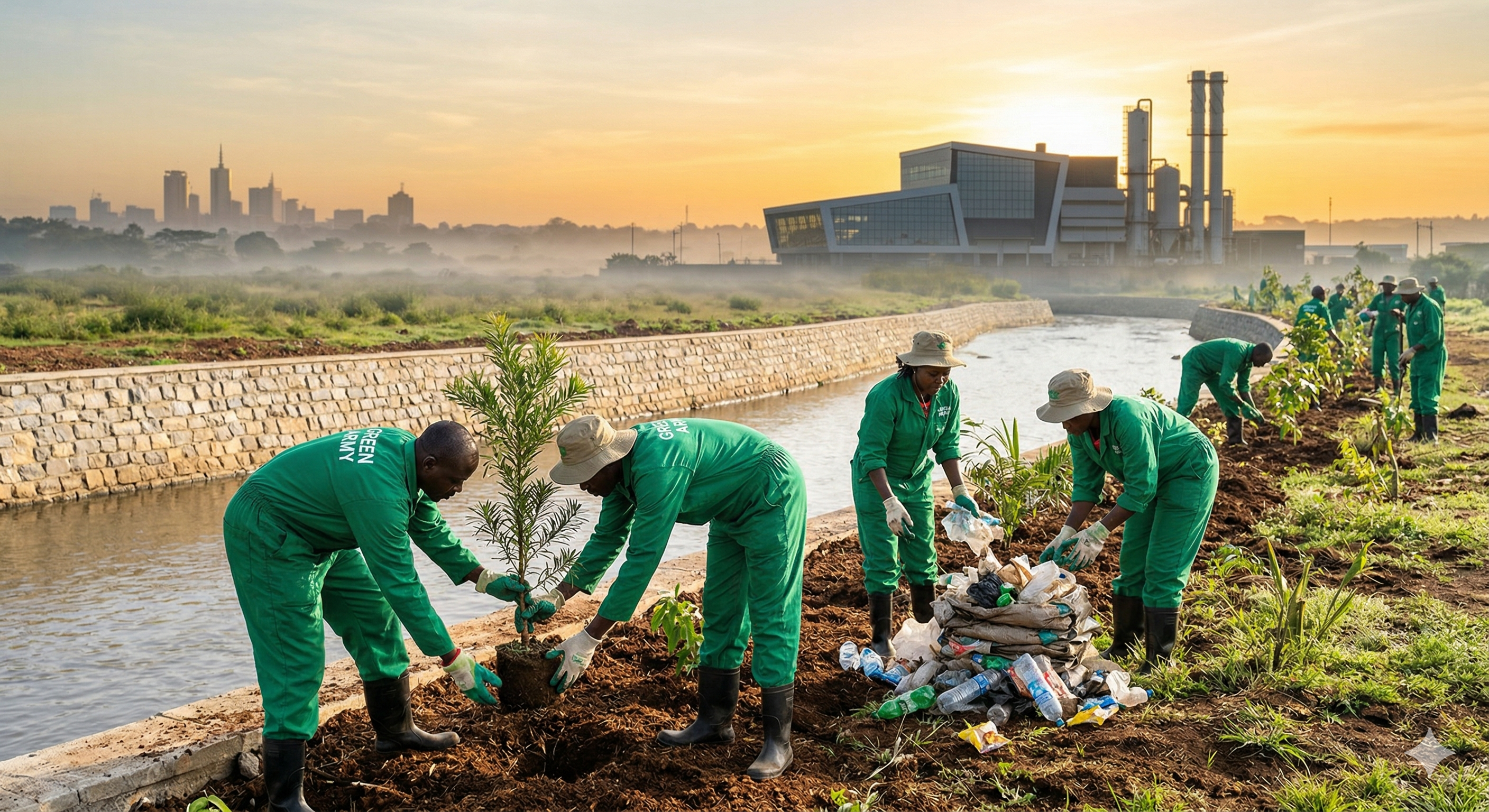
Nairobi is currently undergoing an Sh80 billion transformation under the “Nairobi Rising” agenda, an ambitious intergovernmental pact designed to pull the capital out of its cycle of disaster. The roadmap includes a Sh25 billion overhaul of the city’s drainage and a Sh33 billion investment in expanding sewer systems and restoring polluted waterways. This represents the most significant attempt in recent history to decouple the city’s stormwater from its sewage, a move intended to end the perennial outbreaks of cholera and typhoid that follow every flood.
A central pillar of this new vision is the decommissioning of the notorious Dandora dumpsite. Long a source of environmental and health risks, Dandora is slated to be replaced by a modern waste-to-energy plant in Ruai that will generate between 45 and 70 megawatts of electricity. By transitioning to a circular economy, the government hopes to eliminate the plastic debris that currently chokes the city’s drains, which costs an estimated KES 4.5 billion annually in reactive mitigation.
However, the success of “Nairobi Rising” hinges on institutional reform and accountability. The plan includes the creation of a specialized Nairobi Metropolitan Police Unit to enforce zoning laws and protect reclaimed riparian land, but critics warn of the “financial hangover” left by previous interventions. For the residents of Nairobi, the stakes could not be higher; as the April 2026 waste management launch approaches, the city is betting billions that it can finally build the resilience needed to survive its own growth.
References:
Capital News Sewerage and Sanitation Take Centre Stage in Nairobi’s Sh80bn Development Plan
People Daily Ruto unveils plan for a major overhaul of Dandora dumpsite
Big 3 Africa Nairobi Waste to Energy Transformation
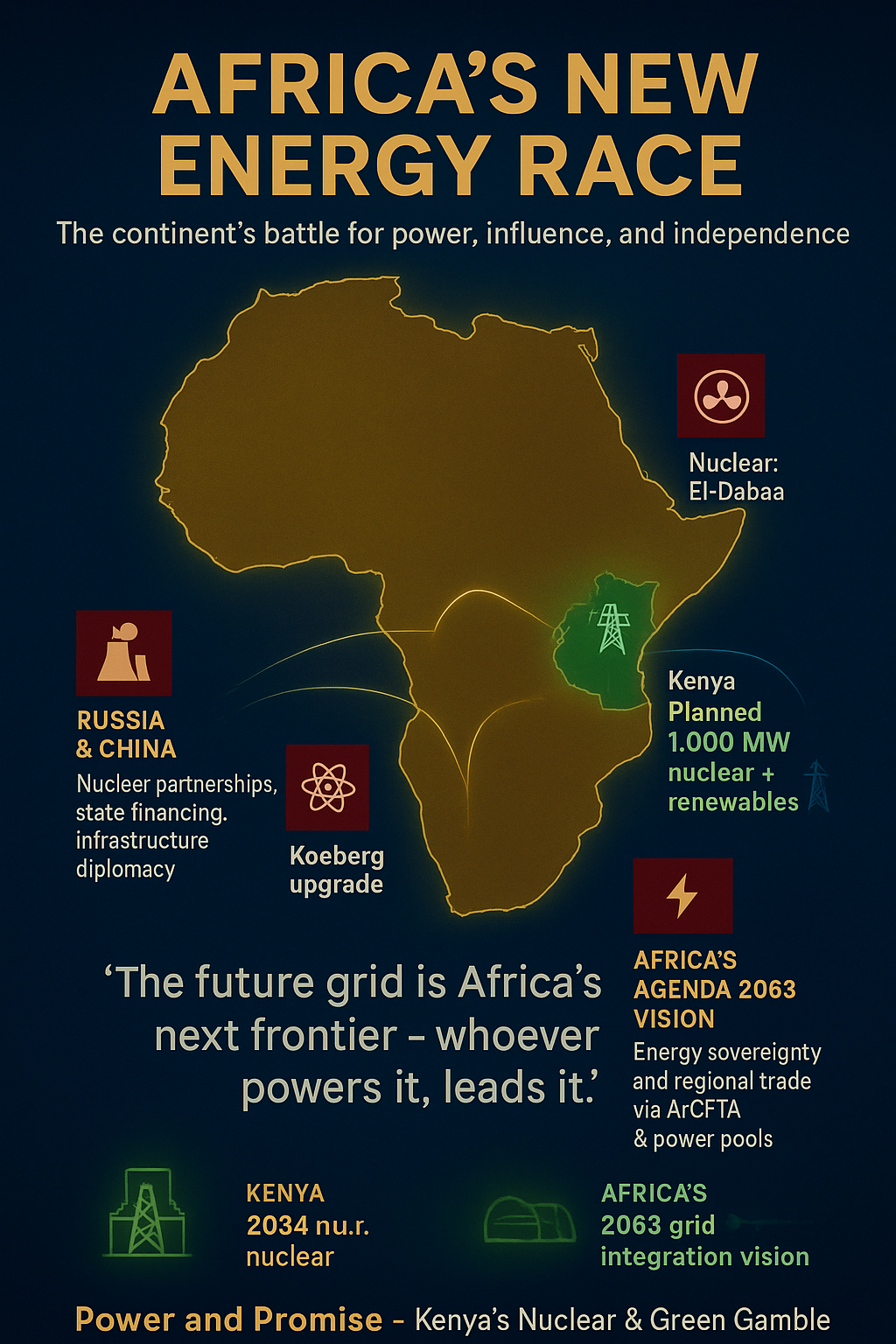
Africa’s energy landscape is shifting faster than at any time in its postcolonial history. From North Africa’s nuclear ventures to Southern Africa’s hydrogen ambitions, the continent is quietly constructing a new map of power — one defined not by oil reserves, but by grid capacity and global alliances. Russia and China are embedding influence through nuclear partnerships; the United States and Europe counter with renewables and clean-tech financing. Across the continent, energy has become the new currency of diplomacy. The story is no longer about light bulbs and power stations — it’s about sovereignty, soft power, and survival. And in this unfolding drama, Kenya stands at the intersection of ambition and caution, armed with geothermal prowess, nuclear dreams, and the burden of fiscal fragility.
Kenya’s choices now echo far beyond its borders. Once hailed as Africa’s renewable beacon, the nation’s dual pursuit of nuclear energy and grid modernization could redefine East Africa’s energy future — or divide it. Egypt’s El-Dabaa reactor is already nearing completion; South Africa is upgrading its Koeberg plant; and Uganda and Ghana are moving from feasibility to formal partnerships. Kenya, strategically perched in the Eastern Africa Power Pool, holds the potential to become a regional energy exporter, a stabilizer in a volatile market. Yet that promise hinges on policy discipline and trust — two currencies Kenya is struggling to sustain. Its fiscal instability, opaque power contracts, and political indecision risk eroding the credibility needed to lead the continental transition. The dream of an integrated African grid may depend less on megawatts and more on governance — and Kenya’s ability to align vision with viability.
The next decade will determine whether Kenya emerges as a powerful nation or merely a powered one. To lead Africa’s energy race, it must balance ambition with accountability, geopolitics with pragmatism. This is not just about building reactors or expanding wind farms — it’s about mastering the grid as an instrument of economic independence and continental diplomacy. The nuclear plant, if realized, will stand not merely as a symbol of technological progress, but as a test of strategic maturity. For Africa, and Kenya especially, the energy race is no longer about who generates power — it’s about who commands it. The atom, the turbine, and the tariff are now the instruments of influence. Kenya’s gamble could define not just its own future, but the direction of Africa’s entire energy destiny.
Kenya is intensifying its efforts to become a significant oil and gas producer, with the government introducing various incentives to attract global investors. This ambition builds on a history of exploration that began in the 1950s and led to the notable discovery of commercially viable oil in the South Lokichar Basin in 2012. Despite this potential, sustained commercial production has remained elusive. The government’s latest strategy involves a licensing round for ten promising oil and gas blocks, scheduled for September 2025. Alongside this, the government is offering tax incentives and flexible terms for Production Sharing Contracts, signaling a strong commitment to developing the sector. Investments in crucial infrastructure, such as the expansion of Lamu Port and the advancement of the Lamu-Lokichar pipeline project, are also underway to support exploration and future production.
A Citizen Digital Report (2022)
However, Kenya’s journey in oil and gas exploration has encountered numerous obstacles. While early efforts identified hydrocarbon presence in basins like Lamu and Anza, they were largely unsuccessful in achieving commercial viability. Logistical challenges, particularly the absence of a reliable pipeline to transport oil from the Turkana region to the coast, have been a major hindrance. Environmental concerns and the critical need for responsible resource management, along with the imperative of fostering positive relationships with local communities, have also posed significant challenges. The substantial oil reserves in the South Lokichar Basin, estimated at 2.85 billion barrels, have yet to be fully exploited due to these infrastructure deficits, coupled with economic uncertainties linked to fluctuating global oil prices and the substantial upfront capital required for development. Regulatory complexities and the evolving global energy landscape, with its increasing emphasis on renewable energy sources, have further complicated the path to commercial production. The recent withdrawal of key partners from the Lokichar project has also added to the existing difficulties.
Experts suggest that while Kenya’s oil and gas sector holds considerable promise, particularly with the untapped potential in various sedimentary basins, realizing this potential depends on effectively addressing the current challenges. Key recommendations for the Kenyan government include accelerating the development of essential infrastructure, most notably the Lokichar-Lamu pipeline, and enhancing the regulatory framework to provide greater clarity and attract sustained investment. Offering competitive fiscal terms, actively pursuing strategic partnerships, and ensuring transparency and good governance within the sector are also deemed crucial. Moreover, prioritizing sustainable and responsible resource management practices, alongside meaningful engagement with local communities and the promotion of local content, are vital for the long-term success and social acceptance of oil and gas development in Kenya. By drawing lessons from international case studies of successful oil and gas development and focusing on these critical areas, Kenya aims to convert its hydrocarbon aspirations into tangible economic progress and development.
References:
The Star Kenya to avail 10 oil and gas blocks to investors
The Standard Kenya to restart licensing of 10 oil and gas blocks in September
AInvest Oil Daily | Kenya Launches Oil Block Bidding, API Reports U.S. Crude Inventory Drop, ONGC Diversifies
Africa Energy Setback for Kenya’s Oil Ambitions as Tullow Oil’s Field Development Plan Faces Rejection
Pumps Africa Oil and Gas Pricing Trends in Africa: Challenges, Opportunities, and Future Outlook
Upstream TotalEnergies and Africa Oil quit Kenya oil project, leaving Tullow without partners
Kenya’s nuclear aspirations are gaining momentum, with the government actively engaging international partners to fulfill its goal of building a nuclear power plant by 2034. This ambition aligns with the country’s desire to meet rising energy demands and transition towards a low-carbon energy mix. The recent signing of a historic nuclear cooperation agreement with the U.S. signals Kenya’s commitment to leveraging American expertise and technology for the project. Meanwhile, Russia remains a significant contender, pushing forward with its offer to assist Kenya through the provision of nuclear expertise and technology under Rosatom’s expanding African footprint. The competition between these two nuclear powerhouses, alongside China’s emerging influence in financing infrastructure, positions Kenya as a battleground for competing geopolitical interests in nuclear development.
Bizhub 360 Report
Despite Kenya’s active role in the global nuclear conversation, opposition within the country remains, particularly from environmental activists and local communities in areas like Kilifi, where the plant is proposed to be built. Concerns about potential environmental degradation, water usage, and safety risks are driving resistance to the project. Activists have also questioned the economic viability of nuclear power, given the country’s significant investments in renewable energy sources such as geothermal, solar, and wind. Kenya’s government, however, continues to emphasize the long-term benefits of nuclear energy, positioning it as a solution to future energy shortages while enhancing the country’s industrial capacity and regional leadership in sustainable energy.
Aljazeera Report
In light of these developments, Kenya must carefully consider its approach to nuclear energy. While the partnerships with global powers offer an avenue to modernize its energy infrastructure, there are crucial issues to address. First, Kenya must invest in robust regulatory frameworks to ensure nuclear safety and non-proliferation compliance. Additionally, transparency in project execution and addressing public concerns about environmental and social impacts will be crucial. Diversifying partnerships beyond Russia and the U.S., perhaps through exploring China’s SMR technology, could also provide a balanced approach to mitigating reliance on any single nuclear superpower. By taking these steps, Kenya can navigate the complex interplay of global nuclear diplomacy while advancing its national energy interests responsibly.
References:
IAI Russian Nuclear Diplomacy in the Global South, and How to Respond to It
Intellinews Kenya signs historic pact with US to advance its nuclear power plans
NEA NEA visits Kenya to explore co-operation, participates in discussions on advancing nuclear energy programmes in Africa
The Africa Report Kenya aims to build nuclear power plant by 2034, says minister
The EastAfrican Kenya to host second US-African nuclear summit
The competition between global powers—namely the United States, Russia, and China—over nuclear energy influence in Africa has intensified, with Sub-Saharan Africa becoming a focal point. Russia’s state-owned nuclear energy corporation, Rosatom, has been proactive in offering nuclear technology and training across Africa, making substantial headway in nations like Egypt and Nigeria. The U.S., meanwhile, has focused on promoting nuclear safety and non-proliferation standards, alongside advancing civil nuclear cooperation through the U.S.-Africa Nuclear Summit and other diplomatic channels. China, on the other hand, has strategically positioned itself as a key player through its Belt and Road Initiative, offering African nations the financial resources to develop nuclear energy infrastructure, while also focusing on small modular reactors (SMRs) that appeal to nations with emerging nuclear aspirations.
Decouple Media Report
Kenya’s ambition to establish a nuclear power plant by 2034 has placed the country in the middle of this geopolitical rivalry. The country has engaged with both Russia and the U.S., signing landmark agreements with the U.S. and expressing openness to Russian proposals. Russia has shown interest in collaborating with Kenya to develop nuclear capabilities, leveraging its global nuclear diplomacy to strengthen ties in Africa. Meanwhile, the U.S. has also intensified its efforts to offer technical support and foster bilateral nuclear agreements, recently hosting key meetings and signing cooperative pacts with Kenya. These developments underscore Kenya’s position as a strategic partner in the nuclear energy race, with its ambitious plans to diversify its energy mix and mitigate reliance on hydro and geothermal power sources.
As the competition escalates, Sub-Saharan African nations are being offered a unique opportunity to harness nuclear technology to meet growing energy demands, modernize their infrastructure, and achieve long-term energy security. However, the geopolitical undertones of this competition could have long-term implications for national sovereignty and environmental safety. While nuclear energy holds promise for addressing power shortages, it also raises concerns regarding potential nuclear waste disposal challenges and the high costs associated with maintaining nuclear infrastructure. The outcome of this competition will depend on the terms and benefits these global powers are willing to offer to African nations, and how these nations navigate the complex geopolitical landscape of nuclear diplomacy.
References:
AZ News Russia and the US to help Kenya develop nuclear energy
The Star US, Russia compete for Africa’s nuclear power deals
PISM U.S. Rivalry with Russia and China over Nuclear Technology in Africa Heating Up
The Guardian Kenya’s first nuclear plant: why plans face fierce opposition in country’s coastal paradise
Kenya faces a significant health crisis due to the widespread use of biomass fuels like firewood and charcoal for cooking. A recent study highlighted that over 90% of rural households and 58% of all households use the Three Stone Open Fire (TSOF), a method that produces high levels of indoor air pollution (IAP). These pollutants, including particulate matter (PM) and carbon monoxide, far exceed World Health Organization (WHO) safety guidelines, leading to respiratory diseases, cardiovascular problems, and increased cancer risks. The study estimates that nearly 23,000 deaths in Kenya in 2020 were attributable to IAP, underscoring the severity of the issue.
Cooking with firewood
The reliance on biomass fuels is driven by economic constraints and cultural practices, with rural households often lacking access to cleaner alternatives. The study found that even improved cookstoves, while better than TSOF, only partially reduce emissions. Furthermore, the transition to clean energy is hindered by the high cost of alternatives and limited infrastructure. The high levels of PM2.5, a fine particulate matter that can penetrate the lungs and bloodstream, particularly in urban slums, pose severe health risks, including chronic obstructive pulmonary disease (COPD), asthma, and acute lower respiratory infections (ALRI), disproportionately affecting women and children who are often exposed to cooking smoke for extended periods.
To address these challenges, the Kenyan government should prioritize the implementation of clean energy solutions. Emphasizing solar energy could be particularly impactful, as it provides a sustainable, long-term solution that can be scaled across both urban and rural areas. Subsidizing solar panels and supporting community-based solar cooking initiatives could significantly reduce dependence on harmful biomass fuels. Additionally, promoting public awareness about the health risks of IAP and improving household ventilation are crucial steps. A multifaceted approach, involving various stakeholders, is essential to reduce the reliance on harmful biomass fuels and improve public health outcomes across the nation.
Many people often prefer mineral water rather than tapped water, boiled water or any other type of drinking water. There is often the misconception that mineral water is safer in terms of hygienic standards. How true is this? In as much as bottled water has many pros, it has a number of cons as well. These limitations have effects on the environment as well as the health of an individual. The hazards arise from the large number of plastics manufactured in order to package the mineral water, which is detrimental to both the consumer and the surroundings. Bottled water poses a number of hazards to the environment and the end user.
How does bottled water affect the environment? Due to the sheer number of plastic bottles being manufactured annually, the energy required to manufacture and transport these bottles to the market severely drains fossil fuels. The production of plastics is usually unregulated and therefore causing strain to the environment. Also, plastic is non-biodegradable and therefore it is not advisable to dispose plastics. It has been proposed that plastics should be washed and reused or recycled in the production of bottles for mineral water. This compromises the quality of the water due to the fact that phthalate leaches its way into the water as the bottle gets older. Phthalate is a harmful chemical used in the production of plastics that is known to contaminate contents of a product packaged in plastic; if it has been recycled a number of times. This chemical has been known to cause damage to the liver and kidneys. We are also not sure about the hygienic standards of the bottled water. This is because most of them are bottled at the source and therefore the water bodies are not enclosed hence cannot inhibit the public for using or tampering with the water, hence contamination of the water.
In a nutshell, bottled water is not the best option. It strains the environment as well as causes environmental pollution among other health hazards. The best alternative is tap water as it saves on resources since there is no need of packaging as well as reduces the hazards caused by bottled water. The Kenyan authorities should plan to provide safe drinking water for the citizens in order for them to develop trust in tap water. The reason why many people in the country do not consume tap water is because it is mostly not entirely treated and hence not safe enough for consumption. The government should therefore plan to come up with effective and functioning water treating plants in order to provide clean and safe water for Kenyans.
“The future of agriculture is to increase productivity and conserve the environment,” said Dr. Ephraim Mukisira, the director of Kenya Agricultural Research Institute (KARI). KARI forecasts to complete a Shs. 32 billion solar powered facility in June, to “pave way for an agrarian system that is less dependent on rain-fed agriculture,” Mukisira said.
Developing nations of Africa have been noted for the application of renewable energy technologies. Kenya in particular has taken a huge leap forward and could be Africa’s first country to “establish a green farm that uses renewable energy.” allAfrica.com reported. Solar powered technologies have high potential to generate renewable energy in Africa, based on the fact that many African countries receive on average 325 days per year of bright sunlight. The KARI facility at Kari Muguga, Kiambu District, will accommodate both crops and livestock. Dr. Mukisira was reported saying “this is a new concept that demonstrates that research and science is moving away from traditional to more exciting settings like the green villages.”
“Kenya has more enlightened policies on renewable energy compared to other developing countries, but the sector is not vibrant due to lack of financing,” said Ajay Marayanan-the Head of Climate Financial Unit, IFC.Local banks should savor the opportunity to invest in green energy projects to ensure a gradual shift to more sustainable energy sources. The International Finance Corporation (IFC) and European Investment Bank (IEB) plan to set up a fund to be accessed by local banks for onward lending to individual green projects is a step in the right direction moving forward, following Kenyan government’s effort to fast-track revision of most green energy policies.
In December 31, 1879, Thomas Edison remarked, “We will make electricity so cheap that only the rich can afford to burn candles”. Kenya’s development agenda Vision 2030 highlights the increase in demand for electricity. Although politically motivated, our ambition to quench the electricity thirst with nuclear power serves as a reminder that we are yet to live up to the dreams of Thomas Edison.
Japan’s nuclear power crisis has ignited a conversation on the country’s seriousness to develop our nuclear energy potential. In this time of rampant global economic growth especially among BRIC nations, there is an even greater need to find new sources of energy, especially green energy sources. Our economy is the 10th largest economy in Africa and will be second to South Africa in developing nuclear energy in the African continent. This development will be a green solution that will address commercial and residential energy needs. As we explore green energy solutions, we need to remind ourselves the true cost; financial, life or otherwise incurred as we address our insatiable thirst for energy.
httpv://www.youtube.com/watch?v=VJfIbBDR3e8
Our Nuclear Electricity Development Project Executive Chairman Ochilo Ayacko was quoted saying “the incident in Japan only served as a lesson on the safety measures Kenya would adopt”. In the history of nuclear power production there have been several accidents many of which involve human loss and civilian exposure to radiation resulting in generational health defects. The safety of civilians and our environment must be placed above all else, however a good solution for Kenya must also accommodate the long-term storage of radio active waste, a bi-product of nuclear power production. As Kenyans we should ask ourselves, does our plan address our long-term energy needs, safety of our people, safety of our environment (both catastrophic meltdowns and nuclear waste storage), our sovereignty and a comprehensive cost breakdown of green and sustainable alternatives?


 The KARI facility at Kari Muguga, Kiambu District, will accommodate both crops and livestock. Dr. Mukisira was
  Jijuze