KENYA FOOD SECURITY | A critical view

Co-Author :  Victor Daniels

On February 22, 2010, a senior policy analyst with the Kenya Institute for Public Policy Research and Analysis (KIPPRA), was quoted saying, “we have a challenge in the management of our public affairs [and] the management of our food stocks. Sometimes we are exporting food yet we later need to import. There is failure to learn from best practices, to invest in knowledge and transform that knowledge into action.”

According to OneWorld UK, the UN “estimates that 3.5 million Kenyans will require food assistance, a figure that may rise before the end of 2011.” However, the assessments updated on July, 2011, “exclude the Somali refugees located in the Dadaab camps in eastern Kenya whose plight is managed as an international refugee crisis, as distinct from Kenya’s national food insecurity.” Scholars have blamed the looming food crisis in Kenya, not only on the failure of successive seasonal rains, but also on poor standards of governance, and mismanagement of the agriculture sector, coupled with lack of political goodwill. Providing credit facilities to farmers, setting up micro-irrigation schemes, and cash transfers to poor farmers, as well as effecting input subsidies are just but a few ways to begin the comprehensive process, to realize food security in Kenya.
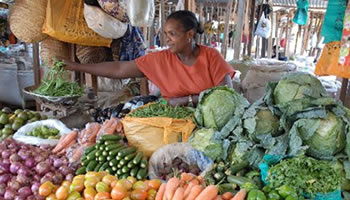
Kenya Food Security

In light of the above, an economy should be based on a long-lasting, reliable system, not on slavery, and coercion. Our economy relies on greed, and a serious lack of thought about consequences. That is a very unstable sort of economy. A lucid socio-economic analysis of the mechanisms of exploitative processes in the Kenyan economy brings out Kenya’s predicament in the light of under-hand shady policy making, which is not exclusively Marxist, but still draws heavily on that school of thought. Even before the fall of the KANU regime, the prices of prime commodities such as tea, sugar, rice, and maize, have constantly been rising, which creates a conflict of interests considering we locally produce the same. Where does the buck stop? Can we still interpret this, as Kenya’s success story? Are the Kenyan food policies a success in terms of growth, or total output? The time has come to reappraise agricultural pricing policies in general, so that agriculture makes its optimum contribution to maximizing gross national production. For maize, the Kenyan staple grain, the producer’s selling price should be reviewed, and be set at the relevant export parity price. The consumer price should be down to a comfortable level, thus, the price should be set at the producer’s selling price, plus marketing costs- incurred in distributing the maize to consumers. It is true that costs are rising, but then, if a justified investment policy was directed for export, we would expect the abolition of domestic marketing, thus, providing comfortable floor and ceiling prices. Starvation in most Kenyan regions remains to haunt us due to the government’s sub-standard reckoning, without political goodwill for the Kenyan people. Well known Members of Parliament, politicians, senior civil servants, and business men affiliated to high echelons of power, have repeatedly been accused with controversial maize and sugar imports and exports, but still, calls to prosecute the alleged suspects, go unheeded. Impunity and indecisiveness, thrives at high levels of governance, and on the miseries of the citizenry, where justice refers to how deep your pockets are. Budgetary allocation for the Ministry of State for Development of Northern Kenya and Other Arid Lands is irrelevant, if the people meant to be protected by the same, are dying of acute food shortage, and malnutrition. The chronic famine situation in Kenya, signals a malfunction in the governance of the Kenyan democracy. Kenya truly needs, a decentralized system, of running State affairs. Focus should be on the people and their strengths, instead of importing western innovations, and ideologies. Since we should be the change we want to see, we should put an end to popularistic politics, and deal with real issues affecting Kenyans on the ground, in a comprehensive manner.

References:

Food Security in Kenya-briefing OneWorld UK, July, 2011

Experts voice food security concerns IRIN Africa, February 22, 2010

Outrage over rising food and fuel prices IRIN Africa, April 20, 2011


HELP FEED A HUNGRY CHILD

Like Daniel Toroitich Arap Moi’s Facebook page (http://www.facebook.com/danieltoroiticharapmoi1) and for EVERY NEW LIKE, from NOW until the END of this month, he will match it up with Kshs100/= AND DONATE IT TOWARDS THE RELIEF EFFORTS OF THE HUNGER STRICKEN PEOPLE. SO TELL YOUR FRIENDS TO LIKE HIS PAGE AND LETS ALL HELP FEED A HUNGRY CHILD.

Reference:

http://www.facebook.com/danieltoroiticharapmoi1

THE STATE OF DROUGHT IN KENYA | Turning Adversity into Opportunity

A recent report by the government indicated that, livestock worth 64.2 billion in the ASAL areas, has been wiped out as the region experiences the worst drought in 60 years. “A quarter of the country’s zebu herd in ASAL areas of 14 million animals is lost and the worst is possibly yet to come” Daily Nation reported.

A brief on investment opportunities available in Kenya, accredited by the Ministry of State for Planning National Development and Vision 2030 stated that, “livestock production in the ASAL accounts for nearly 90% of the employment opportunities and nearly 95% of the family incomes. It also accounts for about 45% of the Agricultural GDP.”  Though natural calamities such as drought cannot be controlled, its effects can be anticipated, thus loss of people’s lives and property as a result of the same can adequately be subdued. Isn’t it wrong in the face of the fact that, 75% of Kenya’s livestock are in the ASAL areas, whereas they are served with less than 10% of livestock service staff? What sense is in losing 64bn on one hand, and soliciting for aid funds to a tune of 1bn on the other? If that is anything to go by, then we have surely settled for less than survival. It is envisioned in the Kenya’s Vision 2030, to increase farmers income, create employment, and reduce malnutrition and food insecurity. Investing in the livestock sector, especially in the North Eastern Province (NEP), may be a good place to begin. “The development of a fully fledged export industry for processed livestock products, would doubtless have the greatest impact on the economy, and welfare of the NEP and its people” ReSAKSS, 2008. The article titled, Investment Opportunities for Livestock in the North Eastern Province of Kenya: A Synthesis of Existing Knowledge, further points out that strengthening of the institutions that, “ensure political stability, public security and protection of investment and ownership would induce investors to contribute to the development of the NEP through investment in the livestock sector.”

Mandera Livestock Market


It is not too late to begin, for all is not lost. It is true that one doesn’t appreciate the value of what they have, till it is lost. But the fool is the one who sits back and stands to lose, even more. Challenges are there, for the ones who are ready to take them. Turning the current drought adversity into an opportunity for growth, can begin with just a simple step as laying down commercially oriented road networks, into the NEP.


What’s Your Say?

References:

Drought wipes out herd worth Sh64bn Daily Nation August 7, 2011

Investment Opportunities Google Docs (as of) August 10, 2011

Investment Opportunities for Livestock in the North Eastern Province of Kenya: A Synthesis of Existing Knowledge ReSAKSS, 2008


Drought Situation in East Africa

In August 2010, World Meteorological Organization (WMO) and the National Oceanic and Atmospheric Administration Climate Prediction Center (NOAA/CPC), both, officially declared a La Nina event.

Sea Surface Temperature (SST) measurements in 2010 indicated rapid cooling, thus yielding “a moderate La Nina event…” projected to last for 9 to 12 months, Famine Early Warning Systems Network (FEWSNET) reported. “La Nina events are generally associated with drier than normal conditions in the eastern sector of East Africa, and wetter than normal conditions in the western and northern sector of the region.” FEWSNET reported. According to National Aeronautics and Space Administration (NASA), the La Nina phenomenon results in “drought over most parts of East Africa and floods and lush vegetation in Australia and other parts of southeast Asia.” guardian.co.uk reported. Jan de Leeuw, the Operating Project Leader (OPL) in the Vulnerability and sustainability in pastoral and agro-pastoral systems within ILRI’s People, Livestock and Environment theme (PLE) was put on record saying, “this La Nina event is one of the strongest since the 1970s.” Meanwhile, Daily Nation reported that “Kenya has been listed among countries facing the world’s worst food security crisis in the eastern horn of Africa.” Further afield, Associated Press (AP) reported that, “UN officials sounded the alarm Tuesday about a deepening humanitarian crisis in East Africa caused by a severe drought and fighting in Somalia…” Approximately 10 million people in northern Kenya, Ethiopia, Somalia, Eritrea and South Sudan need urgent humanitarian assistance as the region experiences the worst drought in 60 years. An estimated 1,300 Somali refugees stream into Dadaab refugee camp daily following continued conflict in Somali, coupled with severe drought. The situation on the ground is getting worse as the world’s largest refugee camp- Dadaab, in Kenya has been forced to house people, four times its full capacity.

I echo Kimani wa Njuguna’s opinion on Tuesday that, “Rather than being preoccupied with weighty bread and butter issues which will add value to the lives of Kenyans, we have seen most elected leaders concentrating on non-issues like singing to the tune of tribal kingpins, how to escape paying taxes, and the 2012 elections.” Real issues are on the ground; drought, a looming food shortage, high inflation, delayed constitutional implementations, and so on. “A pessimist sees the difficulty in every opportunity; an optimist sees the opportunity in every difficulty”, Winston Churchill said. The Kenyan Government should savor the opportunity to act decisively and do something significant to comprehensively take care of the current drought situation.

What’s your say?

The Conversation begins…

References:

Kenya in urgent need of food aid, says US Daily Nation July 11, 2011

La Nina blamed for east African drought guardian.co.uk July 14, 2011

UN struggling to cope with East Africa drought Associated Press July 12, 2011

Executive Brief: La Nina and Food Security in East Africa August 2010 FEWSNET as of July 14, 2011

East African drought ‘worst in 60 years’ Channel 4 News June 28, 2011

Leaders must get their priorities right and put food security at top of agenda Daily Nation:-Opinion July 12, 2011