The abrupt dissolution of USAID, catalyzed by the U.S. government’s sweeping “America First” foreign aid policy pivot, has left Kenya reeling from a vacuum of support once critical to its public health, agriculture, and economic systems. With over $2.5 billion in planned investments between 2020 and 2025, the agency was more than just a donor—it was woven into the fabric of Kenyan service delivery. The termination of 83% of USAID’s programs and the layoff of 94% of its staff effectively ended over six decades of robust U.S. development engagement. For Kenya, this rupture came without a viable transitional plan. Clinics shuttered, medicines vanished, and 40,000 jobs tied to health services evaporated. Programs such as PEPFAR, which had sustained over a million Kenyans on antiretroviral treatment, have been gutted, with HIV/AIDS funding slashed from $846M in 2023 to just $66M in 2025. Maternal health, malaria prevention, and reproductive health services now teeter at the edge of collapse, with service cuts exceeding 90% in some areas. Kenya’s health infrastructure, already strained, is now buckling under a loss that is not merely financial—but fatal.
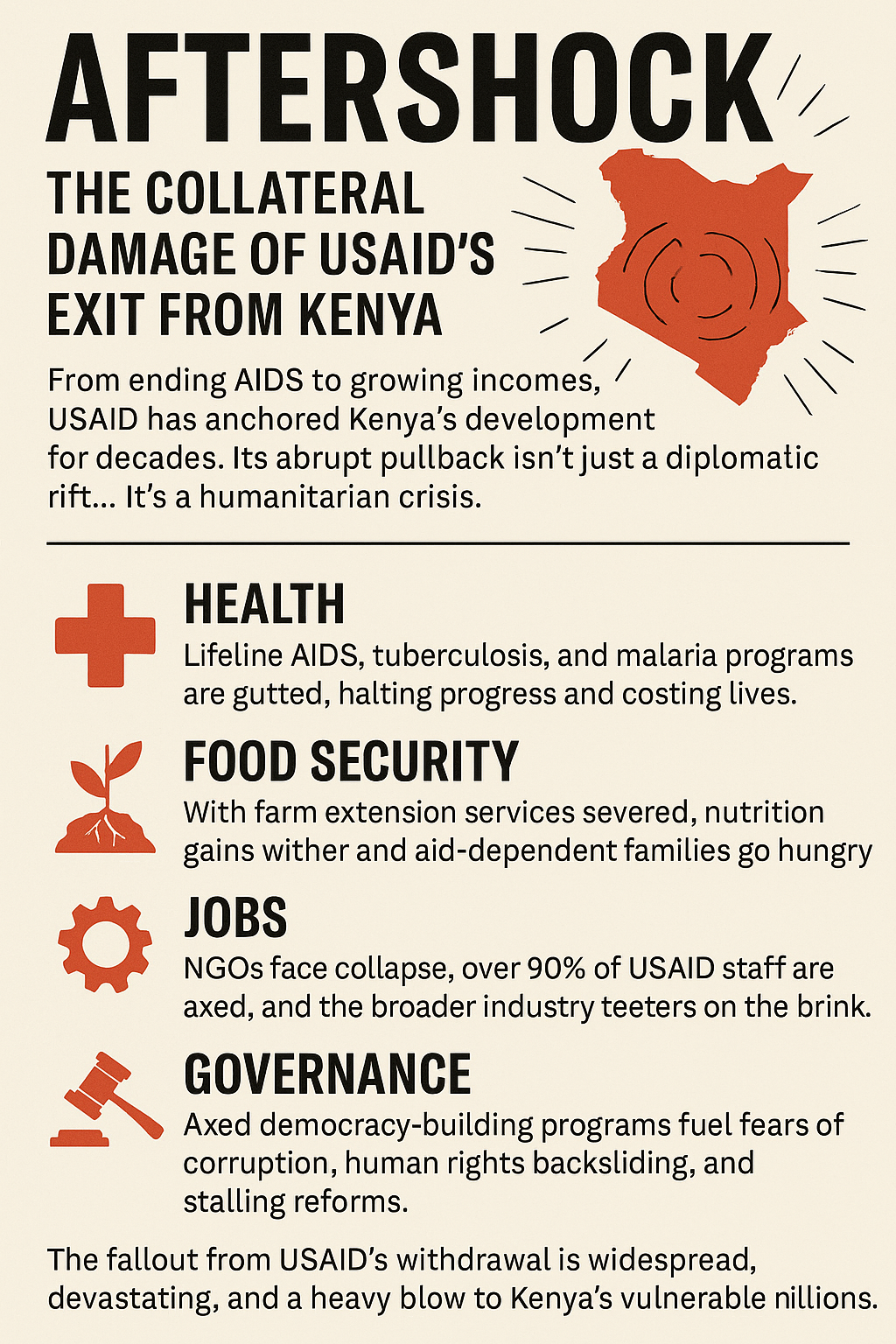
The economic blowback extends far beyond healthcare. USAID had supported Kenya’s agriculture sector through subsidies, training, and innovation, all now dismantled. Smallholder farmers are especially vulnerable. With the termination of the Famine Early Warning Systems Network (FEWS NET) after four decades of operation, Kenya has lost its primary mechanism for forecasting and responding to food insecurity. Meanwhile, tax reforms in the proposed 2025 Finance Bill—removing VAT exemptions on farm inputs and raising fuel duties—compound the crisis, inflating production costs and shrinking rural margins. The convergence of aid withdrawal, policy shocks, and climate threats is deepening food insecurity and threatening to reverse years of agricultural gains. Simultaneously, the Kenyan startup ecosystem and governance reform sectors face a projected $100 million funding shortfall. Civil society actors, often powered by USAID support, now risk losing their watchdog capacity. In areas such as conflict prevention and refugee education, where USAID once acted as a stabilizing force, the vacuum could be exploited by extremist recruiters, echoing conflict patterns seen in past aid shock cases in West Africa.
Kenya’s response has been urgent but encumbered. The government has committed to repatriating its health data from U.S.-hosted systems and shifting toward local infrastructure, yet faces severe capacity shortfalls. The fiscal strain is formidable: a KSh 52 billion health budget hole and a broader KSh 66.9 billion gap across affected sectors. While the Bottom-Up Economic Transformation Agenda (BETA) reflects ambition for self-reliance through tax reforms and private investment, execution remains constrained by weak systems and widespread corruption. Still, civil society and policymakers are beginning to reframe the crisis as a wake-up call for domestic revenue mobilization and governance renewal. If there is a path forward, it lies in converting dependency into resilience—not just by replacing funding streams, but by rethinking national priorities, protecting human capital, and investing in sovereign, accountable systems that can withstand future geopolitical shocks.
References:
Citizen Digital Over 40,000 Kenyans jobless after USAID-funded health facilities shut down
The Voice of Africa USAID Shuts Down After 63 Years, Leaving Africa in Crisis
The Star Civil society calls for self-reliance as foreign aid dwindles
Africa.com Kenya to Reclaim Health Data After Trump Administration’s USAID Cuts
Jijuze Kenya Faces Crisis After USAID Funding Withdrawal
Capital Business USAID funding halt to hit Kenya’s economy, social sectors – report
 Jijuze