Ghosts of Galana Kulalu: The “Mega Dam” Obsession

As the government targets 2 million acres for irrigation under the new debt swap initiative, the ghost of the Galana Kulalu project looms large. Just days ago, on January 26, 2026, the government announced plans for six new mega dams, signaling a return to the large-scale infrastructure strategy that failed so spectacularly in 2014. The original Galana Kulalu pilot consumed Sh7 billion to produce maize at costs higher than market price, collapsing under poor planning and corruption. Critics argue that repeating this “big dam” strategy ignores the hard-learned lessons of the past.
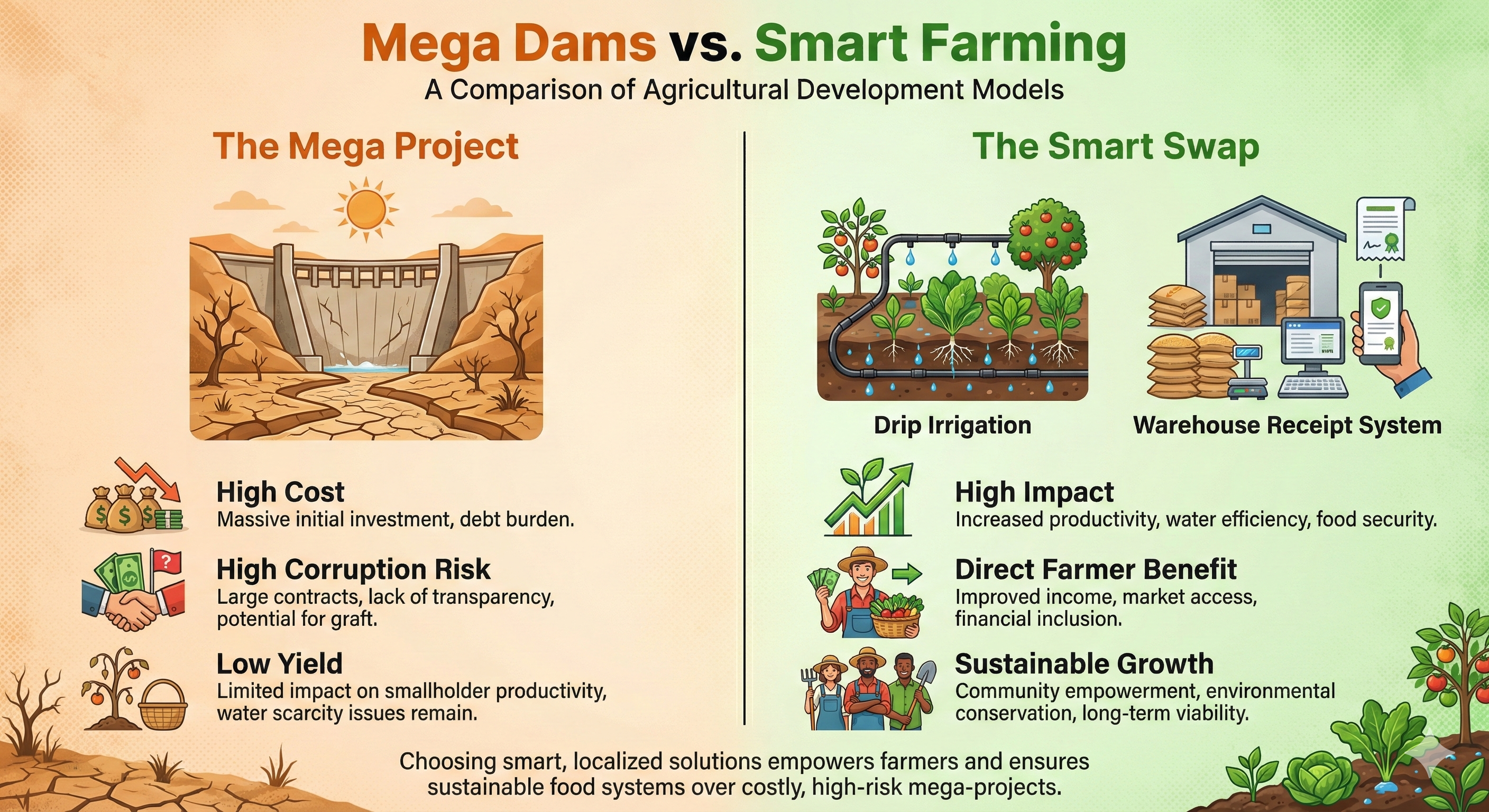
The disconnect is palpable. While the state plans mega-projects in arid lands, small-scale farmers—who produce the bulk of Kenya’s food—are struggling with basic input costs and lack of market access. The “savings” from the debt swap would likely yield higher returns if invested in decentralized solutions: household water pans, small-scale drip irrigation kits, and the Warehouse Receipt System (WRS) to help farmers store grain and avoid price exploitation by middlemen.

If the Sh129 billion is poured into another series of mega-dams, the funds risk being absorbed by contractors and consultants, leaving the country with more debt and no food. The success of this swap depends on shifting focus from concrete structures to the actual economics of farming—lowering production costs and ensuring profitability. Without this shift, we are merely “mixing oil and water” again, hoping that high-finance infrastructure will somehow trickle down to the grassroots.

References:

Capital Business Govt plans six mega dams, targets 2mn acres in irrigation push

The Star Government plans six mega dams, targets 2 million acres for irrigation push
The Billion-Dollar Gamble: Inside Kenya’s “Food-for-Eurobond” Swap

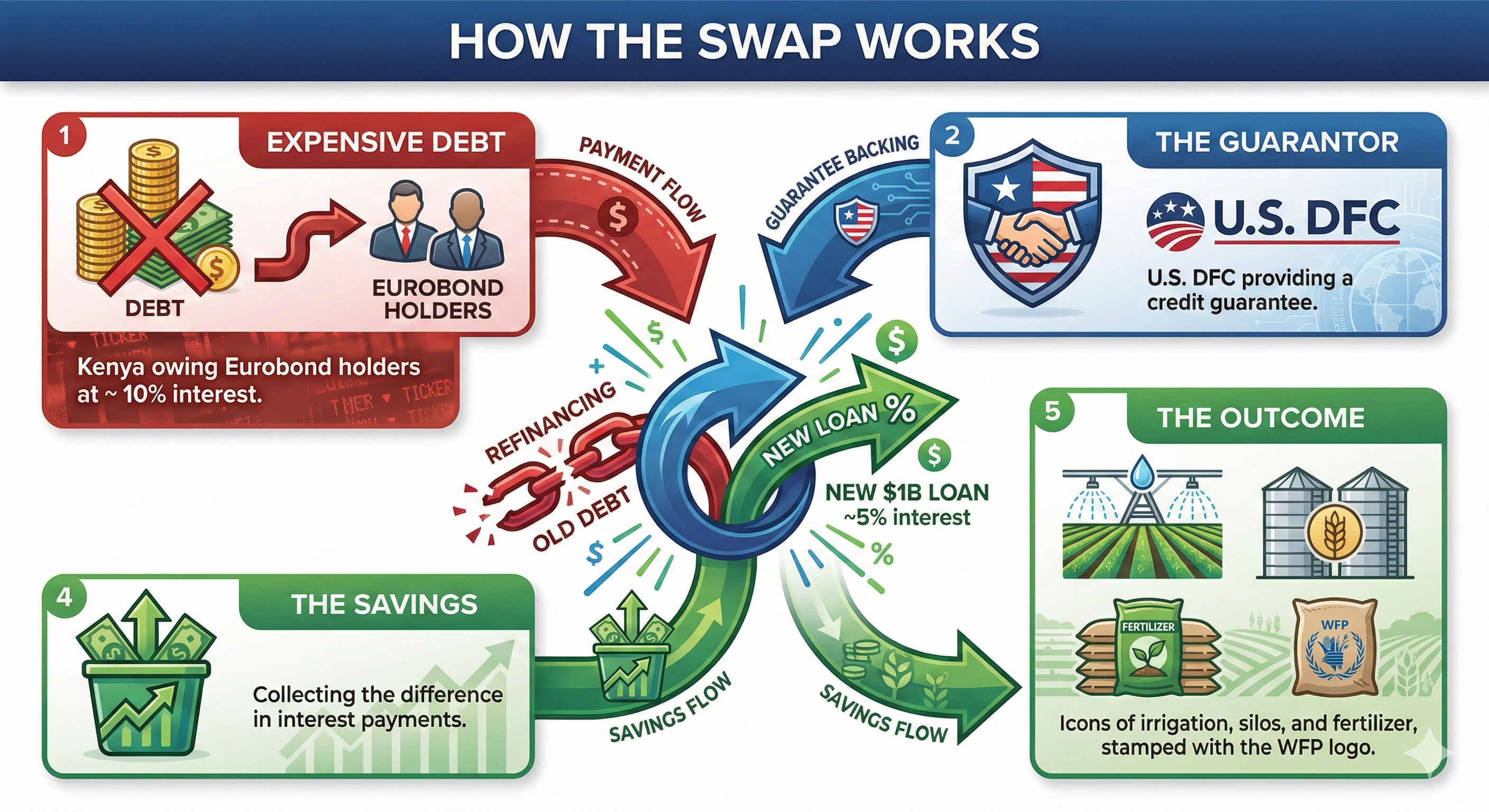
Kenya is on the verge of finalizing a landmark $1 billion (Sh129 billion) debt-for-food security swap, a sophisticated financial maneuver designed to rescue the country from a suffocating liquidity crunch. By leveraging a guarantee from the U.S. International Development Finance Corporation (DFC), the Treasury intends to refinance expensive Eurobond debt with cheaper, concessional loans. The plan is financially astute: it swaps high-interest commercial debt for lower-interest obligations, a move that prompted Moody’s to upgrade Kenya’s credit rating to B3 and stabilize the outlook on the nation’s sovereign debt.

However, the deal comes with a catch that transforms it from a simple refinancing operation into a complex development experiment. The interest “savings” generated from this swap must be ring-fenced and funneled directly into food security projects, managed in partnership with the World Food Programme (WFP). This arrangement effectively outsources a portion of national planning to an international body, admitting that the state needs external discipline to ensure funds aren’t diverted. While this stabilizes the shilling and pleases bondholders, it raises a fundamental question: is this a genuine strategy to feed the nation, or simply financial engineering to avoid default?

The stakes could not be higher. With 3.4 million Kenyans facing acute food insecurity and public debt service consuming over two-thirds of tax revenue, the government is betting that this “financial oil” can mix with the “water” of local agriculture without separating. If successful, it provides fiscal breathing room and lowers input costs for farmers; if it fails, Kenya will be left with the same debt burden and no improvement in the cost of living for the average wananchi.

References:

Business Insider Africa Kenya plans to borrow $1 billion using debt for food swap

CNBC Africa Kenya, US agency to proceed with $1 billion debt-for-food swap

Strategies to Stabilize Kenya’s Economy Amid Rising Debt-to-GDP Ratio

The debt-to-GDP ratio is a crucial metric for assessing a country’s economic health. It is calculated by dividing a nation’s total public debt by its gross domestic product (GDP), then multiplying by 100 to get a percentage. This ratio indicates how much debt a country has relative to its economic output. The formula for the debt-to-GDP ratio is:

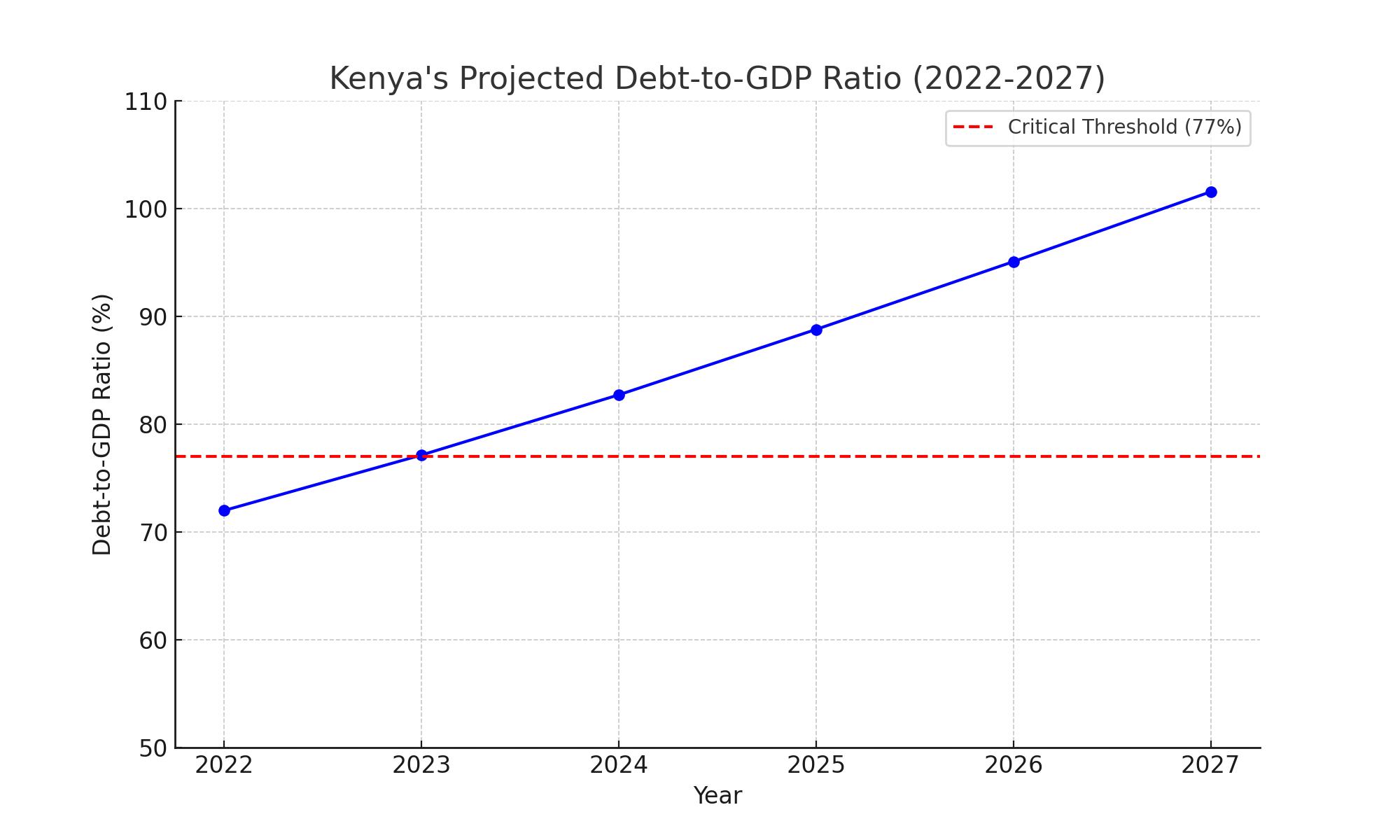
A high ratio suggests that a country may struggle to repay its debts, potentially leading to financial instability. For instance, Kenya’s debt-to-GDP ratio has been rising, with projections indicating it will exceed 100% by 2027.

In the context of Kenya, the debt-to-GDP ratio provides a snapshot of the nation’s financial challenges. According to the Corporate Finance Institute, a ratio above 77% can hamper economic growth. Kenya’s increasing debt, as highlighted in reports by Business Daily Africa and Reuters, signifies growing financial burdens, potentially leading to a debt repayment crunch. The high cost of debt servicing and external borrowing exacerbates these challenges, indicating a need for strategic financial management to avoid economic stagnation. The chart below indicates that Kenya’s public debt stands at KES 9.1 trillion as of early 2024, and projections from the Treasury expect it to cross KES 13 trillion by 2027.

Kenya’s Projected Debt-to-GDP ratio

To mitigate Kenya’s rising debt-to-GDP ratio without increasing taxes, several strategies can be employed:

  1. Boosting Exports: Enhancing the competitiveness of Kenyan goods and services can increase foreign exchange earnings, reducing the need for external borrowing.
  2. Encouraging Foreign Direct Investment (FDI): Attracting FDI can provide the necessary capital for development projects without increasing debt.
  3. Improving Public Sector Efficiency: Streamlining government expenditures and reducing wastage can free up resources for debt repayment and development initiatives.
  4. Diversifying the Economy: Investing in various sectors, such as technology and agriculture, can create new revenue streams and reduce reliance on debt.

Implementing these strategies can help stabilise Kenya’s economy and reduce its debt burden, fostering sustainable growth. Effective management of public resources, coupled with strategic economic policies, is essential to achieving a healthier debt-to-GDP ratio and ensuring long-term economic stability for Kenya.

References:

Business Daily Treasury expects debt to cross Sh13trn by 2027

Economist Intelligence Kenya faces a potential debt repayment crunch in 2024
Reuters Kenya’s double-digit debt costs sign of the tough times

CFI Debt-to-GDP Ratio

The Commonwealth Blog: Rising government debt-to-GDP ratios need urgent response

TheStreet What Is a Debt-to-GDP Ratio? Definition, Calculation & Importance

Cytonn Kenya’s Public Debt Review 2023: Is Kenya’s Public Debt Level Sustainable?