🌦️ Wet West, Dry East: Why One Strategy Won’t Work for All in MAM 2026
The Kenya Meteorological Department (KMD) has dropped its forecast for the March-April-May (MAM) long rains, and it paints a picture of two very different planting seasons.
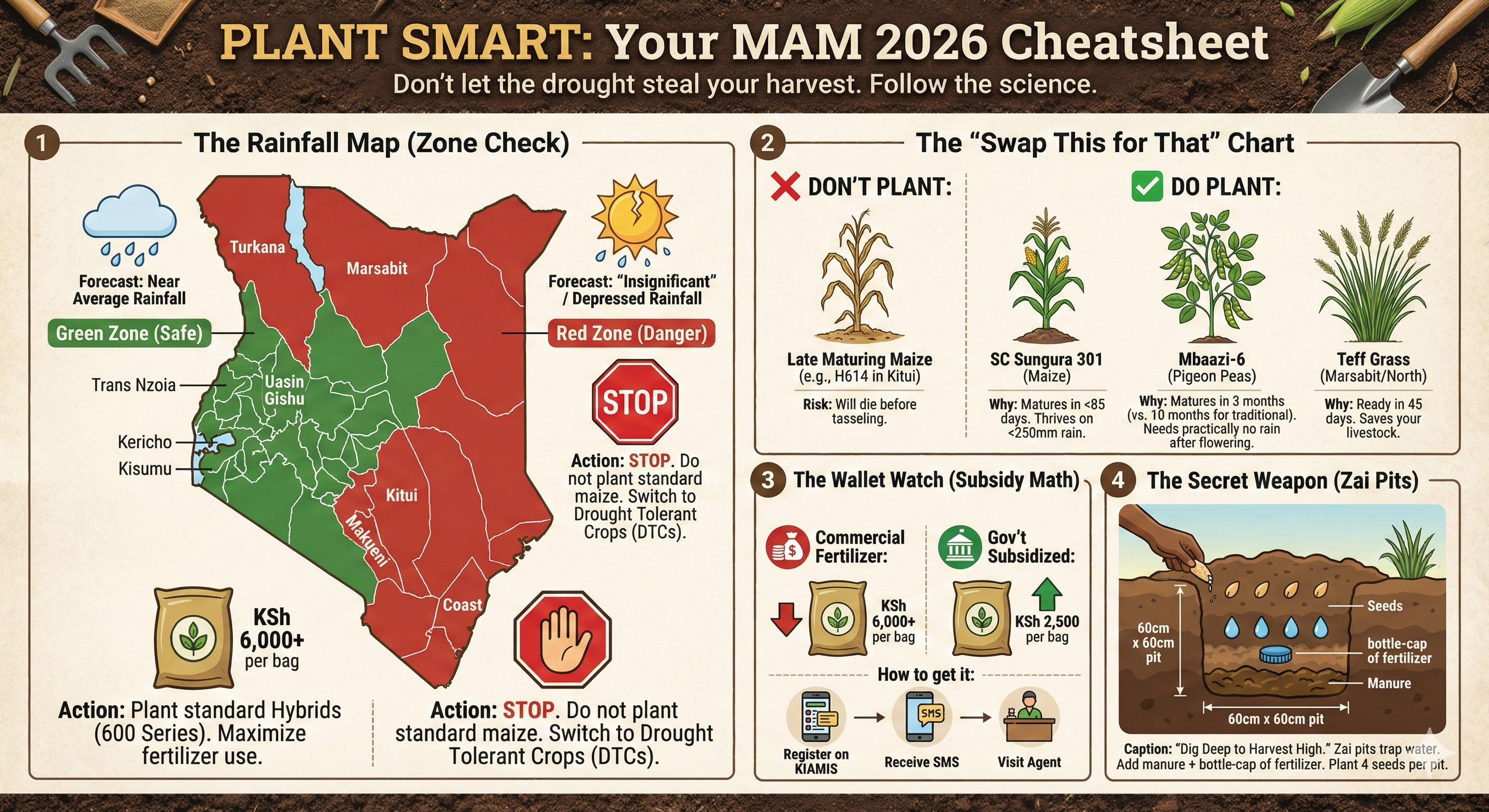
The Good News: If you are in the Highlands West of the Rift (Trans Nzoia, Uasin Gishu, Kericho) or the Lake Victoria Basin, get your tractors ready. The forecast predicts near-average to above-average rainfall. This is the green light for high-yield maize farming.
The Warning: For farmers in the Southeastern Lowlands (Kitui, Makueni), Northeastern, and the Coast, the forecast is tough. You are facing “near-average to below-average” rainfall, with a high chance of insignificant rains—meaning showers that wet the dust but don’t sustain a crop.
The Takeaway: Don’t copy your neighbor in Eldoret if you live in Machakos. The government is urging everyone to plant, but what you plant matters more than ever.
West: Go for maximum yield (600 series maize).
East/North: Go for survival (fast-maturing crops).
References:
Nairobi Leo Kenya Met Issues March-May 2026 Long Rains Forecast
Daily Nation End of drought in sight, but coming rains will be insignificant for arid regions
All Africa Above-Average Rains Expected in Key Regions, Weatherman Warns of Dry Spells Elsewhere
In an era marked by fluctuating weather patterns and volatile market demands, leaving fields fallow while waiting for the next planting season is increasingly becoming a missed opportunity for Kenyan farmers. Off-season vegetable production presents a compelling alternative, transforming idle land into a hub of year-round productivity and profitability. By leveraging advanced farming techniques—such as protected cultivation, targeted irrigation, and specialized seed varieties—farmers can maintain high levels of agricultural activity, even when traditional conditions for planting are less favorable. This approach circumvents supply chain gaps and volatile pricing by providing a stable influx of crops during lean periods when demand is high, boosting farm incomes notably.
Arjun Agriculture World Report
Turning fallow fields into productive assets, off-season vegetable production improves land productivity, an especially attractive option for smallholder farmers contending with limited acreage. Through continuous and diverse cropping, this alternative farming method amplifies land output, countering the constraining effects of dwindling land resources. By cultivating diverse, high-value crops continuously, farmers not only elevate their financial prospects but also make significant strides toward enhancing food security. Off-season farming ensures a reliable supply of nutritious vegetables, addressing malnutrition and seasonal food shortages prevalent in rural communities. Technologies such as heat-tolerant plants, cost-effective rain shelters, and plant growth regulators enable farmers to navigate climatic variability while maximizing yields. This strategy not only transforms the landscape of agriculture in Kenya but also epitomizes a paradigm shift towards sustained economic growth through strategic land use.
Addressing the challenges linked to adopting off-season agriculture invites an engaging dialogue on how Kenyan farmers can collectively embrace this transformative strategy. We encourage you, our readers, to share your insights on empowering farmers to turn idle periods into productive opportunities. How can we make necessary investments in infrastructure—like greenhouses and protective shelters—more accessible to smallholders? Maybe innovative solutions such as micro-financing or government-backed subsidies hold the key to unlocking this potential. Additionally, with the heightened pest and disease risks during off-seasons, what role do you see for Integrated Pest Management (IPM) in creating a sustainable pest control ecosystem? Perhaps you have experiences or innovative ideas about training programs to equip farmers with essential skills in water management, crop selection, and sustainable practices. This open conversation is crucial for crafting strategies that make year-round farming a reality. We invite you to contribute your perspectives, share success stories, or propose novel solutions to foster interactive learning and collaboration within the farming community. Your input is vital as we work together to redefine food security and economic resilience in Kenya, nurturing a vibrant and globally competitive agribusiness sector. Join the conversation, inspire change, and help shape a sustainable agricultural future.
References:
Nation Come rain or sunshine, our crops thrive and we sell produce off season
Science Direct Farmer training in off-season vegetables: Effects on income and pesticide use in Bangladesh
Harvest Money Off-Season The Best Time To Grow Vegetables For Profit
 Jijuze