The Future Grid: Where Africa’s Power and Politics Collide.

Africa’s energy landscape is shifting faster than at any time in its postcolonial history. From North Africa’s nuclear ventures to Southern Africa’s hydrogen ambitions, the continent is quietly constructing a new map of power — one defined not by oil reserves, but by grid capacity and global alliances. Russia and China are embedding influence through nuclear partnerships; the United States and Europe counter with renewables and clean-tech financing. Across the continent, energy has become the new currency of diplomacy. The story is no longer about light bulbs and power stations — it’s about sovereignty, soft power, and survival. And in this unfolding drama, Kenya stands at the intersection of ambition and caution, armed with geothermal prowess, nuclear dreams, and the burden of fiscal fragility.
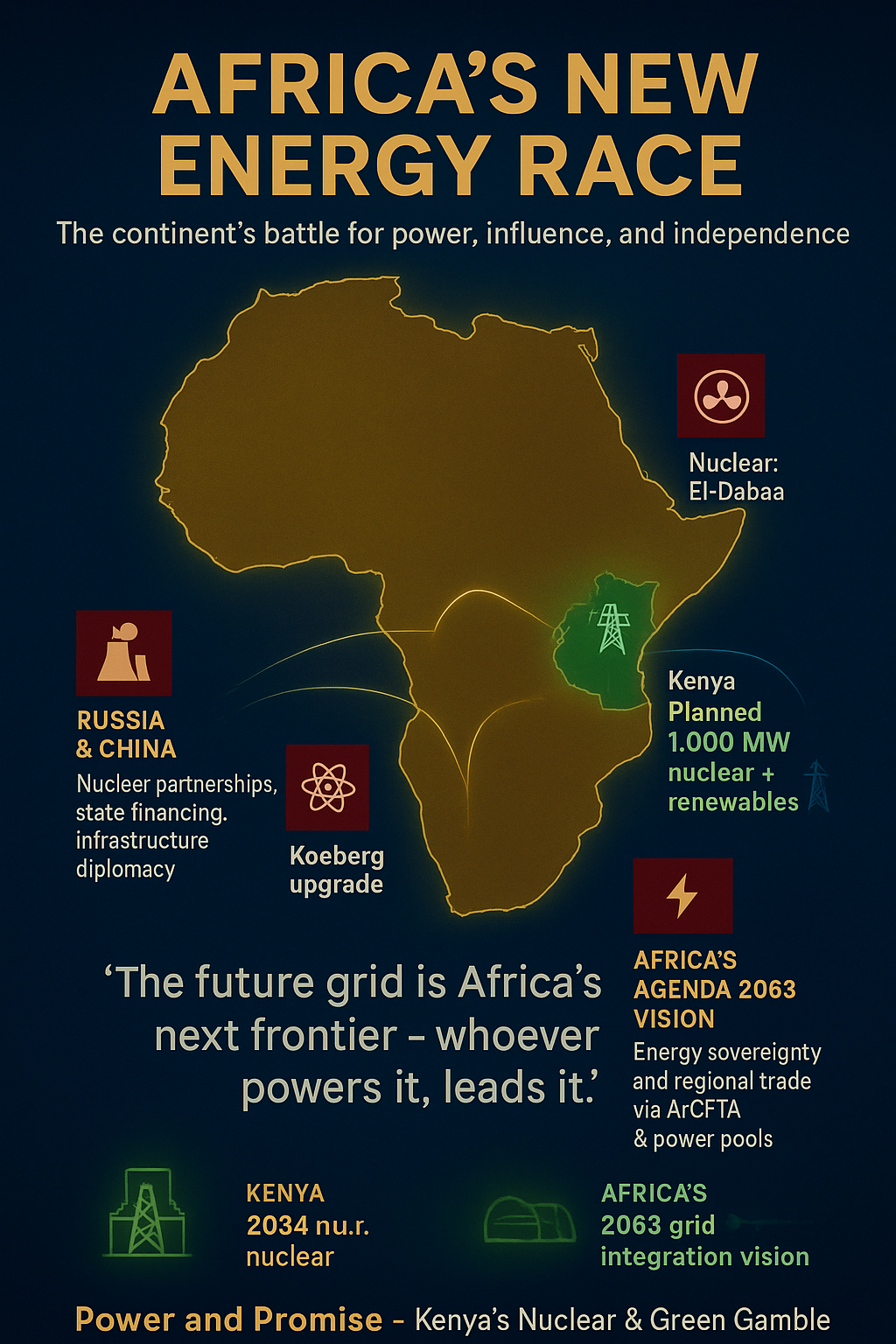
Kenya’s choices now echo far beyond its borders. Once hailed as Africa’s renewable beacon, the nation’s dual pursuit of nuclear energy and grid modernization could redefine East Africa’s energy future — or divide it. Egypt’s El-Dabaa reactor is already nearing completion; South Africa is upgrading its Koeberg plant; and Uganda and Ghana are moving from feasibility to formal partnerships. Kenya, strategically perched in the Eastern Africa Power Pool, holds the potential to become a regional energy exporter, a stabilizer in a volatile market. Yet that promise hinges on policy discipline and trust — two currencies Kenya is struggling to sustain. Its fiscal instability, opaque power contracts, and political indecision risk eroding the credibility needed to lead the continental transition. The dream of an integrated African grid may depend less on megawatts and more on governance — and Kenya’s ability to align vision with viability.

The next decade will determine whether Kenya emerges as a powerful nation or merely a powered one. To lead Africa’s energy race, it must balance ambition with accountability, geopolitics with pragmatism. This is not just about building reactors or expanding wind farms — it’s about mastering the grid as an instrument of economic independence and continental diplomacy. The nuclear plant, if realized, will stand not merely as a symbol of technological progress, but as a test of strategic maturity. For Africa, and Kenya especially, the energy race is no longer about who generates power — it’s about who commands it. The atom, the turbine, and the tariff are now the instruments of influence. Kenya’s gamble could define not just its own future, but the direction of Africa’s entire energy destiny.

References:

Sollay Kenyan Foundation Navigating the Challenges of Kenya’s Energy Crisis in 2025

Semafor Africa’s top bank has a fresh chance to bet on nuclear

Observer Research Foundation Advantage China in Africa’s nuclear energy market race

Intellinews More than 20 African countries exploring potential of nuclear energy – IAEA report

IEA Kenya’s energy sector is making strides toward universal electricity access, clean cooking solutions and renewable energy development

Daily Nation Why Kenya is losing its position as regional energy sector leader
Conservation Challenges in Kenya’s Maasai Mara Region

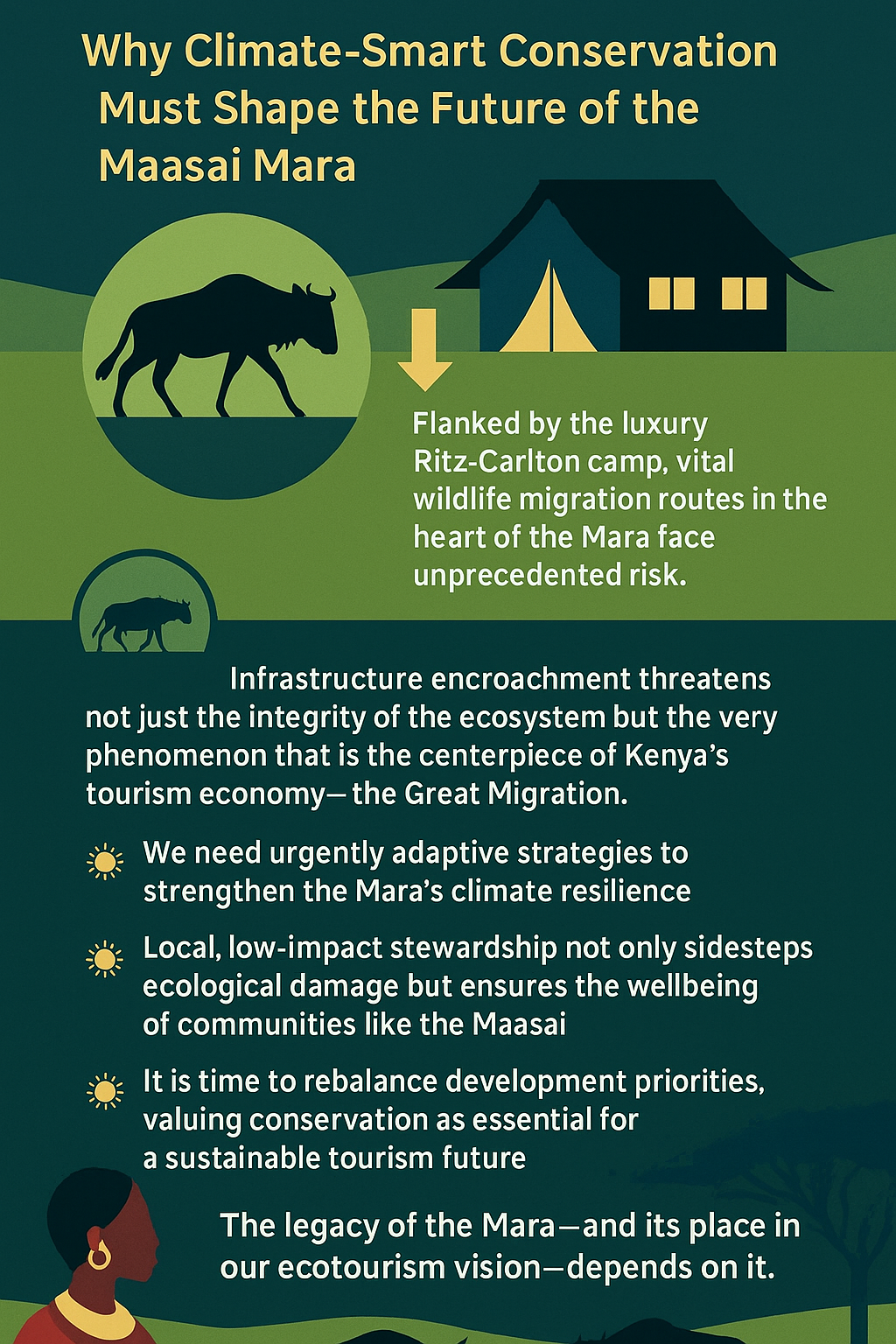
The Maasai Mara, one of the last remaining wild frontiers of Africa’s Great Migration and a cornerstone of Kenya’s ecotourism economy, now faces one of the gravest threats in its recent history—not from drought, poaching, or climate change alone, but from unchecked commercial expansion. A controversial plan to construct a high-end hotel complex and convention centre within the fragile Pardamat Conservation Area has triggered fierce opposition from environmental experts, conservancy leaders, tourism stakeholders, and sections of the local Maasai community. The development, backed by county government actors and private investors, was initially celebrated as a boost to job creation and conference tourism. But critics warn it could irreversibly damage the very ecosystem that draws visitors—and revenue—to the region.

At the heart of the concern is the ecological fragility of the Pardamat area, a critical corridor for wildebeest, elephants, and other migratory species. The proposed construction site borders sensitive wildlife routes and overlaps with communal land managed under an innovative conservation model that merges livestock grazing with wildlife protection. Experts argue that the scale and permanence of such infrastructure threaten to fragment habitat, displace species, and compromise the authenticity of the Mara’s wilderness appeal. Already, irregular land sales, fencing, and proliferation of unregulated camps have altered key migratory paths—choking the ecosystem and undermining decades of community-led conservation gains.

What the Mara needs is not another luxury venue, but a decisive pivot toward climate-smart, community-anchored ecotourism. This means planning developments in harmony with nature, prioritizing low-impact, mobile tourism models, and bolstering scientific land-use policies that preserve migratory corridors and biodiversity integrity. Kenya’s international tourism reputation—and its ability to withstand climate volatility—depends on how well we defend and innovate around natural heritage sites like the Mara. The future must be shaped not by profit margins alone, but by policies rooted in ecological wisdom, community ownership, and a long-term vision for a resilient, inclusive conservation economy.

References:

Spa Opportunities Marriott to open luxury safari camps in Kenya under JW Marriott and Ritz-Carlton brands, with architecture by LW Design

The Star Narok county defends Ritz-Carlton Safari Camp amid conservation criticism

The Standard County contests claims that new safari camp is obstructing wildlife

The Ritz Carlton The Ritz-Carlton, Masai Mara Safari Camp

EACOP Insights: Funding Strategies for Kenya’s Oil Sector

In a significant stride for East African energy, Uganda’s ambitious East African Crude Oil Pipeline (EACOP) project has recently secured a crucial funding boost, signaling a move towards the realization of this multi-billion dollar infrastructure. This development offers a wealth of insights for neighboring Kenya, which also harbors considerable aspirations in the oil and gas sector. While Uganda’s EACOP has navigated a complex landscape of financing challenges and environmental concerns to reach this milestone, Kenya’s own oil development plans, particularly in the South Lokichar basin, have faced delays and the withdrawal of key investors. The contrasting progress underscores a valuable opportunity for Kenya to learn from Uganda’s experience, especially in securing the necessary financial backing and managing the intricate environmental and social considerations that come with large-scale energy projects. As Kenya seeks to tap into its hydrocarbon resources for economic growth, the strategies employed and the hurdles overcome by the EACOP project provide a compelling case study in the realities of the regional energy landscape.

A Report by EACOP (March 2025)

Several key lessons emerge for Kenya from Uganda’s journey. Securing funding in an era of increasing climate consciousness requires a diversified approach, potentially looking beyond traditional Western financial institutions to engage with regional banks and explore partnerships with entities that have different investment priorities. Furthermore, proactively addressing environmental and social concerns through transparent impact assessments, robust mitigation plans, and genuine community engagement is paramount to minimize opposition and enhance project bankability. Uganda’s experience highlights the critical need for a strong and consistent government commitment, coupled with a stable and predictable regulatory environment, to build investor confidence. For Kenya, this means streamlining regulatory processes, ensuring policy consistency, and prioritizing the implementation of stringent environmental standards and community-focused initiatives from the outset. Building strong and stable relationships with international oil companies, ensuring transparency in agreements, and investing in essential infrastructure are also crucial takeaways for Kenya as it navigates the complexities of developing its oil and gas sector.

However, Uganda’s EACOP project has not been without its challenges, facing significant environmental opposition and concerns about social displacement. These potential pitfalls offer further learning points for Kenya. Proactive engagement with environmental stakeholders, prioritizing fair compensation and resettlement plans for affected communities, and striving for maximum transparency in all aspects of the oil and gas sector are essential to avoid similar controversies. Kenya must also be mindful of the broader risks associated with resource extraction, such as the “resource curse,” and implement sound economic policies to ensure long-term sustainable development. By carefully analyzing Uganda’s experience – both its successes in securing funding and the controversies it has faced – Kenya can strategically refine its own approach to oil and gas development, aiming for a path that is both economically beneficial and environmentally and socially responsible, ultimately positioning itself as a stable and attractive player in the regional energy market.

References:

Reuters Uganda’s $5 billion EACOP pipeline gets funding boost

Monitor EACOP secures funding as Uganda eyes oil production next year 

Jijuze Kenya’s Oil and Gas Ambitions: Opportunities and Challenges

Pumps Africa Kenya to restart licensing of oil and gas blocks

UN Environment Programme Greasing the wheels of Kenya’s nascent oil and gas sector

Pipeline & Gas Journal EACOP Secures First Tranche of Funding for $5 Billion Uganda-Tanzania Pipeline

Kenya’s Oil and Gas Ambitions: Opportunities and Challenges

Kenya is intensifying its efforts to become a significant oil and gas producer, with the government introducing various incentives to attract global investors. This ambition builds on a history of exploration that began in the 1950s and led to the notable discovery of commercially viable oil in the South Lokichar Basin in 2012. Despite this potential, sustained commercial production has remained elusive. The government’s latest strategy involves a licensing round for ten promising oil and gas blocks, scheduled for September 2025. Alongside this, the government is offering tax incentives and flexible terms for Production Sharing Contracts, signaling a strong commitment to developing the sector. Investments in crucial infrastructure, such as the expansion of Lamu Port and the advancement of the Lamu-Lokichar pipeline project, are also underway to support exploration and future production.

A Citizen Digital Report (2022)

However, Kenya’s journey in oil and gas exploration has encountered numerous obstacles. While early efforts identified hydrocarbon presence in basins like Lamu and Anza, they were largely unsuccessful in achieving commercial viability. Logistical challenges, particularly the absence of a reliable pipeline to transport oil from the Turkana region to the coast, have been a major hindrance. Environmental concerns and the critical need for responsible resource management, along with the imperative of fostering positive relationships with local communities, have also posed significant challenges. The substantial oil reserves in the South Lokichar Basin, estimated at 2.85 billion barrels, have yet to be fully exploited due to these infrastructure deficits, coupled with economic uncertainties linked to fluctuating global oil prices and the substantial upfront capital required for development. Regulatory complexities and the evolving global energy landscape, with its increasing emphasis on renewable energy sources, have further complicated the path to commercial production. The recent withdrawal of key partners from the Lokichar project has also added to the existing difficulties.

Experts suggest that while Kenya’s oil and gas sector holds considerable promise, particularly with the untapped potential in various sedimentary basins, realizing this potential depends on effectively addressing the current challenges. Key recommendations for the Kenyan government include accelerating the development of essential infrastructure, most notably the Lokichar-Lamu pipeline, and enhancing the regulatory framework to provide greater clarity and attract sustained investment. Offering competitive fiscal terms, actively pursuing strategic partnerships, and ensuring transparency and good governance within the sector are also deemed crucial. Moreover, prioritizing sustainable and responsible resource management practices, alongside meaningful engagement with local communities and the promotion of local content, are vital for the long-term success and social acceptance of oil and gas development in Kenya. By drawing lessons from international case studies of successful oil and gas development and focusing on these critical areas, Kenya aims to convert its hydrocarbon aspirations into tangible economic progress and development.

References:

The Star Kenya to avail 10 oil and gas blocks to investors

The Standard Kenya to restart licensing of 10 oil and gas blocks in September

AInvest Oil Daily | Kenya Launches Oil Block Bidding, API Reports U.S. Crude Inventory Drop, ONGC Diversifies

Africa Energy Setback for Kenya’s Oil Ambitions as Tullow Oil’s Field Development Plan Faces Rejection

Pumps Africa Oil and Gas Pricing Trends in Africa: Challenges, Opportunities, and Future Outlook

Upstream TotalEnergies and Africa Oil quit Kenya oil project, leaving Tullow without partners

Is Lake Nakuru’s Ecosystem at Risk Due to Pollution and Illegal Fishing?

Lake Nakuru National Park, a renowned Kenyan wildlife sanctuary and UNESCO World Heritage Site, is facing a multifaceted crisis. While celebrated for its breathtaking scenery and diverse wildlife, the park is grappling with encroachment, illegal fishing, and escalating sociopolitical and moral conflicts. These issues are intertwined with the adverse effects of pollution, primarily from untreated sewage and industrial waste discharged into the lake from Nakuru town. This pollution not only contaminates the water and renders the fish unsafe for human consumption but also disrupts the delicate balance of the ecosystem, threatening the survival of various species and the livelihoods of surrounding communities.

A Report by Nakuru Today

The presence of fish in Lake Nakuru, once a predominantly saline lake, adds another layer of complexity to this crisis. The introduction of fish, primarily tilapia, can be traced back to an accidental spill from a fish farm uphill in the 1960s. This incident, coupled with the rising water levels that began in 2010, transformed the lake’s environment, making it more habitable for freshwater fish. The rising waters also submerged riparian land, displacing communities and intensifying human-wildlife conflicts. As a result, many residents turned to fishing as a source of livelihood, leading to a surge in illegal fishing activities despite the ban and health risks associated with consuming contaminated fish.

This situation has given rise to a clash between conservation efforts and the socioeconomic needs of local communities. While the Kenya Wildlife Service (KWS) enforces regulations against fishing and encroachment, impoverished communities view the lake as a vital resource for survival. This tension is further exacerbated by allegations of brutality and abuse of power by KWS officers against individuals caught fishing . Addressing this crisis requires a comprehensive approach that prioritizes pollution control as a means to restore the lake’s ecosystem and ensure the safety of the fish. This would pave the way for regulated fishing activities that benefit local communities while upholding conservation goals. Furthermore, fostering dialogue and collaboration between KWS and the community, ensuring ethical conduct within KWS, and promoting alternative livelihood opportunities are crucial steps towards achieving a sustainable and just solution.

References:

Nation The slow death of Lake Nakuru

Mtaa Wangu Nakuru X Space discussion reveals deeper issues in Lake Nakuru fishing menace

Kenya News Agency Uncertain future for wildlife and native plant species at Lake Nakuru National Park as invasive plant species wipe out grasslands and strangle natural fauna

Radio Baraza The Threat to Nakuru’s Green Belt: Human Encroachment Endangers a Vital Ecosystem