Jijuze

The Kenyan News Digest

Menu

Skip to content
  • Home
  • Contact

Tag Archives: CBK

INFLATION IN KENYA | Rising cost of living

Posted on August 18, 2011 by Dickens

The shilling has weakened against major international currencies, continuing to cost firms, and in the long run, the consumers. Firms buying raw materials in foreign currencies have been forced to factor in an element of exchange-rate in their production costs hence, the rise in prices of products and services. When prices rise, each unit of currency buys fewer goods and services thus the decrease in real value for money and monetary items over time. Most production firms rely on the energy sector; for instance, Kenya Power and Ken Gen buy oil in US dollars, and have to factor in depreciation of the Kenyan shilling, in the cost of production, thus, consumers feel the effects of the weakening shilling in paying higher electricity tariffs.

A weak shilling
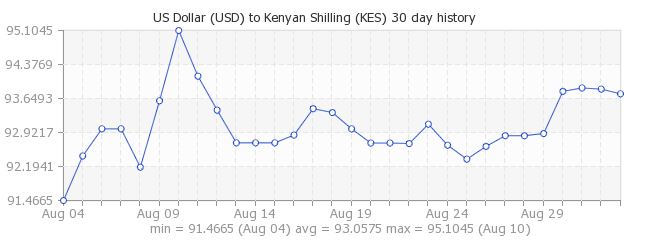
USD-KES-30-day-exchange-rates-history-graph

High rates of inflation lead to inefficiency in a market economy and, in the medium to long term, a lower rate of economic growth. Movements in the general price level are influenced by the amount of money in circulation, and productivity of the various economic sectors. The Central Bank of Kenya regulates the growth of the total money stock to a level that is consistent with a predetermined economic growth target as specified by the Government and outlined in its Monetary Policy Statement. Inflation reduces the value of money thus; a currency will depreciate in value. Firms will try to exchange the Kenyan shilling for other currencies, which will hold value, thus, causing the shilling to weaken. To finance large National debts, the government may sometimes print more money causing a surge in inflation. When a country imports more goods and services than it exports, it causes a currency account deficit. To finance this deficit, the government will require a surplus on the financial/capital account, by attracting capital flows e.g. Iceland had a current account deficit of around 7% of GDP, their banks had higher interest rates thus attracted UK councils to save their money in the Icelandic banks. Because of the capital inflows from abroad, the Icelandic economy could continue to finance its current account deficit. However, the problem comes when; a country can no-longer  finance this deficit, when the country can no longer attract capital inflows. Due to economic recession in Iceland, there was more money leaving Iceland than coming in. This was reflected in the exchange rate. When capital inflows dry up this will actuate depreciation in the exchange rate.

If there is a collapse in confidence in an economy, or the financial sector, this will lead to an outflow of currency as people don’t want to risk losing their value for money. Therefore this causes an outflow of capital and depreciation in the exchange rate.

Currency Mean Buy Sell Date
1 US DOLLAR 93.1361 93.0306 93.2417 18.Aug.2011
2 STG POUND 153.8709 153.6775 154.0643 18.Aug.2011
3 EURO 134.0925 133.9261 134.2589 18.Aug.2011
4 SA RAND 13.0786 13.0508 13.1064 18.Aug.2011
5 KES/USHS 29.8758 29.7078 30.0439 18.Aug.2011
6 KES/TSHS 17.4477 17.3742 17.5211 18.Aug.2011
7 AE DIRHAM 25.3577 25.3275 25.3878 18.Aug.2011
8 JPY(100) 121.5086 121.3185 121.6987 18.Aug.2011
9 CHINESE YUAN 14.5826 14.5654 14.5998 18.Aug.2011

Forex Market Indicative Rates for Major Currencies (Opening of Markets)


References:

Inflation Wikipedia.org August 18, 2011

Consumer Price Index Google Docs (as of) August 18, 2011

Electricity Bills May Go Up-Again allAfrica.com August 18, 2011


Posted in Business, International, News, Politics | Tagged account, CBK, consumers, council, country, Economy, GDP, government, green energy, interest, kenya, market, Policy, politics, rate, shilling, UN

MOBILE BANKING | Success in Kenya

Posted on August 11, 2011 by Dickens

Experts have described mobile money as the future of banking. The success story of Safaricom’s M-PESA service in particular, has had many pondering on the factors that have led to its unparalleled achievements.

Perhaps the most outstanding reason would be; the cell phone operator (Safaricom) offers banking services to previously unbanked customers. “Where previously people with no access to banks would have had to rely on cash, even for sending money far distances, they can now transfer money more securely via their cell phones” African Business Review reported. Auditing firm Ernst and Young was put on record on July 8, 2011 saying, “Mobile money represents greater convenience to end users as payments move away from paper transactions.” “Setting up a bank account on your phone is straightforward. All you do is register with an approved agent, provide your phone, along with an ID card, and then deposit some cash onto your account” BBC reported. Actually, what has stimulated the success of mobile banking in Kenya is the fact that banks append high transaction fees per transaction, on one hand, thus, as the past head of M-PESA Business Operations, Pauline Vaughan, said, it is that gap in the market that mobile phone banking is targeting, on the other hand. However, users of the M-PESA service are “allowed to send up to Sh70,000 in a single transaction, meaning that they incur double transaction charges to send the daily limit” of Sh140,000. In an email response to the governor of Central Bank of Kenya-Njuguna Ndung’u, early this year, Bob Collymore, Safaricom’s CEO, said that, “the company has been working closely with the CBK on transaction charges for M-PESA.” That aside, “an agreement signed at the end of March 2011 with Western Union, the US firm specializing in money transfers, allows funds to be transferred to mobile phones with an M-PESA account from 80,000 Western Union agencies in 45 countries” Proxima mobile reported.

Safaricom partners with Western Union


Well, some will argue that it is an expansion of an already successful, stand-alone service, but I look at it as a leeway for western contamination of a wholly indigenous innovation. Which side of the bread is buttered?

What’s Your Say?

References:

Africa sprints ahead with mobile banking African Business Review August 9, 2011

Marketing mobile money The Citizen July 8, 2011

Kenya’s M-PESA mobile payment service goes international Proxima mobile May 19, 2011

Africa’s mobile banking revolution BBC August 12, 2009

Cut Transfer Costs, Central Bank Tells Mobile Phone Firms in Kenya Balancing Act February 4, 2011


Posted in Business, International, News, Technology | Tagged account, bank, business, cash, CBK, country, deal, funds, kenya, M-PESA, market, mobile cell, money, operator, phone, Safaricom, send, service, success, transaction, Western Union

Recent Posts

  • Kenya’s Circular Economy Moment — A 10-Year Blueprint for What Comes Next
  • The Innovations That Will Separate Circular Leaders from Laggards
  • Why Circular Economy Projects in Africa Fail — And Why Kenya Is Still at Risk
  • Kenya’s Regional Advantage — How the Country Can Lead East Africa’s Circular Economy
  • Financing Kenya’s Circular Future — The Capital Architecture Required for the Next Decade

Recent Comments

Brian Nyabuti's avatarBrian Nyabuti on When the Lights Cost Too Much:…
Mark's avatarMark on When the Lights Cost Too Much:…
Conservation Challen… on Conservation Challenges in Ken…
Digital Dilemmas: Ke… on Privacy vs. Security — Kenya’s…
The Top 10 Oil and G… on Kenya’s Oil and Gas Ambi…

Archives

  • December 2025
  • November 2025
  • October 2025
  • September 2025
  • August 2025
  • July 2025
  • June 2025
  • May 2025
  • April 2025
  • March 2025
  • February 2025
  • January 2025
  • December 2024
  • November 2024
  • October 2024
  • September 2024
  • August 2024
  • July 2024
  • June 2024
  • August 2012
  • May 2012
  • March 2012
  • February 2012
  • November 2011
  • September 2011
  • August 2011
  • July 2011
  • June 2011
  • May 2011
  • April 2011
  • March 2011
  • February 2011

Categories

  • Agriculture
  • Business
  • Educational
  • health
  • International
  • Lifestyle
  • News
  • Politics
  • Soccer
  • Sports
  • Technology
  • Tourism
  • Uncategorized

Meta

  • Create account
  • Log in
  • Entries feed
  • Comments feed
  • WordPress.com
A WordPress.com Website.
Privacy & Cookies: This site uses cookies. By continuing to use this website, you agree to their use.
To find out more, including how to control cookies, see here: Cookie Policy
  • Subscribe Subscribed
    • Jijuze
    • Already have a WordPress.com account? Log in now.
    • Jijuze
    • Subscribe Subscribed
    • Sign up
    • Log in
    • Report this content
    • View site in Reader
    • Manage subscriptions
    • Collapse this bar
 

Loading Comments...