The Maasai Mara, one of the last remaining wild frontiers of Africa’s Great Migration and a cornerstone of Kenya’s ecotourism economy, now faces one of the gravest threats in its recent history—not from drought, poaching, or climate change alone, but from unchecked commercial expansion. A controversial plan to construct a high-end hotel complex and convention centre within the fragile Pardamat Conservation Area has triggered fierce opposition from environmental experts, conservancy leaders, tourism stakeholders, and sections of the local Maasai community. The development, backed by county government actors and private investors, was initially celebrated as a boost to job creation and conference tourism. But critics warn it could irreversibly damage the very ecosystem that draws visitors—and revenue—to the region.
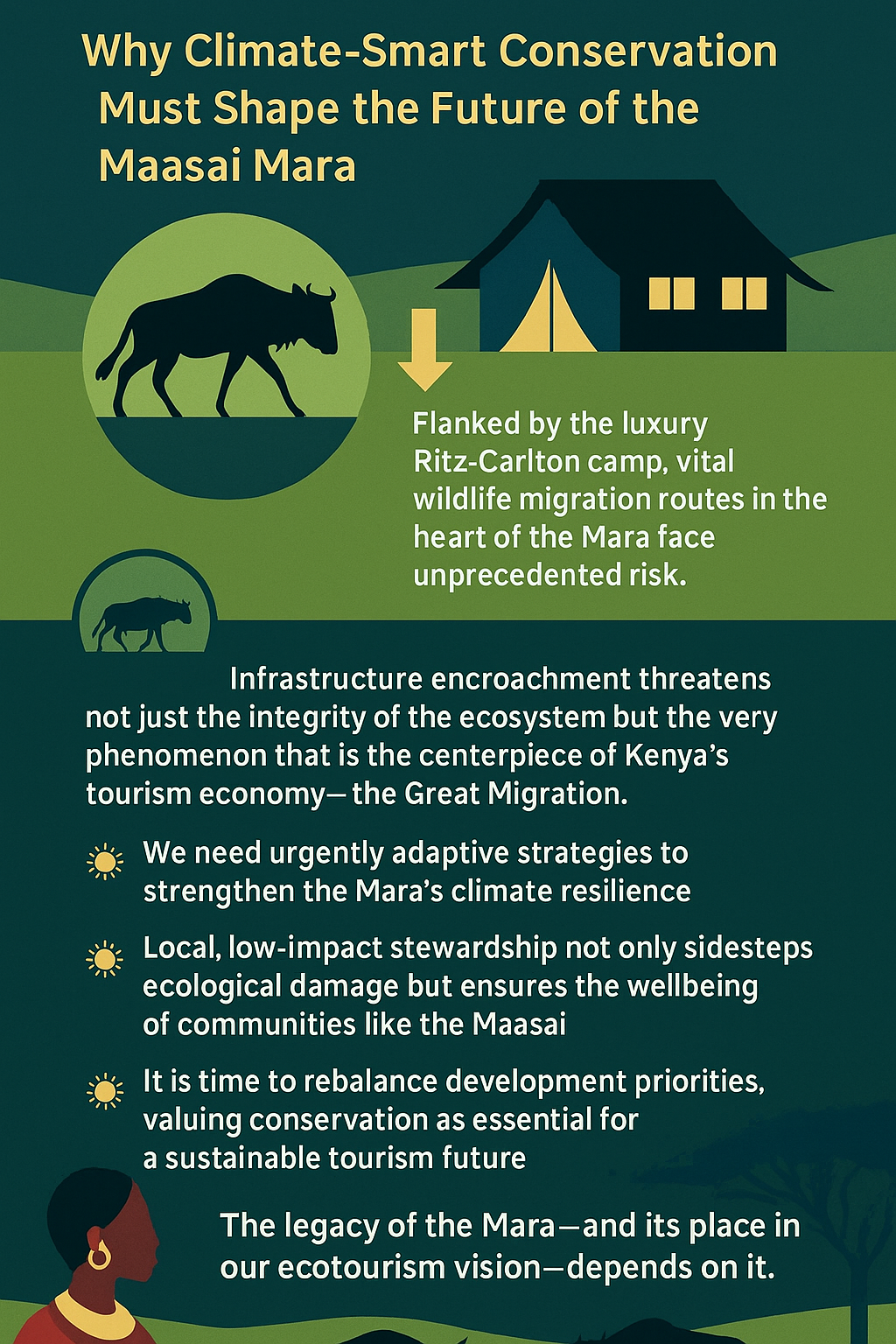
At the heart of the concern is the ecological fragility of the Pardamat area, a critical corridor for wildebeest, elephants, and other migratory species. The proposed construction site borders sensitive wildlife routes and overlaps with communal land managed under an innovative conservation model that merges livestock grazing with wildlife protection. Experts argue that the scale and permanence of such infrastructure threaten to fragment habitat, displace species, and compromise the authenticity of the Mara’s wilderness appeal. Already, irregular land sales, fencing, and proliferation of unregulated camps have altered key migratory paths—choking the ecosystem and undermining decades of community-led conservation gains.
What the Mara needs is not another luxury venue, but a decisive pivot toward climate-smart, community-anchored ecotourism. This means planning developments in harmony with nature, prioritizing low-impact, mobile tourism models, and bolstering scientific land-use policies that preserve migratory corridors and biodiversity integrity. Kenya’s international tourism reputation—and its ability to withstand climate volatility—depends on how well we defend and innovate around natural heritage sites like the Mara. The future must be shaped not by profit margins alone, but by policies rooted in ecological wisdom, community ownership, and a long-term vision for a resilient, inclusive conservation economy.
References:
Spa Opportunities Marriott to open luxury safari camps in Kenya under JW Marriott and Ritz-Carlton brands, with architecture by LW Design
The Star Narok county defends Ritz-Carlton Safari Camp amid conservation criticism
The Standard County contests claims that new safari camp is obstructing wildlife
The Ritz Carlton The Ritz-Carlton, Masai Mara Safari Camp
 Jijuze