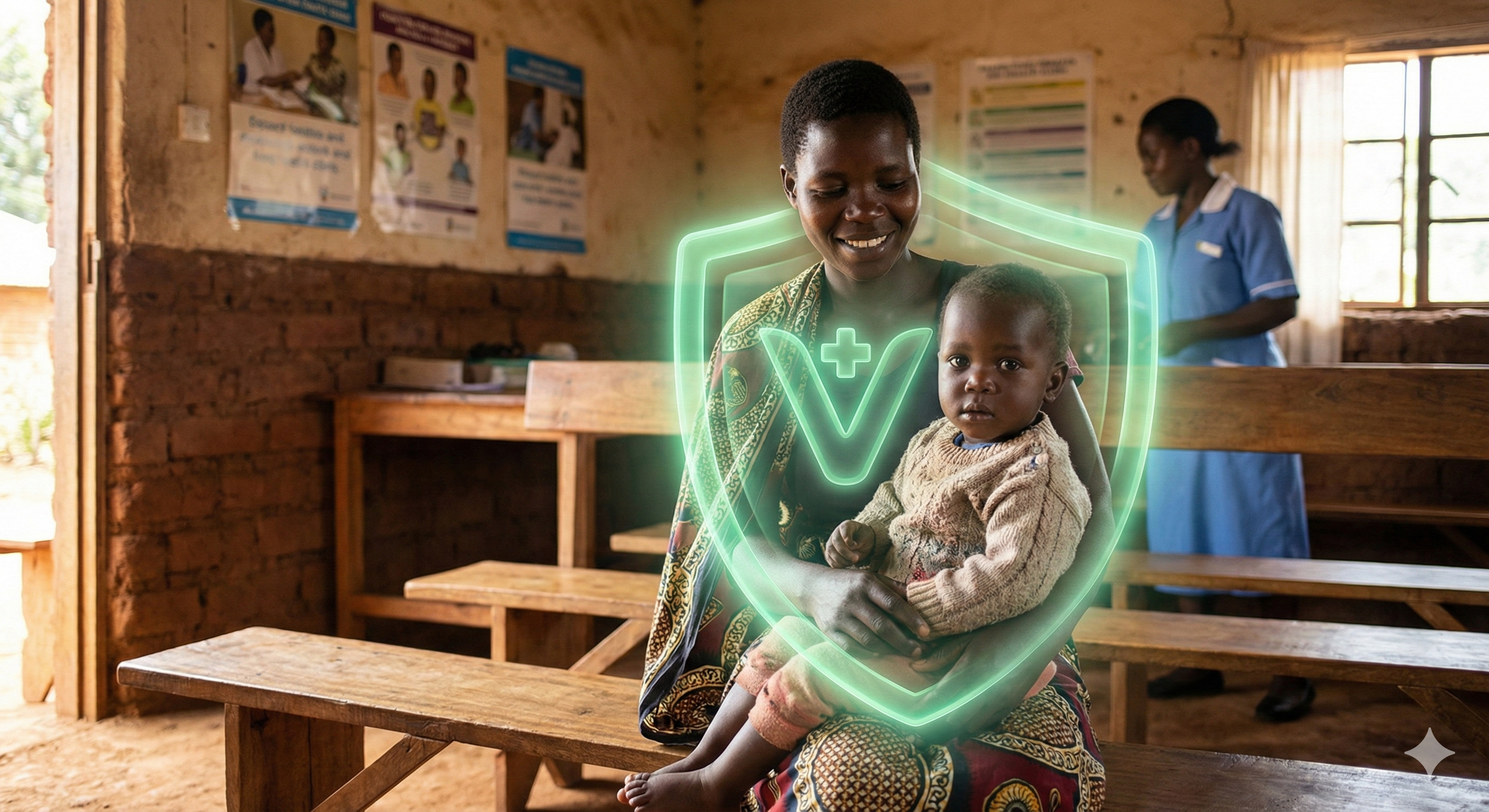
Kenya’s role as a pioneer in the Malaria Vaccine Implementation Programme has already saved lives, with a 13% reduction in child mortality observed in pilot regions. We are now entering a new phase with the rollout of the R21/Matrix-M vaccine, which is more cost-effective at approximately $3 per dose and boasts nearly 75% efficacy . Beyond vaccines, the 2025 approval of “Coartem Baby” marks the first treatment specifically formulated for infants weighing as little as 2kg .
However, the effectiveness of these high-tech “shields” is threatened by systemic disconnects. A fourth dose is required in the second year of life to maintain protection, yet many families face logistical and financial barriers to returning to the clinic . There is a persistent risk that advanced tools are being deployed in facilities plagued by drug stockouts and aging bed nets that have exceeded their three-year lifespan .
The 2024 El Niño rains served as a reminder of how quickly these systemic gaps can be exposed, causing spikes in transmission among children in poverty-stricken areas with poor drainage . While vaccines offer a high public health impact, their success is tied to the strength of the underlying health system. Without consistent investment in routine care and the replacement of old infrastructure, the protection offered by these new tools risks waning just as the parasite’s resistance rises .
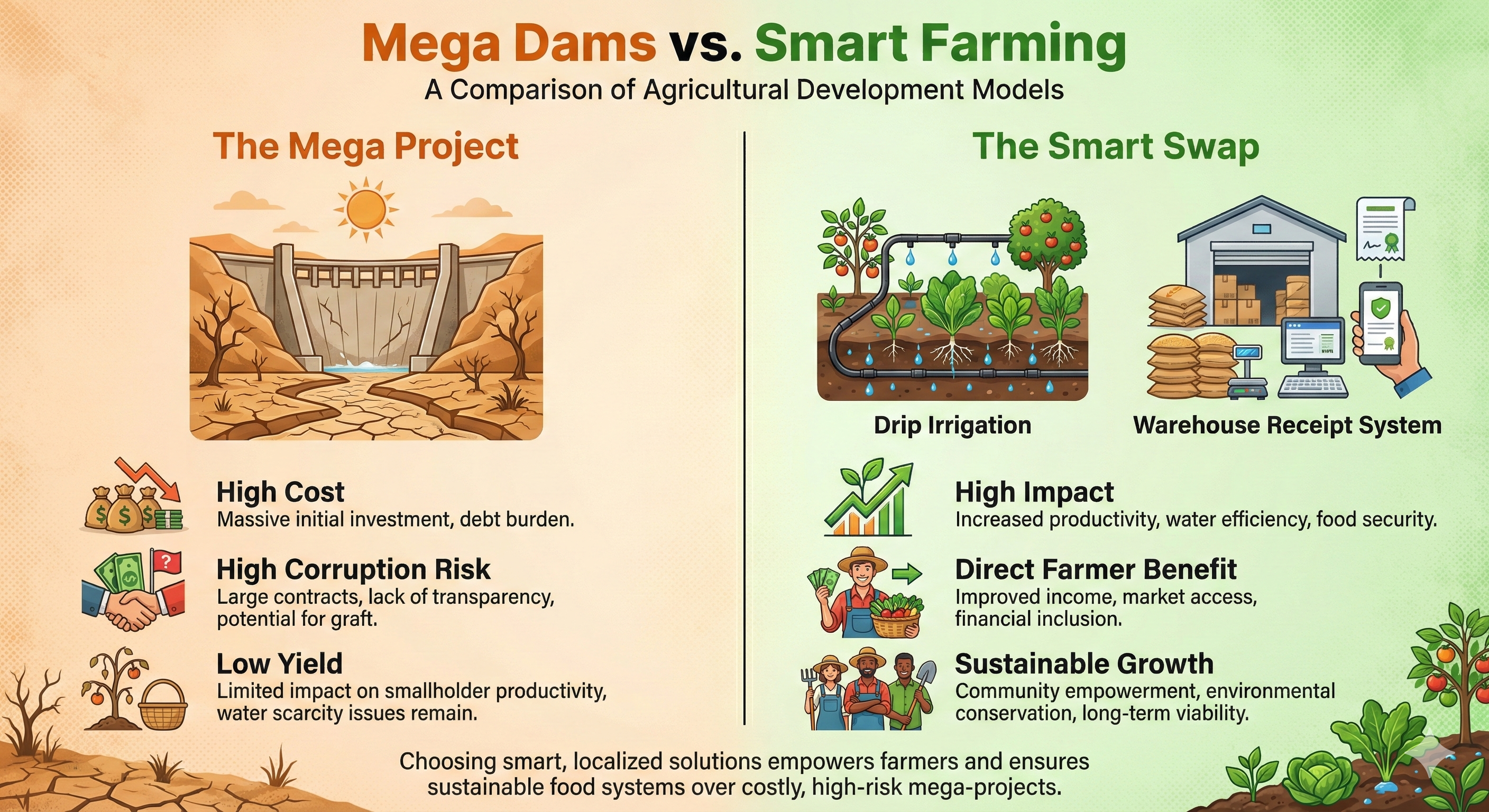
As the government targets 2 million acres for irrigation under the new debt swap initiative, the ghost of the Galana Kulalu project looms large. Just days ago, on January 26, 2026, the government announced plans for six new mega dams, signaling a return to the large-scale infrastructure strategy that failed so spectacularly in 2014. The original Galana Kulalu pilot consumed Sh7 billion to produce maize at costs higher than market price, collapsing under poor planning and corruption. Critics argue that repeating this “big dam” strategy ignores the hard-learned lessons of the past.
The disconnect is palpable. While the state plans mega-projects in arid lands, small-scale farmers—who produce the bulk of Kenya’s food—are struggling with basic input costs and lack of market access. The “savings” from the debt swap would likely yield higher returns if invested in decentralized solutions: household water pans, small-scale drip irrigation kits, and the Warehouse Receipt System (WRS) to help farmers store grain and avoid price exploitation by middlemen.
If the Sh129 billion is poured into another series of mega-dams, the funds risk being absorbed by contractors and consultants, leaving the country with more debt and no food. The success of this swap depends on shifting focus from concrete structures to the actual economics of farming—lowering production costs and ensuring profitability. Without this shift, we are merely “mixing oil and water” again, hoping that high-finance infrastructure will somehow trickle down to the grassroots.
References:
Capital Business Govt plans six mega dams, targets 2mn acres in irrigation push
The Star Government plans six mega dams, targets 2 million acres for irrigation push
🌦️ Wet West, Dry East: Why One Strategy Won’t Work for All in MAM 2026
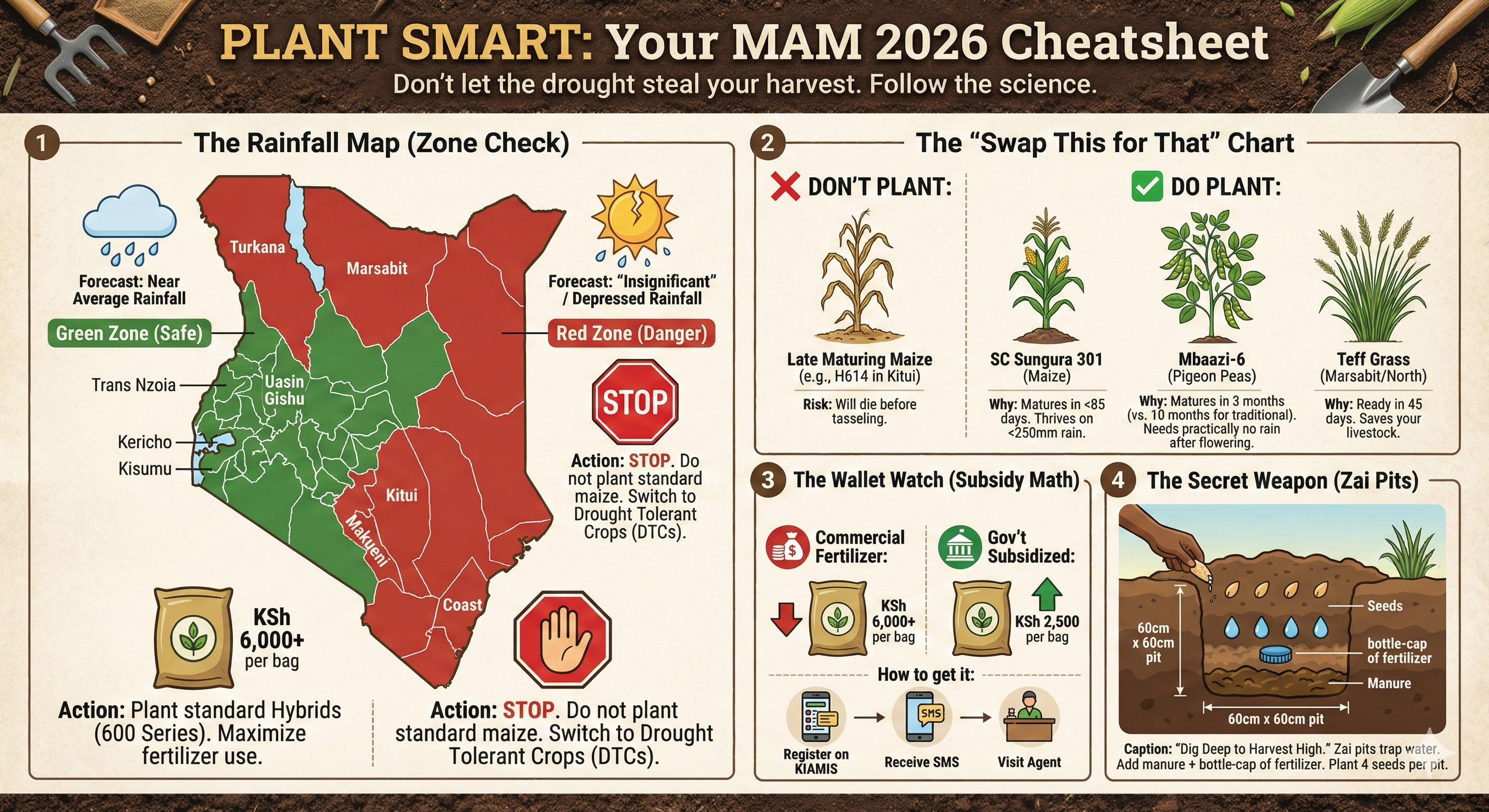
The Kenya Meteorological Department (KMD) has dropped its forecast for the March-April-May (MAM) long rains, and it paints a picture of two very different planting seasons.
The Good News: If you are in the Highlands West of the Rift (Trans Nzoia, Uasin Gishu, Kericho) or the Lake Victoria Basin, get your tractors ready. The forecast predicts near-average to above-average rainfall. This is the green light for high-yield maize farming.
The Warning: For farmers in the Southeastern Lowlands (Kitui, Makueni), Northeastern, and the Coast, the forecast is tough. You are facing “near-average to below-average” rainfall, with a high chance of insignificant rains—meaning showers that wet the dust but don’t sustain a crop.
The Takeaway: Don’t copy your neighbor in Eldoret if you live in Machakos. The government is urging everyone to plant, but what you plant matters more than ever.
West: Go for maximum yield (600 series maize).
East/North: Go for survival (fast-maturing crops).
References:
Nairobi Leo Kenya Met Issues March-May 2026 Long Rains Forecast
Daily Nation End of drought in sight, but coming rains will be insignificant for arid regions
All Africa Above-Average Rains Expected in Key Regions, Weatherman Warns of Dry Spells Elsewhere
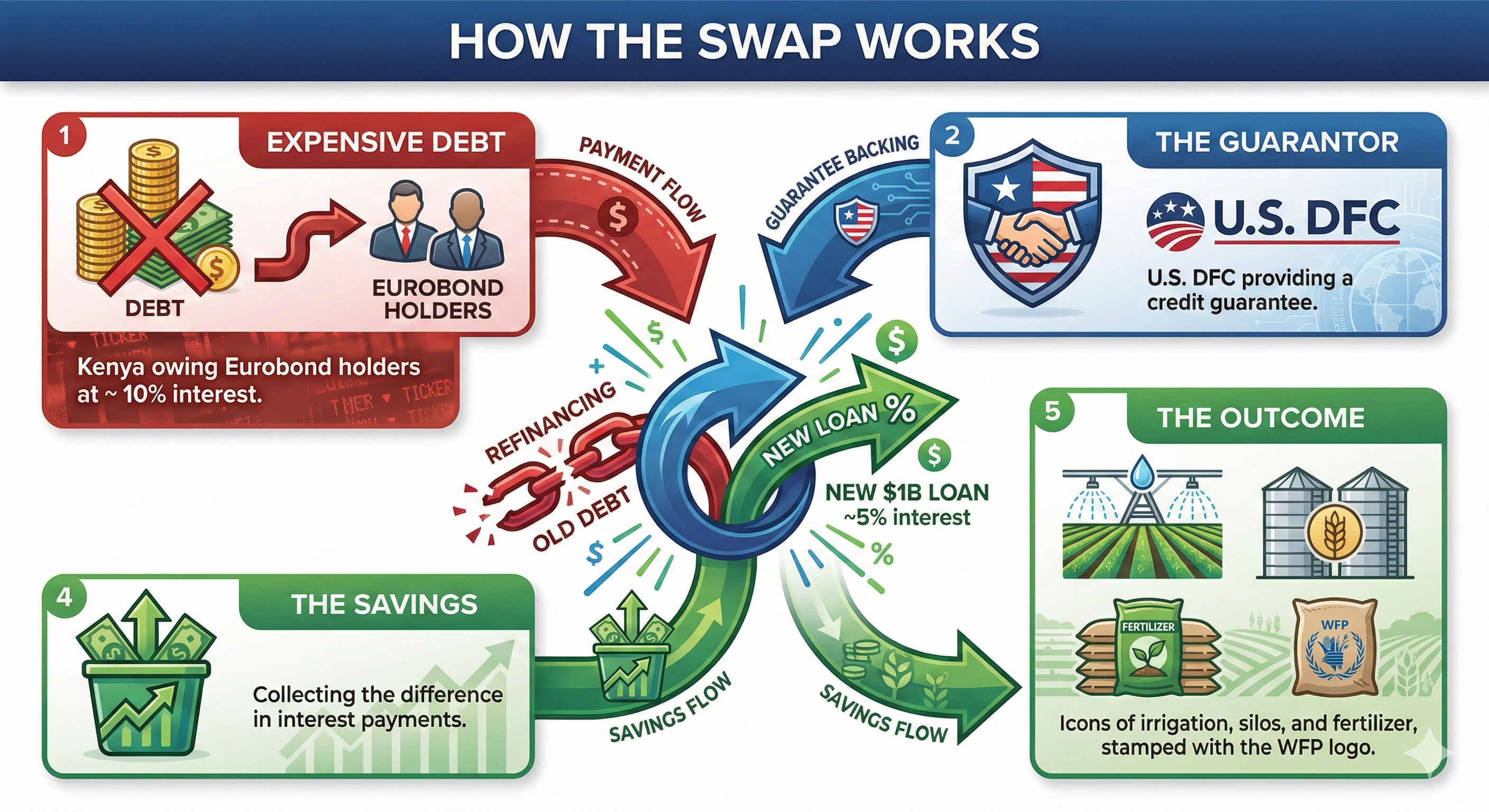
Kenya is on the verge of finalizing a landmark $1 billion (Sh129 billion) debt-for-food security swap, a sophisticated financial maneuver designed to rescue the country from a suffocating liquidity crunch. By leveraging a guarantee from the U.S. International Development Finance Corporation (DFC), the Treasury intends to refinance expensive Eurobond debt with cheaper, concessional loans. The plan is financially astute: it swaps high-interest commercial debt for lower-interest obligations, a move that prompted Moody’s to upgrade Kenya’s credit rating to B3 and stabilize the outlook on the nation’s sovereign debt.
However, the deal comes with a catch that transforms it from a simple refinancing operation into a complex development experiment. The interest “savings” generated from this swap must be ring-fenced and funneled directly into food security projects, managed in partnership with the World Food Programme (WFP). This arrangement effectively outsources a portion of national planning to an international body, admitting that the state needs external discipline to ensure funds aren’t diverted. While this stabilizes the shilling and pleases bondholders, it raises a fundamental question: is this a genuine strategy to feed the nation, or simply financial engineering to avoid default?
The stakes could not be higher. With 3.4 million Kenyans facing acute food insecurity and public debt service consuming over two-thirds of tax revenue, the government is betting that this “financial oil” can mix with the “water” of local agriculture without separating. If successful, it provides fiscal breathing room and lowers input costs for farmers; if it fails, Kenya will be left with the same debt burden and no improvement in the cost of living for the average wananchi.
No Bus Fare to the Podium: The Crisis Facing School Sports
The Ministry of Education released the 2026 National Co-Curricular Activities Calendar this week, signaling the return of rugby, athletics, and drama festivals to the school term. On paper, the stage is set for Kenya to groom the next generation of stars ahead of the Glasgow 2026 Commonwealth Games. However, a look at the school bank accounts reveals a disconnect that threatens to cripple Kenya’s sports pipeline. While the Ministry has disbursed capitation—including a “Games Fund” vote head—school heads argue that the money is effectively already spent. With debts from 2025 accumulating and the real value of capitation eroded by inflation, principals are reportedly diverting these “luxury” funds to essentials like electricity and food just to keep schools open.
Government releases over Shs 44 billion in capitation for term one | KBC Channel 1
The situation is compounded by the “Strict Compliance” directive that has outlawed the traditional “Bus Levies” and “Motivation Fees” parents used to pay. Previously, if the government funds ran dry, a principal could ask parents for Sh2,000 to fuel the school bus for the Regional Games. That lifeline is now illegal. This creates a scenario where a talented sprinter in a C4 day school in Turkana might qualify for the nationals but fail to attend because the school cannot legally raise the fare. Athletics Kenya has already kickstarted the 2026 season early to prepare for Glasgow, but if the grassroots feeder system—the schools—is paralyzed by austerity, the talent will never reach the national trials.
Furthermore, the National Olympic Committee of Kenya (NOCK) has indicated that its 2026 budget excludes expenses for the Glasgow Games, expecting these to be “funded separately by the government.” This passes the buck back to a Treasury that is already squeezing the Ministry of Education. We are witnessing a high-stakes gamble where the government expects gold-medal results from a system it is actively defunding. As KESSHA Chairman Willy Kuria warns of schools “running on fumes,” it is becoming clear that without a ring-fenced budget for school sports, Kenya’s anthem might be missing from the podium in Scotland.
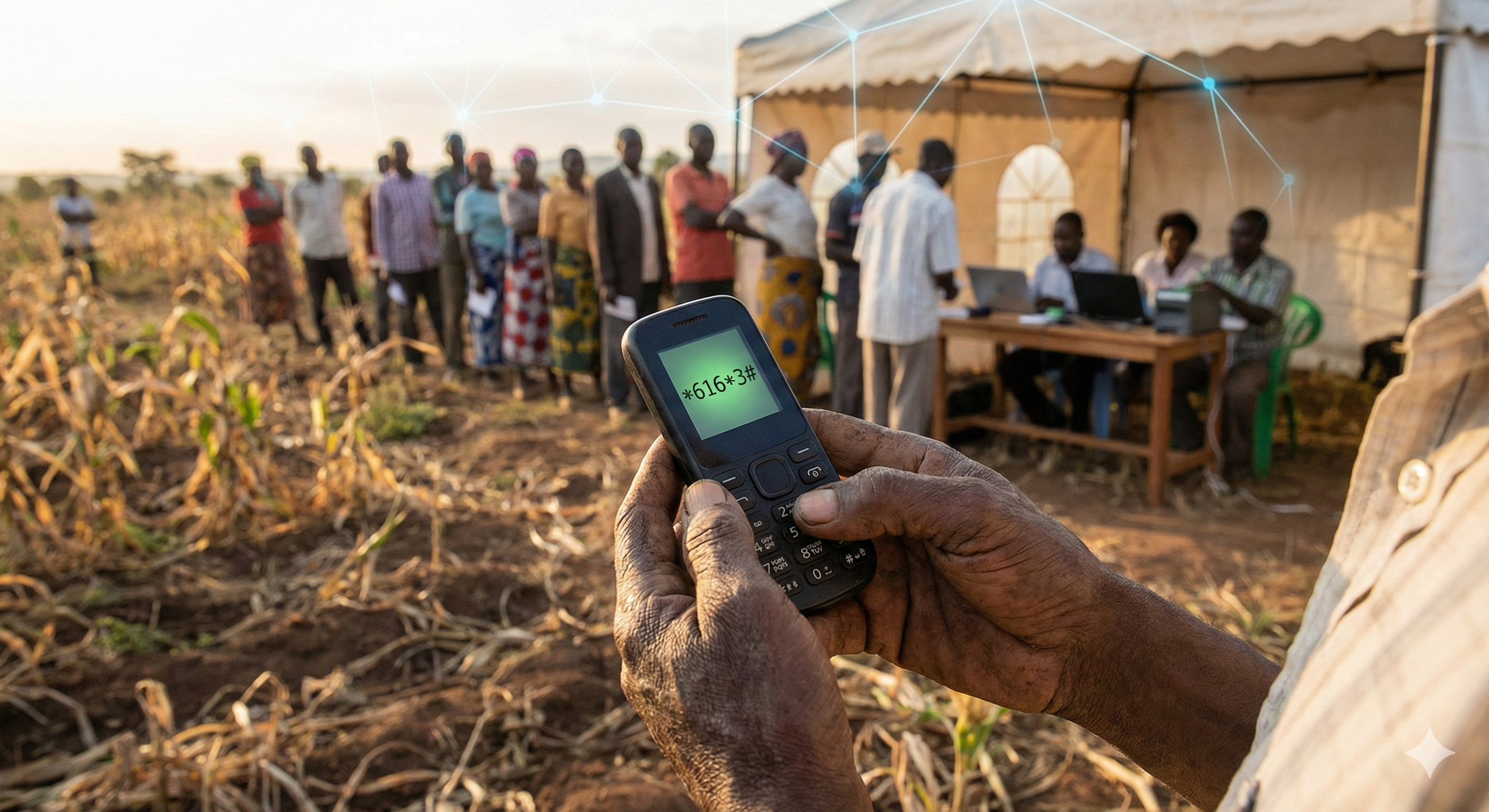
The transition from traditional, manual fertilizer distribution to the Kenya Integrated Agriculture Management Information System (KIAMIS) represents one of the most significant shifts in the nation’s agricultural history. As of late 2025, the Ministry of Agriculture has officially taken full ownership of this digital registry, which now hosts data for over 7.1 million smallholder farmers. This digital “handshake” is no longer a mere pilot program but the mandatory gateway for anyone seeking to purchase subsidized DAP, NPK, or CAN fertilizer at the government-capped price of Ksh 2,500. For the Kenyan farmer, this means the end of “analog” vouchers and the birth of a data-driven system where eligibility is determined not by a physical queue, but by a biometric profile and a verified USSD record. However, as Jijuze has discovered, the sheer scale of this migration has created a new set of digital hurdles that many are struggling to navigate.
At the heart of this system lies the *616*3# USSD code, a simple string of digits that serves as the farmer’s primary interface with the KIAMIS cloud. When a farmer dials this code, they are not just checking a balance; they are interacting with a complex backend that validates their land acreage, crop type, and regional location. The 2025 updates to the platform have introduced even more granular requirements, including the integration of climate-shock insurance directly into the registration process. This means that for a farmer to receive an e-voucher via SMS, their data must be fully validated by both the local Assistant Chief and the Sub-County Agricultural Officer. We have received reports that thousands of farmers who believed they were “registered” are being turned away at National Cereals and Produce Board (NCPB) depots because their profiles lack these critical secondary validations, highlighting a gap between initial data entry and final system approval.
Government targeting 500,000 farmers in KIAMIS registration drive | KBC Business
For the modern Kenyan smallholder, understanding the “Digital Gatekeeper” is now as essential as understanding the soil itself. The government’s 2025 policy emphasizes that the e-voucher system is designed to eliminate the “middleman” and “ghost farmers” who previously diverted subsidized stocks to the black market. By tying every bag of fertilizer to a specific ID number and a geo-tagged farm, the KIAMIS platform ensures that resources reach the intended hands. Yet, this digital-first approach demands a higher level of technical literacy. Farmers must ensure their mobile numbers are correctly linked to their ID and that they have not exceeded the allocated bags per acre—a limit strictly enforced by the algorithm. As the planting season approaches, the message from the Ministry is clear: the era of walking into a depot with just cash is over; if you are not in the cloud, you are not on the farm.
References:
Jijuze How to Access Subsidized Fertilizer in Kenya
Sacco Review Gov’t rolls out pioneering insurance-integrated fertilizer subsidy to safeguard smallholder farmers
The Kenya Times How Kenyans Can Apply for Govt Fertilizer Subsidy Program
Eagmark Agri-Hub Kenya Takes Ownership of National Digital Farmer Registry
What’s something you believe everyone should know.
One of the greatest truths in both physics and politics is this: power never disappears—it merely changes form. Just as energy can neither be created nor destroyed, political power, too, is a conserved force that shifts, mutates, and re-emerges. Tanzania’s recent history is a masterclass in this invisible law. Under the late President John Magufuli, the country witnessed a deliberate compression of democratic energy. Opposition rallies were banned, media voices silenced, and civil liberties choked under an increasingly authoritarian grip. The 2020 general elections—tainted by accusations of fraud and intimidation—did not destroy dissent; they simply converted it into dormant potential energy, locked within the state’s total control. What appeared as political dominance was, in essence, the gathering of immense pressure beneath the surface of the republic.
When Magufuli passed away in 2021 and Vice President Samia Suluhu Hassan took over, that compressed energy found a new expression. For a moment, Tanzania seemed to exhale. Political dialogue resumed, exiled opposition leaders like Tundu Lissu returned, and the media regained a measure of freedom. Yet this was not the dismantling of power but its phase shift—a transformation from brute coercion to soft diplomacy. The ruling party, CCM, maintained its institutional grip, only trading kinetic repression for the subtler currency of legitimacy and international goodwill. Tanzania’s newfound openness was real, but it was carefully managed; the core quantum of control remained untouched. The machinery of power, having changed its form, retained its full magnitude, calibrated now for persuasion instead of fear.
By 2023, the cycle completed itself. The language of reform gave way once more to the mechanics of control. Opposition figures were again entangled in legal webs, critics silenced through procedural precision, and the state’s energy of dominance reappeared cloaked in legality. The lesson is universal: no political power is ever destroyed—it only transforms. What matters is not whether power exists, but how it is expressed, shared, and held accountable. Citizens must therefore act as the catalysts of transformation, ensuring that this energy—inevitable, immense, and perpetual—remains a force for justice rather than repression. The equation, always, must balance.
Kenya is watching itself — pixel by pixel. Over the last five years, the country has built an unseen digital nervous system linking thousands of Huawei-powered Safe City cameras, police databases, and social-media monitoring tools. From downtown Nairobi to Mombasa’s seafront, every movement can be captured and cross-checked within seconds at the National Police Service Command Centre. Officials hail this as “smart security”; critics call it the birth of an algorithmic state. It is now evident that Kenya’s system is among the most extensive in sub-Saharan Africa — facial recognition, automatic number-plate readers, and voice analytics feeding a real-time surveillance web. Civil-rights groups such as Article 19 Eastern Africa warn that the same technologies meant to protect citizens are increasingly used to watch them, often without consent or transparency.
The legal architecture meant to contain this power is full of blind spots. The Cybercrimes (Amendment) Act 2024 widened government interception powers and allowed the Communications Authority to pull down online content on loosely defined “security” grounds. Meanwhile, the National Intelligence Service runs data-fusion platforms that combine SIM registration, mobile-money, and tax records — none of which fall under the Data Protection Act’s civilian oversight. The Office of the Data Protection Commissioner cannot audit national-security operations, leaving surveillance programs completely opaque. As the Kenya Human Rights Commission noted in an April 2024 brief, “privacy protections collapse precisely where the State holds the most data.” In the name of safety, a culture of monitoring has replaced a culture of accountability.
Kenya’s experiment is shaping regional norms. The Huawei model first tested in Nairobi has now appeared in Ethiopia, Uganda, and Tanzania, while Western donors — from the EU to Interpol — fund “cyber-capacity” projects that quietly expand the same infrastructure. Analysts describe this as a surveillance compromise: Eastern hardware, Western money, African data. What began as a modernization effort has become a mirror of global power politics — a democracy borrowing the tools of autocracy to stay secure. Unless Parliament enacts a Surveillance Oversight Law and empowers independent audits, Kenya risks institutionalizing fear as policy. The technology that promised protection now records obedience, and in this new digital republic one truth persists: the cameras no longer blink — they remember.
References:
Article 19 Eastern Africa Surveillance, data protection, and freedom of expression in Kenya and Uganda during COVID-19
The Kenyan Wall Street Kenya Upgrades Cybercrime Law to Hand Gov’t Sweeping Powers to Block Websites
The Star Controversial Cybercrime Act: What they said
Huawei Safaricom:Enhancing Security in Kenya with Huawei’s Converged Command & Control Solution
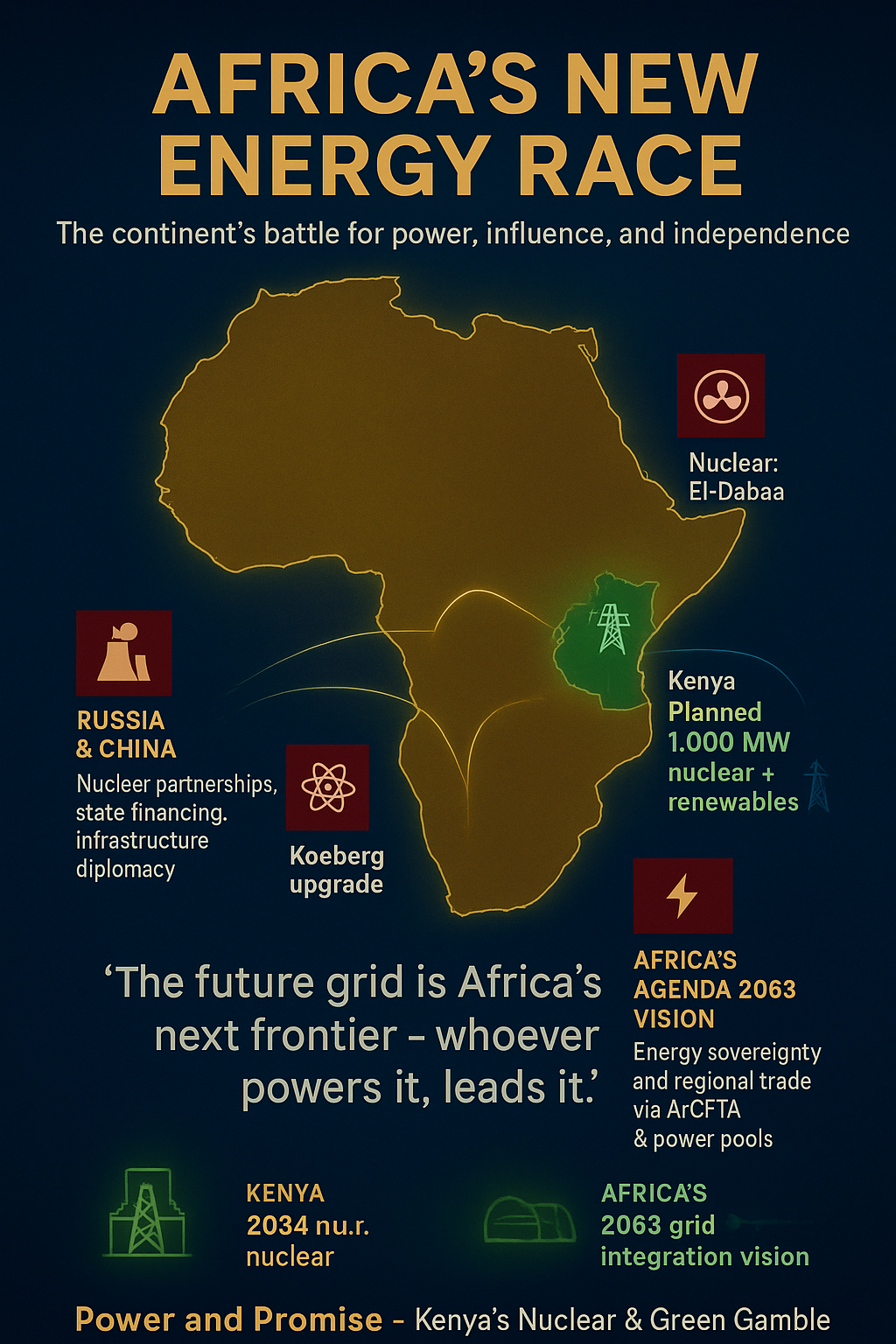
Africa’s energy landscape is shifting faster than at any time in its postcolonial history. From North Africa’s nuclear ventures to Southern Africa’s hydrogen ambitions, the continent is quietly constructing a new map of power — one defined not by oil reserves, but by grid capacity and global alliances. Russia and China are embedding influence through nuclear partnerships; the United States and Europe counter with renewables and clean-tech financing. Across the continent, energy has become the new currency of diplomacy. The story is no longer about light bulbs and power stations — it’s about sovereignty, soft power, and survival. And in this unfolding drama, Kenya stands at the intersection of ambition and caution, armed with geothermal prowess, nuclear dreams, and the burden of fiscal fragility.
Kenya’s choices now echo far beyond its borders. Once hailed as Africa’s renewable beacon, the nation’s dual pursuit of nuclear energy and grid modernization could redefine East Africa’s energy future — or divide it. Egypt’s El-Dabaa reactor is already nearing completion; South Africa is upgrading its Koeberg plant; and Uganda and Ghana are moving from feasibility to formal partnerships. Kenya, strategically perched in the Eastern Africa Power Pool, holds the potential to become a regional energy exporter, a stabilizer in a volatile market. Yet that promise hinges on policy discipline and trust — two currencies Kenya is struggling to sustain. Its fiscal instability, opaque power contracts, and political indecision risk eroding the credibility needed to lead the continental transition. The dream of an integrated African grid may depend less on megawatts and more on governance — and Kenya’s ability to align vision with viability.
The next decade will determine whether Kenya emerges as a powerful nation or merely a powered one. To lead Africa’s energy race, it must balance ambition with accountability, geopolitics with pragmatism. This is not just about building reactors or expanding wind farms — it’s about mastering the grid as an instrument of economic independence and continental diplomacy. The nuclear plant, if realized, will stand not merely as a symbol of technological progress, but as a test of strategic maturity. For Africa, and Kenya especially, the energy race is no longer about who generates power — it’s about who commands it. The atom, the turbine, and the tariff are now the instruments of influence. Kenya’s gamble could define not just its own future, but the direction of Africa’s entire energy destiny.
When a private company’s neural nets began to unmask the hidden flows inside M-Pesa, the discovery jolted more than the fintech sector — it forced Kenya to confront a systemic question: who watches the watchers, and on what rules? The rollout of AI-driven compliance tools at Safaricom was never merely a tech upgrade; it arrived as part of a national emergency — a response to international pressure, spiralling fraud, and regulatory failure. The Financial Action Task Force’s increased-monitoring designation and months of global scrutiny had already pushed lawmakers and regulators into a sprint of reforms; industry actors answered with models that could learn patterns humans could not. But those same models required data — vast, granular, and often personal — and the legal scaffolding for such access was changing in real time. Kenya’s recent cyber-law overhaul and parliamentary amendments to the Computer Misuse and Cybercrime Act expanded state powers over online infrastructure, tightened penalties for SIM-swap and phishing offences, and gave the National Computer and Cybercrimes Coordination Committee sweeping directive authority over platforms and applications. Those moves addressed real harms — SIM swap fraud, phishing, and mass laundering — but they also recalibrated the balance between surveillance and rights.
Video Courtesy: The Kenyan Wall Street Youtube Channel
That recalibration is tested in the day-to-day rub of enforcement. Regulators and the ODPC have begun to draw lines: the Data Protection Commissioner’s recent ruling against a major betting operator for excessive data demands underscores the point that AML objectives cannot be a carte blanche for limitless intrusion. In the Betika case the ODPC found the company’s demand for three months of a user’s M-Pesa statements at account-closure to be disproportionate and ordered compensation, signalling that data-minimisation and privacy remain legally enforceable even amid AML pressures. At the same time, FATF’s 2025 monitoring guidance — and independent analysis from ISS Africa — make plain that Kenya must also show measurable results in prosecutions, beneficial-ownership transparency, and risk-based supervision of non-financial entities (including gambling and virtual assets) if it is to repair global confidence. The practical implication is blunt: Kenya cannot satisfy international partners by papering laws alone; enforcement and proportionate procedural safeguards must accompany technical surveillance. Otherwise the country risks swapping one reputational problem (grey-listing) for another — a domestic legitimacy crisis born of heavy-handed data practices.
So where does Kenya go from here? The answer lies in design choices — legal, technical, and institutional — that make accountability a feature, not an afterthought. We recommend three urgent, interlocking reforms that turn the AI question into a governance opportunity: (1) Purpose-bound, time-limited data access. AML or security queries should be scoped narrowly and logged; full transaction histories must not be a default feed into private models. (2) Explainability + redress. Any automated decision that materially affects a person (account freezes, cash-outs blocked, KYC escalations) must carry a succinct, non-technical rationale and a fast appeals channel routed through an independent body. (3) Joint independent oversight. Operationalize a statutory ODPC–FRC technical review board with public reporting obligations, the power to audit both models and data requests, and a mandate to publish redaction and retention metrics. These are not frictionless reforms — they will slow some processes and impose costs — but that trade-off is precisely the point: legitimacy costs less than lost trust. If Kenya stitches these protections into law and practice — and couples them with meaningful prosecution of financial crimes and improved beneficial-ownership registers — it can convert the awkward moment of global scrutiny into a first-mover advantage: an African model of rights-based, explainable AI governance for financial systems. The choices made now will decide whether Kenya’s algorithms become instruments of accountability or mechanisms that hollow out public trust.
References:
Business Daily Security or surveillance? How amended cyber law could reshape Kenya’s online space
Daily Nation How AI can close trust gaps in Africa’s financial systems
The Kenyan Wall Street How Safaricom is Leveraging AI to Bolster M-Pesa Security and Efficiency

 Jijuze