Navigating Coltan Mining Risks: Lessons for Kenya’s Future

Kenya’s mining sector stands at a pivotal moment, with the discovery of coltan deposits adding complexity to the existing challenges of mismanagement, corruption, and underutilization of resources. The recent transition in the Ministry of Mining, Blue Economy, and Maritime Affairs, where Hassan Joho has taken over from Salim Mvurya, underscores the urgent need for reforms to unlock the sector’s potential. Joho’s focus on strengthening local involvement, enhancing regulatory frameworks, and enforcing Environmental and Social Governance (ESG) standards is crucial for ensuring that Kenya’s mining sector not only contributes to economic growth but does so sustainably and equitably.

France 24

However, as Kenya seeks to capitalize on its mineral wealth, particularly with strategic resources like coltan, it must learn from the experiences of other African nations like the DRC and Rwanda, where resource wealth has often led to conflict and exploitation. Joho’s challenge will be to navigate these risks while fostering an environment where local communities benefit from the mining activities, avoiding the dominance of multinational corporations that can sideline local interests. The future of Kenya’s mining sector will depend on the successful implementation of robust legal frameworks, transparent processes, and inclusive policies that ensure the wealth generated from these resources is equitably distributed and sustainably managed.

As Kenya moves forward, the decisions made in the mining sector will have far-reaching implications not only for its economy but also for its social fabric and geopolitical standing. Joho’s tenure could mark a turning point, setting the stage for a mining industry that is both economically viable and socially responsible, avoiding the pitfalls that have plagued other coltan-rich regions. This foresight is essential as Kenya navigates the complexities of resource management in a globalized world, where technological advancement and environmental sustainability must go hand in hand.

References:

BBC Coltan discovered in Kenya – Mining Minister Salim Mvurya

Nation Kenya strikes ‘large deposits’ of Coltan, mineral used in phones

Global Forest Coalition The Dark Side of Technology: Coltan Mining in the DRC and its Human Rights and Environmental Impacts

Oxford Research Group The Politics of Coltan: An Interview with Michael Nest

The EastAfrican M23 rebels claim control of DR Congo’s coltan mining town of Rubaya
Kenya’s Mining Sector: Challenges, Reforms, and the Joho Effect

As Hassan Joho takes over from Salim Mvurya as the Cabinet Secretary for Mining, Blue Economy, and Maritime Affairs, Kenya’s mining sector stands at a critical juncture. Despite the country’s rich mineral resources, the sector has long been underutilized due to issues like mismanagement, corruption, and inadequate legislation. Joho inherits a sector where significant groundwork has been laid, particularly with the partial lifting of a moratorium on mining licenses. However, the dominance of multinational companies, like Base Titanium in Kwale, raises concerns about equitable benefit distribution and environmental impact, which Joho must address head-on.

Citizen Digital

Joho has outlined ambitious plans to reform the mining sector, emphasizing a comprehensive review of the Mining Act to rectify inefficiencies and close loopholes that have historically enabled corruption and exploitation. His legal strategy appears focused on strengthening regulatory frameworks, particularly by tightening licensing procedures to prevent the undue influence of powerful cartels. This approach signals a shift towards more stringent enforcement of mining laws, including enhanced scrutiny of environmental impact assessments (EIAs) and greater transparency in contract negotiations between the government and multinational corporations. Additionally, Joho has expressed a strong commitment to advancing environmental and social governance (ESG) standards within the industry. He intends to establish a more robust legal infrastructure that holds multinationals accountable for their social responsibilities, ensuring that community development agreements are enforceable rather than merely symbolic. This legal push could involve the creation of new statutory provisions or amendments to existing laws to guarantee that mining operations contribute tangibly to local economies and environmental sustainability. Joho’s focus on legal reform suggests an intent to create a more equitable and transparent mining sector, where the rule of law prevails over vested interests.

If Joho succeeds in implementing these reforms, Kenya’s mining sector could finally begin to fulfill its potential as a major driver of economic growth. This would not only create jobs and generate revenue but also ensure sustainable development practices that protect the environment and empower local communities. Joho’s success in navigating these challenges could define the future of Kenya’s mining industry, making it a cornerstone of the nation’s economic strategy.

References:

Institute for Security Studies Gold and governance provide hope for Kenya’s artisanal miners

The Standard State hasn’t leased out swathes of Kwale mine land, says PS

Emirates News Agency UAE, Kenya sign investment MoU to develop mining, technology sectors

The Star Kenya losing mineral billions to shadow companies – report

The Star Mining CS Joho officially takes over from predecessor Mvurya

The Standard Joho has work cut out to steer mining, blue economy sectors

Mpox Outbreak: Essential Information on Symptoms and Prevention

Mpox, formerly known as monkeypox, is a viral illness caused by the monkeypox virus. This disease manifests through a variety of symptoms including fever, headache, muscle aches, and a distinctive rash that can evolve into painful blisters. These symptoms typically last between two to four weeks. Although the disease is generally self-limiting, certain populations, such as children under five, pregnant individuals, and immunocompromised persons, are at higher risk of severe outcomes and even death. In fact, the current outbreak has recorded 14,626 cases and 654 deaths globally, with a significant number of these cases being among young children​ (WHO).

The Wall Street Journal

Mpox primarily spreads through close contact with an infected person. This can occur via direct skin-to-skin contact, respiratory droplets, and through contact with contaminated objects such as bedding or clothing. Additionally, the virus can spread from animals to humans through bites, scratches, or consuming inadequately cooked meat from infected animals. The recent outbreak, which began in 2022, saw a substantial number of transmissions through sexual contact, particularly among men who have sex with men. The contagious period lasts until all lesions have healed and new skin has formed, typically taking several weeks​.

Preventive measures are crucial in curbing the spread of mpox. Individuals are advised to maintain good hygiene, avoid close contact with those infected, and disinfect contaminated surfaces regularly. The JYNNEOS vaccine is recommended for those at high risk, such as healthcare workers and individuals with known exposure to the virus. In regions where mpox is present, reducing interactions with wild animals and ensuring thorough cooking of meat can lower the risk of animal-to-human transmission. For communities and health sectors in Kenya, heightened surveillance, public education, and access to vaccination will be vital in managing and containing the disease.

References:

WHO Mpox (monkeypox)

VOA Kenya on alert after case of mpox confirmed

Business Daily Alert as Kenya records first case of flu-like Mpox disease

KBC Health Ministry confirms Mpox outbreak in Kenya

CDC Mpox: How to Protect Yourself

National Library of Medicine Prevention and Treatment of Mpox

Addressing Kenya’s Biomass Fuel Crisis: Impact on Public Health

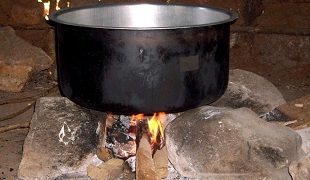
Kenya faces a significant health crisis due to the widespread use of biomass fuels like firewood and charcoal for cooking. A recent study highlighted that over 90% of rural households and 58% of all households use the Three Stone Open Fire (TSOF), a method that produces high levels of indoor air pollution (IAP). These pollutants, including particulate matter (PM) and carbon monoxide, far exceed World Health Organization (WHO) safety guidelines, leading to respiratory diseases, cardiovascular problems, and increased cancer risks. The study estimates that nearly 23,000 deaths in Kenya in 2020 were attributable to IAP, underscoring the severity of the issue.

Cooking with firewood

The reliance on biomass fuels is driven by economic constraints and cultural practices, with rural households often lacking access to cleaner alternatives. The study found that even improved cookstoves, while better than TSOF, only partially reduce emissions. Furthermore, the transition to clean energy is hindered by the high cost of alternatives and limited infrastructure. The high levels of PM2.5, a fine particulate matter that can penetrate the lungs and bloodstream, particularly in urban slums, pose severe health risks, including chronic obstructive pulmonary disease (COPD), asthma, and acute lower respiratory infections (ALRI), disproportionately affecting women and children who are often exposed to cooking smoke for extended periods.

To address these challenges, the Kenyan government should prioritize the implementation of clean energy solutions. Emphasizing solar energy could be particularly impactful, as it provides a sustainable, long-term solution that can be scaled across both urban and rural areas. Subsidizing solar panels and supporting community-based solar cooking initiatives could significantly reduce dependence on harmful biomass fuels. Additionally, promoting public awareness about the health risks of IAP and improving household ventilation are crucial steps. A multifaceted approach, involving various stakeholders, is essential to reduce the reliance on harmful biomass fuels and improve public health outcomes across the nation.

References:

Kenya Household Cooking Sector Study Ministry of Energy, 2019

Springer Link Indoor Air Pollution in Kenya

Nation ‘Cooking with firewood affects my health but I don’t have an alternative’

Promising Advances in HIV Treatment and Potential Cure

Recent scientific advancements have sparked significant hope in the fight against HIV. A new injectable drug administered twice a year has shown 100% effectiveness in preventing HIV infections in clinical trials. This breakthrough offers a groundbreaking alternative to the current regimen of daily oral medications, which can be burdensome for many patients. The biannual injection not only simplifies the prevention process but also enhances adherence, significantly reducing the risk of infection, especially in high-risk populations. The trial, involving 3,200 participants across various demographics in the United States, South Africa, and Brazil, demonstrated remarkable efficacy, with no reported cases of HIV infection among those receiving the injection. The success of this trial suggests that widespread adoption of this method could revolutionize HIV prevention strategies globally.

In another promising development, researchers are making strides toward a potential HIV cure using CRISPR gene-editing technology. This innovative approach involves using CRISPR-Cas9 “scissors” to precisely cut out HIV DNA from infected cells, effectively eliminating the virus. In a landmark study, scientists successfully used this technique to remove HIV DNA from the genomes of living animals, leading to a significant reduction in viral load. The success of this technique in laboratory settings marks a significant step forward in the quest for a cure. However, experts caution that extensive research and rigorous clinical trials, including long-term studies to assess potential off-target effects, are needed to ensure the safety and long-term effectiveness of this method before it can be considered a viable treatment option for patients.

These advancements underscore the relentless efforts and collaborations within the scientific community to combat HIV. The injectable drug’s success in prevention and the potential of CRISPR technology in curing the virus represent a dual approach that could change the landscape of HIV treatment and prevention. As researchers continue to explore these promising avenues, there is renewed optimism that we may be closer than ever to ending the HIV epidemic. The integration of these breakthroughs into clinical practice could ultimately lead to a world where HIV is no longer a persistent public health threat.

References:

Citizen Digital HIV Breakthrough: Drug Trial Shows Injection Twice A Year Is 100% Effective Against Infection

BBC Scientists say they can cut HIV out of cells

Science Daily Researchers a step closer to a cure for HIV

Africa News Hopes of HIV cure after breakthrough using gene-editing ‘scissors’