Oil and Water: Can Global Finance Fix Local Corruption?

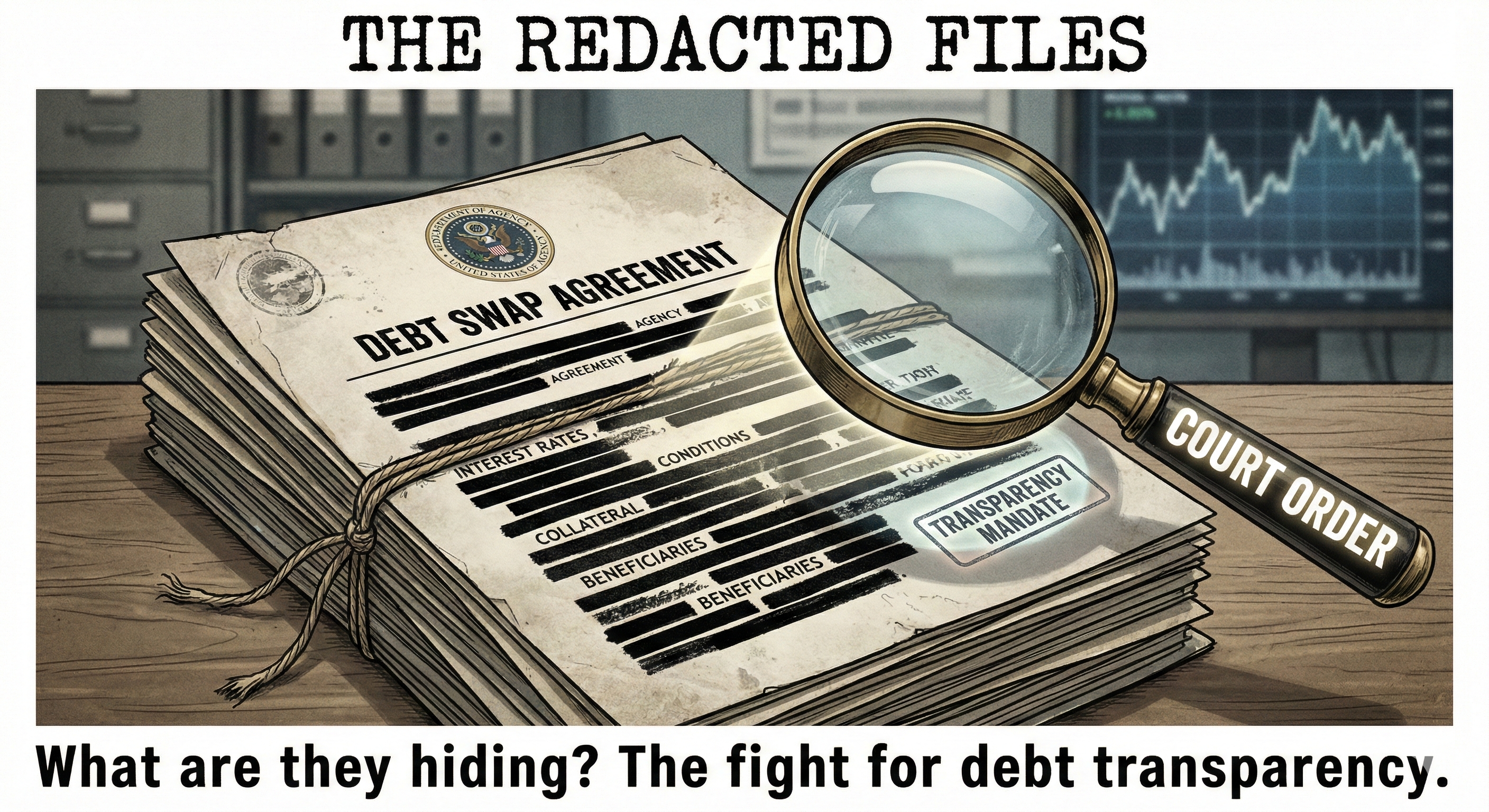
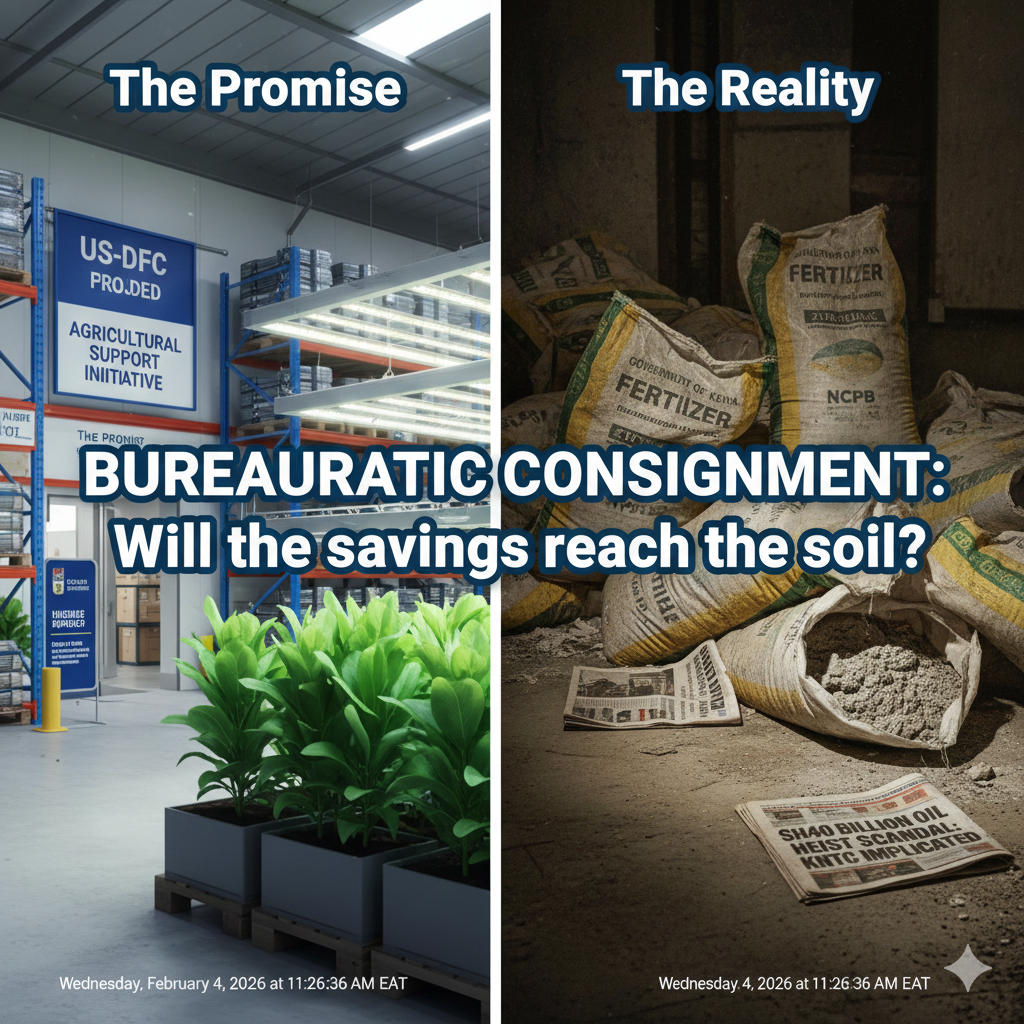
The “Food-for-Eurobond” deal relies on a dangerous assumption: that savings from international debt relief can navigate the treacherous waters of Kenya’s local bureaucracy without being looted. History suggests this is an “oil and water” scenario—liquid finance attempting to mix with a rigid, opaque system. The recent scandals at the Kenya National Trading Corporation (KNTC) and the National Cereals and Produce Board (NCPB) serve as grim warnings. In the KNTC edible oils scandal, tax waivers meant to lower prices were captured by politically connected firms, resulting in a Sh16.5 billion loss with no benefit to the consumer.

Similarly, the NCPB’s recent distribution of “fake fertilizer”—bags filled with quarry dust—demonstrates how easily “agricultural support” can be weaponized against the farmers it is meant to help. If the swap funds are channeled through these same “bureaucratic consignments,” the initiative risks becoming another slush fund for cartels. The involvement of the World Food Programme (WFP) is intended to act as an “emulsifier,” forcing accountability into the system, but their oversight powers will be tested against deeply entrenched patronage networks.

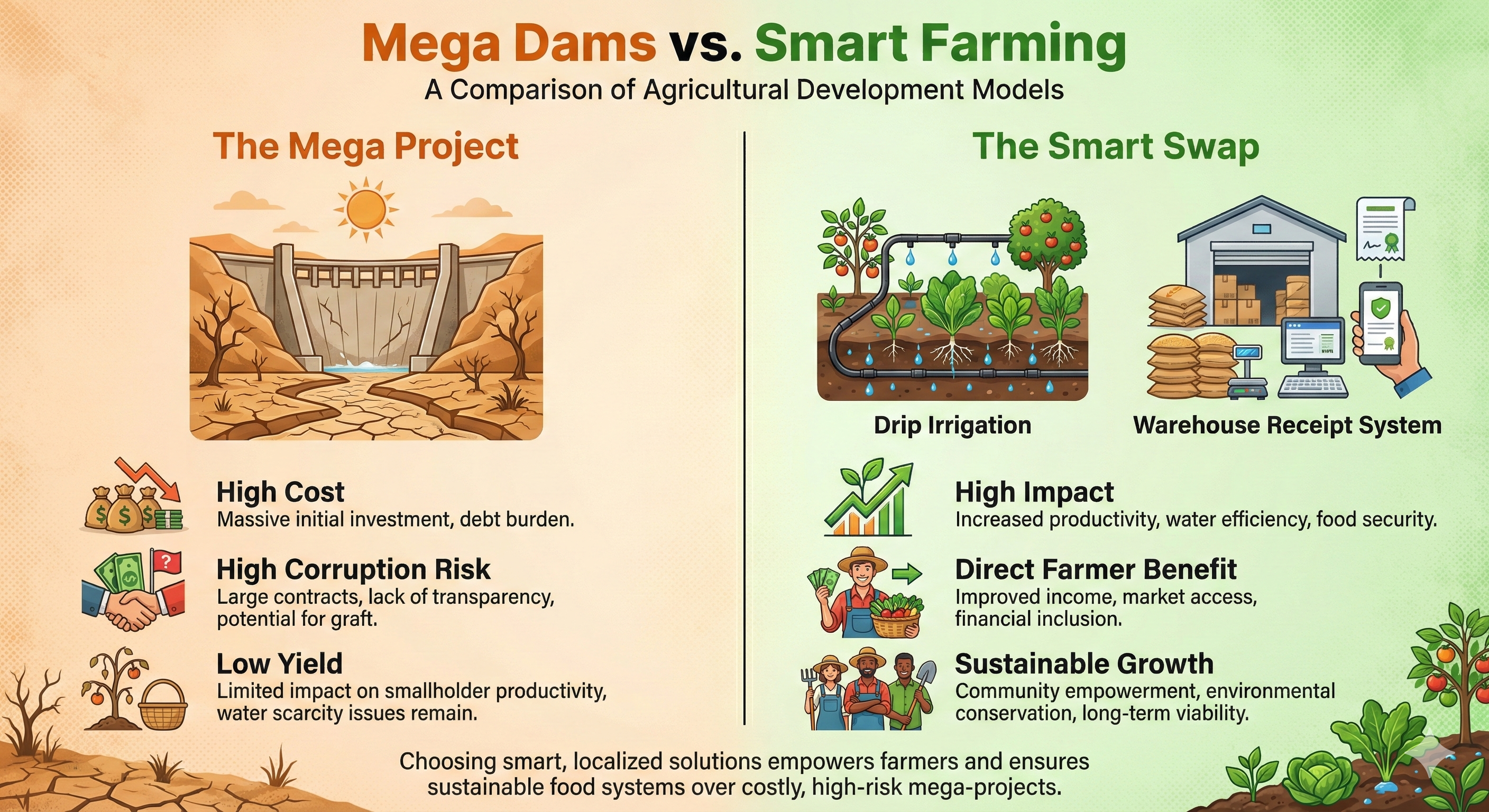
Experts warn that without a radical overhaul of state agencies, the “savings” will evaporate before they buy a single bag of genuine fertilizer or build a working silo. The structural disconnect between the Treasury’s high-level deal-making and the Ministry of Agriculture’s operational failures remains the single biggest risk. Unless the government bypasses these compromised intermediaries, perhaps by funding private sector credit guarantees instead of direct procurement, the “oil” of finance will float to the top, leaving the “water” of development murky and stagnant.

References:

Milling Middle East & Africa Kenya’s edible oil scandal raises questions over accountability, transparency

AP Farmers in Africa say their soil is dying and chemical fertilizers are in part to blame

The Billion-Dollar Gamble: Inside Kenya’s “Food-for-Eurobond” Swap

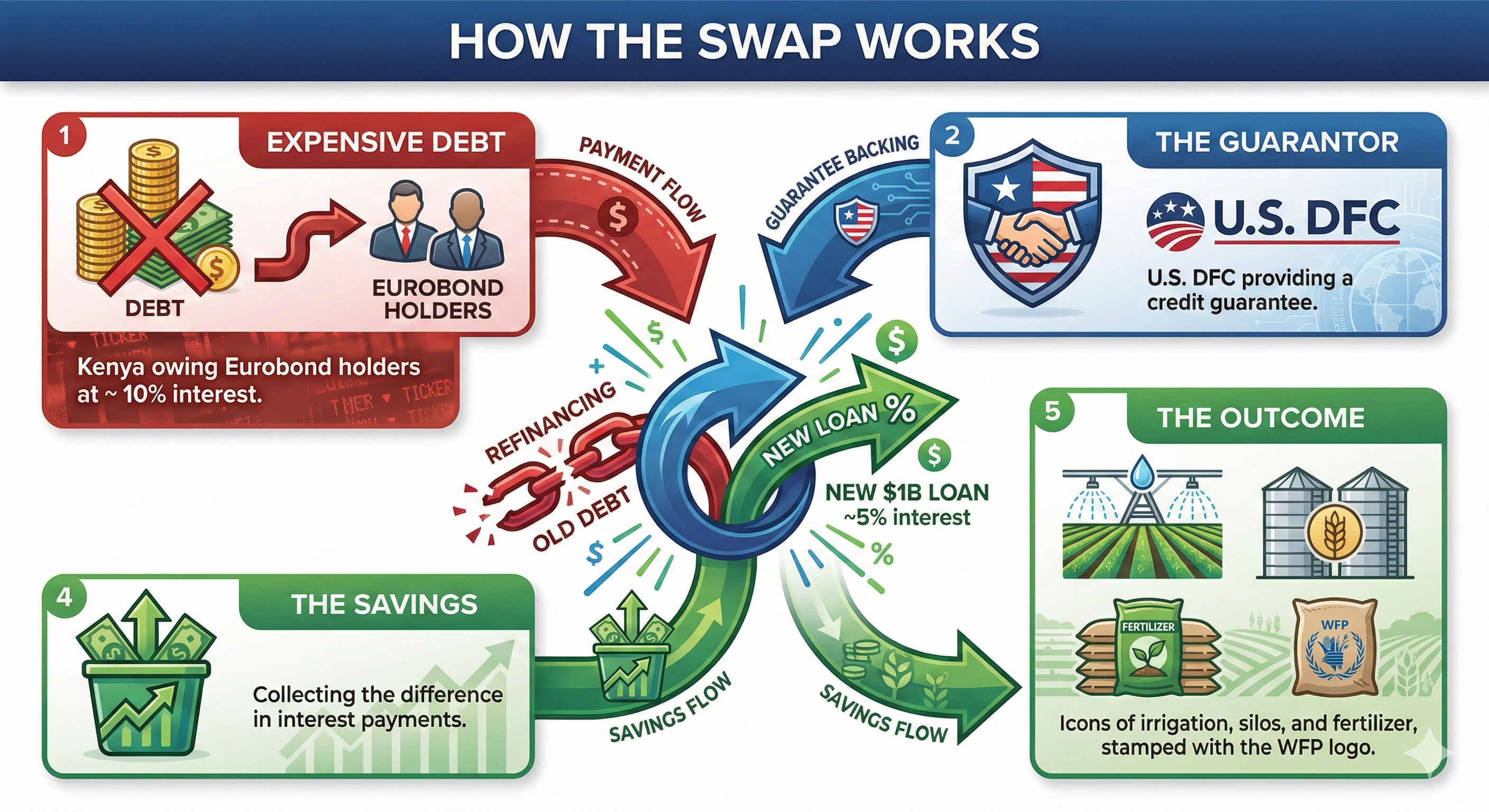
Kenya is on the verge of finalizing a landmark $1 billion (Sh129 billion) debt-for-food security swap, a sophisticated financial maneuver designed to rescue the country from a suffocating liquidity crunch. By leveraging a guarantee from the U.S. International Development Finance Corporation (DFC), the Treasury intends to refinance expensive Eurobond debt with cheaper, concessional loans. The plan is financially astute: it swaps high-interest commercial debt for lower-interest obligations, a move that prompted Moody’s to upgrade Kenya’s credit rating to B3 and stabilize the outlook on the nation’s sovereign debt.

However, the deal comes with a catch that transforms it from a simple refinancing operation into a complex development experiment. The interest “savings” generated from this swap must be ring-fenced and funneled directly into food security projects, managed in partnership with the World Food Programme (WFP). This arrangement effectively outsources a portion of national planning to an international body, admitting that the state needs external discipline to ensure funds aren’t diverted. While this stabilizes the shilling and pleases bondholders, it raises a fundamental question: is this a genuine strategy to feed the nation, or simply financial engineering to avoid default?

The stakes could not be higher. With 3.4 million Kenyans facing acute food insecurity and public debt service consuming over two-thirds of tax revenue, the government is betting that this “financial oil” can mix with the “water” of local agriculture without separating. If successful, it provides fiscal breathing room and lowers input costs for farmers; if it fails, Kenya will be left with the same debt burden and no improvement in the cost of living for the average wananchi.

References:

Business Insider Africa Kenya plans to borrow $1 billion using debt for food swap

CNBC Africa Kenya, US agency to proceed with $1 billion debt-for-food swap