Ruto’s Administration in Kenya: Navigating Modern Autocracy and Democratic Facades

Kenya stands at a critical juncture, facing significant political challenges under President William Ruto’s administration. Recent anti-government protests, driven by widespread discontent with the Finance Bill 2024, have been met with police brutality, arbitrary arrests, and threats to media freedom. These actions echo the tactics of Peru’s former leader Alberto Fujimori, whose full name humorously includes “Kenya.” Fujimori, who was in power from 1990 to 2000, maintained a democratic façade while employing authoritarian measures. His regime was marked by human rights abuses, media manipulation, and suppression of political opposition, reflecting a modern autocratic approach known as “spin dictatorship.”

President Ruto Engaging the Public in a Town Hall Meeting in Mombasa

In Kenya, Ruto’s administration mirrors Fujimori’s use of sophisticated means to consolidate power, such as controlling media narratives and employing legal and extralegal measures against opponents. Ruto has strategically co-opted opposition members into the government, effectively weakening the opposition wing in parliament and disabling effective oversight. This strategy of deception and control highlights the evolving nature of modern autocracies, where maintaining an image of democracy is crucial while reshaping public beliefs and limiting dissent. The recent protests led by Gen Z underscore the growing resistance among informed and digitally savvy citizens, who play a vital role in documenting abuses, organizing movements, and mounting effective resistance.

Despite the efforts of unscrupulous politicians, stable democracies resist sliding into spin dictatorships due to a combination of robust democratic institutions and the active resistance of informed citizens. This educated and connected subset of the population, including a significant presence of Gen Z, opposes attempts to usurp power by utilizing their organizational skills and knowledge. Without such active participation, even the best-designed democratic institutions cannot function effectively. Kenya’s situation, much like Peru under Fujimori, highlights the critical importance of defending democratic principles against sophisticated authoritarian tactics.

References:

KNHCR Finance Bill 2024: Ruto regime must end repression of peaceful protesters

VOA Kenyan president warns of huge consequences over debt plan failure

The Star I had powers to shut down media during protests but I didn’t – Ruto

Aljazeera Kenya police fire tear gas as protesters call for Ruto to quit

Spin Dictators: The Changing Face of Tyranny in the 21st Century, written by Sergei Guriev and Daniel Treisman


AI Revolutionizing Athletic Performance and Event Management at Paris 2024 Olympics

At the Paris 2024 Olympics, artificial intelligence (AI) is revolutionizing athletic performance, event management, and security. Athletes utilize AI-driven data analytics to refine their training and strategies, enhancing performance and reducing injury risks. In precision sports like gymnastics, AI assists in judging by analyzing movements with high accuracy, ensuring fair scoring. Additionally, AI-powered surveillance systems heighten security by detecting potential threats in real-time. The use of digital twins—virtual replicas of physical systems—optimizes energy management and venue maintenance, providing real-time monitoring and predictive insights for efficient operations.

IOC’s President Thomas Bach

In the realm of broadcasting, AI is revolutionizing how the Olympic Games are presented to a global audience. One of the key innovations is the use of AI-driven automatic highlight reels, which compile the most exciting moments from events in real-time. This technology not only caters to the preferences of viewers by generating personalized content but also allows broadcasters to deliver customized experiences to different regions. For instance, NBC is utilizing AI to create tailored commentary and summaries, providing a more engaging experience for audiences in diverse regions, including East Africa. This is particularly important in areas with varying internet bandwidths, where AI can optimize content delivery to ensure smooth streaming and access to high-quality broadcasts. Such advancements in AI technology are making the Olympic Games more accessible and engaging, allowing viewers worldwide to enjoy a personalized and immersive experience.

Despite the enthusiasm surrounding AI’s capabilities, there is a notable divergence in how broadcasters approach its integration. Some broadcasters are fully embracing AI to enhance the viewing experience and streamline content delivery, recognizing the potential for increased audience engagement and operational efficiency. However, others are approaching the technology with caution, raising concerns about ethical implications, including data privacy and the potential for algorithmic biases. This cautious stance underscores the need for a balanced approach that not only leverages AI’s benefits but also addresses its challenges. The differing strategies highlight the broader debate within the media and sports industries about the responsible use of emerging technologies. As AI continues to evolve, these discussions will be crucial in shaping the future landscape of sports broadcasting and event management.

References:

Reuters Paris Olympics broadcasters diverge on AI approach

Nature Three ways AI is changing the 2024 Olympics for athletes and fans

International Olympic Committee AI and tech innovations at Paris 2024: A game changer in sport

Tech.co From Scoring to Surveillance: 7 Ways 2024 Will Be The First AI Olympics
The Athletic AI comes to the Olympics: In Paris, new tech will change your view of the Games

Smooth Transition for Grade 9: Balancing Logistical Challenges and Academic Needs in Kenya

As Kenya gears up for the transition of Grade 9 learners, set for 2025, the government is facing a major logistical challenge. To address the expected increase in student numbers, the Ministry of Education has announced the construction of 16,000 new classrooms. This initiative is part of a broader effort to enhance the educational infrastructure, including the recruitment of 20,000 teachers to support the junior school curriculum. The move aims to ensure that the educational needs of the new cohort are met in a timely and efficient manner.

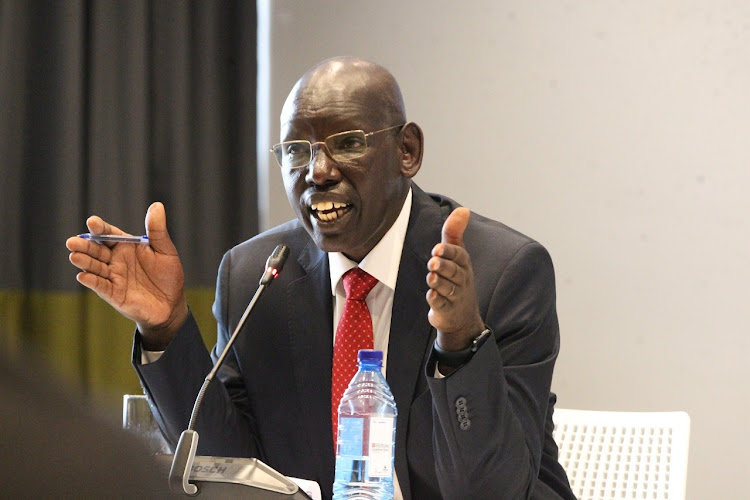
Belio Kipsang – Principal Secretary, Ministry of Education

A significant debate centers around whether Grade 9 learners should be housed in primary or secondary schools. The Ministry of Education, grappling with a current shortfall of 15,021 classrooms, is working on infrastructure expansion within existing primary school settings. However, there are concerns about the readiness of these institutions to accommodate the increased student population. The Ministry’s stance is largely influenced by logistical constraints and the need for a smooth transition, despite some advocacy for placing these students in secondary schools to better align with their developmental and educational needs.

School principals have voiced strong opinions on this matter, advocating for the relocation of Grade 9 to secondary schools. They argue that secondary schools are better equipped with the necessary facilities and resources to cater to older students. The principals believe that the shift would provide a more suitable environment for the academic and social development of these learners. However, this proposal comes with its challenges, including the need for substantial government investment in infrastructure and human resources. To ensure a smooth transition, it is recommended that the government establishes clear timelines and maintains transparency throughout the planning and implementation phases, thereby preventing any potential disruptions or crises.

References:

Nation Concern over readiness by State to launch Grade Nine

The Star 5000 learners commence Knec’s Grade 9 pilot assessment test in 235 schools

The Standard High schools best suited to host Grade 9 students

The Star Belio: We’ll construct 16,000 classes for Grade 9 learners

The Standard Grade 9 to remain in primary despite secondary school push

Nation Why Principals want Grade 9 moved to secondary schools

The Standard Major clash over hosting of Grade Nine learners as transition looms

Kenyan Executive Under Fire: Petition Filed for President and Deputy’s Removal

A legal petition has been submitted to the Kenyan courts seeking the removal of President William Ruto and Deputy President Rigathi Gachagua, citing constitutional violations and a breach of public trust. The petition, filed by Migeria Lempaa & Kariuki Advocates, accuses the leaders of incompetence and mismanagement, particularly highlighting the mishandling of economic policies and the discontinuation of vital social programs. The petitioners argue that these actions have resulted in socio-economic instability, undermining the constitutional responsibilities of the executive office.

Milimani Law Courts

The allegations hinge on Article 145 of the Kenyan Constitution, which provides grounds for impeachment, including gross misconduct and violation of the Constitution. The petitioners claim that the actions of Ruto and Gachagua meet these criteria, noting their failure to uphold public welfare and constitutional duties. They stress that the administration’s conduct could lead to further unrest and instability, drawing parallels with economic crises in other countries. The call for judicial intervention is seen as a necessary step to uphold governance and prevent further constitutional breaches.

Given the escalating public discontent, it would be prudent for President Ruto to consider reordering his government’s priorities to better align with the needs of the Kenyan populace. This could involve revisiting controversial economic policies and strengthening social support systems. By taking proactive steps to address the concerns raised in the petition, Ruto could mitigate potential political fallout and restore confidence in his administration. A focus on transparency, accountability, and responsiveness to public needs may offer a constructive path forward, potentially averting the need for drastic measures like impeachment or a public referendum.

References:

The Standard Petitioners move to court seeking to oust Ruto, Gachagua

Nairobi Wire Petition Filed to Remove Ruto and Gachagua from Office

Impeaching the Kenyan President is Not Treason, It’s Constitutional Ruth Nashipae Muigai, LLB(Hons). LLM

KLRC Constitution of Kenya: Article 145. Removal of President by impeachment


Kenya’s Political Landscape: Ruto’s Surprising Move and Good Governance Challenges

Kenya’s President Ruto has taken a surprising step by nominating four Cabinet Secretaries from the opposition party, sparking concerns about the legitimacy of his administration. The move comes as the country grapples with economic challenges and political tensions.

Left: Raila Odinga; Right: President Ruto

Sources close to the ruling party have revealed that the nominations were made without the formal approval of the opposition leader, Raila Odinga, who had previously issued demands for specific issues to be addressed before engaging in dialogue with the government. This development has left many wondering whether the opposition is quietly aligning itself with the government, potentially compromising its independence.

As the situation unfolds, analysts are cautioning that a broad-based government of national unity could have far-reaching implications for Kenya’s democracy. In light of this, it is crucial to examine the concept of good governance and its intersection with human rights. Good governance refers to the process by which public institutions conduct public affairs, manage public resources, and guarantee the realization of human rights in a manner free from abuse and corruption. This requires respecting human rights, ensuring transparency, accountability, responsibility, participatory decision-making, responsiveness to people’s needs, and freedom from corruption.

According to experts, good governance is closely linked to human rights, as human rights standards and principles provide a set of values to guide government actions and a framework for accountability. In turn, good governance is essential for respecting and protecting human rights in a sustainable manner.

The four key areas where good governance and human rights intersect are:

  1. Democratic Institutions: The establishment of strong democratic institutions is critical for ensuring that power is exercised transparently and in accordance with the rule of law.
  2. Public Service Delivery: Good governance requires effective public service delivery, which involves providing essential services to citizens in a fair, equitable, and efficient manner.
  3. The Rule of Law: The rule of law is essential for upholding human rights, as it provides a framework for ensuring that laws are respected and enforced fairly and without discrimination.
  4. Anti-Corruption Efforts: Anti-corruption efforts are vital for preventing the abuse of power and ensuring that public resources are used for the benefit of all citizens.

As Kenya’s government navigates this complex landscape, it is essential to prioritize good governance and ensure that institutions are accountable, transparent, and responsive to the needs of the people. This requires a commitment to upholding human rights, protecting fundamental freedoms, and promoting sustainable development.

References:

The Standard Mixed reactions as Ruto unveils new Cabinet

AllAfrica Kenya: Sifuna Insists ODM Not in Govt Despite Ruto’s Cabinet Picks

AllAfrica Kenya: Ruto Co-Opts ODM Into Govt Naming Joho, Oparanya, Mbadi In Cabinet

Associated Press Kenyan president appoints opposition ministers to his Cabinet amid political unrest

United Nations Human Rights About good governance

United Nations Human Rights OHCHR and good governance

Addressing Kenya’s Biomass Fuel Crisis: Impact on Public Health

Kenya faces a significant health crisis due to the widespread use of biomass fuels like firewood and charcoal for cooking. A recent study highlighted that over 90% of rural households and 58% of all households use the Three Stone Open Fire (TSOF), a method that produces high levels of indoor air pollution (IAP). These pollutants, including particulate matter (PM) and carbon monoxide, far exceed World Health Organization (WHO) safety guidelines, leading to respiratory diseases, cardiovascular problems, and increased cancer risks. The study estimates that nearly 23,000 deaths in Kenya in 2020 were attributable to IAP, underscoring the severity of the issue.

Cooking with firewood

The reliance on biomass fuels is driven by economic constraints and cultural practices, with rural households often lacking access to cleaner alternatives. The study found that even improved cookstoves, while better than TSOF, only partially reduce emissions. Furthermore, the transition to clean energy is hindered by the high cost of alternatives and limited infrastructure. The high levels of PM2.5, a fine particulate matter that can penetrate the lungs and bloodstream, particularly in urban slums, pose severe health risks, including chronic obstructive pulmonary disease (COPD), asthma, and acute lower respiratory infections (ALRI), disproportionately affecting women and children who are often exposed to cooking smoke for extended periods.

To address these challenges, the Kenyan government should prioritize the implementation of clean energy solutions. Emphasizing solar energy could be particularly impactful, as it provides a sustainable, long-term solution that can be scaled across both urban and rural areas. Subsidizing solar panels and supporting community-based solar cooking initiatives could significantly reduce dependence on harmful biomass fuels. Additionally, promoting public awareness about the health risks of IAP and improving household ventilation are crucial steps. A multifaceted approach, involving various stakeholders, is essential to reduce the reliance on harmful biomass fuels and improve public health outcomes across the nation.

References:

Kenya Household Cooking Sector Study Ministry of Energy, 2019

Springer Link Indoor Air Pollution in Kenya

Nation ‘Cooking with firewood affects my health but I don’t have an alternative’

Strategies to Stabilize Kenya’s Economy Amid Rising Debt-to-GDP Ratio

The debt-to-GDP ratio is a crucial metric for assessing a country’s economic health. It is calculated by dividing a nation’s total public debt by its gross domestic product (GDP), then multiplying by 100 to get a percentage. This ratio indicates how much debt a country has relative to its economic output. The formula for the debt-to-GDP ratio is:

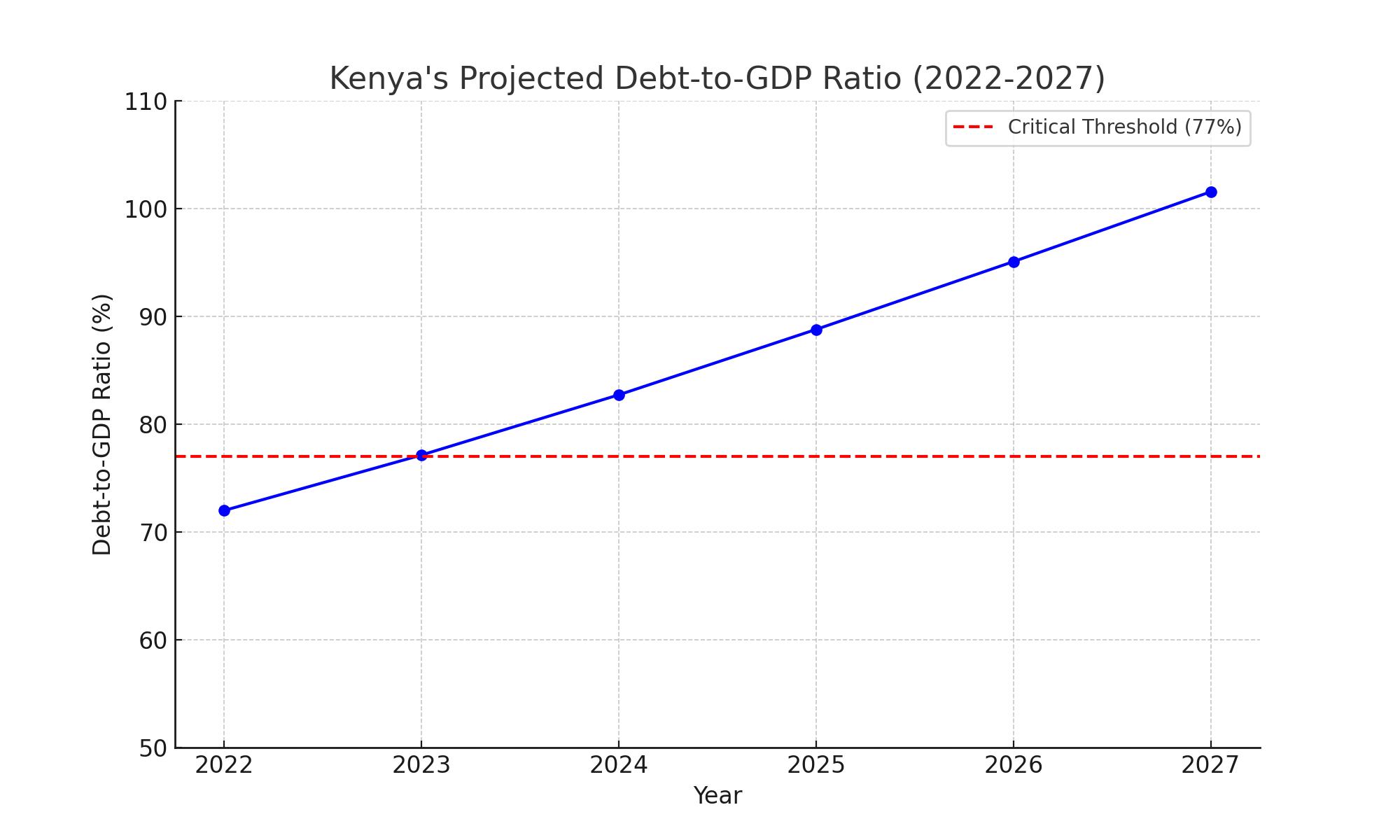
A high ratio suggests that a country may struggle to repay its debts, potentially leading to financial instability. For instance, Kenya’s debt-to-GDP ratio has been rising, with projections indicating it will exceed 100% by 2027.

In the context of Kenya, the debt-to-GDP ratio provides a snapshot of the nation’s financial challenges. According to the Corporate Finance Institute, a ratio above 77% can hamper economic growth. Kenya’s increasing debt, as highlighted in reports by Business Daily Africa and Reuters, signifies growing financial burdens, potentially leading to a debt repayment crunch. The high cost of debt servicing and external borrowing exacerbates these challenges, indicating a need for strategic financial management to avoid economic stagnation. The chart below indicates that Kenya’s public debt stands at KES 9.1 trillion as of early 2024, and projections from the Treasury expect it to cross KES 13 trillion by 2027.

Kenya’s Projected Debt-to-GDP ratio

To mitigate Kenya’s rising debt-to-GDP ratio without increasing taxes, several strategies can be employed:

  1. Boosting Exports: Enhancing the competitiveness of Kenyan goods and services can increase foreign exchange earnings, reducing the need for external borrowing.
  2. Encouraging Foreign Direct Investment (FDI): Attracting FDI can provide the necessary capital for development projects without increasing debt.
  3. Improving Public Sector Efficiency: Streamlining government expenditures and reducing wastage can free up resources for debt repayment and development initiatives.
  4. Diversifying the Economy: Investing in various sectors, such as technology and agriculture, can create new revenue streams and reduce reliance on debt.

Implementing these strategies can help stabilise Kenya’s economy and reduce its debt burden, fostering sustainable growth. Effective management of public resources, coupled with strategic economic policies, is essential to achieving a healthier debt-to-GDP ratio and ensuring long-term economic stability for Kenya.

References:

Business Daily Treasury expects debt to cross Sh13trn by 2027

Economist Intelligence Kenya faces a potential debt repayment crunch in 2024
Reuters Kenya’s double-digit debt costs sign of the tough times

CFI Debt-to-GDP Ratio

The Commonwealth Blog: Rising government debt-to-GDP ratios need urgent response

TheStreet What Is a Debt-to-GDP Ratio? Definition, Calculation & Importance

Cytonn Kenya’s Public Debt Review 2023: Is Kenya’s Public Debt Level Sustainable?

Gen Z Across East Africa: Unstoppable Force for Change and Justice

In the vibrant tapestry of East African protests, Kenyan Gen Z stands out with their digital flair and viral creativity. Imagine a protest powered by clever memes, hashtags like #Reject and #Occupy, and instant crowdfunding campaigns that raise millions in mere hours. Kenyan Gen Z activists have turned protests into digital movements, leveraging social media platforms to coordinate, communicate, and create a global buzz. They turned tragic moments into powerful calls for justice, uniting under the spirit of “the revolution will be live-streamed, hashtagged, and possibly even set to an AI-generated soundtrack”​ (Techweez)​​ (Amnesty International)​.

Children depicting protests

Contrast this with Uganda, where the dynamics of protest are considerably different due to a more repressive political climate. While Kenyan Gen Z activists use digital platforms to orchestrate protests and raise awareness rapidly, their Ugandan counterparts face a more formidable challenge. In Uganda, the government has a tight grip on internet access, frequently resorting to social media blackouts during periods of unrest, making it difficult for activists to communicate and organize efficiently online. Furthermore, Uganda’s Public Order Management Act imposes stringent restrictions on public gatherings, requiring protest organizers to seek police approval, which is often denied or delayed. This legal hurdle significantly stifles spontaneous and large-scale mobilizations that Kenyan Gen Z finds easier to execute​ (Techweez)​​ (Amnesty International)​. The Ugandan Gen Z is also up against a history of severe crackdowns on dissent. Reports of police brutality and extrajudicial killings are not uncommon, with Amnesty International documenting numerous cases of enforced disappearances and unlawful detentions​ (Amnesty International)​. For example, during the 2021 elections, opposition figures and their supporters faced intense repression, with security forces using excessive force to disperse crowds and detain activists arbitrarily. The physical risks associated with protesting in Uganda are therefore much higher, deterring many from participating in public demonstrations. Despite these challenges, Ugandan youth have found innovative ways to voice their dissent, such as through music, art, and satire, highlighting their resilience and creativity in navigating a restrictive environment.

Yet, the core message remains powerful and universal: “An idea whose time has come cannot be stopped even by military artillery.” Whether through the immediacy of a tweet in Nairobi or the grassroots resilience in Kampala, Gen Z across East Africa is proving that the demand for justice and accountability transcends borders and methods. Their innovative spirit and unyielding courage highlight a new era of activism, where the youth, armed with smartphones and a shared sense of purpose, are an unstoppable force for change.

References:

Aljazeera How Kenya’s protesters faced death to hold their leaders to account

Monitor Daring us to copy Kenyan Gen Z demos is a tall order

Cryptocurrency Security: Persistent Threats and Measures for Continuous Improvement

Crypto hacking incidents have shown fluctuating trends in 2024. Early in the year, a report revealed that hackers stole $1.7 billion in 2023, highlighting the growing threat. The RegTech Times reported that in Q1 2024, losses dropped by 23% compared to the same period in 2023, with total losses amounting to $336.3 million. Despite this reduction, crypto hacking still accounted for 96% of all incidents, reflecting the ongoing security challenges in the cryptocurrency industry. In February alone, over $67 million was stolen in 12 attacks on DeFi platforms, showcasing the sector’s vulnerability due to its decentralised nature and complex security needs.

10 Tampa Bay News Report

The first half of 2024 saw a significant rise in crypto thefts, with $1.4 billion stolen by hackers, according to a July 5 Reuters report. This sharp increase was attributed to sophisticated hacking techniques targeting digital assets. On the same day, Punch Nigeria reported data from DeFiLlama indicating that $664 million was stolen from crypto investors in the first six months of 2024. Chainalysis further highlighted that, despite enhanced security measures, substantial funds were still being stolen, underscoring the persistent threat to the cryptocurrency ecosystem. DeFi, or decentralised finance, platforms are blockchain-based systems that offer financial services without traditional intermediaries like banks. These platforms enable activities such as lending, borrowing, and trading through smart contracts, which are self-executing contracts with the terms directly written into code. The consistent targeting of DeFi platforms, with major breaches including $32.5 million from Playdapp and $26.1 million from Fixedfloat, emphasised the need for improved defenses.

These incidents underscore the critical need for continuous improvement in cybersecurity measures within the cryptocurrency sector. While there has been some success in reducing overall losses, the sophistication of attacks and the particular vulnerability of DeFi platforms remain significant challenges. The industry must evolve its security protocols, foster greater collaboration among stakeholders, and enhance user education to better protect against these persistent threats. The resilience of the cryptocurrency market will depend on its ability to adapt and fortify against an ever-evolving landscape of cyber threats.

References:

Reuters Crypto hacking thefts double to $1.4 bln in first half of 2024, researchers say

Punch Hackers steal $664m from crypto investors in six months – DefiLlama

Chainalysis Funds Stolen from Crypto Platforms Fall More Than 50% in 2023, but Hacking Remains a Significant Threat as Number of Incidents Rises
Reuters Crypto hackers stole around $1.7 bln in 2023 – report

RegTech Times Crypto Hacking Report for Q1 2024: Insights and Trends on declining incidents


Promising Advances in HIV Treatment and Potential Cure

Recent scientific advancements have sparked significant hope in the fight against HIV. A new injectable drug administered twice a year has shown 100% effectiveness in preventing HIV infections in clinical trials. This breakthrough offers a groundbreaking alternative to the current regimen of daily oral medications, which can be burdensome for many patients. The biannual injection not only simplifies the prevention process but also enhances adherence, significantly reducing the risk of infection, especially in high-risk populations. The trial, involving 3,200 participants across various demographics in the United States, South Africa, and Brazil, demonstrated remarkable efficacy, with no reported cases of HIV infection among those receiving the injection. The success of this trial suggests that widespread adoption of this method could revolutionize HIV prevention strategies globally.

In another promising development, researchers are making strides toward a potential HIV cure using CRISPR gene-editing technology. This innovative approach involves using CRISPR-Cas9 “scissors” to precisely cut out HIV DNA from infected cells, effectively eliminating the virus. In a landmark study, scientists successfully used this technique to remove HIV DNA from the genomes of living animals, leading to a significant reduction in viral load. The success of this technique in laboratory settings marks a significant step forward in the quest for a cure. However, experts caution that extensive research and rigorous clinical trials, including long-term studies to assess potential off-target effects, are needed to ensure the safety and long-term effectiveness of this method before it can be considered a viable treatment option for patients.

These advancements underscore the relentless efforts and collaborations within the scientific community to combat HIV. The injectable drug’s success in prevention and the potential of CRISPR technology in curing the virus represent a dual approach that could change the landscape of HIV treatment and prevention. As researchers continue to explore these promising avenues, there is renewed optimism that we may be closer than ever to ending the HIV epidemic. The integration of these breakthroughs into clinical practice could ultimately lead to a world where HIV is no longer a persistent public health threat.

References:

Citizen Digital HIV Breakthrough: Drug Trial Shows Injection Twice A Year Is 100% Effective Against Infection

BBC Scientists say they can cut HIV out of cells

Science Daily Researchers a step closer to a cure for HIV

Africa News Hopes of HIV cure after breakthrough using gene-editing ‘scissors’