When a child is discharged from the hospital after severe malaria, they enter an “adherence abyss”. The current standard of care—Post-Discharge Malaria Chemoprevention (PDMC)—requires families to manage a complex three-month pill regimen, a task that often fails due to logistical barriers and drug stockouts. This leaves vulnerable, still-recovering children at a heightened risk of re-infection or death if they contract the disease again.
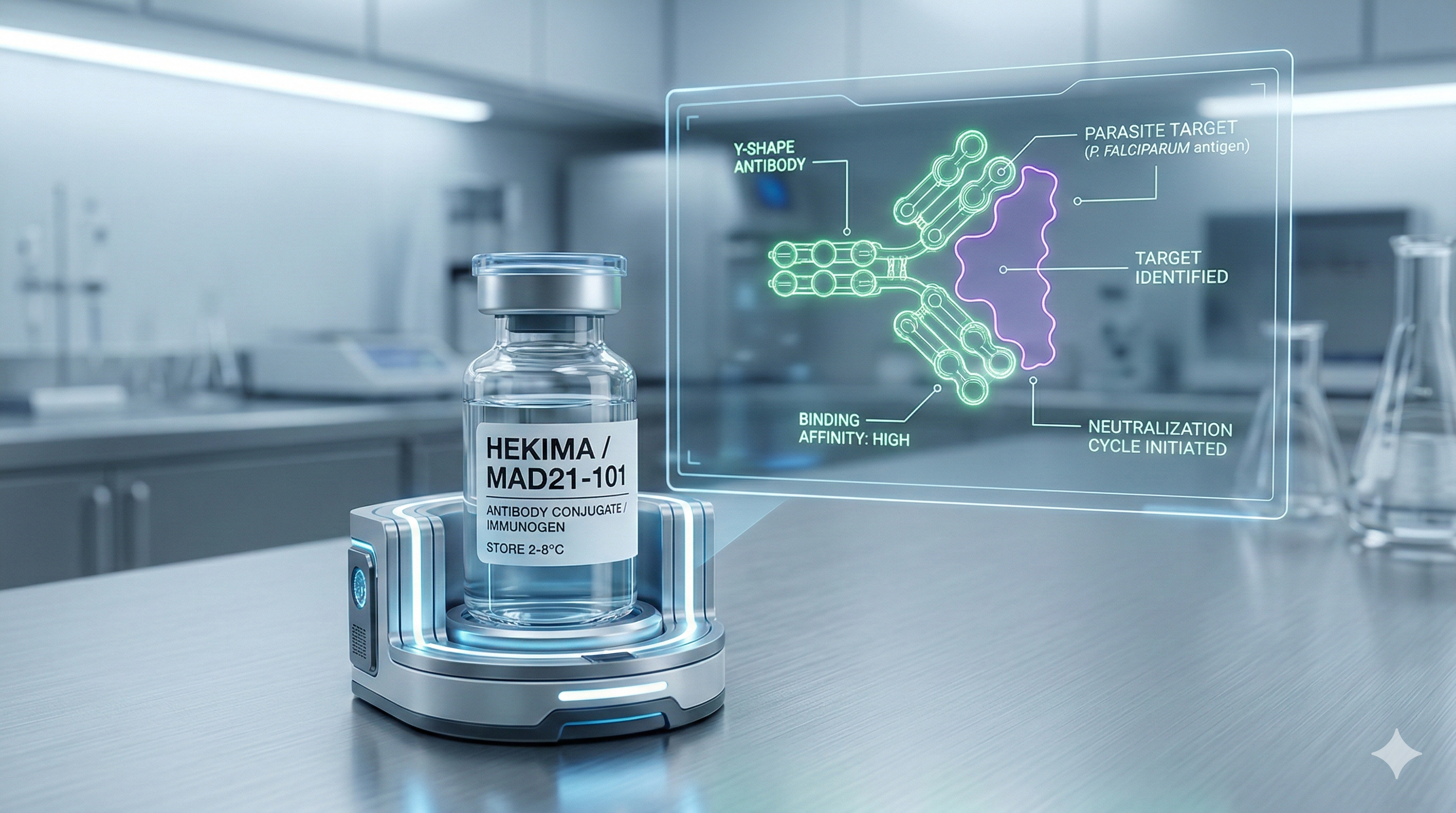
KEMRI is currently co-leading the HEKIMA project to test a groundbreaking alternative: monoclonal antibodies (mAbs). Unlike vaccines, a single injection of a lab-made antibody like MAD21-101 provides immediate, months-long protection without the need for daily medication . This is a fundamentally different way to stop infection before it starts, particularly for children from poorer households who struggle with long-term treatment schedules.
The science behind these antibodies is precise; MAD21-101 targets a “hidden” weak spot (the pGlu-CSP epitope) exposed only during a split-second of the parasite’s life cycle. Because this target is different from the one used by current vaccines, these antibodies could be used in combination to provide a “double shield” against infection. The challenge now lies in reducing production costs and ensuring these “monoclonal shields” are accessible to those who need them most .
References:
University of Bergen HEKIMA | The HEKIMA projects’s objective is to generate evidence on the cost-effectiveness, community acceptability, and health system feasibility of implementing the new treatment.
National Institute of Health Potential new target for malaria discovered
 Jijuze