Kenya’s tourism sector is embroiled in a polarizing debate over the proposed increase in park entry fees by the Kenya Wildlife Service (KWS)—a move that has triggered pushback from parts of the tourism industry. Critics argue that the price hike could drive tourists away and stall the sector’s fragile post-COVID recovery. But that narrative, while convenient, masks a more urgent reality: our current tourism pricing model is fundamentally unsustainable. Kenya’s parks remain globally underpriced, with outdated fee structures that neither reflect the ecological value of protected areas nor contribute meaningfully to the conservation costs borne by the country. The research-backed push for value-based pricing is not just about economics—it’s about survival. A model dependent on cheap mass tourism ultimately risks collapsing under the weight of its own footprint, undercutting the very landscapes and wildlife it profits from.
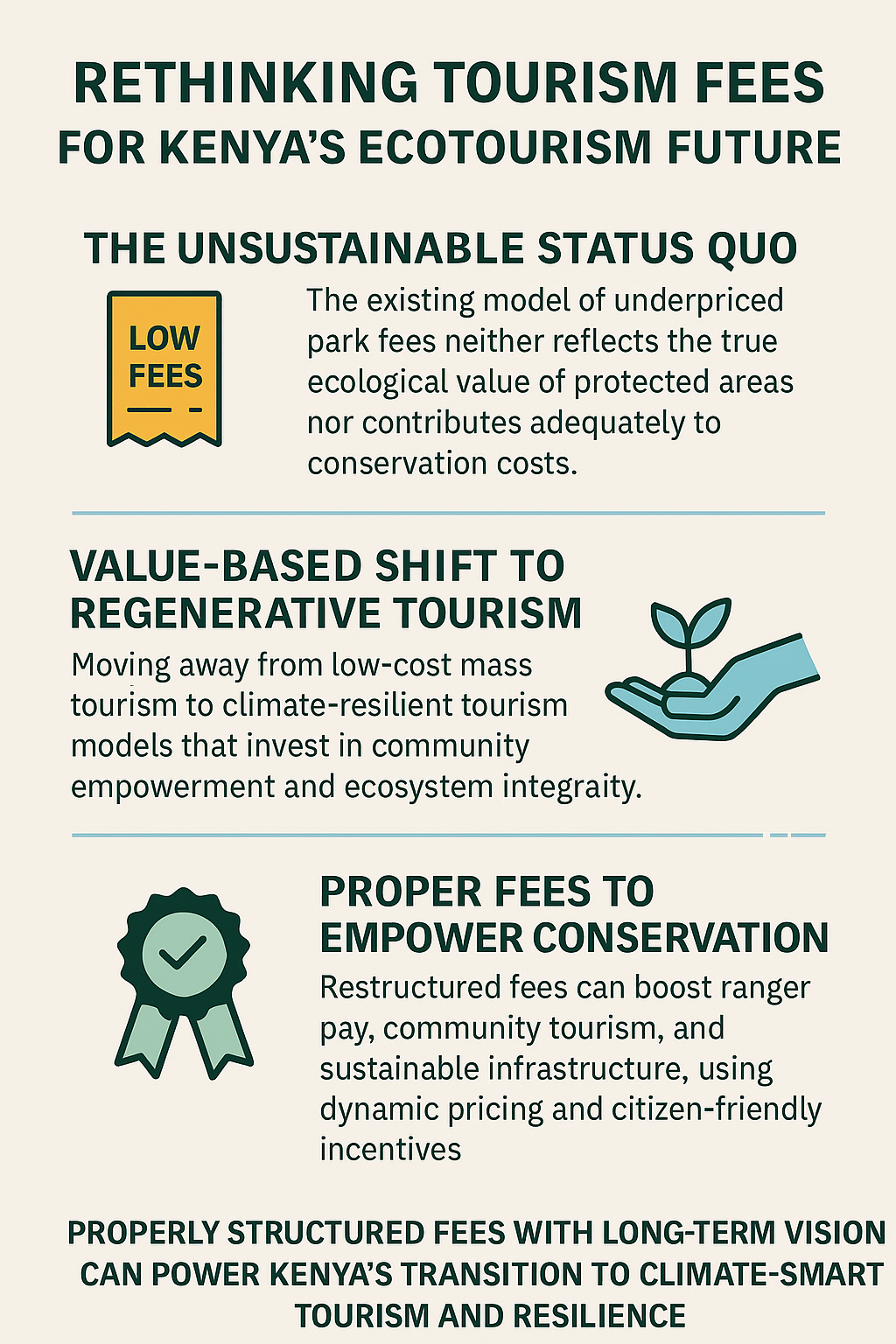
Behind this pricing debate is a much bigger question: what kind of tourism future does Kenya want? Thought leaders like Prof. Bitange Ndemo have laid out a compelling vision for a shift away from extractive tourism that prioritizes volume, to regenerative tourism anchored in climate resilience, community empowerment, and ecosystem integrity. That means investing in tourism models that diversify products—like cultural tourism, eco-lodges, digital nomad experiences, and heritage circuits—that share value beyond the traditional safari elite. It also means linking fees directly to visible benefits: better ranger pay, stronger community tourism projects, and infrastructure that supports conservation rather than compromises it. The government’s failure to transparently communicate how increased revenue would be reinvested only feeds public skepticism, but that shouldn’t be used to stall reform altogether. If anything, it’s a call for better governance—not retreat.
The real danger isn’t raising fees—it’s failing to raise the bar. Kenya sits on the cusp of becoming a global model for climate-smart tourism, but that future will not be built on subsidized access and status quo politics. Properly structured fees—coupled with dynamic pricing, seasonal packages, and citizen-friendly incentives—can empower conservation without excluding access. The goal is not to gatekeep Kenya’s beauty, but to protect it with intention and long-term vision. Every tourist who visits our parks should not just be a guest but a contributor to a shared legacy of resilience. That’s the story Kenya should be telling the world—and charging fairly for.
References:
MDPI Re-Imagining Heritage Tourism in Post-COVID Sub-Saharan Africa: Local Stakeholders’ Perspectives and Future Directions
Travel Weekly Weighing the pros and cons of Kenya’s proposed safari park fee increase
The Journal of African Policy Studies Sustainable Tourism in Kenya: An Analysis of Tourism Policy Currently Under Consideration
EAC Tourism and Wildlife Management
 Jijuze