Kenya Faces Crisis After USAID Funding Withdrawal

The abrupt cessation of funding from the United States Agency for International Development (USAID) has sent shockwaves through Kenya, marking a significant turning point in the country’s development trajectory. The decision by the US government to terminate approximately 83% of USAID’s global contracts has had an immediate and profound impact, with Kenya ranking as the seventh most affected nation worldwide, underscoring its heavy reliance on donor funding for crucial sectors. The sheer scale of the withdrawal, encompassing the cancellation of numerous projects across health, education, economic development, and governance, has left a void that will be challenging to fill. Organizations on the ground, such as CFK Africa, have reported widespread panic and uncertainty as essential healthcare services, particularly in the fight against HIV/AIDS and tuberculosis, face severe disruptions . The sudden halt has not only jeopardized the continuation of vital programs but has also resulted in significant job losses, with estimates suggesting that at least 35,000 Kenyans working in USAID-funded initiatives are now facing unemployment . This abrupt departure of a major development partner has ignited discussions about the long-term sustainability of Kenya’s development and the urgent need for alternative strategies.  

A Citizen Digital Report

The health sector in Kenya is bearing the brunt of the USAID funding freeze, with potentially devastating consequences for the progress made over the past two decades, particularly in combating the HIV/AIDS epidemic. While the US has allocated $66 million to HIV/AIDS programs in Kenya for 2025, this represents a significant decrease from the $846 million provided in 2023, signaling a concerning downward trend. The World Health Organization (WHO) had earlier warned that Kenya was among several countries at risk of running out of essential HIV drugs due to the aid pause, potentially undoing years of hard-won gains and leading to a resurgence of the disease. The termination has severely impacted the US President’s Emergency Plan for AIDS Relief (PEPFAR), which relies heavily on USAID’s logistical support, leading to an immediate halt in HIV treatment, testing, and prevention services across more than 50 countries. Reports from organizations like Médecins Sans Frontières (MSF) paint a grim picture of service shutdowns and treatment disruptions, leaving millions of vulnerable individuals without access to life-saving medications and care . The situation is further compounded by existing shortages of some HIV drugs within the country, creating a perfect storm that threatens to overwhelm the healthcare system .  

Beyond the immediate crisis in the health sector, the USAID funding cuts are expected to have far-reaching long-term repercussions across Kenya’s social and economic landscape . Programs supporting maternal and child health, tuberculosis and malaria control, water and sanitation, education, and economic development are all facing significant funding shortfalls . The termination of initiatives aimed at improving primary literacy, supporting smallholder farmers, and promoting trade and investment will hinder progress in these crucial areas . The Kenyan government now faces immense pressure to find alternative funding sources and implement sustainable development strategies to mitigate the impact of this significant withdrawal of aid . This necessitates a concerted effort to strengthen domestic resource mobilization, diversify international partnerships, engage the private sector, and foster local innovation to ensure the continued well-being and progress of the nation .

References:

The Star Kenya 7th most affected by US aid freeze

Aljazeera USAID’s demise raises fears for millions of lives across the Global South

Capital Business USAID funding halt to hit Kenya’s economy, social sectors – report

Nation USAID funding cuts disrupt vulnerable rural livelihoods in Turkana

Think Global Health Life After USAID: Africa’s Development, Education, and Health Care

Reliefweb CFK Africa Witnesses Devastating Effects in Kenya from End of U.S. Agency for International Development Support

Willow Health Media USAID Shut for Good: Millions at risk in Kenya, thousands jobless overnight 


What Fueled Kenya Airways’ Profits After Years of Losses?

Kenya Airways, long dubbed the “Pride of Africa,” has finally soared back into profitability in 2024 after an arduous eleven-year drought, reporting a net profit of Sh5.4 billion. This remarkable financial resurgence, a stark contrast to the Sh22.6 billion loss in the previous year, begs the question: what confluence of events truly orchestrated this dramatic turnaround? Was it solely the much-touted “Project Kifaru,” the airline’s recovery strategy emphasizing operational performance and customer service, or did external tailwinds, such as favorable foreign exchange gains amounting to a staggering Sh10.5 billion, play an equally significant role? While passenger numbers and cargo volumes saw encouraging increases, contributing to a rise in revenue, the sustainability of this newfound profitability in the face of ongoing global aviation challenges, including shortages of aircraft and spare parts, remains a key point of inquiry. Could this profit be a fleeting moment of relief, or does it genuinely signal a long-term stabilization for the national carrier?

A Report by Kenya Airways

Delving deeper, a complex web of strategic maneuvers and external market forces that appear to have influenced Kenya Airways’ financial trajectory are evident. The airline’s aggressive cost-cutting measures, including the innovative transformation of Msafiri House into a centralized operations hub and the implementation of a fuel hedging strategy, undoubtedly contributed to the improved bottom line. However, the crucial role of government intervention was significant, with substantial debt restructuring efforts providing much-needed financial alleviation. This raises further questions about the extent to which Kenya Airways’ profitability is dependent on continued state support and whether the airline can truly achieve long-term financial independence. Moreover, with plans for fleet modernization and route expansion underway, how will these ambitious initiatives be financed, and will they ultimately translate into sustained profitability in an intensely competitive African aviation market?

Looking ahead, the future of Kenya Airways remains a subject of both optimism and uncertainty. While the return to profitability has undoubtedly boosted investor confidence, as evidenced by the doubling of the airline’s share price, experts caution that significant challenges persist. The airline’s historical financial instability and the lingering substantial debt burden continue to cast a shadow, prompting questions about the feasibility of attracting a strategic investor by 2025, a key objective for long-term sustainability. Furthermore, the financial woes of its subsidiary, Precision Air, add another layer of complexity, raising concerns about potential risks to Kenya Airways’ investment. As the airline navigates the dynamic landscape of the global and African aviation industries, marked by fluctuating fuel prices and geopolitical tensions, the fundamental question remains: can Kenya Airways truly break free from its legacy of losses and establish a consistently profitable and sustainable future?

References:

The Star KQ’s turnaround: National Carrier posts Sh5.4 billion profit after a decade of losses

Business Insider Africa Kenya Airways posts profit in 2024 after over a decade of losses

Trading View Kenya Airways records profit after more than a decade of losses

Kenya Airways Kenya Airways Records an Operating Profit of KShs 10.5 Billion in Full Year Results


Elfyn Evans Wins 2025 WRC Safari Rally in Kenya

The roar of engines and the thrill of competition at the 2025 World Rally Championship (WRC) Safari Rally Kenya, held in the stunning landscapes of Naivasha, have once again translated into a significant economic victory for the nation, with Britain’s Elfyn Evans clinching the coveted title behind the wheel of his formidable Toyota GR Yaris Rally1. The four-day event, a highlight on the global motorsport calendar, drew tens of thousands of enthusiastic spectators, both local and international, eager to witness the high-octane action. This massive influx of visitors triggered a substantial surge in demand for accommodation, with hotels and lodging facilities in Naivasha reporting full occupancy throughout the rally period, creating a vibrant and bustling business environment. Beyond the immediate financial activity within the host region, the Safari Rally served as a powerful magnet for tourism, attracting a record number of motorsport aficionados and further solidifying Kenya’s position as a premier destination for unique and thrilling experiences. The Kenya Tourism Board’s proactive campaigns, coupled with the inherent allure of the Safari Rally, successfully drew in a significant increase in visitors from the East African region, amplifying the positive impact on the local hospitality sector and demonstrating the growing appeal of motorsports tourism within the community.  

Final Day Highlights by DirtFish

The global spotlight shone brightly on Kenya during the Safari Rally, with broadcasts reaching over 120 million viewers across 70 countries, offering an unparalleled opportunity to showcase the nation’s breathtaking scenery and vibrant culture on an international stage. This extensive media coverage not only elevates Kenya’s global profile but also holds the potential to attract future tourism and investment. The success of the event was further underpinned by the generous financial support of numerous sponsors, including major players like KCB Bank, Betika, Safaricom, and White Cap, demonstrating the strong commercial appeal and value of the Safari Rally. Notably, the Kenyan government continued its efforts to optimize the financial aspects of hosting the rally, significantly reducing expenditure compared to previous years while still anticipating a substantial economic contribution of approximately Sh7 billion to the Kenyan economy. This projected figure underscores the vital role of the Safari Rally as a key economic catalyst, building upon the impressive Sh38 billion contribution from the 2021 edition, highlighting the enduring economic power of this iconic event. Moreover, Toyota’s remarkable performance, culminating in Evans’ victory, marks their fifth consecutive win at the Safari Rally Kenya, a testament to the reliability and prowess of their rally vehicles .  

Head to head run between T. Neuville(Hyundai) vs. Elfyn Evans(Toyota) courtesy of FIA World Rally Championship

Looking beyond the immediate thrills and spills of the race, the Safari Rally acts as a crucial driver for infrastructure development and fosters long-term economic benefits for Kenya. The consistent demand for hospitality services in Naivasha has spurred significant investments in hotels and accommodation facilities, enhancing the region’s capacity to cater to future tourists. Moreover, the rally provides numerous employment opportunities for local communities, from event organization and logistics to supporting the influx of visitors, contributing to enhanced livelihoods across various sectors. The government’s strategic focus on increasing private sector involvement in funding the rally points towards a sustainable future for this prestigious event, ensuring its continued presence in Kenya and its ongoing contribution to the national economy. As Kenya continues to negotiate with the WRC Promoter to extend its hosting rights beyond 2026, the enduring legacy and substantial economic impact of the Safari Rally solidify its importance as a national asset and a key player in the growth of Kenya’s economy.

References:

FIA WRC – Evans/Martin seize Safari Rally Kenya victory to hold record championship lead

Safari Rally Kenya Tens of thousands throng to watch 2025 WRC Safari Rally conclude in Naivasha

KBC Tourism,Business booms as Naivasha basks in WRC Safari Rally Championship

Business Daily WRC Safari Rally is Kenya’s biggest business pitch to the world in 2025


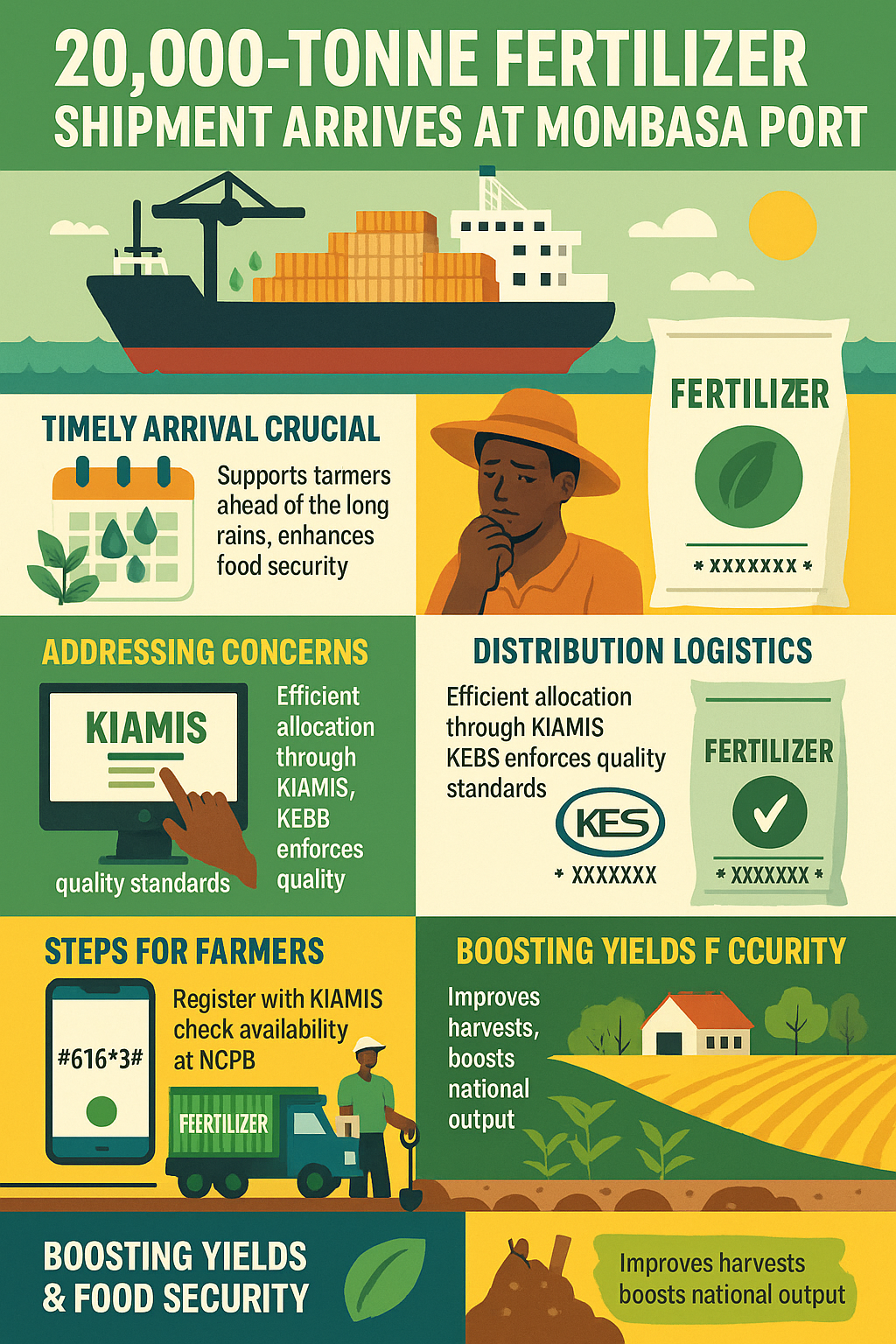
How to Access Subsidized Fertilizer in Kenya

The arrival of a 20,000-tonne fertilizer consignment at Mombasa Port marks a significant milestone in the government’s efforts to support farmers ahead of the long rainy season, a crucial period for agricultural production in Kenya. The timely arrival of this shipment is expected to provide much-needed inputs to enhance food security and boost national yields. An additional 1,300 metric tons of fertilizer is expected soon, further reinforcing the commitment to ensuring farmers have access to essential inputs. However, concerns remain over the lack of transparency regarding the origin and composition of the shipment. The absence of details on the supplier and specific types of fertilizer included in the consignment may limit farmers’ ability to plan effectively, as different soil types and crops require specialized fertilizers for optimal growth. Additionally, past cases of substandard or expired fertilizers in the market have made quality assurance a priority for farmers and stakeholders alike. The government’s approach to addressing these concerns focuses on efficient allocation and swift distribution, primarily managed through the Kenya Integrated Agriculture Management Information System (KIAMIS), ensuring that only registered farmers receive their fair share of subsidized fertilizer.

To guarantee the quality of fertilizer reaching farmers, the Kenya Bureau of Standards (KEBS) plays a critical role in enforcing national quality standards. Farmers are urged to verify the authenticity of their fertilizer by checking for the KEBS Standardization Mark on the packaging and utilizing the SMS verification system by texting the unique code beneath the mark to 20023. This verification step is essential to protect farmers from counterfeit or substandard products that could negatively impact yields. Furthermore, distribution logistics have been carefully structured to ensure that fertilizer reaches key agricultural regions efficiently. The government, in collaboration with the National Cereals and Produce Board (NCPB), is overseeing a multi-modal transportation plan where the fertilizer is first transported from Mombasa to Naivasha by train and then distributed to major farming areas like Uasin Gishu, Bomet, and Nakuru via trucks. This logistical approach is intended to overcome transportation bottlenecks and ensure that farmers across the country receive their fertilizer in time for planting. However, the initial reports do not specify which types of fertilizers—such as Diammonium Phosphate (DAP) or Calcium Ammonium Nitrate (CAN)—are included in the shipment, leaving many farmers uncertain about how best to apply them to different crops. As a result, farmers are encouraged to seek further clarification from NCPB depots or agricultural extension officers before application.

Farmers looking to access the subsidized fertilizer must ensure they are registered with KIAMIS, a digital platform designed to streamline distribution and enhance transparency. Registration can be done through the National Government Administration offices, including local chiefs and village elders, or by dialing *616*3# to confirm or update their details. The use of this system helps prioritize genuine farmers while reducing the risk of fraudulent claims. Once registered, farmers should promptly check with their nearest NCPB depots to inquire about fertilizer availability and collection procedures, as delays in retrieval could affect their planting schedules. Additionally, soil testing is recommended to determine the specific nutrient requirements for different crops, allowing farmers to apply the right type and amount of fertilizer for maximum productivity. Staying informed through official government communication channels, such as the Ministry of Agriculture and NCPB updates, is crucial to keeping track of distribution schedules and additional shipments. With proper planning, timely collection, and strategic application of fertilizer, Kenyan farmers stand to significantly improve yields, contributing to national food security and economic growth.

References:

Kenya News Agency Farmers to receive fertilizer ahead of long rains

The Eastleigh Voice 20,000 tonnes of fertiliser arrive at Mombasa port as planting season starts

KEBS Marks of Quality

All Africa Kenya: Govt Assures Farmers On Subsidy Fertilizer Quality


High Court Strikes Down Government Media Directive

In a significant blow to the government’s media policy, the High Court has resoundingly declared as unconstitutional a directive that sought to channel all public sector advertising exclusively through the state-owned Kenya Broadcasting Corporation (KBC). This landmark ruling, delivered by Justice Lawrence Mugambi, effectively nullifies the order issued by the ICT Principal Secretary, Edward Kisiang’ani, in March 2024, which mandated that all government ministries, agencies, and parastatals place their advertising solely with the national broadcaster. The court’s decisive action underscores the judiciary’s commitment to upholding the tenets of the Kenyan Constitution, particularly those safeguarding media freedom, equality, and the principles of good governance, thereby setting a crucial precedent for the relationship between the state and the media landscape.  

A Report by KTN News Kenya

The High Court’s judgment hinged on the finding that the directive contravened several fundamental articles of the Constitution. Justice Mugambi meticulously detailed how the policy violated Article 10, which enshrines good governance and integrity, Article 27, which guarantees equality and freedom from discrimination, and Article 34, which protects the freedom of the media. The court reasoned that limiting government advertising to a single entity constituted an indirect form of control over the media, potentially stifling dissenting voices and undermining the independence of the press. Furthermore, the judge pointed out a critical procedural flaw, asserting that the ICT Principal Secretary had overstepped his legal authority, as the power to make such a significant policy decision regarding public procurement of advertising services rests solely with the Treasury Cabinet Secretary. This lack of legal mandate rendered the directive void from its inception, highlighting the importance of adherence to established legal frameworks in government operations.

The implications of this ruling extend far beyond a mere legal victory; it serves as a powerful reaffirmation of the critical role of a diverse and independent media in a democratic society. Had the directive been allowed to stand, it would have created an uneven playing field, unfairly disadvantaging private media houses that rely heavily on government advertising revenue for their sustainability. Critics had argued that such a policy would not only threaten the financial viability of independent media outlets, potentially leading to job losses and closures, but also limit the public’s access to a plurality of voices and perspectives. The court’s decision safeguards against the potential for government influence through financial leverage, ensuring that the media can continue to operate as a watchdog, holding power to account and providing the public with the information necessary for informed participation in national discourse.

References:

Citizen Digital High Court declares gov’t advertising monopoly unconstitutional

Nation ‘Non-existent powers’: Court quashes PS Kisiang’ani order restricting State advertising to KBC

Kenyans.co.ke High Court Rules That Kisiang’ani Directive Moving Govt Advertising to KBC is Unconstitutional

The Eastleigh Voice High Court declares ICT PS Kisiang’ani has no powers to decide who gets govt advertising

The Standard State cancels adverts to Standard Media as court set to rule on ad monopoly case


Benni McCarthy’s Impact on Harambee Stars: A New Era for Kenyan Football

The appointment of Benni McCarthy as the head coach of the Harambee Stars marks a significant moment for Kenyan football, injecting a fresh wave of optimism after a decade characterized by managerial instability. Since 2015, the national team has seen a revolving door of coaches, with an average tenure of less than a year, hindering the development of a consistent playing style and team cohesion . This frequent turnover, as evidenced by the ten different coaches who have taken the helm in the last ten years, underscores the deep-seated challenges that have plagued the Harambee Stars . McCarthy’s arrival, however, brings a palpable sense of anticipation, fueled by his illustrious playing career in Europe and his recent experience as a first-team coach at Manchester United . This impressive pedigree has resonated with both the public and football experts, many of whom hope that McCarthy possesses the tactical knowledge and leadership qualities to finally guide Kenya back to its long-desired “glory days” .  

A Report by Habari 254tv

Despite the initial excitement, McCarthy faces a complex landscape with inherent challenges that could impact his chances of success. A primary concern revolves around his familiarity with the Kenyan football scene and its players, as he admitted to having limited prior knowledge of the current squad . While former Harambee Stars coach Francis Kimanzi has been brought in to provide local expertise and assist with talent identification, the learning curve for McCarthy will be steep . Furthermore, the historical context reveals that coaching changes alone have not been a panacea for Kenyan football’s woes, with systemic issues such as financial instability within the federation and infrastructural deficiencies in player development often undermining even the most promising appointments . Public sentiment, while largely positive, also carries a note of caution, with some fans expressing concern about potential interference from the federation and the need for sustained support beyond just the initial appointment .  

Ultimately, Benni McCarthy’s chances of revitalizing the Harambee Stars hinge on a delicate balance of factors. His proven coaching abilities and commitment to an attacking style of play offer a promising foundation, and the support of key players like captain Michael Olunga is a significant boost . However, the historical instability of the coaching position and the enduring systemic challenges within Kenyan football cannot be ignored . For McCarthy to succeed in bringing sustained success, he will require not only the full backing of the Football Kenya Federation in terms of resources and autonomy but also the patience and understanding of the Kenyan public as he navigates the complexities of the local football environment . While his appointment offers a renewed sense of hope, the journey to reclaiming “glory days” will demand a concerted and sustained effort from all stakeholders to address the multifaceted issues that have historically hindered the Harambee Stars’ progress.  

References:

FIFA McCarthy appointed Kenya coach

The Eastleigh Voice McKinstry’s Kenyan reunion presents clash of similar styles ahead of Gambia’s encounter against Harambee Stars

Pulse Sports Explainer: Why Francis Kimanzi’s deep football knowledge is critical for Benni McCarthy’s Harambee Stars project

Nation Harambee Stars coaches come and go, an average of one every 16 months since 1961


Kenya Ends $3.6 Billion IMF Loan: A Turning Point

Kenya’s decision to mutually end its $3.6 billion loan arrangement with the International Monetary Fund (IMF) marks a significant shift in the nation’s approach to economic management, primarily driven by a confluence of unmet fiscal targets and mounting public discontent . The existing Extended Fund Facility (EFF) and Extended Credit Facility (ECF) arrangement, while having disbursed a substantial $3.12 billion, faced a critical juncture with its ninth review, which ultimately was not pursued . The core issue stemmed from Kenya’s inability to meet specific fiscal obligations stipulated under the program, leading to the cancellation of a significant $850 million payment . This failure to adhere to the agreed-upon spending and revenue collection benchmarks highlighted the challenges President Ruto’s administration encountered in balancing the demands of fiscal discipline with the socio-political realities on the ground . Compounding these difficulties were the widespread public protests against the Finance Bill of 2024, a piece of legislation designed to boost government revenue in line with IMF recommendations but which proposed tax hikes on essential goods, triggering significant public outcry and ultimately its withdrawal . Despite this setback, Kenya has already initiated discussions with the IMF for a new loan agreement, indicating a continued recognition of the necessity for external financial support as the nation grapples with a considerable debt burden.  

A Report by NTV Kenya

The abrupt termination of the IMF program carries significant implications for Kenya’s already strained economic landscape, particularly concerning its high levels of debt and the stability of its financial markets . With a debt-to-GDP ratio exceeding sustainable thresholds and a substantial portion of government revenue already committed to debt servicing, the discontinuation of IMF funding introduces a potential funding gap that could further exacerbate these vulnerabilities . While the government has sought alternative financing through a loan from the UAE and the restructuring of Eurobonds, these measures may come with increased borrowing costs and potential foreign exchange risks . Experts also anticipate that the absence of the IMF program’s oversight could lead to renewed pressure on the Kenyan Shilling and the external sector, potentially impacting inflation and investor confidence . The IMF itself had previously assessed Kenya’s public debt as being at a high risk of distress, and the termination of the program could intensify these concerns, making future access to international capital markets more challenging and potentially increasing the long-term risk of default .  

Looking ahead, Kenya faces a period of economic uncertainty that will require careful navigation and strategic policy decisions . The government will likely need to implement further austerity measures, including budget cuts and enhanced domestic revenue collection, to compensate for the lost IMF funding and maintain fiscal credibility . The success of these measures, coupled with the ongoing negotiations for a new IMF loan agreement targeted for finalization by November 2025, will be crucial in determining Kenya’s economic trajectory . Building public trust and ensuring transparency in the implementation of fiscal reforms will be paramount, especially in light of the recent widespread protests against IMF-backed austerity measures . Ultimately, Kenya’s ability to achieve long-term economic stability and inclusive growth will depend on its commitment to fiscal discipline, equitable revenue mobilization, and sound governance practices in the absence of the previous IMF program.

References:

News Central Kenya Abandons Existing IMF Programme in Pursuit of New Loan Agreement

Further Africa Kenya and IMF Drop Loan Review and Move Toward New Financing Deal

Daba Finance Kenya Faces IMF Setback After $800M Review Falls Through

Aljazeera What do the IMF and foreign debt have to do with Kenya’s current crisis?

The Eastleigh Voice Gen Z anti-tax demos dented Kenya’s GDP growth prospect for 2025 – IMF

African Business IMF exit and eurobonds raise questions over Kenyan debt


Impact of Kenya’s Court Decision on University Funding

Kenya’s ambitious new university funding model, intended to revolutionize higher education financing, remains in a state of uncertainty following a decisive blow from the High Court, which declared it unconstitutional in December 2024. Justice Chacha Mwita cited a lack of legal framework, discriminatory elements based on financial ability, school type, age, and ambiguous criteria like “household income,” and insufficient public participation as key reasons for the ruling, a decision hailed as a victory by students and civil society groups who had long protested the model’s perceived unfairness. The National Student Caucus celebrated the ruling as an opportunity for national reflection on tertiary education funding, echoing the sentiments of thousands of students who had earlier taken to the streets in September 2024, decrying the increased financial burden placed on them and their families, with over 10,000 students even appealing their assigned funding allocations. Parents, too, voiced relief, having expressed fears that the new model would lock out deserving students due to unaffordable costs and flawed categorization through the Means Testing Instrument (MTI). The Kenya Human Rights Commission (KHRC), a key petitioner in the case alongside the Elimu Bora Working Group and a Students’ Caucus, framed the model as a manifestation of “neoliberal” policies that commodify education, emphasizing the need for a funding approach that prioritizes accessibility and equity for all Kenyans, as education is considered a fundamental public good.  

A Report by Citizen Digital

Despite the High Court’s firm stance, the government has swiftly appealed the decision, with Education Cabinet Secretary (CS) Julius Ogamba reaffirming the commitment to the model’s core principles of ensuring no needy student is left behind and highlighting that the government had doubled funding to universities in the past two years. While acknowledging the initial challenges and inaccuracies in the Means Testing Instrument (MTI), the government is actively working on revisions, with a special committee appointed by President William Ruto submitting a preliminary report proposing changes and aiming for a re-introduction by September to coincide with the admission of new first-year students. However, this legal tug-of-war has created a significant impasse, leaving universities in a precarious financial situation. Professor Daniel Mugendi, chair of the Public Universities Vice Chancellors’ Committee, warned of an impending crisis if the matter is not resolved promptly, highlighting the difficulties in running institutions with delayed fund disbursements, especially for first and second-year students who cannot access government support as the allocated funds are held by the Higher Education Loans Board (HELB) and the Universities Fund (UF) awaiting court direction. The Universities Fund (UF) Chief Executive Officer (CEO), Geoffrey Monari, also voiced concerns that the suspension could exacerbate the already mounting public debt for universities, emphasizing the intended benefits of the new model in alleviating financial strain and granting universities independence to commercialize research. Currently, universities are navigating the uncertainty by agreeing not to demand fees from first and second-year students until the issue is resolved through the courts, while relying on the older Differentiated Unit Cost (DUC) model for continuing students.  

As the legal battle continues, stakeholders are actively proposing alternative solutions and voicing their concerns about the long-term implications. Private universities, through the National Association of Private Universities in Kenya (NAPUK), have seized this moment to advocate for a fundamental shift towards a loan-based funding model, suggesting the establishment of a unified National Students Financial Aid Corporation (NSFAC) to streamline financial assistance across both public and private institutions and move away from a “social-welfare orientation.” This proposal reflects a broader debate about the sustainability and equity of higher education financing in Kenya, especially considering historical funding disparities where private universities received significantly less government support under the DUC model. The ongoing uncertainty has left many first and second-year students in limbo, unsure of the fees they will ultimately be required to pay, with some even facing difficulties in enrolling or sitting for exams due to the funding crisis, as universities demand outstanding fees based on the now-unconstitutional band system. Furthermore, an audit report revealed significant operational challenges and management flaws in the initial implementation of the new funding model, including a lack of coordination between key agencies like the UF, HELB, and the Kenya Universities and Colleges Central Placement Service (KUCCPS), raising concerns about the efficiency and fairness of fund allocation and the long-term sustainability of the fund given low loan repayment rates. The path forward remains unclear, but the need for a resolution that addresses both the financial sustainability of universities and the accessibility of higher education for all qualified Kenyan students is more pressing than ever.  

References:

People’s Dispatch Kenya’s High Court delivers blow to neoliberal university funding model

Business Daily Hundreds of students locked out of varsities as finance woes persist

KBC Private Universities offer middle ground proposals on funding model

Nation Ogamba: Improved draft for new varsity funding model ready

Capital News High Court declines to lift orders quashing new University Funding Model

Nation Hundreds fail to report to universities over funding crisis

Kenya’s Healthcare Financing: SHA Performance Review

Six months after its nationwide launch in October 2024, Kenya’s ambitious transition from the National Health Insurance Fund (NHIF) to the Social Health Authority (SHA) and its financing arm, the Social Health Insurance Fund (SHIF), is facing significant challenges, casting a shadow over the nation’s pursuit of Universal Health Coverage (UHC). An early assessment reveals a concerning decline in the implementation’s performance score, dropping from 46 percent in December to a meager 44 percent by February 2025, earning a “poor grade of D” . This regression, highlighted by the Rural and Urban Private Hospitals Association of Kenya (Rupha), points to a deterioration in crucial service delivery areas, notably the financial health of healthcare providers, the functionality of the new system, and the efficiency of outpatient reimbursements . While some progress has been noted in areas like e-contracting and patient verification, these minor advancements are struggling to offset the growing difficulties in critical domains such as claims management and ensuring the financial stability of hospitals and clinics across the country .

A Report by Citizen Digital

A major stumbling block in the initial phase of SHA/SHIF has been the glaring financial instability plaguing healthcare providers due to inconsistent and delayed payments . Alarmingly, nearly half of all healthcare facilities reported receiving irregular payments as of February 2025, with the situation particularly dire for smaller, level two and three hospitals, where a staggering 64 percent reported receiving no payments at all . This precarious financial situation is compounded by a substantial inherited debt of Sh30.9 billion from the NHIF, further straining the already limited resources of the SHA . The significant funding gap between the projected Ksh168 billion needed for full implementation and the mere Ksh6.1 billion allocated to the SHA in the current budget raises serious questions about the long-term sustainability of the scheme . Operational inefficiencies are also hindering progress, with increasing difficulties reported in claims management and the effectiveness of new reimbursement models . Moreover, ongoing system updates and persistent challenges in navigating the SHA portal are impacting service delivery, while public hospitals are grappling with long waiting times and service delays .

Public perception and adoption of the new healthcare system also present considerable hurdles. Despite the mandatory nature of the scheme, registration and active contribution rates remain worryingly low, with only 3.3 million Kenyans actively contributing out of the 19.4 million registered . This is further underscored by the fact that initial voluntary registration fell far short of the government’s target . Public resistance has been fueled by concerns over the new contribution model, which sees salaried workers contributing a higher percentage of their income compared to the previous flat rate under NHIF . This has led to calls for a fairer system, particularly for low-income households . Furthermore, reports indicate a concerning rise in out-of-pocket expenses for patients, particularly in private and faith-based facilities, contradicting the very aim of UHC to reduce the financial burden of healthcare . Coupled with reports of limited coverage and lower reimbursement rates for specialized treatments compared to the NHIF, the initial performance of SHA/SHIF suggests that significant challenges must be urgently addressed to ensure its effectiveness in providing equitable and quality healthcare for all Kenyans .

References:

Nation Explainer: How to make Kenya’s NHIF-SHIF transition less painful

Nation Healthcare reforms suffer setback as SHA performance declines

Nation Bold commitment to Kenya’s healthcare equity and growth

Newcastle United Ends Trophy Drought: A Historic League Cup Victory

Manchester United are showing signs of life under new boss Ruben Amorim, with captain Bruno Fernandes leading the charge in spectacular fashion. The Portuguese maestro has bagged four goals in his last two outings, including a hat-trick in the Europa League, sparking hopes of a resurgence at Old Trafford. Amorim’s tactical switch to a dynamic 3-4-3 formation seems to be unlocking the team’s attacking potential, but questions remain whether this purple patch can be sustained against tougher opposition in the long run. While the Red Devils faithful will be buoyed by these recent performances, the true test of their revival is still to come.

Newcatle United beat Liverpool to win Carabao Cup

Meanwhile, in a jubilant turn of events, Newcastle United ended a decades-long trophy drought yesterday by clinching the English League Cup. The Magpies soared to a 2-1 victory over Premier League leaders Liverpool in a thrilling final at Wembley. Goals from Dan Burn and Alexander Isak sealed a historic win for Eddie Howe’s side, marking their first major domestic silverware in 70 long years. The Toon Army erupted in celebration as their team finally lifted a coveted trophy, a testament to the club’s resurgence under their new ownership and manager.

Yesterday’s contrasting fortunes highlight the unpredictable nature of football, with both Manchester United and Newcastle enjoying significant moments. For United, the challenge lies in building on their recent spark and proving their return to form is more than just a flash in the pan. For Newcastle, the League Cup triumph could be the catalyst for further success, fueling their ambition to compete at the highest level. Football fans will be watching keenly to see if these recent highs can translate into sustained achievements for both clubs.

References:

Premier League Manchester United

The Guardian Newcastle sink Liverpool to savour taste of glory after decades of drought

The Guardian Rasmus Højlund ends goal drought as Manchester United cruise past Leicester