Challenges Faced by Mobius Motors in Kenya’s Business Environment

The recent closure of Mobius Motors, Kenya’s only home-grown car manufacturer, after 13 years of operation, underscores the challenging business environment in the country. The company, which specialized in building rugged vehicles suited for African roads, cited mounting debts and an ongoing tax dispute with the Kenya Revenue Authority (KRA) as primary reasons for its shutdown. Mobius’s directors decided to liquidate the company to settle debts and distribute any remaining assets to shareholders.

Mobius III

Mobius Motors was founded in 2011 with the vision of producing affordable and durable vehicles tailored to the local market. Despite initial success and investor interest, Mobius struggled to compete with more advanced global automakers like Toyota and Volkswagen. These companies, with their established brands and economies of scale, dominated the market with superior technology and extensive product lines. Additionally, Mobius faced financial challenges exacerbated by a significant tax demand from KRA and stiff competition from the importation of cheaper used cars from Japan, which further limited their market share​.

The shutdown of Mobius Motors highlights broader issues within the Kenyan business landscape, particularly regarding the ease of doing business and the tax regime. Many local companies face similar challenges, making it difficult for them to thrive. The decline in sales within the automotive sector further indicates a tough operating environment for businesses in Kenya, calling for urgent reforms to enhance business viability and competitiveness​.

References:

The Standard Mobius car maker shuts down after 13 years amid mounting debts, tax dispute

The Star End of the road for Kenya’s only home grown car

Reuters Kenya’s Mobius, maker of rugged cars for African roads, calls it a day

Business Daily Mobius shuts down after 13-year journey

Nation End of an era as Mobius shuts down after 13-year drive
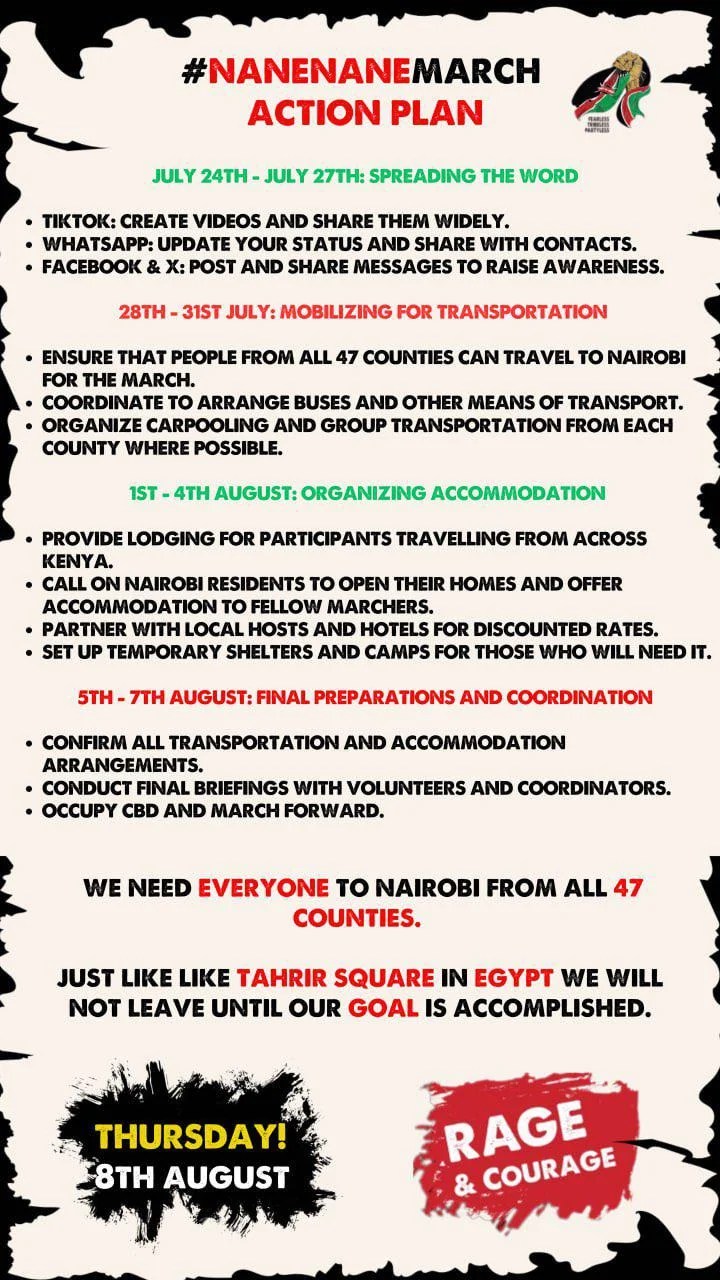
Nane Nane 2024: Gen Z Activists Mobilize for Peaceful Protests in Kenya

In Kenya, August has become a pivotal month for reflection and activism. On August 8, 2023, the Kenya Human Rights Commission (KHRC) organized peaceful demonstrations in Nairobi, known as “nane nane,” to protest against police brutality observed in anti-government protests the previous month. This tradition of August activism echoes the political fervor of August 8, 2022, when Kenyans prepared to vote in a highly charged election. The date has become synonymous with significant societal and political checkpoints in the country, reflecting a pattern of civic engagement and calls for change.

Nane nane Action Plan making rounds in social media

This year, the spirit of activism continues as Gen Z activists announce fresh protests on August 8, 2024, emphasizing non-violence. Events are being planned across the country, with Trans Nzoia youths being particularly urged to maintain a peaceful stance during the Nane Nane March. The movement has gained momentum with cultural contributions like songs aimed at mobilizing the youth and highlighting the importance of unity and peaceful protest. These demonstrations aim to address longstanding issues such as governance, corruption, and social justice, reinforcing the youth’s role in shaping the nation’s future.

The right to peaceful assembly and demonstration is enshrined in the Kenyan Constitution under Article 37, which guarantees citizens the freedom to assemble, demonstrate, picket, and present petitions to public authorities. Amnesty International highlights that freedom of expression and peaceful protest are fundamental human rights essential for the functioning of a democratic society. Nonviolent resistance, as detailed in various historical contexts, has proven effective in achieving social and political change without resorting to violence. For Gen Z activists, maintaining a peaceful approach is essential. Strategies to ensure non-violence include clear communication of objectives, avoiding confrontations with law enforcement, and staying organized. It’s crucial for protestors to focus on their goals and engage in constructive dialogue. Diplomatic channels for grievances should be explored to ensure their message is heard effectively. This approach not only safeguards the protestors but also strengthens their cause, demonstrating a commitment to positive and sustainable change in Kenya.

References:

The Kenya Times Gen Zs Announce Fresh Protests ‘Nane Nane’, Unveil Line-up of Events

The Mt. Kenya Times Trans Nzoia Youths Urged to Embrace Non-Violence Ahead of Planned Nane Nane March

The Star Kenyan composes song to mobilise Gen Zs ahead of August 8 protests

NTV Kenya Maandamano: KHRC announces demonstrations to protest police brutality

Carnegie Endowment for International Peace In Kenya’s 2022 Elections, Technology and Data Protection Must Go Hand-in-Hand

Nation What you need to know of the Kenya election as at August 8

Challenges of Nullifying Kenya’s Finance Act 2023 | Impact on Government Operations

The nullification of Kenya’s Finance Act 2023 has presented a severe challenge for President William Ruto’s administration, impacting fiscal policies and government operations. The suspension of this critical legislation threatens to undermine the government’s financial stability, potentially resulting in a loss of approximately KSh 211 billion in the current financial year. This significant revenue gap could disrupt budgetary commitments and essential public services, highlighting the urgency of resolving the legal and constitutional disputes surrounding the Act​.

Firstpost Africa Report

The controversy extends beyond financial implications, touching on issues of constitutional and procedural integrity. Critics, including Busia Senator Okiya Omtatah, argue that the Act was passed without adequate public participation and proper parliamentary procedures. They contend that several provisions were included without Senate endorsement and that some tax proposals were introduced without thorough deliberation, raising questions about the democratic process and transparency in legislative proceedings. These concerns have fueled ongoing legal battles that underscore the complexities of implementing fiscal reforms in Kenya​.

As the Supreme Court prepares to issue further directions on August 28, 2024, the government’s path forward remains uncertain. The situation calls for a comprehensive review of the disputed provisions of the Finance Act, enhanced public consultation, and strict adherence to constitutional mandates. Such measures are essential to rebuilding public trust, ensuring legislative integrity, and fostering a more inclusive and transparent fiscal policy framework. This case also resonates with global calls for more democratic financial policies, emphasizing the importance of public involvement in economic decision-making processes.

References:

The Star Treasury wants nullification of Finance Act 2023 suspended

The Star EXPLAINER: Consequences of nullifying Finance Act 2023 on taxation and budget

Reuters Kenyan court nullifies 2023 finance law in new blow to President Ruto

Global Stock Markets in Sharp Decline Amid Looming Recession Fears

Global stock markets ended the week in a sharp decline as fears of a looming recession intensified among investors. Big Tech’s massive investments in artificial intelligence, once hailed as transformative, are now under scrutiny following disappointing earnings reports from companies like Amazon and Intel. This turmoil was palpable, with Intel suffering its worst trading day since the 2000 dot-com bubble burst, shedding about 20% due to poor earnings, suspended dividends, and significant job cuts. This volatility also rippled through bond markets, with Treasury yields plummeting and the VIX ‘fear index’ surpassing 20 for the first time since April.

Bloomberg Television

Despite sidestepping a recession in 2023, the outlook for 2024 appears grim, with experts now predicting a mild downturn or a soft landing at best. The latest U.S. employment report revealed lackluster job growth in July and an unemployment rate climbing to 4.3%, further stoking recession fears. However, some analysts argue that these indicators might be misleading. The Federal Reserve’s interest rate decisions remain a critical focus, with markets increasingly betting on significant rate cuts by September. This sentiment reverberates globally, as European and Asian markets also show signs of distress, and central banks, including the Bank of England, initiate rate cut cycles, highlighting the potential for a widespread economic slowdown.

Amid this global economic uncertainty, the Kenyan shilling has been experiencing considerable volatility, recently dipping to 131 against the dollar. The decline is attributed to a mix of domestic factors, including recent protests that have disrupted trade and tourism, as well as broader economic pressures such as the rising dollar and global recession fears. The shilling’s instability is further evidenced by its fluctuations against other major currencies like the Sterling pound and Euro. As investors brace for continued market turbulence, the performance of the shilling will be closely monitored along with key economic reports and Federal Reserve decisions. The interplay of global market dynamics and local economic conditions will be crucial in shaping the financial landscape in the coming weeks, with the Kenyan economy facing additional pressures from inflation and debt servicing costs.

References:

The Guardian Fear of US recession rattles global markets as tech shares fall

The Economic Times Is there a fear of recession in the U.S? Here’s all you need to know

Reuters Morning Bid: Rethinking recession risks and AI, markets take fright

CNBC The U.S. avoided a recession in 2023. What’s the outlook for 2024? Here’s what experts are predicting

Market Watch Recession fears fuel swings in interest-rate expectations and 2-year Treasury yield

PBS News Unemployment rise shakes stock markets, yet recession signals have been wrong — so far

CBC Global stock markets end week in a slump over fears of U.S. recession

Infinix CogLabs: Revolutionizing Africa with AI Education

Infinix Mobility isn’t just a tech brand; it’s an agent of change, striving to empower Africa through the transformative power of artificial intelligence (AI). Their ambitious CogLabs initiative, born from a partnership with Google and UNESCO, transcends traditional education models. CogLabs blends hands-on workshops integrating 3D printing, robotics, and basic programming with a revolutionary mobile application that democratizes access to machine learning and coding concepts. This digital platform, accessible on any smartphone, breaks down geographical barriers and economic disparities, ensuring every child has the opportunity to unlock their potential in the AI-powered future.

Infinix Partners with UNESCO for STEM Program CogLabs Workshops

Infinix’s commitment to Africa runs deeper than simply providing technological tools. They understand the continent’s rich linguistic diversity and are actively addressing it. Specialized R&D centers across seven African nations employ over 120 linguists dedicated to developing localized AI language models that cater to minor and regional languages. This proactive approach ensures inclusivity, guaranteeing that every voice can participate in the AI revolution regardless of their native tongue. CogLabs is already making waves in Kenya, where workshops are engaging primary, secondary, and tertiary students, igniting their imaginations and fostering a generation of innovators.

But CogLabs isn’t confined to Kenyan borders; it’s poised to become a continental movement. Plans are underway to expand workshops across Africa, reaching even more young minds and nurturing their potential. Infinix’s vision extends beyond just equipping individuals with skills; they aim to shape the future of Africa through technology education, empowering its youth to become agents of innovation and progress. Their story resonates globally as a powerful example of how technology can be wielded to create a more equitable and prosperous future for all.

References:

Xinhua Chinese smartphone firm, UNESCO partner to launch AI robot project in Kenya

The Star New deal to hand Kenyan youths skills to build own robots

PR Newswire Infinix Teams Up with UNESCO and Google to Inspire Today’s Youth with AI and Robotics Education through the Largest CogLabs Workshop Ever

UDA’s Governance Crisis: Escalating Disputes and Election Chaos

The United Democratic Alliance (UDA) has recently postponed the Nairobi County grassroots elections, citing an order from the Political Parties Dispute Tribunal on June 6, 2024. This is the second consecutive postponement which underscores significant internal organizational issues within the party. The tribunal intervened amid escalating disputes, signaling a critical lapse in leadership and governance. Notably, some candidates not listed on the party register were controversially declared winners, exacerbating the electoral chaos and pointing to deeper systemic issues within the party’s hierarchy.

Chaos as UDA delegates air their grievances following postponement of county elections

Prominent figures, including Nairobi Governor Johnson Sakaja, faced restrictions in participating due to alleged discrepancies in membership status, fueling widespread frustration among party loyalists. This situation highlights a failure in leadership and organization, impairing the party’s ability to manage its internal affairs effectively. In response to the turmoil, President William Ruto appointed Deputy President Rigathi Gachagua to mediate the internal conflicts, an effort to restore order and unity within UDA.

In a significant move to address these leadership failures, UDA ousted Cleophas Malala from his position as Secretary General, holding him accountable for the mismanagement. Moving forward, the party must overhaul its leadership structure and election procedures to restore trust and transparency. Ensuring effective communication and structured dispute resolution will be crucial to prevent future disruptions and maintain party cohesion. The success of these reforms will hinge on strong, decisive leadership to guide UDA through its current challenges and uphold its integrity in future elections.

References:

Nation UDA ousts Cleophas Malala from Secretary-General post

KBC UDA suspends Nairobi County grassroots election amid tribunal order

Citizen Digital UDA Elections: Mystery, Anger As Candidates Not On Party Register Declared Winners

The Star UDA explains why Sakaja could not vote in grassroots elections

The Star UDA calls off Nairobi county grassroot elections

Nation Ruto’s UDA postpones grassroots elections amid nationwide rage

Mpox Outbreak: Essential Information on Symptoms and Prevention

Mpox, formerly known as monkeypox, is a viral illness caused by the monkeypox virus. This disease manifests through a variety of symptoms including fever, headache, muscle aches, and a distinctive rash that can evolve into painful blisters. These symptoms typically last between two to four weeks. Although the disease is generally self-limiting, certain populations, such as children under five, pregnant individuals, and immunocompromised persons, are at higher risk of severe outcomes and even death. In fact, the current outbreak has recorded 14,626 cases and 654 deaths globally, with a significant number of these cases being among young children​ (WHO).

The Wall Street Journal

Mpox primarily spreads through close contact with an infected person. This can occur via direct skin-to-skin contact, respiratory droplets, and through contact with contaminated objects such as bedding or clothing. Additionally, the virus can spread from animals to humans through bites, scratches, or consuming inadequately cooked meat from infected animals. The recent outbreak, which began in 2022, saw a substantial number of transmissions through sexual contact, particularly among men who have sex with men. The contagious period lasts until all lesions have healed and new skin has formed, typically taking several weeks​.

Preventive measures are crucial in curbing the spread of mpox. Individuals are advised to maintain good hygiene, avoid close contact with those infected, and disinfect contaminated surfaces regularly. The JYNNEOS vaccine is recommended for those at high risk, such as healthcare workers and individuals with known exposure to the virus. In regions where mpox is present, reducing interactions with wild animals and ensuring thorough cooking of meat can lower the risk of animal-to-human transmission. For communities and health sectors in Kenya, heightened surveillance, public education, and access to vaccination will be vital in managing and containing the disease.

References:

WHO Mpox (monkeypox)

VOA Kenya on alert after case of mpox confirmed

Business Daily Alert as Kenya records first case of flu-like Mpox disease

KBC Health Ministry confirms Mpox outbreak in Kenya

CDC Mpox: How to Protect Yourself

National Library of Medicine Prevention and Treatment of Mpox

Ruto’s Administration in Kenya: Navigating Modern Autocracy and Democratic Facades

Kenya stands at a critical juncture, facing significant political challenges under President William Ruto’s administration. Recent anti-government protests, driven by widespread discontent with the Finance Bill 2024, have been met with police brutality, arbitrary arrests, and threats to media freedom. These actions echo the tactics of Peru’s former leader Alberto Fujimori, whose full name humorously includes “Kenya.” Fujimori, who was in power from 1990 to 2000, maintained a democratic façade while employing authoritarian measures. His regime was marked by human rights abuses, media manipulation, and suppression of political opposition, reflecting a modern autocratic approach known as “spin dictatorship.”

President Ruto Engaging the Public in a Town Hall Meeting in Mombasa

In Kenya, Ruto’s administration mirrors Fujimori’s use of sophisticated means to consolidate power, such as controlling media narratives and employing legal and extralegal measures against opponents. Ruto has strategically co-opted opposition members into the government, effectively weakening the opposition wing in parliament and disabling effective oversight. This strategy of deception and control highlights the evolving nature of modern autocracies, where maintaining an image of democracy is crucial while reshaping public beliefs and limiting dissent. The recent protests led by Gen Z underscore the growing resistance among informed and digitally savvy citizens, who play a vital role in documenting abuses, organizing movements, and mounting effective resistance.

Despite the efforts of unscrupulous politicians, stable democracies resist sliding into spin dictatorships due to a combination of robust democratic institutions and the active resistance of informed citizens. This educated and connected subset of the population, including a significant presence of Gen Z, opposes attempts to usurp power by utilizing their organizational skills and knowledge. Without such active participation, even the best-designed democratic institutions cannot function effectively. Kenya’s situation, much like Peru under Fujimori, highlights the critical importance of defending democratic principles against sophisticated authoritarian tactics.

References:

KNHCR Finance Bill 2024: Ruto regime must end repression of peaceful protesters

VOA Kenyan president warns of huge consequences over debt plan failure

The Star I had powers to shut down media during protests but I didn’t – Ruto

Aljazeera Kenya police fire tear gas as protesters call for Ruto to quit

Spin Dictators: The Changing Face of Tyranny in the 21st Century, written by Sergei Guriev and Daniel Treisman