Kenyan Politics: Raila Odinga, William Ruto, and the Ever-Changing Alliances Landscape

The 2005 referendum on Kenya’s proposed constitution was more than just a vote; it was a pivotal moment that redefined the country’s political alliances and set the stage for future power struggles. Raila Odinga and William Ruto, then key figures in the opposition, found common cause in their opposition to President Mwai Kibaki’s draft constitution. The proposed document was seen by many as flawed, favoring the incumbent’s administration. Rallying under the “Orange” banner, which symbolized their resistance, Raila and Ruto spearheaded a campaign that resonated with a significant portion of the electorate. Their victory, which culminated in the rejection of the constitution, not only signaled the birth of the Orange Democratic Movement (ODM) but also established Raila as a formidable force in Kenyan politics. The referendum catalyzed a new era of political realignments, where former allies became rivals and the landscape of Kenyan politics became increasingly fluid and unpredictable.
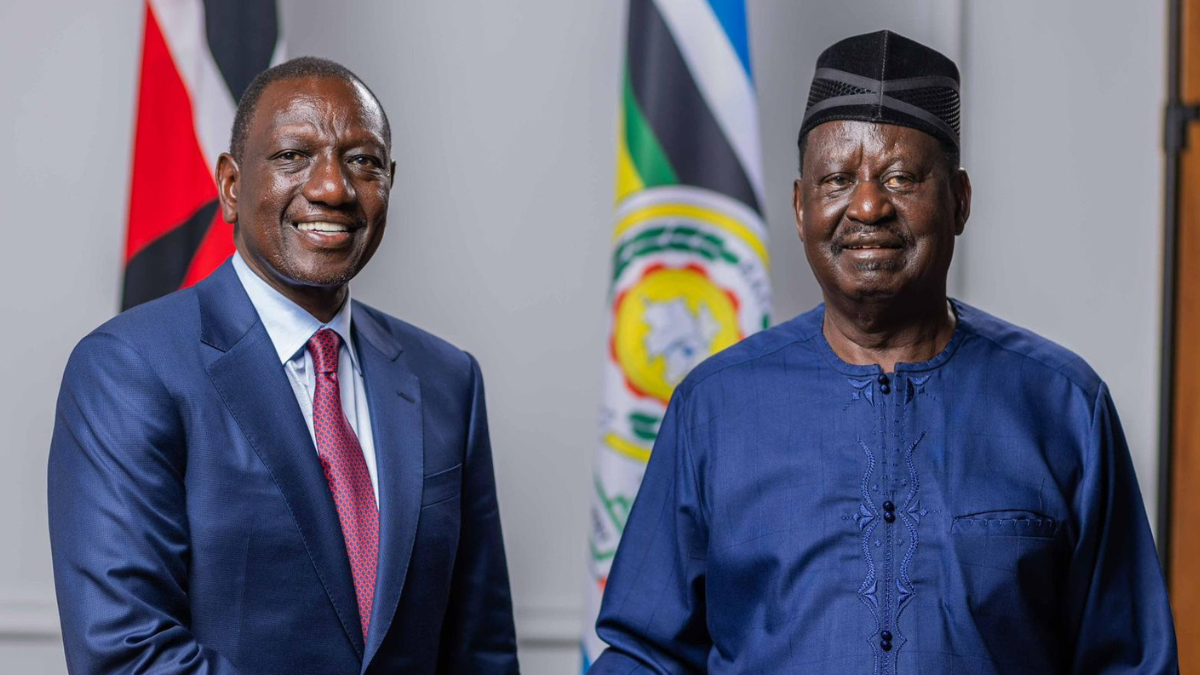
President Ruto and Raila at the launch of Raila’s AUC bid at State House – Nairobi

Fast forward to the present, and the political dynamics in Kenya have taken an unexpected turn, revealing the cyclical nature of political allegiances. Raila Odinga, who has long been a mainstay in Kenyan politics, is now setting his sights on the international stage with his bid for the African Union Commission (AUC) chairmanship. What is perhaps most surprising is the support he has garnered from President William Ruto, his long-time political adversary. This alliance, which would have been unthinkable just a few years ago, underscores the strategic calculations at play in Kenya’s political arena. For Raila, Ruto’s backing is crucial as it not only bolsters his candidacy but also provides a sense of national unity that could strengthen his position on the continental stage. For Ruto, supporting Raila may serve to consolidate his own power by easing domestic tensions and sidelining a potential competitor in the next general election. This pragmatic alliance highlights the fluidity of Kenyan politics, where today’s adversaries can quickly become tomorrow’s allies if the circumstances are right.

The implications of this alliance are far-reaching and could significantly reshape Kenya’s political landscape. Raila’s pursuit of the AUC chairmanship has left a potential power vacuum within ODM, a party that has been synonymous with his leadership for nearly two decades. This could lead to a reorganization within the party, with emerging leaders vying to fill the void, or it could trigger the formation of new alliances as political players reposition themselves for the future. Meanwhile, the Kenyan electorate is left to grapple with the ramifications of this newfound camaraderie between two of the country’s most influential leaders. On one hand, the alliance could bring a period of political stability, reducing the polarization that has characterized recent elections. On the other hand, there is a risk that voters, particularly those who have been loyal to Raila or Ruto based on their opposition to the other, may feel disillusioned or betrayed. This evolving narrative is a testament to the ever-changing nature of Kenyan politics, where alliances are as much about survival as they are about ideology, and where the next chapter is always just one unexpected alliance away.

References:

Capital News Ruto Hosts Historic Launch of Raila’s AU Commission Chairmanship Candidacy

The EastAfrican Raila Odinga: ‘My heart is ready, my hands are steady’ for AUC top job

The Star Raila arrives at State House ahead of his AUC bid launch

Nation Show of might as Ruto unveils Raila AUC bid

The Star Raila launches website to promote his AUC job bid

The Star [PHOTOS] Ruto officially launches Raila’s AUC bid at State House

The Nairobi Law Monthly Raila’s handshakes with opponents greatly cost his supporters

Nation United stand in vote against 2005 constitution gave birth to Orange

The Standard How referendum campaigns gave birth to ODM


Ruto’s Unfulfilled Promises and the Impact on Kenyan Citizens

In the realm of political leadership, the consequences of overpromising can be profound, leading to difficult decisions that may prioritize short-term gains over long-term welfare. President William Ruto’s governance in Kenya bears striking similarities to the biblical account of Herod the tetrarch, whose rash promise led to a morally compromising decision. This analysis explores how Ruto’s ambitious promises, much like Herod’s fateful vow, have placed him in a tight spot, forcing decisions that appease certain groups at the expense of the broader populace. Herod’s story is a cautionary tale of how a leader’s words can become a trap. When he promised to grant Herodias’ daughter whatever she wished, Herod did not anticipate the moral dilemma he would face when she asked for the head of John the Baptist. Despite his reluctance, Herod felt compelled to honor his promise to maintain his authority and avoid public embarrassment. Similarly, Ruto’s leadership has been marked by a series of promises that, once made, have proven difficult to keep. The grand visions he laid out during his campaign—ranging from economic reforms to social justice—have created high expectations among the Kenyan people. However, the reality of governance has revealed the challenges in fulfilling these commitments, leading to a growing sense of disillusionment among the populace.

Africa News Report

According to reports from The Nation and The Standard, this gap between Ruto’s promises and the outcomes on the ground has become increasingly evident. Many of the ambitious goals set by his administration have remained unachieved, leading to public frustration and criticism. The unfulfilled promises are not just political missteps; they have real consequences for the people, particularly in areas such as employment, economic stability, and social equity. Much like Herod, who found himself trapped by his own words, Ruto faces the challenge of managing the expectations he has set. His administration’s focus has often shifted towards maintaining political alliances and managing public perception rather than addressing the underlying issues that the promises were meant to resolve. This has led to decisions that seem more about preserving power than serving the broader interests of the Kenyan people, mirroring Herod’s decision to prioritize his reputation over justice.

KTN News Report

The consequences of such a leadership approach are far-reaching. Just as Herod’s actions resulted in the death of an innocent man to uphold a thoughtless promise, Ruto’s governance risks sidelining the needs and welfare of ordinary citizens. The pressure to deliver on promises, particularly when they are unattainable, can lead leaders to make decisions that are more about appeasing specific groups or maintaining political stability than addressing the real needs of the population. This analysis underscores the importance of careful, realistic promises in leadership. The story of Herod and the current challenges faced by Ruto serve as reminders that overpromising can compromise a leader’s integrity and effectiveness. For a global readership, the lesson is clear: leaders must be mindful of the weight of their words, as they will ultimately be held accountable for the promises they make, and the decisions taken to uphold them can have lasting impacts on society.

References:

Nation The promises versus reality: President Ruto’s rough road ahead

The Standard Ruto’s missteps, broken promises cause untold suffering to Kenyans

Nation The appeal of elsewhere: Of Ruto’s promises and reality

The Standard Wandayi: Ruto’s regime has failed Kenyans with its empty promises

People Daily Queries over Ruto empty promises after Gen-Z demos

The Star AJUOK: Why Ruto has become master of false promises

People Daily With no cogent plan, pact with Raila may buy Ruto time

Nairobi News International Women’s Day: 7 promises to women Ruto has not kept


Kenya’s Governance Crisis: Using Legal Frameworks to Silence Dissent

In recent years, Jimi Wanjigi, once regarded as Kenya’s most feared oligarch, has experienced a dramatic fall from grace, with the state employing various tactics to curtail his influence and silence his criticisms. Wanjigi, who was once a shadowy figure wielding immense power behind the scenes, has become a target of state machinery. This shift began when his relationship with the ruling elite soured, leading to a series of events that point to a broader pattern of intimidation against dissenters in Kenya. The state’s strategy seems to revolve around using legal frameworks and court processes as tools of political retribution, aiming to quash opposition voices and maintain control over the narrative.

Citizen Digital Report

The analysis of recent media coverage reveals a concerted effort by the Kenyan government to use the judiciary as a weapon against Wanjigi. From the fallout over the Standard Gauge Railway (SGR) project, where Wanjigi allegedly lost favor with powerful allies, to the multiple legal summons and court appearances he now faces, the pattern is clear: the courts are being leveraged to harass and weaken those who challenge the status quo. The media reports show a continuous escalation of state action against Wanjigi, including police summons, publicized court battles, and the orchestration of highly visible legal confrontations. These actions align with broader trends observed in Kenya, where the judiciary is increasingly used to stifle dissent and intimidate those who seek to expose governmental malfeasance.

This pattern of using legal and judicial means to intimidate is not unique to Wanjigi; it reflects a growing trend in Kenya where the state appears to weaponize the law to suppress criticism. As seen in the media reports, Wanjigi’s high-profile clashes with the government, including his dramatic court appearances and the recent confrontations over the rejected Finance Bill 2024 and the Nane Nane protests, underscore a broader issue of governance in Kenya. The persistent legal challenges faced by Wanjigi and others who oppose the regime highlight a troubling trajectory in which the state, rather than addressing concerns raised by critics, opts to punish them through a series of strategically timed and publicized legal actions. This strategy not only serves to neutralize opposition figures like Wanjigi but also sends a chilling message to others who might consider speaking out against government wrongdoing.

References:

The Standard How death and SGR fallout forced Jimi Wanjigi out of the dark power circle

Nation Jimi Wanjigi: Kenya’s most feared oligarch

The Standard Wanjigi: Man who wielded influence, now at odds with government

The Star Police summon Jimi Wanjigi for grilling over Nane Nane demos

Nation Jimi Wanjigi’s high-stakes drama: Ruto’s government wants to eliminate me


Starlink’s Impact on Kenya’s Telecom Market: Safaricom Faces Disruption

Elon Musk’s Starlink has rapidly emerged as a significant disruptor in Kenya’s telecommunications market, challenging the long-standing dominance of Safaricom. By introducing affordable data plans and rental kits, Starlink has made satellite internet more accessible, particularly in rural areas where traditional telecom infrastructure is lacking. This mirrors the company’s global strategy, where it has successfully penetrated underserved markets by offering reliable, high-speed internet services. In Kenya, this has translated into a growing adoption of Starlink’s offerings, which poses a direct threat to Safaricom, particularly as consumers in remote regions begin to view satellite internet as a viable alternative to conventional services. Safaricom’s response, urging the government to impose stricter regulations on satellite internet providers, reflects its concern about the potential impact of this new competitor on its market share.

CNBC Report

The technological advantage that Starlink enjoys, through its use of low Earth orbit (LEO) satellites, allows it to deliver faster and more reliable internet, particularly in areas where traditional services falter. This edge has been a critical factor in its global expansion, enabling Starlink to disrupt established telecom markets by offering superior service quality at competitive prices. For instance, in rural Alaska, Starlink has swiftly gained a foothold by providing high-speed internet where conventional telecom providers have struggled due to the challenging terrain. Similarly, in parts of rural Australia and Canada, Starlink’s ability to deliver consistent service in remote areas has made it a preferred choice for many consumers. In Kenya, where internet connectivity has long been a challenge in many regions, Starlink’s entry could be a game-changer. The potential for market disruption is significant, as consumers increasingly gravitate towards Starlink’s offerings, attracted by the promise of high-speed internet in areas where Safaricom and other local providers have struggled to maintain a strong presence. This trend is reflective of global patterns, where Starlink’s innovative approach has often outpaced traditional telecom services, forcing incumbents to reconsider their strategies to remain competitive.

The evolving competition between Safaricom and Starlink is likely to have far-reaching implications for Kenya’s telecommunications landscape. Safaricom’s call for more stringent regulatory oversight suggests a strategy aimed at slowing Starlink’s momentum, but it also highlights the broader challenges that traditional telcos face in adapting to the changing market dynamics. Globally, this regulatory tension is not unique to Kenya; in Europe, for example, traditional ISPs have also lobbied for tighter regulations on satellite internet services, citing concerns over fair competition and spectrum allocation. In India, similar regulatory debates have emerged as Starlink seeks to expand its presence, with local telecoms urging the government to enforce stricter rules. If the regulatory environment in Kenya tilts in favor of fostering innovation while ensuring fair competition, it could lead to a more diverse and competitive market, ultimately benefiting consumers with better service options. However, if Safaricom and other local telcos fail to adapt to the new competitive pressures brought by Starlink, the satellite internet provider could significantly alter the market, potentially emerging as a dominant force in Kenya’s telecom industry. The coming years will be crucial in determining whether Safaricom can retain its leadership position or if Starlink’s innovative model will redefine internet service delivery in Kenya.

References:

Tuko Kenyans React after Safaricom Writes to Govt to Regulate Elon Musk’s Starlink Internet

The Economic Times Kenya’s Safaricom urges new requirements for satellite providers like Starlink

CNA Kenya’s Safaricom urges new requirements for satellite providers like Starlink

The EastAfrican Starlink doubles satellite internet uptake in Kenya

The Kenyan Wall Street Starlink Launches Rental Kits to Accelerate Market Penetration

Reuters Kenya’s Safaricom urges new requirements for satellite providers like Starlink

Space in Africa Starlink Introduces Kit Rental Option to the Kenyan Market

CNET Starlink Internet Review: Quality Connectivity in Hard to Reach Places

The EastAfrican Elon Musk’s Starlink cheaper data plan for Kenya jolts Safaricom, Airtel

How we Made it in Africa Elon Musk’s Starlink could fuel competition for internet customers in Africa

Light Reading Musk’s Starlink is ‘not some huge threat to telcos’

Alaska Public Media In rural Alaska’s Starlink revolution, new opportunities abound and flagship telecoms see cause for competition

Science Direct Factors influencing the effects of the Starlink Satellite Project on the internet service provider market in Thailand


Importance of Unions: KNUT Prevents Strike Through Diplomatic Negotiations

In a significant move that averted potential disruption to the academic calendar, the Kenya National Union of Teachers (KNUT) called off a planned nationwide strike that was set to begin on Monday, August 26, 2024. The decision came after a day-long meeting of KNUT’s National Executive Council (NEC), where it was agreed that substantial progress had been made in negotiations with the Teachers Service Commission (TSC) and the government. The union had initially issued a strike notice due to unresolved issues including the implementation of the second phase of the 2021/2025 Collective Bargaining Agreement (CBA), the conversion of Junior Secondary School teachers to permanent terms, and the promotion of 130,000 stagnated teachers​.

TV47 Report

Despite the withdrawal of the strike notice, KNUT has expressed cautious optimism, acknowledging that while some demands have been met, significant concerns remain. The ongoing negotiations highlight the critical role of collective bargaining in securing workers’ rights and advancing employment interests. As noted in the principles of collective bargaining, the agreements reached between KNUT and the TSC are not just about salary increments or job security, but also about addressing the broader working conditions and professional development of teachers. The union’s persistence in advocating for issues such as promotions and permanent employment reflects the broader labor movement’s success in influencing work conditions through democratic decision-making. These negotiations emphasize how unions can expand the scope of their influence by addressing emerging issues that may not be covered by existing legal frameworks or company policies.

Looking ahead, the situation underscores the importance of sustained and open dialogue between unions and government bodies to prevent such crises from escalating. Trade unions, such as KNUT, play a vital role in balancing power dynamics in the workplace, ensuring that workers have a voice in decisions that affect their livelihoods. The ability of unions to negotiate effectively on behalf of their members is a testament to their importance in promoting fairness and equity in employment relations. The government’s commitment to addressing KNUT’s concerns through a consultative approach is a positive step, but it must be matched by timely and concrete actions. By continuing to prioritize diplomatic negotiations, both parties can foster a more stable and conducive environment for education in Kenya, ensuring that the interests of teachers and students are safeguarded without resorting to industrial action.

References:

The Star Knut calls off planned strike, asks teachers to report to work Monday

Citizen Digital KNUT calls off planned nationwide teachers strike

Nation Teachers’ strike. William Ruto calls town-hall meeting at KICC

Nation Where are you? Parents ask Ruto on teachers’ strike

Capital News KNUT directs teachers to report to work for third term as it withdraws strike notice

Kenya’s Political Reshuffle: Balancing Stability and Public Trust

President William Ruto’s recent cabinet reshuffle, meant to address growing public unrest and a wave of youth-led protests against poor governance in Kenya, is raising eyebrows both at home and abroad. While cabinet reshuffles are often deployed as a strategic move to reinvigorate a government and show responsiveness to public demands, the effectiveness of such a maneuver hinges on its ability to introduce genuine change. The decision to reinstall familiar faces, rather than bring in fresh talent, calls into question the administration’s commitment to the meaningful reforms that many Kenyans are clamouring for.

Understanding “Cabinet Reshuffle” in Politics – Word Wisdom Report

Globally, political reshuffles are understood as opportunities for governments to hit the reset button, to signal a shift in priorities, or to correct course where leadership has faltered. Political science underscores that successful reshuffles often involve bringing in new blood—leaders who can inspire confidence and offer new solutions to persistent problems. However, when reshuffles simply recycle the same figures who have previously held power, they risk being perceived as mere window dressing. In Kenya’s case, reappointing former officeholders does little to convince a skeptical public that the administration is serious about tackling the entrenched issues of corruption, inefficiency, and lack of transparency that have driven widespread discontent.

Swearing in of new Cabinet Secretaries – Kenya Digital News Report

The boldness of a reshuffle lies in its capacity to break with the past and usher in a new era of governance. By choosing continuity over change, President Ruto’s cabinet reshuffle may have secured short-term political stability, but at what cost? For a global audience watching Kenya’s political developments, this move seems more like a preservation of the status quo than the radical transformation that many had hoped for. The youth who have taken to the streets, frustrated by high unemployment, rising living costs, and perceived government failures, were looking for a clear sign that their voices were heard. Instead, they are left questioning whether this reshuffle is anything more than a superficial adjustment.

In the broader context of governance, reshuffles that fail to address the root causes of public discontent can backfire. They may temporarily appease certain political factions, but they do little to restore the public’s trust or address the deep-seated challenges facing the country. If the administration continues to prioritize political loyalty and experience over innovative leadership and accountability, it risks further alienating the very demographic that has been most vocal in demanding change. For Kenya, and for President Ruto’s legacy, this reshuffle may be remembered not as a moment of renewal, but as a missed opportunity to deliver the fundamental reforms that are urgently needed.

References:

The Star Ruto appoints ex-CS Moses Kuria senior economic adviser

Nation Eliud Owalo, Moses Kuria and Dennis Itumbi land plum State jobs

Citizen Digital President Ruto appoints Eliud Owalo, Moses Kuria, Dennis Itumbi to State jobs

The Star Back to factory settings! Kenyans react after Kuria, Owalo land state jobs

The Standard Ruto in dilemma over disbanding Cabinet amidst public pressure

Institute for Government Government reshuffles

The Constitution Society The Complex Implications of Reshuffles

Business Insider Africa List: Kenya’s Ruto keeps former ministers in new cabinet reshuffle

BBC Kenyan president sacks cabinet after anti-tax protests

The Star New Cabinet: Ruto’s opportunity to give Kenyans what they want, says Ahmednasir

Regional Trade Dynamics: Impact of Uganda’s Oil Import Diversification

Uganda’s decision to diversify its oil import routes comes at a critical juncture as the country faces ongoing delays and challenges with the East African Crude Oil Pipeline (EACOP) project. This $3.5 billion pipeline, intended to transport crude oil from Uganda’s fields to the Tanzanian port of Tanga, has been hampered by financial difficulties, environmental opposition, and geopolitical tensions, leading to prolonged reliance on oil imports through Kenya. As Uganda’s energy demands increase, the government has recognized the risks associated with depending on a single route, prompting a strategic push to explore alternative corridors. This diversification is aimed at enhancing energy security and reducing the country’s vulnerability to potential disruptions linked to political or logistical challenges in its traditional supply chain.

BBC Report

The drive to diversify is motivated by both economic necessity and strategic foresight. Uganda’s growing energy needs and the complexities of relying exclusively on the Kenyan route have made it clear that alternative import paths are essential. By developing routes through Tanzania and the Democratic Republic of Congo (DRC), Uganda not only seeks to secure a more stable oil supply but also aims to position itself as a regional hub for oil distribution, increasing its influence in East Africa’s energy market. However, this strategy has been met with significant hurdles, including legal disputes with Kenya over restrictive trade practices and the substantial infrastructure investments required to make these new routes viable. These challenges highlight the complexities of shifting regional trade dynamics and underscore the difficulties Uganda faces in executing its diversification plan.

Citizen Digital

For Kenya, the evolving situation underscores missed opportunities and important lessons. Kenya’s restrictive measures on oil imports and its failure to adequately address Uganda’s concerns have strained relations between the two nations, pushing Uganda to seek alternatives that could ultimately reduce Kenya’s role as the primary transit hub for East Africa’s oil. The emergence of new routes through Tanzania and the DRC not only threatens to diminish Kenya’s economic benefits from transit fees and related services but also signals a shift in regional influence. This situation serves as a reminder of the importance of adaptability and cooperation in regional trade relationships. Kenya’s experience highlights the risks of rigid trade policies and the potential losses that come from failing to engage constructively with neighbors. Moving forward, Kenya must reassess its approach to regional trade and explore more collaborative strategies to maintain its position as a key player in East Africa’s energy sector.

References:

Business Daily Facilitating direct oil product imports by Uganda through Kenya is proper

The EastAfrican Uganda diversifies oil import routes to meet demand

Argus Uganda seeks alternative oil product import routes

The Star Uganda sues Kenya over oil importation

The EastAfrican Uganda locks out Kenyan firms in oil transport deal

The Standard How Kenya’s oil import deal has soured trade with Uganda

AllAfrica Uganda Lodges Lawsuit Against Kenya Over Oil Importation

BBC How Kenya stands to lose from Uganda oil row

The EastAfrican Uganda to start oil imports via Mombasa from May, ending months-long dispute

Business Daily Uganda keeps oil import case alive despite Kenya deal

Business Daily Kenya ends oil import feud with Uganda

Business Daily Uganda state oil firm starts fuel sales after Kenya fallout

Petroleum Authority of Uganda The East African Crude Oil Pipeline (EACOP) Project

Total Energies Tilenga and EACOP Projects: Acting Transparently

The EastAfrican Uganda-Tanzania crude pipeline project gains steam as Eacop opens new coating plant

The EastAfrican China loans delay plunges Eacop partners in crisis

EACOP EACOP participates at the Inaugural Occupational Safety & Health Conference & Expo 2024


AI and Robotics in Kenyan Hospitality: Innovations, Challenges, and Future Potential

In 1983, the Two Panda Deli in Pasadena, California, made history by becoming the first-ever restaurant to employ robot waitstaff, a pioneering step that foreshadowed the integration of technology in the hospitality industry. Since then, the global landscape has evolved significantly, with advancements in artificial intelligence (AI) and robotics reshaping dining experiences across the world. Restaurants today, particularly in regions like Southern California, have embraced AI-powered robots that not only serve but also cook, interact with customers, and provide personalized services, offering a glimpse into the future of hospitality.

Citizen Digital

Kenya recently joined this technological revolution with the opening of the Robot Café in Kilimani, Nairobi, in June 2024. The café has become the first in the country to employ robots as part of its waitstaff, marking a significant milestone in East Africa’s hospitality industry. These robots, named Nadia, R24, and Claire, assist in delivering food to tables and clearing dishes, working alongside human staff. While the technology is still in its nascent stages compared to global counterparts, the introduction of these robots highlights Kenya’s readiness to embrace innovative solutions in a sector traditionally reliant on human labor.

As AI and robotics continue to develop, the Kenyan hospitality industry is poised for significant transformation. The integration of such technologies promises to enhance efficiency, reduce operational costs, and potentially redefine customer service standards. However, challenges such as high implementation costs and technological limitations remain. Looking ahead, the successful adoption and adaptation of these innovations in Kenya could serve as a blueprint for similar advancements across Africa, paving the way for a new era in the continent’s service industry​.

References:

Nation Robots offer a peek into the future of hospitality

Guinness World Records First restaurant with robot waiting staff

KTLA 5 World’s first AI-powered restaurant opens in Southern California

UNILAD World’s first restaurant completely run by robots and AI is officially ready for launch

CBS News World’s first AI-powered restaurant soon opening doors in Pasadena

Business Daily Tech-infused dining: Nairobi restaurant where robots serve meals with a side of sci-fi charm

Nation Robots in Nairobi restaurant, is it overhyped?

Hospitality and Catering News AI and Robotics: Enhancing Accessibility and Tackling Skill Shortages in Hospitality

United Robotics Group Top trends in hospitality for 2024

Nasdaq How Robotics & AI is Tackling Hospitality’s Labor Challenge

BW Hotelier How robots are changing the hospitality industry 

Kenya Airways (KQ) Financial Turnaround: From Losses to 2024 Profit

Kenya Airways (KQ) has achieved a remarkable turnaround after a decade of financial instability, posting its first operating profit in over ten years in 2024. This recovery follows a period of significant losses that culminated in the 2014-2015 fiscal year when the airline reported a pre-tax loss of 29.7 billion Kenyan Shillings ($290 million)—the largest in its history. Faced with an existential crisis, KQ embarked on a comprehensive restructuring plan under new leadership, which included stringent cost-cutting measures, a focus on operational efficiency, and the reorganization of its route network to concentrate on more profitable destinations. These efforts were crucial in reversing the airline’s fortunes, bringing it back from the brink of collapse.

KBC Report

The path to profitability was also paved by sustained government support. The Kenyan government, recognizing the national carrier’s strategic importance, provided multiple financial bailouts, which were vital in keeping the airline afloat during its most challenging years. Additionally, the global aviation industry’s recovery post-COVID-19 significantly boosted KQ’s operations, as increased passenger numbers and a rebound in international travel brought much-needed revenue. The airline’s operating profit of 10.5 billion Kenyan Shillings in 2024 is a testament to the effectiveness of these strategies and the resilience of KQ amidst intense competition from other regional carriers like Ethiopian Airlines.

Looking ahead, Kenya Airways faces the challenge of sustaining this profitability in a highly competitive and volatile market. The airline must continue to innovate, possibly by expanding its network judiciously and investing in technology to enhance customer experience. Strategic partnerships or alliances could also provide new growth opportunities. However, the airline must remain vigilant against the operational inefficiencies and management issues that plagued it in the past. If KQ can maintain its current trajectory, it may not only secure its place as a leading African carrier but also build a more sustainable and profitable future.

References:

African Business Kenya Airways propelled by first operating profit in years

The Kenyan Wall Street Kenya Airways Posts First Operating Profit of KSh 10.5 Billion in 7 Years

Business Today Kenya Airways Profit Surprise After 10 Years Of Losses

Nation Kenya Airways posts first profit in 11 years

AIN Turmoil at Kenya Airways Reaches Climax

Financial Times Kenya Airways records country’s worst ever loss

The EastAfrican Kenya Airways reports record $248m net loss

Ventures Kenyan Airways plans asset sale as collapse seems eminent

The EastAfrican Audit exposes how employees, suppliers wrecked Kenya Airways

DW Bailout for Kenya Airways?


Safeguarding Against Eldoret City Scams: Financial and Immigration Alerts

Eldoret City, newly elevated to city status, is currently grappling with a surge in fraudulent activities targeting its residents. Among the most alarming cases are financial scams that have seen individuals lose significant amounts to schemes ranging from fake investment opportunities to fraudulent forex trading platforms. The once peaceful city is now in the grip of con artists exploiting its rapid development and the accompanying influx of hopeful investors and job seekers.

Citizen Digital

A particularly concerning trend has been the rise of travel and immigration scams, with Novice Global Travel Agency at the forefront. The agency has allegedly deceived numerous residents by promising secure Canadian visas and employment opportunities, only for victims to discover the agency’s fraudulent nature after parting with their money. These scams have left many financially and emotionally devastated, sparking widespread calls for better oversight and protection for potential immigrants.

To protect themselves from such deceptions, individuals are urged to remain vigilant and informed. Potential immigrants should verify the credentials of any immigration consultant through official channels like the College of Immigration and Citizenship Consultants (CICC). Red flags include agencies that guarantee visa approvals, demand large upfront payments, or lack transparent contracts. Official Canadian immigration websites and trusted platforms offer valuable resources for identifying legitimate services and avoiding scams. By staying informed and consulting verified sources, residents can safeguard themselves against these increasingly common scams.

References:
Nation Eldoret investors lose millions of shillings in fake pyramid scheme

Citizen Digital Law enforcement on the spot as Forex scam leaves Eldoret residents in ruin

Mwakilishi Another Travel Agency Scam Hits Eldoret

Pulse Live How residents lost Sh1.5 Billion in the latest employment scandal in Eldoret

The Kenya Times Kenyans Lose Money in Another Travel Abroad Scam

Moving 2 Canada Five red flags to look out for when hiring a Canadian immigration consultant or lawyer

CICC Find an Immigration Consultant

MDC Beware of Scams: 5 Ways to Tell if an Immigration Agency is Fake or Real