The FATF Fallout — Kenya’s Grey Listing and the Regulatory Reckoning

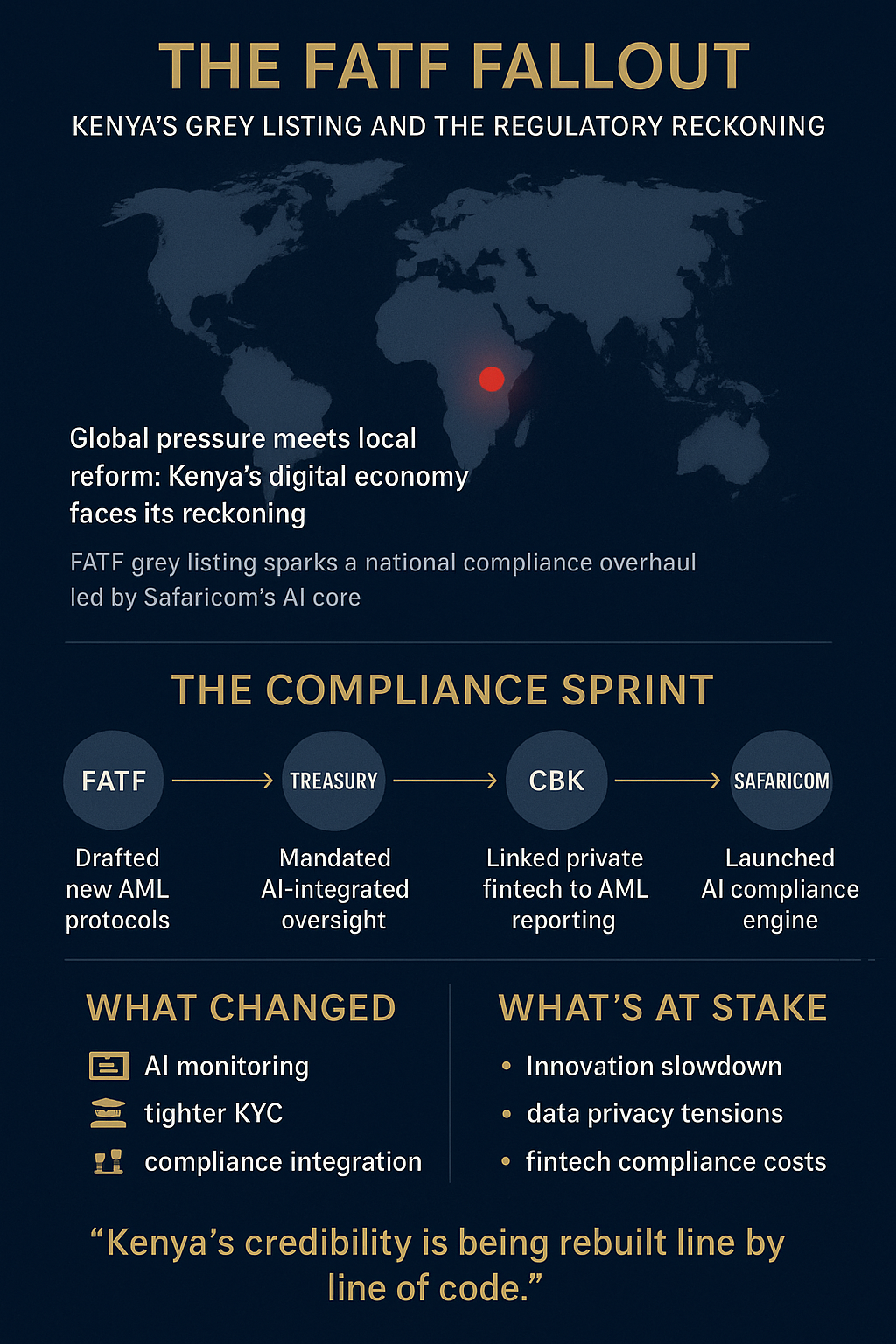
When Safaricom deployed its AI compliance engine, it wasn’t just about technological advancement — it was about survival. Behind the polished rollout was a growing alarm: Kenya had been placed on the Financial Action Task Force’s grey list in February 2024, forcing a reckoning over AML/CFT deficiencies exposed by international watchdogs. The grey listing exposed severe gaps: weak beneficial ownership disclosure, minimal prosecutions of money laundering, and under-regulation of sectors at high risk, including gambling, real estate, non-profit organisations, virtual assets, and law firms. Safaricom, already under pressure, recognized that its standing as the country’s digital financial backbone (through M-Pesa) meant that mere innovation would not suffice without credible compliance. The company’s AI overhaul was not a strategic choice — it was a compliance lifeline in a context where global trust, investor confidence, and even Kenya’s regional financial status were on the line.

The government’s response post-grey-listing was fast but fraught. On 17 June 2025, Kenya passed the new Anti-Money Laundering and Combating Terrorism Financing Act, strengthening the mandate of the Financial Reporting Centre (FRC) to oversee not just banks but non-financial businesses, regulated gambling operators, and high-risk non-profit entities. New requirements for beneficial ownership transparency, risk-based supervision, enhanced due diligence for high-risk customers, and stricter reporting of suspicious transactions were added. Yet, FATF’s June 2025 monitoring statement makes clear: Kenya is still under close watch. The list of obligations under “increased monitoring” remains long: non-financial entities must be better regulated; virtual asset service providers must be accounted for; suspicious transaction reports must rise; enforcement must reach even the high and powerful. The risk is no longer about drafting laws, but whether those laws bite.

But the FATF fallout isn’t only about compliance checkboxes—it’s rewriting Kenya’s fintech ecosystem. Startups, betting firms, M-Pesa agents, virtual asset operators are now navigating a regulatory terrain that demands transparency in ownership, speed in auditing, and an ever-watchful AI lens on behavior. The pushback has begun: fears of overreach, regulatory burden, and challenges for small operators. Still, for the first time in years, Kenya’s financial credibility is being rebuilt around enforceability—not just promise. As the Act takes effect and the global community watches, the real question is whether the government will apply these laws impartially — especially against the well-connected and politically exposed. Because grey-listing may be a stain, but it’s also the mirror revealing whether Kenya’s institutions have the courage and capacity to be truly accountable in a cashless, borderless world. Stay tuned for our next post as we continue to explore these developments and their implications!

References:

Institute for Security Studies Risk and reward of Kenya’s push to reverse FATF grey-listing

The FATF Jurisdictions under Increased Monitoring – 13 June 2025

Thomson Reuters AI, other technology the “only answer” to AML challenges in evolving threat landscape, says ACAMS report

ENACT IFFs and money laundering / Can anti-money laundering amendments get Kenya off FATF’s grey list?

Kenya’s Event Security Challenges: A Wake-Up Call

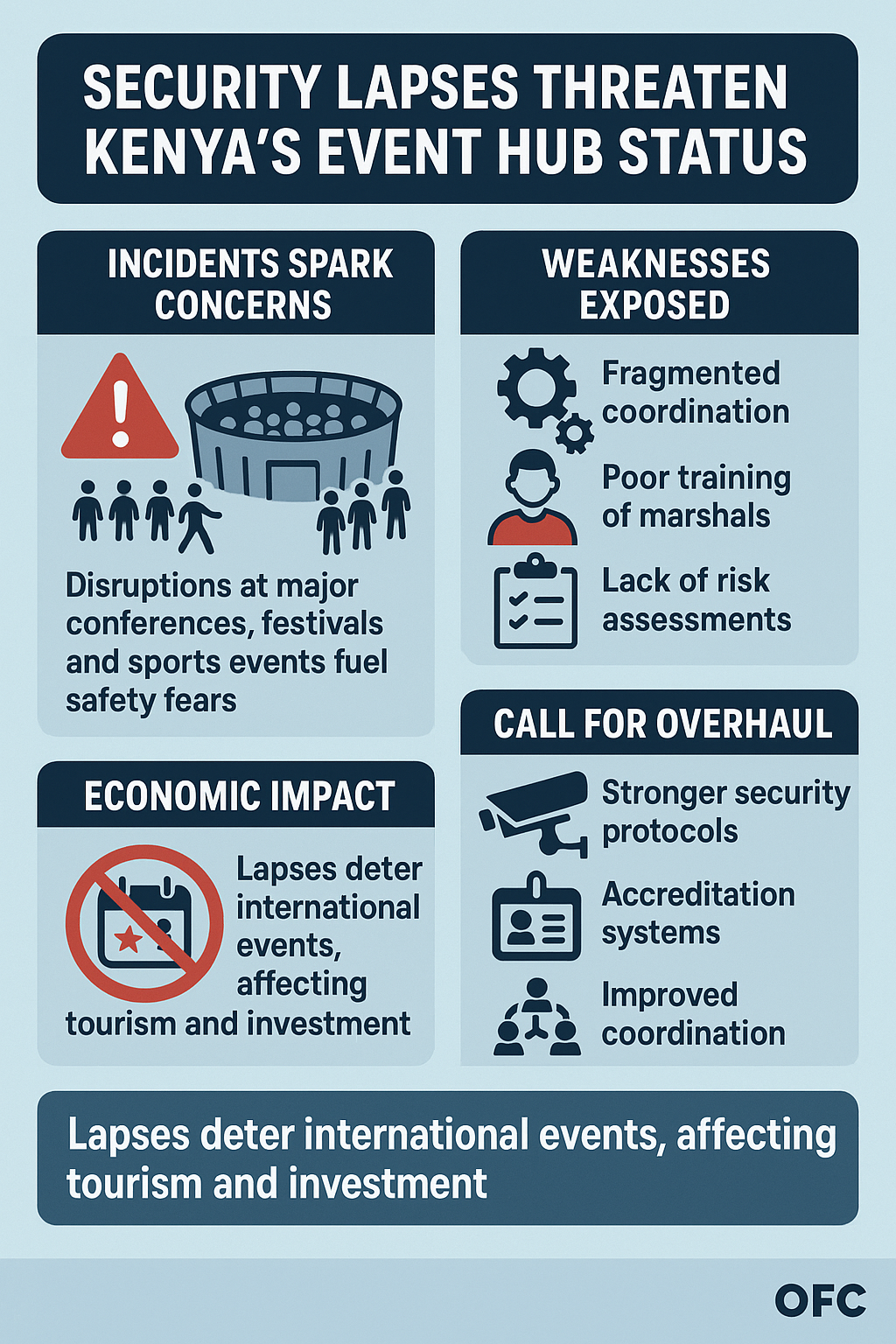
Kenya’s growing profile as a hub for international conferences, cultural festivals, and major sporting events hangs in the balance, threatened by a persistent and damaging weakness—event security lapses. The recent spate of high-profile disruptions, from chaotic crowd control failures to delayed emergency responses, has reignited fears that the country’s infrastructure and management systems are not keeping pace with its ambitions. While Kenya has successfully hosted large-scale gatherings in the past, these successes are increasingly overshadowed by incidents that put both safety and the nation’s reputation at risk. For a tourism and investment-driven economy, where marquee events serve as global shop windows, the stakes could not be higher. Any perception that Kenya cannot guarantee the safety of participants and spectators risks deterring international organizers, sponsors, and attendees, redirecting both revenue and influence to competing destinations.

At the core of the problem lies a combination of fragmented coordination among security agencies, inadequate training for event marshals, and a lack of robust, preemptive risk assessments. Large-scale events—from global athletics meets to high-profile music festivals—often depend on ad hoc arrangements, with security strategies being reactive rather than proactive. This has led to avoidable breaches, where unruly crowd surges, unauthorized access, and even petty crime have disrupted otherwise well-planned programs. For international guests, especially those attending for the first time, such lapses create a lasting negative impression, overshadowing the event’s core purpose and undermining Kenya’s pitch as a safe, reliable host. Stakeholders in the hospitality, transport, and retail sectors warn that the ripple effects of diminished confidence could translate into real economic losses, especially in cities like Nairobi and Mombasa where event-linked tourism forms a major income stream.

The solution requires more than isolated fixes—it demands a systemic overhaul anchored in professionalism, technology, and accountability. Kenya must invest in event-specific security protocols that integrate crowd science, digital surveillance, and emergency response drills into every planning phase. Clear chains of command, mandatory accreditation systems, and cross-agency coordination hubs should be standard practice, not aspirational goals. Without this, the “Africa’s Meeting Place” narrative risks collapsing under the weight of recurring security failures. The opportunity cost is immense: from losing bids to host continental championships, to deterring corporate conventions, to stalling the growth of cultural tourism. Kenya’s position as an event destination of choice is not guaranteed; it must be earned and safeguarded through consistent, visible competence. If the country cannot put its house in order, it may soon find the world taking its events—and its investment—elsewhere.

References:

Jijuze How CHAN 2024 is Boosting Tourism and Infrastructure in East Africa

The Kenyan Wall Street Legacy or Liability? Putting Kenya’s CHAN 2024 Moment Under the Lens

GhanaWeb Crowd disorder at CHAN raises concerns in Kenya

Pulse Sports Protect the Game: How CHAN 2024 Fans Can Keep Big Tournaments Coming to Kenya

FlashScore 2024 CHAN: Kenya fined by CAF again over multiple safety and security breaches

The Standard CHAN 2024: Why Kenya could lose quarterfinal hosting rights

Experience Magical Kenya: Football and Nature Unite

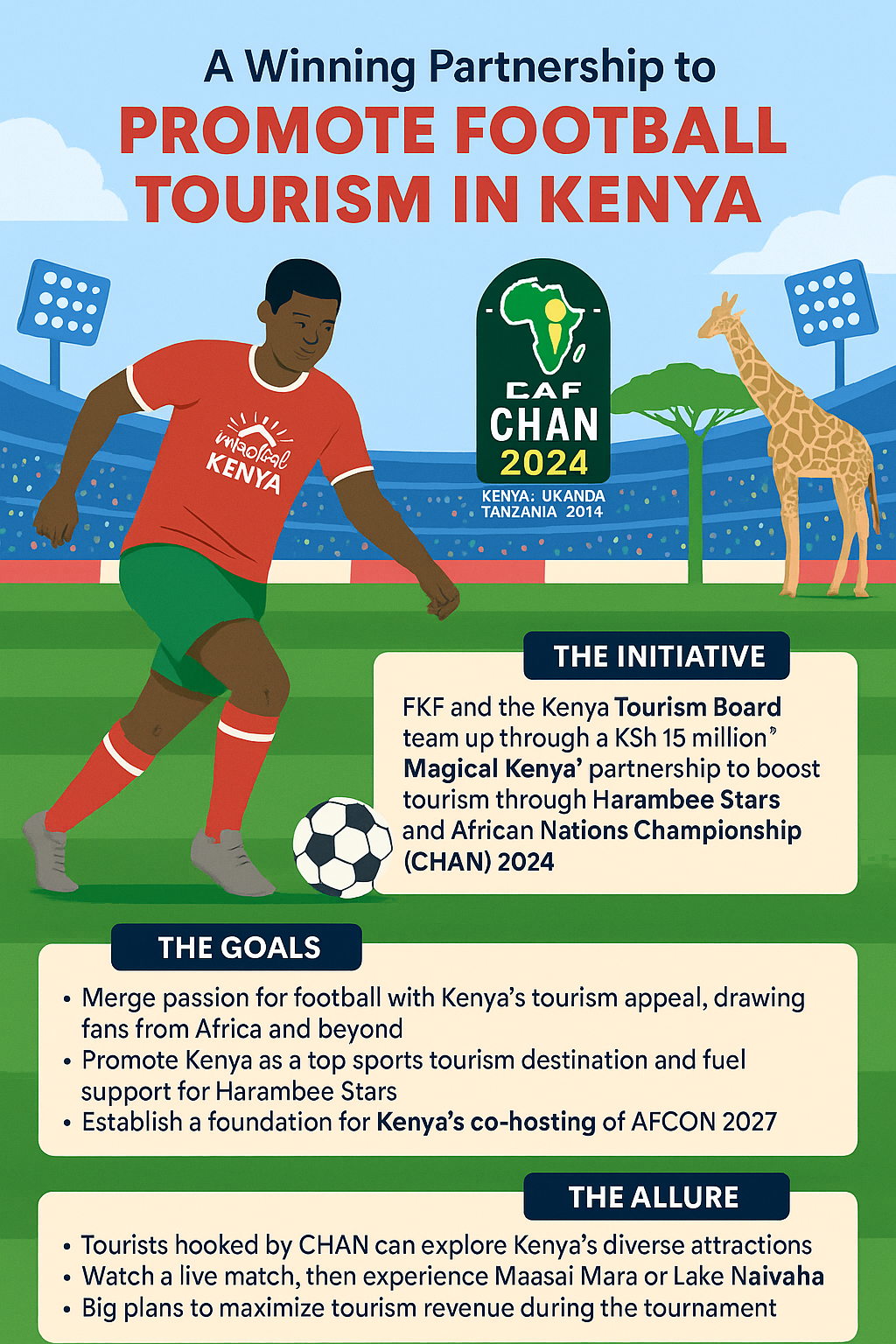
Kenya is kicking off a fresh chapter in tourism, swapping the usual safari lens for stadium lights. The Football Kenya Federation (FKF) and the Kenya Tourism Board (KTB) have teamed up in a KSh 15 million “Magical Kenya” partnership, putting the Harambee Stars front and center as ambassadors for the nation’s diverse travel experiences. The goal? To fuse the emotional energy of football with Kenya’s appeal—from the drama of CHAN 2024 matches to the breathtaking wildebeest migration in the Maasai Mara—drawing in fans from across Africa and beyond. By co-hosting CHAN alongside Tanzania and Uganda, Kenya is showing it can deliver on both pitch-side excitement and unforgettable tourist adventures, all while positioning itself for the much bigger stage of AFCON 2027.

This partnership isn’t just about branding on jerseys or LED boards; it’s about storytelling that links football passion to travel dreams. Match-day promotions, digital campaigns, and fan events will immerse audiences in Kenya’s landscapes, culture, and hospitality. For potential visitors, the appeal is clear: catch a continental clash at Kasarani, then cap the trip with a coastal beach escape or a safari in Amboseli. By syncing tournament schedules with peak tourism seasons like the Maasai Mara migration, Kenya is creating a “double attraction” that few destinations can rival—where sports fever and natural wonders collide in one itinerary. This approach not only boosts tourism revenue but also strengthens the football sector itself, creating a loop where each success fuels the other.

For sports-loving travelers, this is Kenya’s open invitation: come for the game, stay for the magic. Whether it’s the adrenaline of CHAN, the cultural vibrancy of Nairobi’s markets, or the serenity of Lake Naivasha at sunset, the country is rolling out a red carpet that stretches from the stadium tunnel to the savannah horizon. With strategic planning, creative marketing, and world-class hospitality, Kenya is aiming to score big—not just in the tournament standings, but in the hearts of travelers who’ll carry home memories far beyond the final whistle.

References:

Xinhua Kenya to leverage sports to boost tourism sector

KBC Ministry of Tourism and FKF sign Ksh 15 million partnership to promote Kenya as a sports tourist destination

Citizen Digital FKF signs Ksh15million deal with Kenya Tourism Board

The Eastleigh Voice FKF inks Sh15 million partnership deal with KTB to tap into sports tourism

The Star Arrival of African teams and fans for CHAN 2024, a boost for tourism

How CHAN 2024 is Boosting Tourism and Infrastructure in East Africa

As the African Nations Championship (CHAN) 2024 shifts its focus to East Africa, the co-hosting of the tournament by Kenya, Tanzania, and Uganda represents a significant shift in leveraging sports for economic transformation. For Kenya, this is a vital opportunity to recover its sporting integrity after a disappointing bid in 2018, underscored by considerable investments in stadium infrastructure, notably in Nairobi’s Nyayo Stadium and Eldoret’s Kipchoge Keino facility. These venues serve not just as football fields but as epicenters for urban redevelopment, spurring enhancements in transportation, hospitality, and small business interactions. The rising bookings in Nairobi’s hospitality sector indicate that CHAN is influencing broader economic dynamics, while also acting as a political lever to expedite long-delayed public works, showcasing the power of football in aligning with national development agendas.

Tanzania’s strategy for CHAN 2024 is meticulously crafted around intentional, brand-driven national development, where the Benjamin Mkapa Stadium in Dar es Salaam is being promoted as a pivotal regional hub for intertwining sports, tourism, and diplomacy. The government is tying the tournament to a larger tourism revival initiative, highlighting not only Dar es Salaam but also related destinations such as Arusha, Zanzibar, and Kilimanjaro to attract visitors. With a projected TSh 85 billion anticipated to flow into the economy as a direct result of the events, Tanzania seeks to boost its visibility as a potential future AFCON bidder. This emphasis on long-term tourism sustainability and attractive international offerings is designed to craft a narrative of lasting impact that transcends the tournament.

As Uganda joins its neighbors in this collaborative effort, it is focusing on a community-centered approach despite logistical challenges concerning stadium upgrades. The government is investing in public-private partnerships that engage local artisans, vendors, and cultural showcases to ensure wider community involvement in the festivities. Investments in essential infrastructure, including public transport and sanitation, aim to position CHAN as a catalyst for enduring urban renewal. By pairing match experiences with unique local attractions like gorilla trekking and cultural tours, the Ugandan Tourism Board is working to transition CHAN visitors into long-term tourists. Overall, while the three nations unite to present East Africa as a cohesive travel destination, the urgent challenge lies in translating the tournament’s temporary excitement into lasting benefits for the region, effectively establishing their collective identity as a forward-thinking economic bloc.

References:

Citizen Digital Why CHAN 2024 is not just a tournament, but a catalyst for East Africa integration

The Standard CHAN 2024, Kenya’s opportunity to boost economy, tourism

Nile Post Uganda Co-Hosting CHAN 2024 is a Landmark Achievement in the Country’s Sports

EAC EAC to promote the region as a unified tourism destination at ITB Berlin 2025

IPP Media Zanzibar hotels overflow with tourists ahead of CHAN match

Elfyn Evans Wins 2025 WRC Safari Rally in Kenya

The roar of engines and the thrill of competition at the 2025 World Rally Championship (WRC) Safari Rally Kenya, held in the stunning landscapes of Naivasha, have once again translated into a significant economic victory for the nation, with Britain’s Elfyn Evans clinching the coveted title behind the wheel of his formidable Toyota GR Yaris Rally1. The four-day event, a highlight on the global motorsport calendar, drew tens of thousands of enthusiastic spectators, both local and international, eager to witness the high-octane action. This massive influx of visitors triggered a substantial surge in demand for accommodation, with hotels and lodging facilities in Naivasha reporting full occupancy throughout the rally period, creating a vibrant and bustling business environment. Beyond the immediate financial activity within the host region, the Safari Rally served as a powerful magnet for tourism, attracting a record number of motorsport aficionados and further solidifying Kenya’s position as a premier destination for unique and thrilling experiences. The Kenya Tourism Board’s proactive campaigns, coupled with the inherent allure of the Safari Rally, successfully drew in a significant increase in visitors from the East African region, amplifying the positive impact on the local hospitality sector and demonstrating the growing appeal of motorsports tourism within the community.  

Final Day Highlights by DirtFish

The global spotlight shone brightly on Kenya during the Safari Rally, with broadcasts reaching over 120 million viewers across 70 countries, offering an unparalleled opportunity to showcase the nation’s breathtaking scenery and vibrant culture on an international stage. This extensive media coverage not only elevates Kenya’s global profile but also holds the potential to attract future tourism and investment. The success of the event was further underpinned by the generous financial support of numerous sponsors, including major players like KCB Bank, Betika, Safaricom, and White Cap, demonstrating the strong commercial appeal and value of the Safari Rally. Notably, the Kenyan government continued its efforts to optimize the financial aspects of hosting the rally, significantly reducing expenditure compared to previous years while still anticipating a substantial economic contribution of approximately Sh7 billion to the Kenyan economy. This projected figure underscores the vital role of the Safari Rally as a key economic catalyst, building upon the impressive Sh38 billion contribution from the 2021 edition, highlighting the enduring economic power of this iconic event. Moreover, Toyota’s remarkable performance, culminating in Evans’ victory, marks their fifth consecutive win at the Safari Rally Kenya, a testament to the reliability and prowess of their rally vehicles .  

Head to head run between T. Neuville(Hyundai) vs. Elfyn Evans(Toyota) courtesy of FIA World Rally Championship

Looking beyond the immediate thrills and spills of the race, the Safari Rally acts as a crucial driver for infrastructure development and fosters long-term economic benefits for Kenya. The consistent demand for hospitality services in Naivasha has spurred significant investments in hotels and accommodation facilities, enhancing the region’s capacity to cater to future tourists. Moreover, the rally provides numerous employment opportunities for local communities, from event organization and logistics to supporting the influx of visitors, contributing to enhanced livelihoods across various sectors. The government’s strategic focus on increasing private sector involvement in funding the rally points towards a sustainable future for this prestigious event, ensuring its continued presence in Kenya and its ongoing contribution to the national economy. As Kenya continues to negotiate with the WRC Promoter to extend its hosting rights beyond 2026, the enduring legacy and substantial economic impact of the Safari Rally solidify its importance as a national asset and a key player in the growth of Kenya’s economy.

References:

FIA WRC – Evans/Martin seize Safari Rally Kenya victory to hold record championship lead

Safari Rally Kenya Tens of thousands throng to watch 2025 WRC Safari Rally conclude in Naivasha

KBC Tourism,Business booms as Naivasha basks in WRC Safari Rally Championship

Business Daily WRC Safari Rally is Kenya’s biggest business pitch to the world in 2025


Benni McCarthy’s Impact on Harambee Stars: A New Era for Kenyan Football

The appointment of Benni McCarthy as the head coach of the Harambee Stars marks a significant moment for Kenyan football, injecting a fresh wave of optimism after a decade characterized by managerial instability. Since 2015, the national team has seen a revolving door of coaches, with an average tenure of less than a year, hindering the development of a consistent playing style and team cohesion . This frequent turnover, as evidenced by the ten different coaches who have taken the helm in the last ten years, underscores the deep-seated challenges that have plagued the Harambee Stars . McCarthy’s arrival, however, brings a palpable sense of anticipation, fueled by his illustrious playing career in Europe and his recent experience as a first-team coach at Manchester United . This impressive pedigree has resonated with both the public and football experts, many of whom hope that McCarthy possesses the tactical knowledge and leadership qualities to finally guide Kenya back to its long-desired “glory days” .  

A Report by Habari 254tv

Despite the initial excitement, McCarthy faces a complex landscape with inherent challenges that could impact his chances of success. A primary concern revolves around his familiarity with the Kenyan football scene and its players, as he admitted to having limited prior knowledge of the current squad . While former Harambee Stars coach Francis Kimanzi has been brought in to provide local expertise and assist with talent identification, the learning curve for McCarthy will be steep . Furthermore, the historical context reveals that coaching changes alone have not been a panacea for Kenyan football’s woes, with systemic issues such as financial instability within the federation and infrastructural deficiencies in player development often undermining even the most promising appointments . Public sentiment, while largely positive, also carries a note of caution, with some fans expressing concern about potential interference from the federation and the need for sustained support beyond just the initial appointment .  

Ultimately, Benni McCarthy’s chances of revitalizing the Harambee Stars hinge on a delicate balance of factors. His proven coaching abilities and commitment to an attacking style of play offer a promising foundation, and the support of key players like captain Michael Olunga is a significant boost . However, the historical instability of the coaching position and the enduring systemic challenges within Kenyan football cannot be ignored . For McCarthy to succeed in bringing sustained success, he will require not only the full backing of the Football Kenya Federation in terms of resources and autonomy but also the patience and understanding of the Kenyan public as he navigates the complexities of the local football environment . While his appointment offers a renewed sense of hope, the journey to reclaiming “glory days” will demand a concerted and sustained effort from all stakeholders to address the multifaceted issues that have historically hindered the Harambee Stars’ progress.  

References:

FIFA McCarthy appointed Kenya coach

The Eastleigh Voice McKinstry’s Kenyan reunion presents clash of similar styles ahead of Gambia’s encounter against Harambee Stars

Pulse Sports Explainer: Why Francis Kimanzi’s deep football knowledge is critical for Benni McCarthy’s Harambee Stars project

Nation Harambee Stars coaches come and go, an average of one every 16 months since 1961


Newcastle United Ends Trophy Drought: A Historic League Cup Victory

Manchester United are showing signs of life under new boss Ruben Amorim, with captain Bruno Fernandes leading the charge in spectacular fashion. The Portuguese maestro has bagged four goals in his last two outings, including a hat-trick in the Europa League, sparking hopes of a resurgence at Old Trafford. Amorim’s tactical switch to a dynamic 3-4-3 formation seems to be unlocking the team’s attacking potential, but questions remain whether this purple patch can be sustained against tougher opposition in the long run. While the Red Devils faithful will be buoyed by these recent performances, the true test of their revival is still to come.

Newcatle United beat Liverpool to win Carabao Cup

Meanwhile, in a jubilant turn of events, Newcastle United ended a decades-long trophy drought yesterday by clinching the English League Cup. The Magpies soared to a 2-1 victory over Premier League leaders Liverpool in a thrilling final at Wembley. Goals from Dan Burn and Alexander Isak sealed a historic win for Eddie Howe’s side, marking their first major domestic silverware in 70 long years. The Toon Army erupted in celebration as their team finally lifted a coveted trophy, a testament to the club’s resurgence under their new ownership and manager.

Yesterday’s contrasting fortunes highlight the unpredictable nature of football, with both Manchester United and Newcastle enjoying significant moments. For United, the challenge lies in building on their recent spark and proving their return to form is more than just a flash in the pan. For Newcastle, the League Cup triumph could be the catalyst for further success, fueling their ambition to compete at the highest level. Football fans will be watching keenly to see if these recent highs can translate into sustained achievements for both clubs.

References:

Premier League Manchester United

The Guardian Newcastle sink Liverpool to savour taste of glory after decades of drought

The Guardian Rasmus Højlund ends goal drought as Manchester United cruise past Leicester

2025 WRC Safari Rally: Kenya’s Grand Motorsport Celebration

Kenya is gearing up to welcome the world for the 2025 World Rally Championship (WRC) Safari Rally, taking place in Naivasha from 20th to 23rd of March 2025. This isn’t just another race; it’s a celebration of Kenya’s motorsport heritage, a testament to the country’s resilience, and a golden opportunity to showcase its stunning natural beauty to a global audience. Imagine the thrill of high-speed rally cars navigating the challenging terrain, the vibrant colors of Kenyan culture, and the warm hospitality of the people. As the engines roar and the dust settles, Kenya anticipates a significant economic boost, with the rally projected to inject a staggering Sh7 billion into the local economy. This influx of revenue will create jobs, support local businesses, and attract tourists from all corners of the world, further solidifying Kenya’s position as a premier tourist destination.

A review of the Best Action from the 2024 Edition WRC Safari Rally by DirtFish

The Safari Rally holds a special place in Kenya’s history, dating back to 1953 when it was first run as the East African Coronation Safari. This legendary rally, known for its demanding terrain and unpredictable weather, has tested the mettle of some of the greatest rally drivers in history, including the likes of Shekhar Mehta and Tommi Mäkinen. This year, organizers have introduced two new stages to the rally, a 5km shakedown at Camp Moran and an 8km race at Morendat Farm, promising an adrenaline-pumping spectacle for both seasoned rally enthusiasts and newcomers alike. President William Ruto will flag off the rally at City Hall Way in Nairobi, a change from the traditional flag-off location, bringing the excitement closer to the heart of the city and making it more accessible to fans.

But the 2025 WRC Safari Rally is more than just a thrilling race; it’s a testament to Kenya’s commitment to sustainable development and community engagement. Organizers are implementing measures to minimize the environmental impact of the rally, ensuring that the pristine landscapes that make Kenya so unique are protected for generations to come. Furthermore, the rally is creating numerous opportunities for local communities, with job creation in various sectors such as marshalling, hospitality, and logistics. Local businesses are also set to benefit from the influx of tourists and rally enthusiasts, contributing to the overall economic growth of the region. With its blend of high-octane action, rich history, and community involvement, the 2025 WRC Safari Rally is poised to be a resounding success, leaving a lasting legacy for Kenya and its people. As the Swahili saying goes, “Harakaharaka haina baraka,” meaning “Hurry hurry has no blessings.” This embodies the spirit of the rally, reminding us that true success comes with patience, perseverance, and a deep appreciation for the journey.

References:

RedBull This is the WRC calendar 2025

WRC Safari Rally Kenya: A WRC icon through the ages

Safari Rally Kenya KCB Commits KShs. 209 Million to 2025 Safari Rally

African Nations Championship Delayed: Kenya, Tanzania, Uganda Prepare

The postponement of the African Nations Championship (CHAN) from February to August 2025 highlights not only the infrastructural challenges but also the strategic opportunities for host countries Kenya, Tanzania, and Uganda. As these nations refocus their efforts, several key factors emerge essential for executing an ideal tournament across three countries. The foremost priority is establishing world-class venues that meet international standards, accompanied by top-tier training facilities and accommodations. Efficient transportation networks between venues within and between the host countries are critical, alongside robust communication systems that ensure seamless information flow among organizers, teams, and officials. Comprehensive security measures for all venues and travel routes, along with readily accessible medical facilities, further underpin the logistical framework needed for a successful event.

A Report by African Informant

The postponement offers a valuable timeframe to reinforce coordination and collaboration, the backbone of an international undertaking of this scale. A strong centralized organizational structure with clear lines of authority can facilitate efficient coordination between the national organizing committees of each country. This foundation supports cross-border cooperation, harmonizing rules and procedures, and ensuring the seamless movement of personnel and equipment. Cultivating respect for cultural norms and integrating local customs into the tournament experience help create a unique and welcoming atmosphere. Furthermore, offering accessible and affordable tickets, alongside fan zones and entertainment options in each host city, enriches the fan experience. High-quality hospitality services and friendly, helpful volunteers will be key in providing an unforgettable experience for both local and international spectators.

Sustainability and technology also play crucial roles in shaping the tournament’s legacy and innovation. Organizers are urged to minimize the environmental impact through sustainable practices and eco-friendly transportation solutions while promoting waste management. The tournament can leave a positive social impact through community engagement and development programs, ensuring that the benefits extend beyond the event itself. Leveraging technology for ticketing, logistics, and fan engagement, and employing data analytics to enhance the tournament experience, can position CHAN 2024 as a forward-thinking and memorable event. While CAF finalizes the schedule and confirms team participation, attention to these critical factors will enable the host nations to not only address current challenges but also set a new standard in international sports hosting, bolstering East Africa’s reputation on the global stage.

References:

Kenya News Agency CAF pushes CHAN 2025 to August, cites infrastructure gaps

Morocco World News Why CAF Delayed CHAN Until 2025, Revealed

FootBoom CHAN 2025: Tournament Postponed to August 2025 by CAF

BBC CHAN 2024 delay welcomed by three co-hosts

Reuters African Nations Championship in East Africa postponed as facilities not ready

Will CHAN 2024 Transform Kenyan Football?

Kenya finds itself at a critical juncture as it prepares to co-host the 2024 African Nations Championship (CHAN) alongside Tanzania and Uganda. This opportunity comes with the potential to transform Kenya’s position on the continental football stage. Reflecting on past setbacks in hosting the 1996 Africa Cup of Nations (AFCON) and losing the 2018 CHAN rights, the nation faces a formidable test in delivering on its promise this time around. As Sports Cabinet Secretary Kipchumba Murkomen urges, national patriotism and unity are crucial, emphasizing that the current debate and pressure can serve as catalysts for achieving the desired success. By learning from its historical challenges and engaging in robust infrastructural and logistical preparations, Kenya is determined to demonstrate its capacity to host international tournaments effectively.

KBC Report

Scheduled for February 1 to February 28, 2025, CHAN 2024 is not just a football tournament but an acid test of Kenya’s preparedness and organizational prowess. As CAF inspectors monitor the progress, with deadlines looming large, the stakes could not be higher. Stadium renovations at Nyayo and Kasarani are under intense scrutiny, and Murkomen acknowledges the enormity of the task ahead, admitting the oversight in offering two stadiums. Nevertheless, the establishment of the CHAN 2024 and AFCON 2027 Local Organizing Committee, under Nicholas Musonye’s leadership, represents a strategic response to these challenges. Meanwhile, newly elected Football Kenya Federation President Hussein Mohammed’s appeal to the private sector for active involvement further underscores the collaborative effort required to elevate Kenya’s football infrastructure and capabilities.

As Kenya steps into the spotlight, CHAN 2024 emerges as a defining test that could ultimately reshape Kenya’s sporting narrative and bolster East Africa’s football reputation. The nation stands to gain not only from the economic and social benefits of hosting but also from placing itself firmly on the map as a regional sports hub. However, the potential repercussions of losing hosting rights remain a stark reminder of the stakes involved. What role should national pride and private investment play in meeting these challenges? How can Kenya leverage this opportunity for a sustainable legacy? We invite you to share your thoughts and insights as we navigate this turning point in Kenyan and East African football history. Join the conversation and help shape the future of regional sports development.

References:

CECAFA African Nations Championship 2025 dates announced

BBC Kenya confident it will remain as CHAN 2024 co-host

TV47 Digital Murkomen dismisses claims of Kenya losing CHAN and AFCON hosting rights

Nation 2027 Afcon and 2024 CHAN: Kenya appoints team to oversee preparations

The Standard Murkomen confident Kenya will host CHAN 2024

BBC Kenya stripped of hosting rights for CHAN 2018

Nation Why Kenya lost rights to host 16-nation Africa soccer contest

Nation Kenya loses Chan hosting rights as Caf decides – VIDEO

Nation Kenya’s failure to host 1996 Afcon a blot in Moi’s rich sporting legacy

KIPPRA Hosting the African Cup of Nations: What Kenya Needs to Know