The Forest Frontline: When “Schools” Become Targets in the Conservation War

Bulldozers in the Classroom: The KFS vs. “Ghost School” Standoff

The tension between infrastructure expansion and environmental conservation reached a boiling point on January 3, 2026, in Baringo County. The Kenya Forest Service (KFS) executed a controversial operation in Makutani Forest, demolishing what locals claimed was a school but what the state termed a “two-room iron-sheet structure” erected to grab gazetted forest land. While KFS maintains that the structure was a Trojan horse for encroachment by pastoral communities in the Lekirati area, the incident exposes the dangerous friction generated by the rush to build infrastructure for the Grade 10 transition.

Loramoru Primary: School closed for 13 years because of insecurity now demolished by KFS | TV47 Kenya

This specific demolition is a symptom of a much larger, systemic crisis. With the Ministry of Education pressing for the rapid construction of new classrooms, the definition of a “school” is becoming fluid on the ground. The Makutani incident highlights how the demand for education facilities is being weaponized—sometimes by local leaders to legitimize settlement in protected areas. Conversely, it shines a light on the precarious tenure of genuine educational institutions; currently, over 26,000 public schools in Kenya lack title deeds, leaving them legally defenseless against land disputes or accusations of encroachment.

The “Education vs. Ecology” war is no longer theoretical; it is physical. As KFS intensifies patrols to enforce the Forest Conservation and Management Act, and the Ministry of Education demands physical expansion for Senior Schools, communities are caught in the crossfire. The government is effectively fighting itself: one arm (MoE) is desperate for land to house learners, while another (KFS) is bulldozing structures to save trees. Without a synchronized land-use policy, the Senior School rollout risks becoming an ecological disaster, where “ghost schools” in forests become the new frontline of land conflict.

References:

The Kenya Times Truth Behind Govt Demolishing School Days to Reopening

Daily Nation Pressure mounts on Ministry as over 26,000 schools lack title deeds

People Daily Kenya Forest thwarts efforts to grab Makutani Forest in Baringo

The Star KFS dismisses claims of school demolition in Makutani forest operation


The “Smart” School Lie: Why Interns are Teaching Coding on Blackboards

The “Tech-Teacher” Trap and the Hardware Vacuum

The Teachers Service Commission (TSC) is currently on an aggressive recruitment drive, prioritising a new breed of educator: the Bachelor of Education (Technology) graduate. This degree is being marketed as the golden ticket for the Competency-Based Curriculum’s STEM pathway. However, this recruitment drive masks a ridiculous operational reality. We are hiring highly specialized teachers to deploy them into “C4” schools that are technological deserts. Recent studies in counties like Homa Bay reveal that some public primary schools are operating with as few as 27 tablets for an entire school population, with zero interactive whiteboards or functional computer labs.

We are effectively creating a “Tech-Teacher Trap.” These fresh graduates, armed with skills in electrical engineering and digital media, are being hired as interns—paid a fraction of a permanent salary—and placed in classrooms where “Computer Science” is taught theoretically because there is no hardware. The government’s ban on parents buying digital devices creates a stalemate: schools can’t afford them, the government hasn’t supplied enough of them, and parents aren’t allowed to buy them. The result? A generation of Grade 10 students who can define a microprocessor on paper but have never held one.

The numbers don’t lie. The sector is facing a shortage of 58,590 teachers for the 2026 transition, with the STEM pathway hitting the hardest deficit in areas like aviation and computer studies. By plugging these gaps with underpaid interns and failing to provide the “Digital Literacy” hardware promised a decade ago, the Ministry is setting up the pioneer Senior School class for failure. We are simulating a modern education system rather than building one, widening the gap between the “digital haves” in elite private schools and the “analogue have-nots” in the public system.

References:

ResearchGate Development of Digital Literacy Skills among Learners in Public Primary Schools in Homabay County, Kenya

Capital News Govt publishes boarding fee caps, day school remains fully funded

The Eastleigh Voice Kenya needs 58,590 more teachers for 2026 senior school transition – TSC

Scribd Guidelines for recruitment of Teacher Interns, Junior Schools-2025/2026 Financial Year

The Economic Aftershock: Why Nakuru Hotels are Empty this January

The “Back-to-School” Squeeze is Killing Domestic Tourism

Usually, the first week of January sees the hotels of Nakuru and Naivasha buzzing with the last wave of domestic holidaymakers. This year, the lobbies are quiet, with occupancy rates reportedly dropping by nearly 40% compared to December. This economic contraction is the direct collateral damage of the “Capitation Paradox.” The “on-time” release of funds has done nothing to alleviate the burden on household budgets. Faced with “strict compliance” fees of Sh53,554, new uniforms for Senior School, and the hidden costs of the “Digital Divide” where parents must buy laptops , the Kenyan middle class has cancelled the holiday to save the school term.

Ironically, while leisure travel has plummeted, “panic travel” has surged. The transport sector is witnessing a windfall, not from tourists, but from the 350,000-strong army of parents and students traveling to sort out placement appeals and admissions. The roads are full, but the mood is frantic, not festive. This shift from leisure to logistical spending indicates a deeper economic stress; the education sector is cannibalizing the disposable income that usually fuels the service economy.

Furthermore, the “Strict Compliance” directives have frozen the local economies that usually thrive around schools. With principals under pressure to centralize procurement and cut costs to survive the “Ghost Deficit,” the local suppliers—the women selling cabbages, the small-time stationers, and the local transporters—are being cut out of the supply chain. The Sh44 billion release might be sitting in commercial bank accounts in Nairobi, but it is not trickling down to the school-adjacent communities, leaving the “hustlers and mama-mboga’s” economy to dry up alongside the empty hotel rooms.

References:

The Kenya Times From Free to Ksh53,554: How Much Grade 10s Will Pay Under C1-C4 Senior School System

Daily Nation Senior school chaos: Ministry relaxes rules amid confusion

The Kenya Times Govt Extends Grade 10 Placement Revision, CS Explains Why 144,000 Applications were Rejected

The Standard Mad rush for back to school amid financial crunch

The Standard Government releases Sh44b in capitation ahead of school reopening

The Grade 10 Lottery: Anatomy of a Placement Crisis

140,000 Rejections and the “Prestige Scarcity” Panic

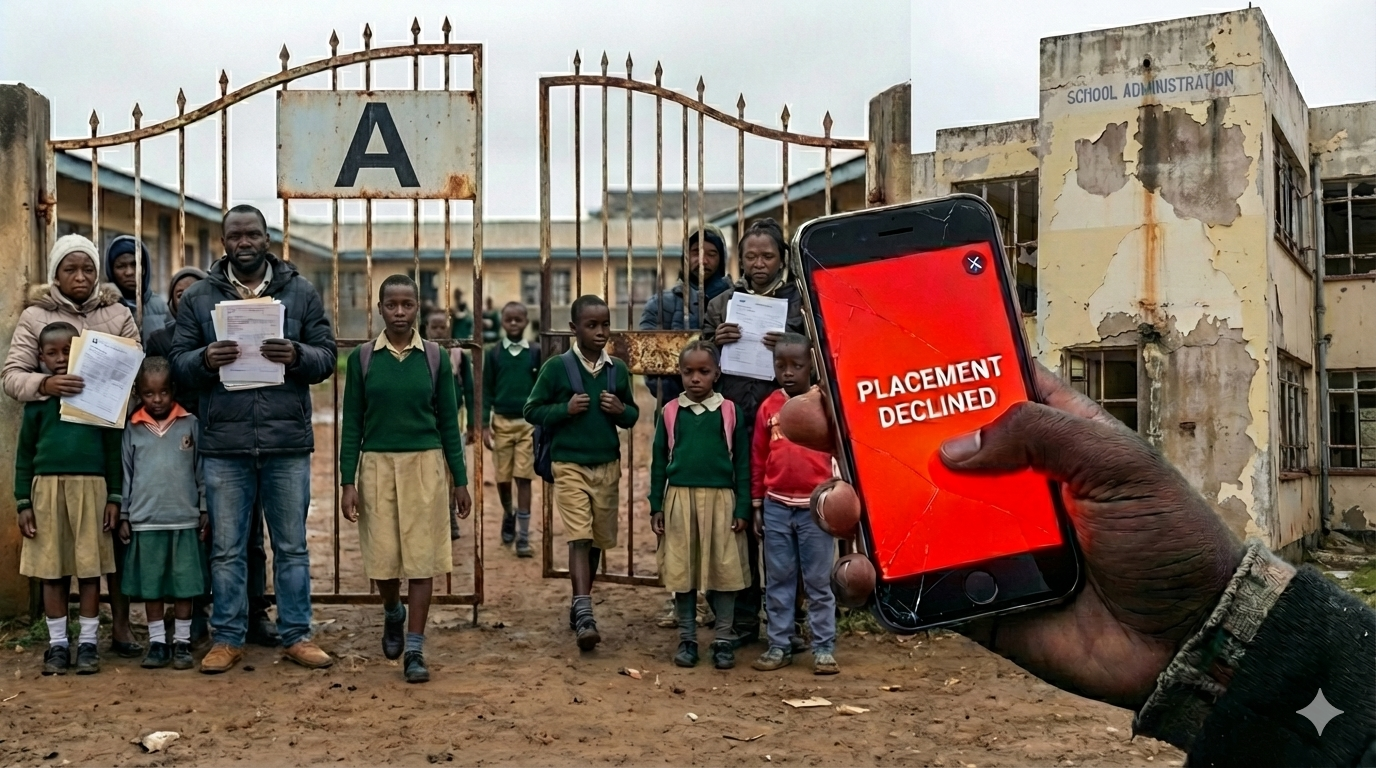
The transition to Senior School (Grade 10) was meant to be the crowning achievement of the CBC rollout; instead, it has devolved into a logistical nightmare. As the January 12 reporting date approaches, the system is reeling from the rejection of over 140,000 transfer requests. This staggering number isn’t just a statistic; it represents a massive vote of no confidence by Kenyan parents in the “C4” (formerly sub-county) schools. The root cause is “Prestige Scarcity”—the desperate scramble for the limited slots in “Big 3” giants like Alliance and Kenya High, which are seen as the only institutions capable of delivering the resource-intensive STEM pathways.

The contrast in readiness between private and public sectors is stark and sobering. While private institutions like Golden Elite Schools in Kisumu are flaunting virtual laboratories and heated pools for Sports Science , many public day schools are welcoming Grade 10s into “shells”—classrooms without equipment or specialized teachers. With a reported shortage of 58,000 teachers and the Teachers Service Commission scrambling to recruit “interns” to teach complex technical subjects , the promise of a “Competency-Based” education is colliding with a lack of capacity. Parents know this, which is why they are crisscrossing counties in a panic, refusing to relegate their children to schools they view as academic dead ends.

This chaos has birthed a dangerous unregulated market: “Private Boarding.” With the government capping boarding fees and refusing to fund new dorms in day schools, parents whose children have been placed in distant C4 schools are renting rooms in nearby shopping centers. These shadow dormitories, unsupervised and unsafe, are the desperate solution for families caught between a rigid placement system and the geography of their assigned schools. The Ministry may have “placed” every child, but in refusing to address the infrastructure gap, they have abandoned thousands of them to a precarious existence outside the school gates.

References:

The Eastleigh Voice Kenya needs 58,590 more teachers for 2026 senior school transition – TSC

Daily Nation Teacher shortage paradox despite record hiring by TSC

All Africa Education Ministry Declines 66,000 Grade 10 Placement Appeals Over School Capacity Constraints

Daily Nation Senior School placement chaos: Your 10 burning questions answered

The “Ghost Deficit”: Why Sh44 Billion Isn’t Enough to Keep the Lights On

The “Historic” Release That Schools Can’t Spend

The headlines this week screamed victory: “Government Releases Sh44 Billion for Schools.” On paper, it looks like a windfall, with the Ministry of Education beating the opening bell to disburse funds before learners report on January 5. However, for the principal sitting in a C3 county school, this “historic” release is a mathematical mirage. The funds are pegged to a capitation rate of Sh22,244 per student—a figure fixed in 2018. In the eight years since, the cost of electricity, maize, and fuel has skyrocketed, yet the government expects schools to operate on a budget that was barely sufficient a decade ago. The result is a “Ghost Deficit” of approximately Sh10,000 per student, a financial hole that no amount of administrative “strict compliance” warnings can fill.

This fiscal disconnect has birthed the era of the “Survival Levy.” With the Ministry issuing strict directives against fee hikes and criminalizing “motivation fees,” school boards are being forced into the shadows. We are seeing a rise in “voluntary” projects and outsourced service fees designed to bypass the official fee structure. While the Cabinet Secretary warns against unauthorized levies, the reality on the ground is that schools face a binary choice: break the rules to solicit funds from parents, or close the dining halls before the term ends. The “free” in Free Day Secondary Education is fast becoming a technicality, sustained only by the quiet contributions of squeezed parents.

The standoff is further complicated by the looming Sh4 billion fraud audit currently before Parliament. The Ministry is using this probe into “ghost students” as a moral bludgeon to deny legitimate requests for increased funding. By framing the crisis as one of theft rather than underfunding, the state has successfully deflected responsibility. But as 1.1 million Grade 10 learners flood into schools that lack the funds for basic practicals, the “Ghost Deficit” threatens to turn the ambitious Competency-Based Curriculum into a theoretical exercise, proving that you cannot buy 2026 quality with 2018 prices.

References:

The Standard Government releases Sh 44b in capitation ahead of school reopening

NTV Kenya Secondary school heads want fees raised by Sh27, 000

All Africa Govt Releases Sh44.2bn in Term I Capitation Ahead of Monday Reopening

Harvesting the ROI—The Macroeconomic Impact of the Subsidy

The economic ripple effects of the 2025 fertilizer subsidy program are beginning to manifest in Kenya’s national food security metrics with startling clarity. According to the June 2025 Treasury budget highlights, the government has allocated Ksh 8 billion specifically for the Fertilizer Subsidy Programme for the 2025/2026 financial year. This is part of a broader Ksh 47.6 billion agricultural transformation budget aimed at moving Kenya from a “food deficit” nation to a “food surplus” economy. By slashing the cost of a 50kg bag by approximately 60% compared to market rates, the program has successfully triggered a 38.9% increase in maize production in high-potential regions, directly contributing to the stabilization of mealie-meal prices in urban centers like Nakuru and Nairobi.

Kenya is set to harvest 70 million bags of maize in 2025 | NTV Kenya

However, the 2025 policy is no longer just about quantity; it is increasingly about soil health and long-term sustainability. New directives from the Ministry of Agriculture emphasize the use of NPK 23:23:0 and other non-acidic blends to correct soil degradation caused by years of over-relying on DAP. This scientific approach ensures that the “bumper harvests” seen this year are not a one-time fluke but the beginning of a sustained increase in yield per hectare. For the Kenyan farmer, this shift represents a move toward “Precision Agriculture,” where the digital data collected during KIAMIS registration helps the government determine which specific nutrient blends are needed for which regions, potentially saving billions in wasted inputs.

The final piece of this economic puzzle lies in the integration of “De-Risking” strategies. For the first time, the 2025 digital registration automatically links farmers to climate-risk insurance and credit facilities. This means that a farmer who buys subsidized fertilizer is also protected against the devastating losses of drought or floods, making the entire agricultural sector more attractive to young “agri-preneurs.” As Jijuze continues to monitor these developments, it is clear that the fertilizer subsidy is the anchor of a much larger economic engine. By empowering smallholders with affordable inputs and digital tools, Kenya is slowly rebuilding its agricultural backbone, turning the “kabambe” phone into a powerful tool for national prosperity.

References:

Capital Business Maize harvest to hit 70mn bags in 2025, up from 67mn last year

The Kenyan Wall Street The Hidden Costs of Kenya’s Fertiliser Subsidy Model

Jijuze How to Access Subsidized Fertilizer in Kenya


The “Iron Circuit”—Solving the Last Mile Bottleneck

The logistical machinery behind the 2025 fertilizer subsidy has undergone a radical shift to solve the “depot bottleneck” that plagued previous seasons. In late March 2025, the Ministry of Agriculture, led by CS Mutahi Kagwe, confirmed a massive surge in distribution, moving over one million bags of fertilizer in a single week to meet the high demand of the long rain season. The strategic change this year involves a heavy reliance on the “Iron Circuit”—using the Standard Gauge Railway (SGR) freight wagons to bypass the congested Port of Mombasa and deliver directly to the Naivasha Inland Container Depot. This shift has significantly reduced the turnaround time for stocks, ensuring that once a farmer receives their e-voucher via the KIAMIS system, the physical bags are already staged at regional hubs rather than being stuck in highway transit.

The iron circuit

Despite these macro-logistical wins, the “Last Mile” remains the most significant challenge for the average Kenyan smallholder. Current research indicates that while private agro-dealers are usually within 6km of a farm, centralized NCPB depots are often an average of 18km away. To bridge this gap in 2025, the government has entered into critical Memorandums of Understanding (MoUs) with county governments like Uasin Gishu and Nakuru. These partnerships allow for the transfer of fertilizer from main regional hubs to smaller, county-run satellite depots. This decentralization strategy is designed to lower the “hidden costs” of the subsidy—specifically the high transport fees farmers previously paid to move 50kg bags across long distances, which often eroded the savings provided by the government-capped price of Ksh 2,500.

At the depot level, the 2025 experience is becoming increasingly automated, yet it requires farmer vigilance. The Ministry has introduced “Consignment-Based Framework Agreements,” allowing for a more diverse mix of fertilizers, including crop-specific blends for coffee and tea sectors, moving away from a “one-size-fits-all” approach. However, with high demand comes the risk of exploitation. Farmers are urged to verify their e-vouchers through the upgraded KIAMIS interface before making the journey to the depot to avoid “system-down” frustrations. Furthermore, officials have issued stern warnings against counterfeiters attempting to sell substandard mixtures in look-alike government packaging, reinforcing that legitimate subsidized stock is only available at registered NCPB or county-authorized sites.

References:

Citizen Digital Gov’t to issue over 1 million bags of subsidized fertilizer amid high demand

Kenyans.co.ke Govt to Distribute 1 Million Bags of Fertilizer to NCPB Depots Next Week After Shortage

Daily Nation Kagwe orders destruction of 25,518 bags of expired fertiliser

Jijuze How to Access Subsidized Fertilizer in Kenya

The Digital Gatekeeper—Decoding Kenya’s New Era of Fertilizer Distribution

The transition from traditional, manual fertilizer distribution to the Kenya Integrated Agriculture Management Information System (KIAMIS) represents one of the most significant shifts in the nation’s agricultural history. As of late 2025, the Ministry of Agriculture has officially taken full ownership of this digital registry, which now hosts data for over 7.1 million smallholder farmers. This digital “handshake” is no longer a mere pilot program but the mandatory gateway for anyone seeking to purchase subsidized DAP, NPK, or CAN fertilizer at the government-capped price of Ksh 2,500. For the Kenyan farmer, this means the end of “analog” vouchers and the birth of a data-driven system where eligibility is determined not by a physical queue, but by a biometric profile and a verified USSD record. However, as Jijuze has discovered, the sheer scale of this migration has created a new set of digital hurdles that many are struggling to navigate.

The digital gateway for fertilizer subsidy

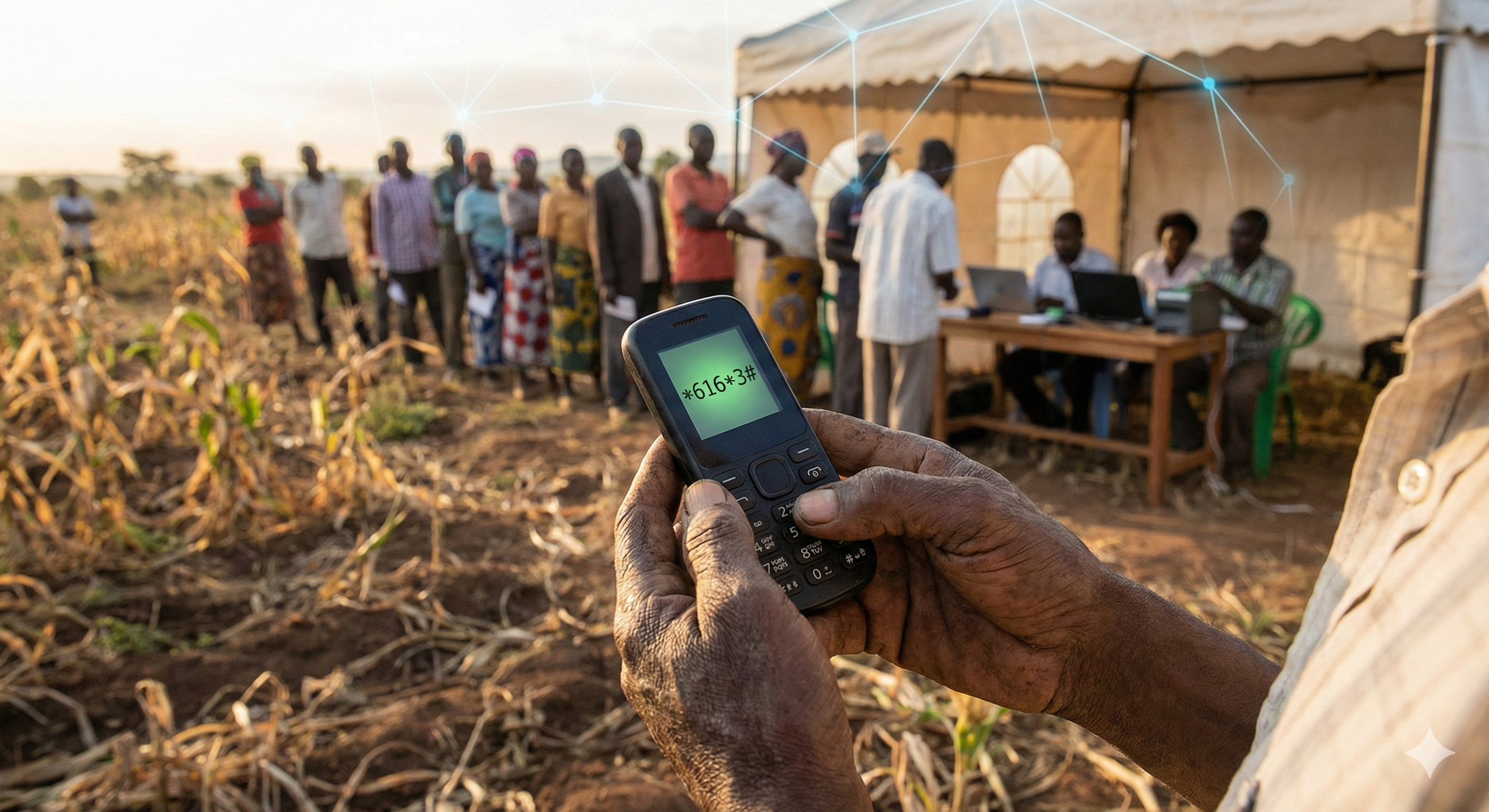
At the heart of this system lies the *616*3# USSD code, a simple string of digits that serves as the farmer’s primary interface with the KIAMIS cloud. When a farmer dials this code, they are not just checking a balance; they are interacting with a complex backend that validates their land acreage, crop type, and regional location. The 2025 updates to the platform have introduced even more granular requirements, including the integration of climate-shock insurance directly into the registration process. This means that for a farmer to receive an e-voucher via SMS, their data must be fully validated by both the local Assistant Chief and the Sub-County Agricultural Officer. We have received reports that thousands of farmers who believed they were “registered” are being turned away at National Cereals and Produce Board (NCPB) depots because their profiles lack these critical secondary validations, highlighting a gap between initial data entry and final system approval.

Government targeting 500,000 farmers in KIAMIS registration drive | KBC Business

For the modern Kenyan smallholder, understanding the “Digital Gatekeeper” is now as essential as understanding the soil itself. The government’s 2025 policy emphasizes that the e-voucher system is designed to eliminate the “middleman” and “ghost farmers” who previously diverted subsidized stocks to the black market. By tying every bag of fertilizer to a specific ID number and a geo-tagged farm, the KIAMIS platform ensures that resources reach the intended hands. Yet, this digital-first approach demands a higher level of technical literacy. Farmers must ensure their mobile numbers are correctly linked to their ID and that they have not exceeded the allocated bags per acre—a limit strictly enforced by the algorithm. As the planting season approaches, the message from the Ministry is clear: the era of walking into a depot with just cash is over; if you are not in the cloud, you are not on the farm.

References:

Jijuze How to Access Subsidized Fertilizer in Kenya

Sacco Review Gov’t rolls out pioneering insurance-integrated fertilizer subsidy to safeguard smallholder farmers

The Kenya Times How Kenyans Can Apply for Govt Fertilizer Subsidy Program

Eagmark Agri-Hub Kenya Takes Ownership of National Digital Farmer Registry

The Hero’s Exit: Why David Munyua’s 3-0 Loss is Still a Win for Kenya

The dream run at Alexandra Palace may have hit a clinical Dutch roadblock in the form of Kevin Doets, but to focus on David Munyua’s 3-0 defeat is to miss the point entirely. While the scoreboard at Ally Pally showed a straight-sets exit, the digital scoreboard across Kenya and the UK was lighting up with a different narrative: the birth of a legend. Munyua walked onto that stage not just as a darts player, but as a veterinary surgeon from Murang’a who forced a global audience to take Kenyan sports diversity seriously. He didn’t just play the game; he advocated for it with every dart thrown, proving that Kenyan excellence isn’t confined to the track—it’s alive and well on the Oche, even when the “home” government is slow to notice.


Ally Pally HERO David Munyua’s walk-on! | Sky Sports Darts

Despite the loss, Munyua’s advocacy for the sport reached a fever pitch. In the post-match atmosphere, the conversation wasn’t about his average or his double-top misses; it was about the sheer audacity of a man who fought his way from Kabati to London with a foreign sponsor’s logo on his chest and a nation’s hope on his back. He has single-handedly elevated Darts from a “pub sport” to a national priority. He showed the world a Kenyan who was resilient, articulate, and capable of commanding the rowdiest crowd in sports. If the Ministry of Sports was looking for a masterclass in “Sporting Diplomacy,” Munyua just gave it to them for free, while exiting the stage with the kind of grace that only true champions possess.

David Munyua INSTANT REACTION to Doets World Championship loss: ‘PDC, BRING DARTS TO AFRICA!’ | TungstenTales
Kevin Doets reacts to his 3-0 win over David Munyua at the PDC World Championships | talkSPORT Darts

The question now shifts from the dartboard to the boardroom. As Munyua packs his flights and stems to head back home, the “Magical Kenya” stakeholders are left holding a mirror to their own missed opportunities. Will they let this momentum vanish like a missed double, or will they finally invest in the infrastructure that Munyua’s success has proven is vital? He has done the hard work of opening the door; he has provided the global platform and the viral interest. The ball—or rather, the dart—is now in the government’s court to ensure that the next David Munyua doesn’t have to rely on a UK betting tipster to fly the Kenyan flag at the highest level of global competition.

References:

PDC Munyua vows to inspire new generation of Kenyan dart players

Mirror David Munyua’s huge prize money so far, job outside of darts, ‘choo choo’ meaning on his shirt

Insider Sport PDC world championship welcomes first Kenyan as betting ties shine

Daily Nation Invest in talent early, not after success

The Most Expensive Shirt in London: How Brand Kenya Lost Millions to a Betting Club

As David Munyua stood on the oche at Alexandra Palace, broadcast to millions of households via Sky Sports, his chest should have been a billboard for “Magical Kenya.” Instead, viewers around the world saw the logo of Andy’s Betting Club. This visual represents one of the most significant marketing fumbles of the year for the Kenya Tourism Board (KTB). The advertising value equivalent (AVE) of a prime-time slot during the World Darts Championship is estimated in the millions of shillings—far exceeding the cost of the flight ticket the government refused to pay. By failing to sponsor Munyua for a nominal sum (approx. Ksh 200,000), Brand Kenya forfeited a global advertising asset that a Scottish betting tipster was savvy enough to seize for pennies on the dollar.

David Munyua 'Whynot'

This missed opportunity highlights a rigid, outdated approach to tourism advocacy that fails to capitalize on organic viral moments. While the KTB recently appointed a taskforce to refresh the “Magical Kenya” brand with a focus on youth, their strategy seems fixated on traditional avenues. They appoint established stars like Faith Kipyegon or pageant winners like Michelle Otieno, who are safe, predictable choices. Meanwhile, they overlook the “everyman” appeal of a figure like Munyua—a veterinarian who plays darts in a local bar. Munyua’s story resonates perfectly with the UK working-class demographic, a key source market for Kenyan tourism. A “Darts & Safari” campaign built around him could have opened a new, lucrative niche, but the agility to execute such a pivot in real-time appears absent from the current bureaucratic structure.

The implications extend to Truphena Muthoni’s case as well. Her intended protest in the Amazon was a ready-made global PR campaign for Kenya’s climate leadership. By failing to facilitate her travel, the Ministry of Environment lost a powerful visual symbol of Kenya’s commitment to the Global South’s conservation dialogue. Instead of a Kenyan girl hugging a tree in the Amazon alongside indigenous Brazilian tribes—a photo op that would have gone viral globally—we got a localized protest in Nyeri. The lesson for Brand Kenya is stark: in the digital age, the most valuable ambassadors are often the ones you didn’t create. The state must shift from merely congratulating viral stars to actively incubating them, or continue losing its most authentic marketing assets to private entities and foreign sponsors.

References:

The Kenya Times Rebecca Miano Appoints Taskforce to Rebrand ‘Magical Kenya’, Create Youth Jobs

Kenya Tourism Board MAGICAL KENYA TO WORK WITH THE 2025 MISS TOURISM GLOBAL TO SHOWCASE THE DESTINATION

Yahoo Sport Darts vet David Munyua pockets win to change lives and also the Ally Pally wasp

Kenya News Agency Munyua makes history at World Darts Championship